- Most conservation guidance, including standards aligned with the American Institute for Conservation, recommends maintaining gallery RH between 45% and 55%, with daily fluctuation kept within 5% RH to prevent mechanical stress on hygroscopic materials.
- Canvas, wood panel, and paper-based works expand and contract as RH changes. Repeated cycling outside the 45 to 55% window causes cumulative structural damage, including cracking, delamination, and paint loss, that cannot be reversed.
- Whether a gallery needs humidification, dehumidification, or both depends on climate zone and season. Facilities in regions with marked seasonal variation typically require both capabilities.
- Humidification systems that produce droplets large enough to wet surfaces before evaporation are a direct conservation risk near irreplaceable collection pieces.
- A precision of plus or minus 1 to 2% RH is a meaningful specification for gallery environments because fluctuating humidity levels cause more long-term damage to organic materials than a stable condition slightly outside the ideal range.
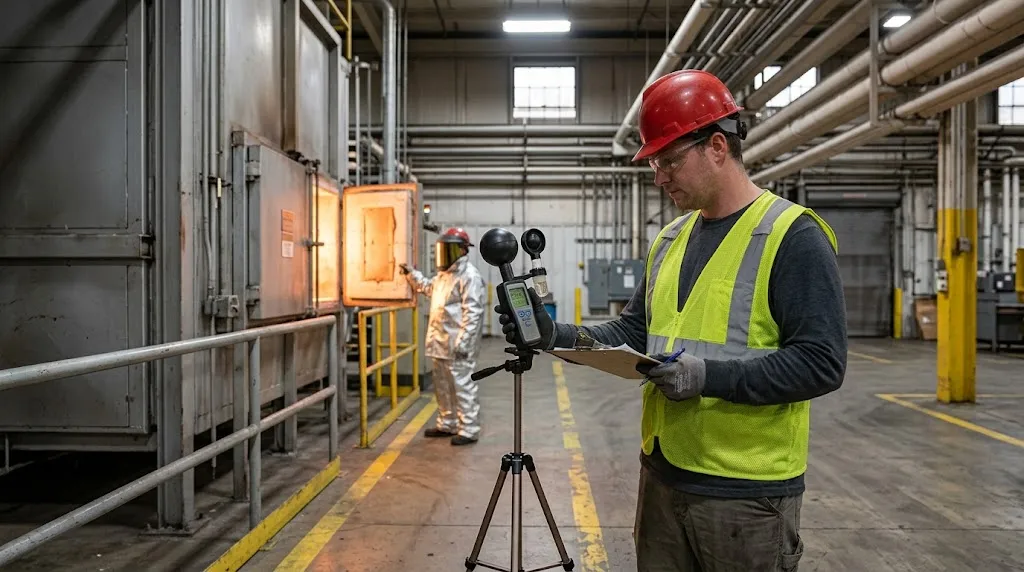
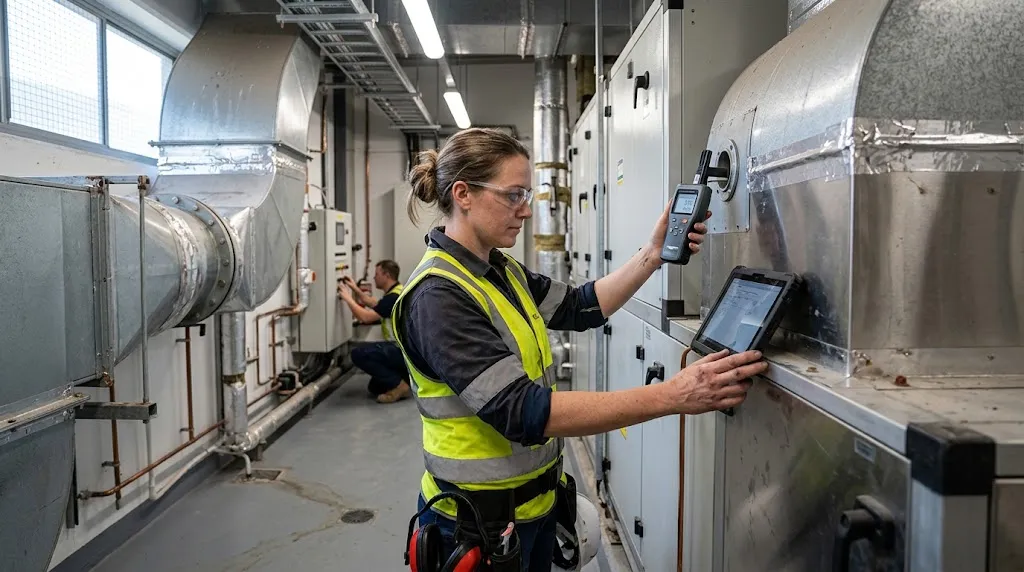
- Temperature and humidity monitoring using calibrated data loggers placed at multiple points in the gallery is required to verify that conditions are being held throughout the space, not just at the thermostat.
Humidifier or Dehumidifier: What Does an Art Gallery Actually Need?
The answer depends on climate zone and season. In dry climates, or during heating season in cold-climate regions, indoor RH drops well below 45% as heated air loses its relative moisture content. Under those conditions, a humidifier is the required intervention. In humid climates, or during summer months in many parts of the country, galleries face the opposite problem: excess ambient moisture that pushes RH above 55% and creates conditions favorable to mold and mildew growth on organic media. Facilities in regions with marked seasonal variation typically need both capabilities. A gallery that installs only a humidifier without planning for summer dehumidification needs will operate outside the preservation range for part of every year. The 45 to 55% RH target is the anchor specification. At any given moment, that target tells a facilities manager whether the system needs to add moisture or remove it.When a Gallery Needs a Humidifier
Low-dewpoint outdoor air and forced-air heating systems are the two most common drivers of dangerously low indoor RH. When outdoor temperatures drop, the absolute moisture content of the air falls. Heating that air without adding moisture produces very low relative humidity indoors, often well below 30% in poorly controlled spaces. Canvas and panel works respond to that dryness by contracting, placing mechanical stress on paint layers that have different flexibility characteristics than the substrate. A precision humidification system capable of maintaining stable RH without introducing surface moisture is the correct specification for these conditions. For a broader overview, see our guide on relative humidity.When a Gallery Needs a Dehumidifier
Coastal climates, humid summers, and buildings with aging envelopes frequently push gallery RH above 55%. Elevated humidity promotes mold and mildew growth on canvas, paper, and textile works, and creates condensation damage risk on cooler surfaces. Two dehumidifier types appear in commercial gallery applications. A refrigerant dehumidifier works by passing air over a chilled coil to condense moisture, and is effective at temperatures above approximately 60°F. A desiccant dehumidifier uses a moisture-absorbing material to extract humidity from the air and performs well at lower temperatures, making it appropriate for cold storage areas within a facility. Museum-grade dehumidification equipment should be capable of holding RH within plus or minus 2% of setpoint continuously.What Humidity Does to Artwork: Material-Specific Damage Mechanisms
Gallery operators who have never seen a humidity-damaged collection sometimes underestimate what is at stake. The damage mechanisms are physical and chemical, and they are cumulative. Understanding what actually happens to each media type under humidity deviation makes the case for precision climate control systems far more clearly than any general warning about "dry air" can.- Canvas and oil paintings: Cotton and linen canvas fibers are hygroscopic and expand when RH rises and contract when it falls. The paint layer, which has different mechanical properties than the fabric substrate, does not flex at the same rate. Repeated RH cycling creates differential stress that leads to cracking, cupping, and paint flaking over time. The damage is irreversible.
- Canvas and panel paintings: Wood is more dimensionally responsive to RH changes than canvas. Panel works are especially vulnerable to splitting and warping when RH drops below 40% or climbs above 60%, because wood swells and shrinks more dramatically than the gesso and paint layers adhered to it.
- Works on paper: Paper fibers absorb and release moisture readily. High RH causes cockling and distortion; low RH produces brittleness. Silver gelatin photographs are additionally sensitive to fluctuating humidity levels, which accelerate the deterioration of the image layer and promote chemical instability in the silver compounds.
- Textiles and tapestries: Organic fibers including wool, silk, and cotton weaken and become brittle under prolonged low humidity. The structural integrity of woven works depends on fiber flexibility, and extended exposure to RH below 40% accelerates that degradation.
Fluctuating Humidity Is More Damaging Than a Stable Wrong Level
Hygroscopic materials experience mechanical fatigue when RH cycles repeatedly rather than holding steady. A stable RH of 50% causes significantly less long-term structural stress than an RH that cycles between 35% and 65%, even if the daily average falls within the target range. A few things follow from this:- Each expansion and contraction cycle adds cumulative stress to paint films, paper fibers, and wood structures
- System precision matters for preventive conservation, not just system capacity
- A humidification system that overshoots its target and corrects, producing fluctuating humidity levels around the setpoint, inflicts cyclic mechanical stress even when no individual reading looks alarming
Recommended Humidity and Temperature Targets for Art Galleries
The generally accepted preservation range for mixed collections is 45 to 55% RH. This range reflects the balance between the minimum moisture level needed to prevent embrittlement of organic materials and the maximum level below which mold and mildew growth risk remains low. ASHRAE guidelines for museums and archives provide engineering specifications for heating, ventilation, and air conditioning (HVAC) systems serving cultural institutions, including psychrometric conditions appropriate for preservation environments. A few related points matter here:- Temperature: most conservation standards recommend 65 to 70°F (18 to 21°C) for mixed collections. Because RH is temperature-dependent, a change in space temperature without a corresponding adjustment to moisture content will shift the measured RH. A gallery that controls temperature but not moisture content is not controlling RH.
- Single-media collections: collections dominated by a single media type may require more specific conditions than the general 45 to 55% range. A gallery holding exclusively photographic prints, works on paper, or textiles should obtain a conservation assessment before specifying a climate control system, as those media may have narrower preservation windows. The American Institute for Conservation provides professional guidance on collection-specific standards and can assist with determining appropriate targets for a given collection profile.
- Daily fluctuation: RH should be held within 5% of the target to avoid mechanical stress cycles in hygroscopic materials.
Temperature and Humidity Monitoring Requirements
Specifying the right RH target is necessary but not sufficient. The system must be verified to hold those conditions throughout the gallery, not just at a single thermostat or sensor location. Temperature and humidity monitoring using calibrated data loggers and hygrometers placed at multiple points is the standard practice. Sensor placement should include locations near artworks, at HVAC supply and return positions, and in any closed storage areas. For guidance on selecting the right instruments, see our guides on humidity meters and monitors and hygrometers. Continuous logging with recorded data is expected practice for institutions that insure or loan collection pieces, as underwriters and lending institutions typically require documented evidence of stable archival storage conditions.Selecting a Climate Control System for Gallery Environments
Generic equipment buying guides rarely address the constraints specific to exhibition and storage spaces. Gallery environments impose requirements that industrial and commercial HVAC specifications do not always capture, and selecting a system without accounting for them creates operational problems after installation. The selection criteria that matter most in gallery contexts:- Noise rating: Exhibition spaces operate at very low ambient sound levels. HVAC systems and standalone units with audible fan noise are disruptive to visitors. Noise output in decibels is a real specification dimension for gallery humidification, not an afterthought.
- Surface wetting risk: Any system that directs moisture toward artwork or produces droplets that do not fully evaporate before contacting surfaces is categorically unsuitable. The system must be specifiable such that moisture fully evaporates before reaching any surface under normal operation.
- HVAC integration vs. standalone units: In-duct HVAC humidification systems distribute moisture through the existing air handling system and avoid placement decisions in the gallery itself. Standalone units offer flexibility for spaces without centralized HVAC but require careful siting relative to collection pieces.
- Zone coverage: A gallery with multiple rooms requires a system engineered to maintain consistent relative humidity control across all zones, not just the room where the equipment is located.
- Precision specification: Museum-grade dehumidification and humidification equipment should hold RH within plus or minus 2% of setpoint continuously, not just on average. Equipment that averages an acceptable RH while cycling outside that range causes the stress described in the damage mechanisms section above.
- Dehumidifier type for storage areas: Refrigerant dehumidifiers are effective above approximately 60°F at lower operating cost. Desiccant dehumidifiers perform well at lower temperatures and suit cold storage areas. Energy-efficient dehumidification in a gallery context means matching the technology to the operating temperature range, not simply selecting the unit with the lowest rated wattage.
Why Non-Wetting Humidification Matters in Gallery Spaces
Conventional high-pressure misting and spray-based humidification systems produce droplets that may not fully evaporate before contacting nearby surfaces. In a space containing irreplaceable artwork, that wetting risk is not acceptable. A non-wetting humidification system that uses self-evaporating droplets is the correct specification when humidification must be introduced into a space where moisture contact with surfaces cannot be tolerated. It is important to note that "non-wetting" applies under proper system design: direct exposure to the fog stream will wet a surface, and system design must account for nozzle placement relative to collection pieces. For a broader comparison of humidification approaches, see our guide on controlling humidity.Archival Storage Areas Have Different Requirements Than Exhibition Spaces
Galleries with archival storage areas may need to maintain different RH conditions from the exhibition floor. Storage areas are often cooler and may hold media with narrower preservation windows. When conditioning is required, a desiccant dehumidifier is frequently the appropriate specification for storage areas that operate below 60°F. The climate control system serving the storage area should be specified independently from the one serving the gallery floor, with its own monitoring points and setpoints calibrated to the specific collection requirements of that space.How Smart Fog Addresses Humidity Control in Gallery and Collection Environments
Gallery humidification requires precise, continuous relative humidity control without any risk of surface wetting near artwork. That requirement eliminates a large class of conventional humidification systems from consideration. Spray-based and traditional misting systems cannot guarantee full droplet evaporation before surface contact, making them incompatible with environments where collection safety is the primary constraint. Smart Fog uses compressed air and water mixed through a proprietary nozzle to produce an equal-sized droplet grid where each droplet is slightly charged to prevent re-aggregation. The droplets self-evaporate before reaching any surface, adding moisture to the air without wetting collection pieces, walls, floors, or exhibition hardware under proper system design. As noted above, direct exposure to the fog stream will wet a surface, and nozzle placement must be specified accordingly. A few things follow from Smart Fog's delivery model:- Smart Fog delivers a complete engineered system, not a component kit
- The spray field, nozzle placement, and system capacity are designed to the facility's dimensions and airflow conditions
- Gallery operators receive a system specified to their space, not a product they must size and install independently
Precision and Stability for Artwork Preservation
Precision in the context of preventive conservation means more than hitting the right average RH. As established in the damage mechanisms section, fluctuating humidity levels cause mechanical fatigue in hygroscopic materials even when the average reading appears acceptable. Smart Fog systems maintain RH within plus or minus 1 to 2% of setpoint continuously, with minimal fluctuation. Key performance characteristics relevant to artwork preservation:- RH precision: Plus or minus 1 to 2% maintained continuously, not just on average
- Water efficiency: 100% of water evaporates into the air; no pooled water on floors or surfaces
- Surface wetting risk: Self-evaporating droplets eliminate surface moisture contact under proper system design
- Moving parts: No moving parts in the humidification process, reducing mechanical failure risk
- Maintenance interval: Designed for maintenance intervals extending up to two years