 Made in USA


Industrial humidification systems
Where do you need to add moisture? The ES100 serves individual rooms and production zones. The TS100 delivers humidity through a duct or air handler.
Where will you add moisture?
A pressroom with its own shift schedule and an air handler serving several rooms call for different delivery methods. Compare the four Smart Fog system families by installation location.
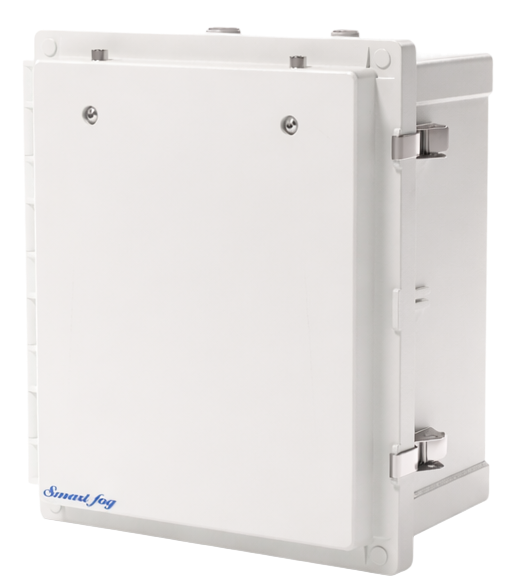
ES100 · Direct-space humidifier
Add moisture where the material is exposed. Independent zones can follow different production shifts and RH targets.
What to check
Room layout, air movement and the distance to the nearest rack, press or cold surface.
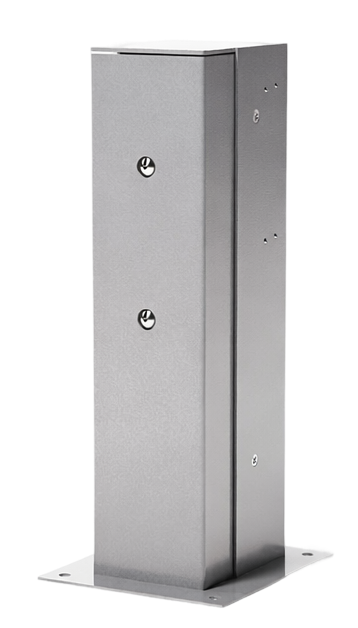
TS100 · In-duct humidifier
Condition a shared supply airstream in a new or existing air handler. The rooms it serves should have compatible humidity requirements.
What to check
Duct dimensions, minimum and maximum airflow, straight-run distance and downstream high-limit sensing.
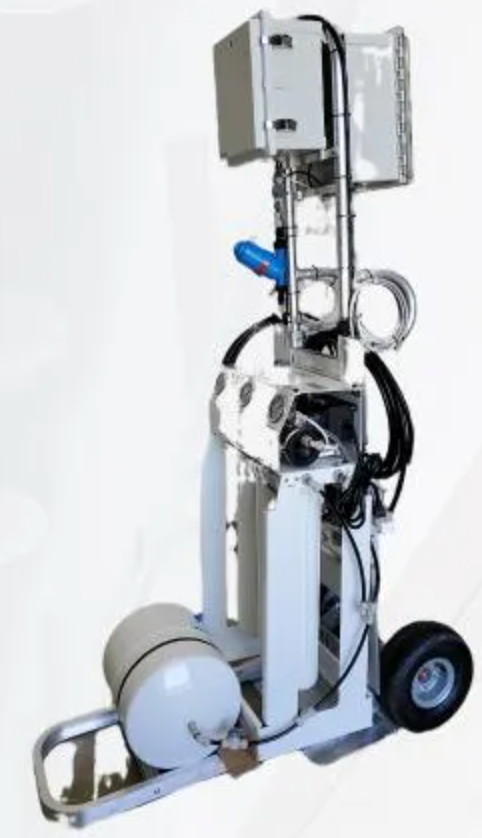
ES100M · Mobile humidifier
Bring humidification to a temporary work area or move it when the layout changes. Identify the operating position for each use.
What to check
Access to utilities, clearance, travel route and airflow at each proposed position.
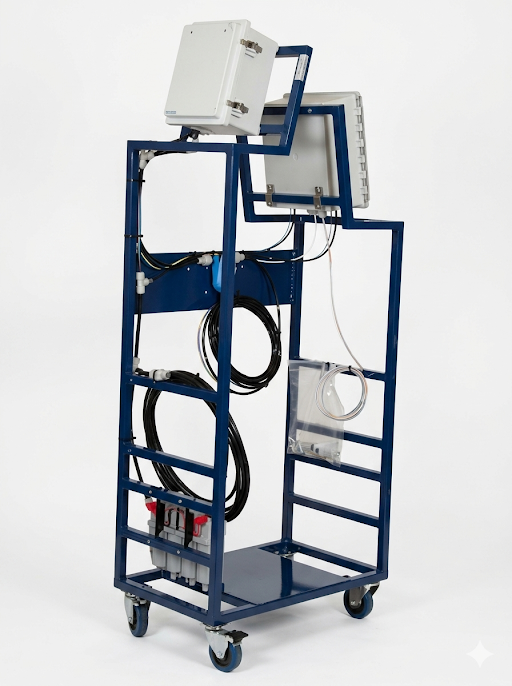
MS100 · Custom grid system
Distribute moisture across a large or unusual airstream. Grid placement and control depend on the air profile and the available space.
What to check
Cross section, velocity profile, available evaporation distance and access for inspection.
ES100 vs TS100: room or duct?
Choose the ES100 when the room needs its own humidity schedule or setpoint. Choose the TS100 when the air handler can deliver the required moisture to every space it serves. For either installation, check low-airflow operation as well as peak demand.
| Design question | ES100 · Room | TS100 · Duct |
|---|---|---|
| Where is humidity needed? | At a process, in a room, or across independently controlled zones. | In spaces served by a common supply airstream. |
| What governs placement? | Room circulation, ceiling height, and the position of equipment and exposed material. | Duct dimensions, airflow range, and evaporation distance before a bend, filter, or coil. |
| What should controls track? | Relative humidity at a representative point in each controlled zone. | Space or return-air humidity demand, proven airflow, and downstream duct humidity limits. |
| What should I send for sizing? | Floor plan, ceiling height, outdoor-air rate, shift schedule, and target room temperature and humidity. | Duct cross section, minimum and maximum airflow, entering air conditions, and desired leaving condition. |
What do both Smart Fog systems require?
Both systems use compressed air and water to produce Self-Evaporating Droplets. Smart Fog reports a characteristic droplet diameter of about 4.2 microns. Placement still matters: the air must carry the moisture away before droplets reach nearby equipment or material.
Estimate the moisture load
Two rooms of the same size can need different capacities. Outdoor air entering the space and the difference between incoming and target humidity both affect the load.
Planning an installation?
For a room, share its dimensions and outside-air rate. For a duct, share the cross section and airflow range. Include your target temperature and relative humidity for either system.