- Proper moisture control supports product quality and stable production
- Steam uses heat, while dry fog and ultrasonic systems focus more on efficiency
- Sensitive spaces often need systems that help prevent surface wetting
- Energy use has a major impact on long-term operating cost
- The right fit depends on process needs and existing infrastructure
The Four Main Humidification Technologies
An effective climate control method starts with selecting the right humidification technology. The system you choose affects air stability, product quality, and operating cost across your facility.Isothermal vs Adiabatic: The Fundamental Split
Humidification systems are generally divided into two main types, isothermal and adiabatic. The difference comes from how each system adds moisture to the air and how much energy it needs to do it. Isothermal systems use external heat to convert water into steam. This allows tight control over humidity levels but increases energy usage. Adiabatic systems use existing air energy to evaporate water, which makes them more efficient for large-scale applications. The main differences between these technologies include:- Steam (Isothermal): Uses external heat, delivers high precision, and produces vapor
- Ultrasonic (Adiabatic): Uses electrical vibration, operates quietly, and produces fine mist
- Evaporative (Adiabatic): Uses airflow, offers lower cost operation, and produces vapor
- Dry Fog (Adiabatic): Uses compressed air, prevents surface wetting, and creates self-evaporating droplets
Steam Humidification
Steam humidification remains a core climate control method in many industrial facilities. Unlike adiabatic systems such as fog or dry fog, it adds moisture as heated vapor, which makes it highly effective for precise humidity control in large buildings.How Steam Humidifiers Work
Steam humidifiers work by boiling water and injecting the resulting steam directly into the airstream. Because the moisture enters as vapor, the system can raise humidity without producing liquid droplets on nearby surfaces. Modern systems usually use electric heaters or gas-fired heat exchangers to generate steam. That steam is then released through a dispersion tube so it can mix evenly with the air before reaching equipment or occupied areas.Pros and Cons of Steam Humidification
Steam systems are often valued for their ability to deliver hygienic moisture. Because the water is boiled during the process, many impurities are removed before the moisture enters the air. At the same time, this method comes with trade-offs that facility managers need to account for. The main pros and cons include:- Hygiene: Boiling water removes many impurities before moisture enters the air
- Energy Demand: Steam systems need significant electricity or gas, which makes them more expensive to run than high-pressure or compressed-air systems
- Maintenance: Mineral scale can build up in boiling tanks, so regular cleaning is needed
Best Use Cases for Steam
Steam is a strong fit for environments where hygiene and tight humidity control are critical. It is commonly used in hospitals, museums, and data centers where stable air conditions help prevent material damage, equipment issues, or environmental drift. The main differences between steam and adiabatic systems include:- Energy Usage: Steam systems use high energy, while adiabatic systems generally use less
- Sterility: Steam offers high sterility, while adiabatic systems usually provide moderate sterility
- Installation: Steam systems are more complex to install, while adiabatic systems are usually simpler
Ultrasonic Humidification
Ultrasonic humidification creates a fine mist without using heat, which makes it a quiet and energy-efficient option for controlled environments. It is often used as an alternative to steam in facilities that need stable humidity without adding extra heat to the space.How Ultrasonic Humidifiers Work
Ultrasonic systems use a piezoelectric transducer that vibrates at very high frequencies. These vibrations break water into microscopic droplets, which are then dispersed into the air. Because the system does not rely on boiling, it uses far less energy than thermal humidification methods. To maintain steady performance, these systems depend on controlled water flow. Smaller units may use gravity, while industrial systems often use pumps to supply water consistently to the transducer. This helps maintain even mist output as humidity demand changes.Pros and Cons of Ultrasonic Humidification
The main advantage of ultrasonic technology is its low energy use. Since it does not heat water, operating costs are much lower than steam-based systems. It can also provide a light evaporative cooling effect, which may be useful in some industrial environments. The main pros and cons include:- Low power use: Consumes much less energy than thermal systems
- Instant output: Produces mist quickly without a warm-up period
- Quiet operation: Works with very little noise
- Water quality requirement: Needs high-quality demineralized water to prevent white dust buildup
- Maintenance needs: Requires regular transducer cleaning for long-term reliability
Best Use Cases for Ultrasonic
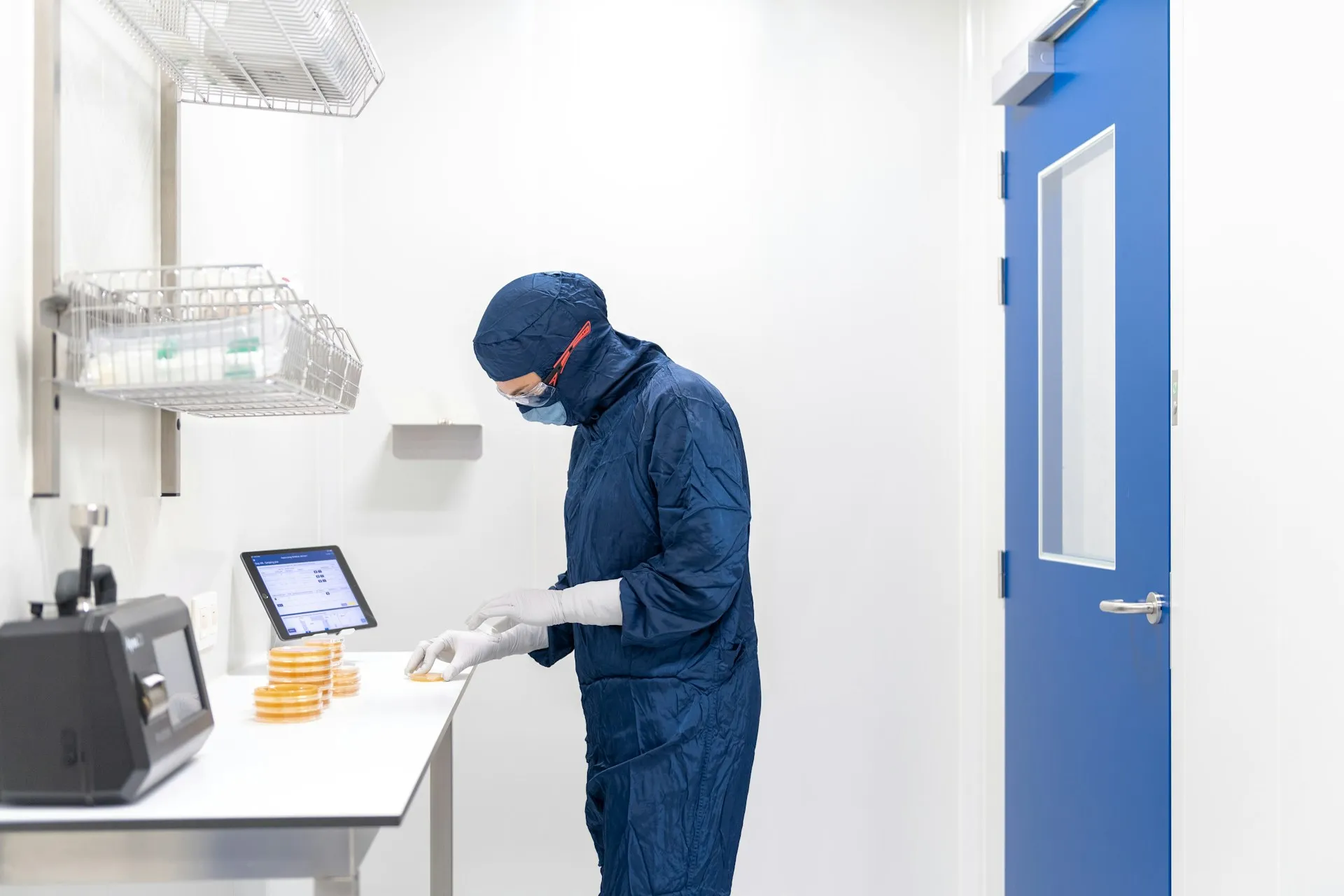
Ultrasonic systems are well suited to environments where temperature stability matters. Because they do not add heat to the space, they are often used in laboratories, data centers, and cleanrooms where precise humidity control supports equipment protection and air quality. They are also a strong fit for facilities focused on sustainability and lower operating costs. By avoiding the energy demand of boiling water, ultrasonic humidification can support strict environmental control while helping reduce overall power use.Evaporative Humidification
Evaporative humidification uses a natural, adiabatic process to maintain moisture in industrial environments. By using ambient air heat to turn water into vapor, these systems avoid the high energy demand associated with boiling water.How Evaporative Humidifiers Work
These systems work by pulling dry air through a wetted medium, such as a pad or specialized filter. As the air passes across that surface, it absorbs moisture and raises the humidity level in the space. Unlike ultrasonic systems that use vibration, evaporative humidifiers depend on airflow and natural evaporation to distribute moisture. Some advanced designs also use nozzles to break water into finer particles for faster evaporation. This helps improve moisture absorption while reducing the chance of wet spots on equipment or floors. When properly designed, the system can maintain stable humidity without leaving excess surface moisture behind.Pros and Cons of Evaporative Humidification
Evaporative humidification systems are often used because adiabatic humidification can use less energy than isothermal steam systems. They can also cool the air as water evaporates into the airstream, but they still require regular maintenance to support reliable operation. The main pros and cons include:- Energy Efficiency: Uses much less power than isothermal systems
- Safety: Does not heat water, so there is no thermal burn risk
- Maintenance: Needs regular cleaning of media or nozzles to prevent mineral buildup
- Air Quality: Can provide a natural cooling effect while adding moisture
Best Use Cases for Evaporative
Evaporative humidification works well in large industrial spaces where energy cost is a major factor. Modern adiabatic evaporative systems support strong performance in demanding environments like manufacturing plants, printing facilities, and electronics assembly areas. By helping maintain stable humidity, these systems protect materials from static and dehydration. They also offer a scalable and cost-effective option for facilities that want reliable climate control without the higher energy load of steam systems.Dry Fog Humidification
Dry fog humidification makes it possible to maintain precise relative humidity without creating surface wetting. This technology is widely used in sensitive production areas where moisture control, equipment protection, and energy efficiency all matter.How Dry Fog Systems Work
Dry fog systems create self-evaporating droplets through specialized nozzles and controlled atomization. The fog is introduced through HVAC ductwork or overhead distribution lines, which helps spread moisture evenly across large spaces without creating concentrated damp areas. This supports stable humidity control and can also assist with fog dust control in environments where fine airborne particles are a concern. This allows facilities to maintain stable humidity across broad production zones. The result is more uniform moisture distribution with less risk of uneven conditions across the floor.Why Dry Fog Does Not Wet Surfaces
The key lies in droplet size. Dry fog systems create self-evaporating droplets, typically below 10 microns, which allows them to evaporate very quickly after entering the air. Because these droplets are so small, they turn into vapor before settling on machinery, floors, or products. This is what allows dry fog systems to raise humidity without creating the liquid water buildup associated with larger droplets. Smart Fog engineers its adiabatic humidification systems to maintain ±1–2% RH precision with a non-wetting guarantee, no constant nozzle cleaning required, and continuous 24/7 set-and-forget operation. Systems are manufactured in the USA and designed for straightforward installation without certified technicians.Best Use Cases for Dry Fog
A fog humidifier is a strong fit for environments where moisture damage is a serious concern. Unlike steam injection, which can raise room temperature and increase operating cost, dry fog works at ambient conditions while still delivering effective humidity control. This makes it useful in facilities that need reliable moisture control without slippery floors, mold risk, or temperature rise. The main differences between dry fog and other common humidification methods include:- Energy Usage: Dry fog uses very low energy, while steam injection uses high energy and ultrasonic systems use moderate energy
- Droplet Size: Dry fog produces self-evaporating droplets in a uniform grid, steam produces vapor, and ultrasonic systems produce fine mist
- Surface Wetting: Dry fog does not create surface wetting, steam also avoids wetting, and ultrasonic systems carry a low wetting risk
- Maintenance: Dry fog systems usually need low maintenance, while steam systems need high maintenance and ultrasonic systems need moderate maintenance
Side-by-Side Comparison, Which Technology Fits Your Environment?
Selecting the right humidification system depends on how each technology performs in your specific environment. Energy use, RH stability, maintenance demands, and scalability all affect how well the system supports long-term climate control.Energy Consumption
Energy use is one of the biggest concerns for facilities operating a commercial humidifier. Steam systems usually require the most power because they must boil water to create vapor. Dry fog systems use compressed air and water to create self-evaporating droplets, which typically uses much less electricity.Precision and RH Stability
Stable relative humidity depends on how precisely the system can respond to changing conditions. High-precision systems are especially important in sensitive manufacturing areas where humidity swings can increase static risk. Systems that produce fine droplets can distribute moisture more evenly and help reduce condensation risk.Maintenance Requirements
Maintenance needs vary based on the technology and the size of the installation. Smaller room humidifiers often need frequent cleaning, while larger industrial systems may include automated cycles that reduce routine labor. A strong control system also helps track performance and flag service needs before they become larger issues.Scalability for Large or Sensitive Spaces
Scalability matters when humidity must be managed across large warehouses or controlled spaces such as laboratories. Dry fog systems are highly modular, which makes it easier to expand nozzle coverage as facility needs grow. This flexibility can improve fog system performance across larger areas by supporting more even humidity distribution and more consistent environmental control. The main differences between these technologies include:- Steam: Low energy efficiency, very high precision, and high maintenance needs
- Ultrasonic: High energy efficiency, high precision, and moderate maintenance needs
- Evaporative: Moderate energy efficiency, moderate precision, and moderate maintenance needs
- Dry Fog: Very high energy efficiency, high precision, and low maintenance needs