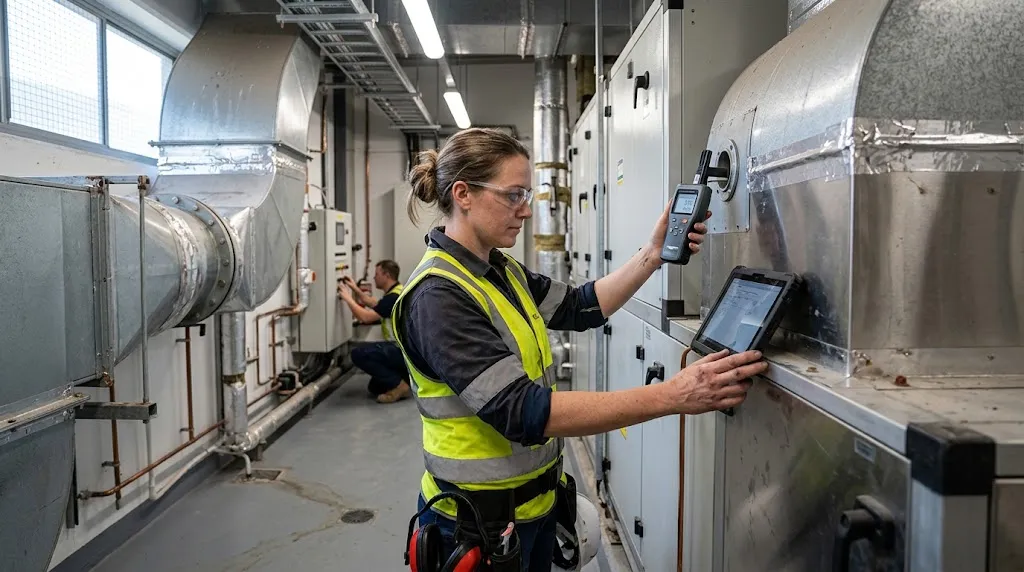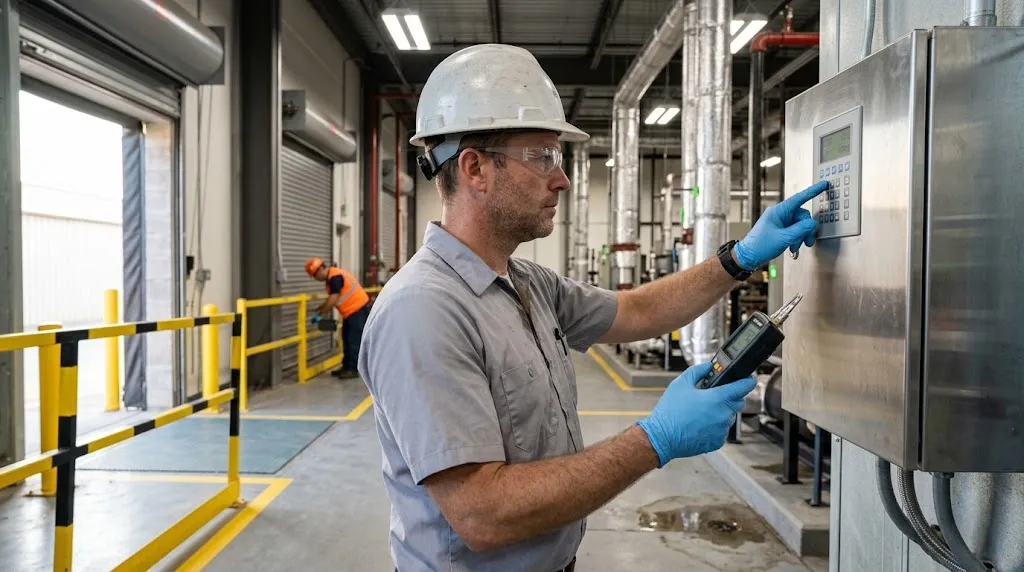


Context determines whether static electricity is a nuisance or a documented workplace hazard. In domestic settings, the static shock from touching a doorknob is uncomfortable but physically harmless. In electronics manufacturing, pharmaceutical powder handling, or fuel storage facilities, the same physical phenomenon can destroy sensitive components, ignite flammable atmospheres, and trigger Occupational Safety and Health Administration (OSHA) compliance obligations.
This article covers the physics of static charge, the voltage and energy thresholds at which static becomes dangerous, the specific industrial scenarios where it causes real harm, and the control strategies facilities use to manage the risk.
Key Takeaways
- A typical static shock can reach voltages between 1,000 and 35,000 volts, but the extremely low current and near-instantaneous discharge duration mean the energy transferred is far too small to injure a healthy adult.
- Electrostatic discharge (ESD) can permanently damage sensitive electronic components at voltages as low as 20 volts, well below the human perception threshold, making invisible ESD events a serious production risk in electronics and semiconductor environments.
- Ignition of flammable vapors and gases can occur at discharge energies below 1 millijoule, a threshold documented in NFPA 77 and IEC 60079-32-1, and the regulatory basis for static control requirements under OSHA 29 CFR 1910.119.
- An unexpected static shock in an industrial workplace with moving equipment can cause a startle response and secondary injury, an underappreciated category of industrial workplace hazards distinct from the electrical risk of the discharge itself.
- Maintaining relative humidity (RH) above 40 to 45 percent reduces static charge accumulation by allowing moisture in the air to provide a continuous conductive dissipation path across surfaces.
- Precision industrial humidification systems that hold RH within plus or minus 1 to 2 percent provide consistent, facility-wide ESD suppression without the compliance dependence of point-of-use controls.
What Static Electricity Actually Is (And Why It Builds Up)
Static electricity originates at the point of material contact. When two surfaces touch and then separate, electrons transfer from one material to the other through the triboelectric effect, leaving one surface with a net positive charge and the other with a net negative charge. On conductive materials, this charge drains away quickly through any available path to ground. On insulating materials, such as plastics, rubber, and synthetic fabrics, there is no conductive path, so charge accumulates.
The magnitude of voltage buildup depends on how much charge accumulates before a discharge event occurs. In dry conditions, accumulation can reach tens of thousands of volts before the electrical potential is high enough to bridge the air gap between the charged surface and a nearby grounded object.
Why Low Humidity Makes Static Worse
Water vapor in the air forms a thin conductive film on most surfaces, giving accumulated charge a passive path to dissipate continuously. When RH drops below approximately 40 percent, this film effectively disappears, removing the natural dissipation mechanism and allowing voltage buildup to reach much higher potentials before discharging.
This is the physical basis for humidity-based ESD control: maintaining adequate humidity levels keeps the dissipation pathway active, preventing charge from reaching hazardous levels in the first place.
Everyday Static Electricity: Nuisance, Not Hazard
The everyday static electricity examples most people recognize, including shocks from car door handles, doorknobs, and synthetic fabrics, involve voltages that sound alarming in isolation. A typical static shock at the fingertip can range from 1,000 to 35,000 volts. Yet these events cause no physical injury to healthy adults.
The reason lies in the distinction between voltage, current, and energy. Physical tissue damage from an electric shock depends primarily on current magnitude and discharge duration, not voltage alone. Static discharges involve microampere-level currents and discharge durations measured in nanoseconds, so the total energy transferred is far too small to cause harm.
The Difference Between Voltage, Current, and Discharge Energy
A 10,000-volt static shock from a synthetic fabric doesn’t injure a person, while a 120-volt household circuit can cause serious injury or death. The difference comes down to two factors:
- Current: household alternating current can drive sustained current flow through the body at magnitudes measured in milliamperes or higher.
- Duration: a static discharge is high-voltage but nearly instantaneous, delivering a current pulse so brief that total energy is typically measured in microjoules.
The static shock is analogous to a very brief, very intense pressure wave rather than a sustained force.
One genuine exception involves individuals with implanted cardiac devices. People with a cardiac pacemaker or implantable cardioverter-defibrillator should consult their device manufacturer’s guidance on electromagnetic exposure thresholds, as device sensitivity varies by model and generation. The risk isn’t from household static shocks generally, but device-specific guidance is the appropriate reference for those individuals.
In industrial environments, however, the variables that make domestic static harmless change significantly.
When Static Electricity Becomes a Genuine Industrial Hazard
Industrial environments introduce conditions that transform static from a minor irritant into a documented safety, quality, and regulatory concern. Three distinct hazard categories define where the threshold is crossed.
ESD Damage to Electronic Components and Why Workers Cannot Feel It
Semiconductor devices and integrated circuits can sustain permanent damage from electrostatic discharge at voltages as low as 20 volts. The human perception threshold for a static shock at the fingertip is typically above 2,000 volts. That gap means a worker can repeatedly handle sensitive electronic components and destroy them without ever feeling a thing.
- Classification framework: the JEDEC ESD sensitivity classifications rate component vulnerability, ranging from Class 0 devices damaged at voltages below 250 volts to less sensitive classifications at higher thresholds.
- Program requirement: ANSI/ESD S20.20 defines ESD control program requirements for manufacturers handling these components.
- Latent damage risk: low-level ESD events often don’t cause immediate functional failure. Defects can pass initial inspection and appear as field failures after deployment, making ESD a quality and liability risk as much as a production one.
For guidance on how to prevent static electricity in electronics manufacturing, environmental humidity control is a recognized foundational measure alongside point-of-use controls.
Static Ignition in Flammable and Combustible Environments
Static discharge can ignite flammable vapors, gases, and combustible dusts at energies that routine electrostatic events can achieve. The minimum ignition energy for hydrogen is approximately 0.017 millijoules; for ethylene, it is approximately 0.082 millijoules. These thresholds are documented in NFPA 77, which governs static control in industrial settings, and IEC 60079-32-1, which covers electrostatic hazards in explosive atmospheres.
Combustible dust environments, including grain elevators, flour mills, and pharmaceutical powder handling areas, also have minimum ignition energies within ranges that static discharge can reach. OSHA 29 CFR 1910.119 requires static control measures in facilities handling chemicals that meet the standard’s hazard thresholds. Compliance typically involves bonding, grounding, and environmental controls, and static-related fire and explosion risk is a documented regulatory inspection category.
Startle-Response Injury in Industrial Workplaces
An unexpected static shock in an industrial facility creates an indirect injury risk that is separate from the electrical energy of the discharge itself. When a worker receives an unexpected static shock while operating machinery, handling tools near moving conveyor systems, or performing precision assembly tasks, the startle response can cause recoil, loss of grip, or uncontrolled movement.
This category of industrial workplace hazards is underrepresented in static electricity literature but is a legitimate OSHA-relevant concern in any environment where workers operate near moving equipment.
Industries Where Static Electricity Is a Regulated Hazard
The industrial hazard categories described above are not evenly distributed across all facility types. Certain sectors face static as a documented, regulated operational risk.
- Electronics and semiconductor manufacturing: ESD events damage JEDEC-classified sensitive components at voltages below human perception. ANSI/ESD S20.20 compliance requires a formal ESD control program, and static electricity problems in cleanroom environments are a recognized source of latent defect production in high-volume PCB assembly and semiconductor fabrication.
- Pharmaceutical and chemical processing: Fine pharmaceutical powders have minimum ignition energies within the range achievable by routine static discharge, making static control a fire safety requirement alongside GMP environmental control obligations. Facilities handling these materials must maintain pharmaceutical manufacturing humidification as part of their process safety framework.
- Data centers and server rooms: ESD events can damage server hardware, storage media, and network interface components. Maintaining RH above 40 percent RH is recognized as a passive baseline control for data center humidification systems environments.
- Printing and publishing: Static on paper and film substrates causes misfeeds, ink adhesion failures, and paper jams in high-speed press environments. Humidity control at 45 to 55 percent RH is standard practice for static management in these facilities.
- Aerospace and defense manufacturing: ESD-sensitive avionics components and composite material handling procedures require controlled environments. How static electricity impacts aerospace manufacturing reflects requirements documented in MIL-STD-1686 and related defense standards.
- Automotive manufacturing: Paint booths and assembly areas are exposed to static-generated contamination and fire and explosion risk from solvent vapors. Static electricity risks in automotive plants include both ignition hazards and coating quality failures linked to uncontrolled charge.
- Fuel handling and chemical processing: Grounding and bonding requirements under OSHA 29 CFR 1910.119 directly address static ignition risk during transfer of flammable materials between containers.
How Facilities Control Static Electricity
Static control programs in industrial facilities combine multiple methods, each with a distinct mechanism, coverage scope, and set of limitations. A review of ESD control methods demonstrates why no single method addresses all hazard scenarios.
- Grounding and bonding: Provides a conductive path to earth that dissipates electrical charge from metal equipment and bonded containers. Highly effective for conductive objects, but does not address charge on insulating surfaces or in the ambient air.
- Anti-static wristband and footwear: An anti-static wristband connects the wearer to a ground point through a resistor, continuously draining body charge during bench-level component handling. Protection ends when the worker leaves the workstation or the connection is broken.
- Ionizers: Generate balanced positive and negative ions that neutralize charged surfaces in the ionizer’s coverage zone. Effective for localized surface charge control, but do not address charge accumulation at a facility level or in areas outside the ionizer’s placement range.
- Conductive flooring: Dissipates charge from personnel footwear to ground. Effective as part of a layered ESD program, but does not address charge on insulating surfaces, equipment housings, or airborne particulates.
- Humidity control: Maintains ambient RH above the threshold at which moisture forms a conductive film on surfaces, enabling continuous passive charge dissipation across the full facility environment. The only method that operates facility-wide without ongoing worker compliance.

Why Humidity Control Is the Only Facility-Wide Passive Solution
Wrist straps, grounding connections, and conductive footwear all depend on correct worker behavior at every moment. A wrist strap that is not worn, is worn improperly, or whose ground connection has failed provides no protection. Humidity control, once the system is operational and holding target RH, functions continuously across the entire facility without relying on individual worker action. This makes it not merely a supplement to an ESD control program, but its environmental foundation.
How Smart Fog Humidification Controls Static Electricity at the Facility Level
Maintaining stable facility RH above the static accumulation threshold requires a humidification system that adds moisture without introducing surface wetting risk into environments where equipment, components, and substrates cannot tolerate condensation or liquid contact. A compressed-air-and-water nozzle system that produces an equal-sized droplet grid addresses this constraint directly.
The droplets are slightly charged to prevent re-aggregation and self-evaporate before contacting any surface, allowing the system to raise ambient humidity to target RH without wetting equipment, racks, components, or facility surfaces under proper system design.
One caveat applies: direct exposure to the fog stream itself will wet a surface. This applies to objects placed directly in the stream, not to the ambient environment the system conditions across the facility footprint.
Smart Fog’s ESD control systems are engineered on this operating principle, with no moving parts in the humidification process, maintenance intervals of up to two years, and continuous 24/7 industrial operation capability. These characteristics matter in facilities where downtime has operational and compliance consequences.
Precision Humidity Maintenance for ESD-Sensitive Environments
Humidity precision matters as much as average RH level. A system that averages 45 percent RH but oscillates between 35 and 55 percent creates windows below the 40 percent threshold during which static charge accumulates to hazardous levels. Smart Fog systems maintain RH within plus or minus 1 to 2 percent of target, eliminating these fluctuation windows and providing consistent passive dissipation across the full operating cycle.
This level of precision is the relevant specification for electronics manufacturing humidification environments, where latent ESD damage occurs during brief, uncontrolled charge accumulation events.
Non-Wetting Operation in Electronics, Pharmaceutical, and Data Center Environments
The concern that introducing humidity into a sensitive facility risks surface wetting, condensation, or contamination is a legitimate design consideration. The self-evaporating droplet mechanism addresses it: because droplets evaporate into vapor before reaching any surface, Smart Fog systems can operate in environments where surface wetting would cause immediate equipment damage or cleanroom contamination.
Cleanroom humidifiers designed on this principle are appropriate for pharmaceutical cleanrooms, electronics assembly areas, and server rooms where conventional humidification methods introduce an unacceptable wetting risk. The non-wetting caveat applies: objects placed directly in the fog stream will be wetted; ambient surfaces in the conditioned environment will not, under proper system design.
Final Thoughts
Static electricity is context-dependent. In domestic settings, the physics that govern a static shock from a doorknob make it uncomfortable but not injurious. In electronics facilities, pharmaceutical manufacturing, fuel handling operations, and aerospace assembly, the same phenomenon operates under conditions where the hazard thresholds for component damage, ignition, and indirect injury are all within reach of routine charge accumulation events.
Effective static control at the industrial level requires both point-of-use methods and an environmental baseline that operates continuously without compliance dependence. Maintaining humidity levels above 40 percent RH is that baseline, and precision matters: a system that holds 45 percent RH with minimal variance provides meaningfully better ESD suppression than one that averages the same figure but fluctuates across the critical threshold.
If your facility handles sensitive electronic components, flammable materials, or operates in a regulated environment where static buildup is a documented risk, speak with a Smart Fog engineer to request a humidity-based static control assessment for your specific facility type and RH requirements.
FAQ
Can static electricity kill you?
Static electricity is not capable of killing a healthy adult under ordinary conditions. A typical static discharge involves voltages in the thousands of volts but carries microampere-level currents for a duration measured in nanoseconds, producing total energy far too low to cause cardiac arrest or tissue damage. The exception involves individuals with implanted cardiac devices: people with a pacemaker should consult their device manufacturer’s specifications for electromagnetic exposure guidance, as sensitivity thresholds vary by device. Lightning strike is a separate phenomenon entirely, involving vastly greater energy transfer, and should not be conflated with ordinary static electricity.
Is static electricity dangerous to humans in everyday life?
In everyday domestic settings, static electricity is not physically dangerous to healthy adults. Static shocks from doorknobs, car handles, and synthetic fabrics are startling and uncomfortable, but the discharge energy is too small to injure. The hazard profile changes in industrial environments, where static electricity can damage sensitive components at voltages below human perception, ignite flammable vapors at discharge energies below 1 millijoule, and create indirect injury risk through startle-response accidents near moving equipment.
Can static electricity cause a fire or explosion?
Yes. Static discharge can ignite flammable vapors, gases, and combustible dusts at energies well within the range that routine static accumulation can produce. The minimum ignition energy for hydrogen vapor is approximately 0.017 millijoules. Combustible dust environments, including grain handling, flour milling, and pharmaceutical powder processing, also have minimum ignition energies achievable by static discharge. NFPA 77 and IEC 60079-32-1 govern static control requirements in these environments, and OSHA 29 CFR 1910.119 requires static control measures in facilities handling highly hazardous chemicals.
At what voltage does static electricity damage electronics?
Sensitive electronic components can sustain permanent damage from electrostatic discharge at voltages as low as 20 volts, according to JEDEC ESD sensitivity classifications. This is far below the human perception threshold of approximately 2,000 volts at the fingertip, meaning workers can destroy components without feeling any shock at all. Damage may appear as a latent defect that passes initial inspection and causes field failure after deployment, making ESD a quality and reliability concern beyond the production floor.
Is static electricity dangerous for people with pacemakers?
People with implanted cardiac devices, including pacemakers, should consult the specific guidance issued by their device manufacturer. Device sensitivity to electromagnetic events varies by model, generation, and programming. Routine household static shocks do not generally produce the electromagnetic field strengths that implanted devices are designed to withstand, but device-specific documentation is the authoritative reference. This is a medical device question and should be directed to the prescribing physician or device manufacturer, not addressed generically.
How do you protect yourself from static electricity in an industrial facility?
Static control in industrial facilities requires a layered approach. Grounding and bonding dissipate charge from conductive equipment and personnel. Anti-static wristbands provide bench-level protection for workers handling sensitive components. Ionizers neutralize surface charge within their coverage zone. Conductive flooring provides a ground path through personnel footwear. Maintaining facility RH above 40 to 45 percent provides continuous, passive, facility-wide charge dissipation without relying on worker compliance at every moment. Best practice in high-risk environments combines all applicable methods, with humidity control as the environmental baseline.
Why is static electricity worse in winter and in dry environments?
Static electricity intensifies when ambient humidity levels drop below approximately 40 percent RH. Low-humidity air lacks the water vapor that normally forms a thin conductive film on surfaces, allowing accumulated charge to dissipate passively. In winter, cold outdoor air contains less moisture, and indoor heating further reduces RH by warming the air without adding water vapor. The result is a dry indoor environment where charge accumulates to higher potentials before discharging. Industrial facilities in cold climates or with active HVAC heating often require active humidity control to maintain RH above the static-prone threshold year-round.
What is the difference between a static shock and an electric shock from a power outlet?
A static shock involves high voltage but extremely low current and nearly instantaneous discharge duration. The total energy transferred is typically measured in microjoules, too small to cause injury. An electric shock from a 120-volt household outlet is lower in voltage, but the alternating current can sustain continuous flow through the body at milliampere-level currents for as long as contact is maintained. Sustained current at milliampere levels is what causes cardiac disruption, burns, and tissue damage. The danger from a power outlet comes from current magnitude and duration, not voltage, which is why a 35,000-volt static shock is harmless and a 120-volt outlet shock can be fatal.