 Made in USA


TS100In-duct humidifier
Add moisture in the supply airstream and distribute it through existing ductwork. The TS100 is designed for air handlers and commercial HVAC systems in new construction and retrofits.
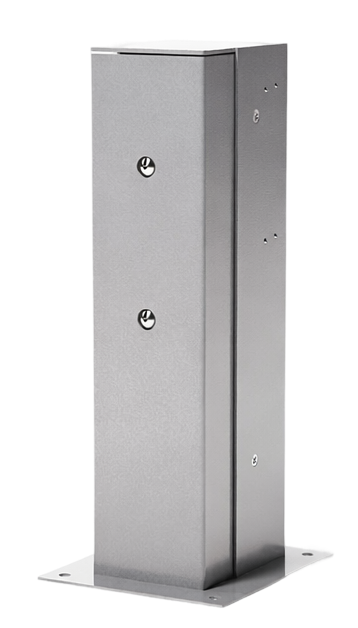
Compare TS100 models
Start with the moisture load and the air available to absorb it. Model output sets the number of units; duct dimensions and operating airflow guide their placement.
| Per unit | TS100-1 | TS100-2 |
|---|---|---|
| Rated water output | 6 L/h | 12 L/h |
| Compressed air at 100 psi | 70 L/min | 140 L/min |
| Installation | In duct / air handler | In duct / air handler |
Nominal per-unit design figures. Final selection depends on entering air conditions, minimum airflow, and available absorption distance.
How the TS100 fits the air handler
Size for the airstream
Engineering compares entering air temperature and moisture content with the supply or room target. Include outside-air fractions and minimum fan flow for variable-air-volume systems.
Choose a mounting location
Identify clear duct length, access doors, coils, elbows, and filters. These determine where Self-Evaporating Droplets can mix with the airstream before reaching downstream equipment.
Coordinate the controls
The CPLC can use room or duct RH feedback, airflow proof, and a duct high-limit input. When airflow stops or humidity approaches the configured limit, the controls can inhibit output.
TS100 application questions
Does the TS100 need a steam boiler?
The TS100 atomizes water with compressed air. The droplets evaporate into the moving airstream, drawing heat from the air. Account for that temperature change when reviewing the HVAC sequence.
Can it work in a retrofit?
Often, yes. A duct cross-section, access photos, fan airflow range, and distance to the next obstruction let engineering evaluate a retrofit before selecting hardware.
How does the system communicate with the building controls?
Discuss the required points and protocol during design. The CPLC supports integration options for Modbus and BACnet. Confirm the interface and hardware in the project submittal.
What equipment should be included in the scope?
Allow for humidification units, compressed air, water treatment as needed, the controller, sensors, and the PB valve controls. The equipment schedule should identify which party supplies each utility and interlock.
Size the TS100 for your duct
Share the duct width and height, minimum and design airflow, entering temperature and RH, desired leaving or room conditions, and available straight duct length. A marked-up AHU or duct drawing is especially helpful.