

 Made in USA

- Evaporative cooling works by exploiting the latent heat of vaporization: water absorbs approximately 2,260 joules of energy per gram during phase change, drawing that heat from the surrounding air and lowering dry bulb temperature.
- Direct evaporative cooling lowers air temperature while increasing relative humidity (RH); indirect evaporative cooling reduces temperature without adding moisture to the conditioned air, making it better suited for moderate-humidity climates.
- Above approximately 70°F (21°C) wet-bulb temperature, direct evaporative cooling provides minimal temperature reduction because ambient air is already carrying substantial moisture, per ASHRAE psychrometric principles governing this threshold.
- In arid and dry climates with outdoor RH regularly below 30% to 40%, evaporative cooling is a viable energy-efficient cooling alternative to refrigerant-based air conditioning because it uses a fan and pump rather than a compressor.
- At industrial scale, adiabatic humidification systems apply the evaporative cooling principle in a controlled, precision-engineered form to manage both humidity and temperature simultaneously.
- Water quality directly affects system performance; dissolved minerals in hard water deposit as scale on evaporative cooler pads and heat exchange surfaces, reducing airflow and cooling efficiency over time.
What Is Evaporative Cooling?
Evaporative cooling is a thermodynamic process that lowers air temperature by converting liquid water into vapor. As water evaporates, it absorbs thermal energy from the surrounding air as latent heat of vaporization, reducing the dry bulb temperature of that airstream. No refrigerant, compressor, or vapor-compression cycle is involved. This is a naturally occurring process. Perspiration and sweating cool the human body through the same mechanism: moisture on the skin surface evaporates, removing heat from tissue and lowering perceived body temperature. Evaporative cooling systems engineer that same principle at scale.The Physics Behind the Cooling Effect
Water absorbs approximately 2,260 joules of energy per gram during the liquid-to-vapor phase change. That energy comes from somewhere specific: the surrounding air, which is why air temperature drops measurably as evaporation occurs. The total temperature reduction possible depends on one thing: how much additional water vapor the air can accept before it reaches saturation.Wet-Bulb Temperature and Why It Sets the Limit
Wet-bulb temperature is the lowest temperature air can reach through evaporative cooling alone, given the moisture already present in that air. It reflects both the dry bulb temperature and the current humidity load simultaneously. Above approximately 70°F (21°C) wet-bulb temperature, the psychrometric gap between dry bulb and wet bulb is too small for meaningful heat transfer through evaporation, and cooling efficiency drops sharply. ASHRAE psychrometric engineering principles establish this threshold as the practical upper limit for effective direct evaporative cooling.How Does an Evaporative Cooler Work?
A direct evaporative cooler draws warm ambient air through water-saturated evaporative cooler pads using a fan. As air passes through the wet pads, water evaporation absorbs heat from the airstream, delivering cooler, more humid air into the space. Unlike refrigerant-based heating, ventilation, and air conditioning (HVAC) systems, evaporative coolers introduce outdoor air continuously rather than recirculating conditioned indoor air. Because outside air is constantly introduced, the system requires partially open doors or windows to function correctly. The continuous fresh air introduction is a secondary benefit in spaces where ventilation matters, but it also means the system cannot be used in a sealed, recirculating configuration. The key components of a direct evaporative cooler are:- Water reservoir: holds the supply of water drawn up to wet the cooling pads
- Pump: circulates water from the reservoir to the pad surface continuously
- Evaporative cooler pads: the wet media through which warm air passes and loses heat
- Fan: draws ambient air through the saturated pads and into the conditioned space
- Housing: encloses the components and directs airflow
What Are Evaporative Cooler Pads?
Evaporative cooler pads are the media through which warm air passes to absorb moisture and lose heat. Pads are typically made from cellulose fiber, aspen wood fiber, or synthetic materials, and their cooling efficiency depends on surface area, material porosity, and uniformity of water saturation across the pad face. The primary degradation mechanism for evaporative cooler pads is mineral scaling: dissolved solids in hard water deposit on pad surfaces over time, restricting airflow and reducing the effective surface area available for water evaporation. Managing water quality and scheduling periodic pad replacement are the primary maintenance requirements for any direct evaporative cooling system.Types of Evaporative Cooling Systems
The three main system configurations differ in how they use water evaporation, what happens to indoor RH, and which climate conditions each can serve effectively. Choosing the wrong type for a given climate or application produces poor performance, regardless of system quality. For a deeper treatment of how these types compare in HVAC contexts, see our guide on evaporative cooling.Direct Evaporative Cooling
In direct evaporative cooling, warm outside air passes through wet evaporative cooler pads and is delivered into the conditioned space as cooler, more humid air. The trade-off is unavoidable: temperature drops, but RH increases. This makes direct systems appropriate only in arid and dry climates where ambient humidity is low enough that the added moisture does not push indoor RH to uncomfortable or damaging levels. Common applications include residential swamp coolers, agricultural buildings, desert warehouses, and open or semi-open manufacturing spaces. This is the simplest and lowest-cost configuration available.Indirect Evaporative Cooling
Indirect evaporative cooling uses a heat exchanger to cool a secondary air supply without exposing that air directly to evaporating water. The conditioned air stream loses heat without gaining moisture, keeping indoor RH stable. This makes indirect systems viable in moderate climates where direct systems would raise indoor humidity to unacceptable levels. Typical applications include commercial HVAC pre-cooling and data center air handling. The capital cost is higher than a direct system, but the expanded climate suitability and stable humidity outcome justify that cost in many commercial and industrial installations.Two-Stage and Hybrid Systems
Two-stage designs combine indirect pre-cooling in a first stage with a direct evaporative stage in a second pass. The indirect stage lowers air temperature without adding humidity; the direct stage then achieves further cooling starting from a lower baseline temperature. The result is a greater total temperature reduction than either stage could achieve alone. This configuration is used in large commercial and industrial buildings in moderate climates where single-stage direct systems cannot achieve target temperatures reliably. Industrial adiabatic systems represent a precision-engineered variant of direct evaporative cooling applied to controlled indoor environments, covered in the Smart Fog section below.Climate Suitability: Where Evaporative Cooling Works and Where It Does Not
Evaporative cooling is most effective in arid and dry climates where outdoor RH regularly falls below 30% to 40%. In these conditions, warm outside air carries enough capacity to accept additional water vapor, which drives the heat transfer that produces measurable temperature reduction. In the US Southwest and Mountain West, direct evaporative cooling has long served as a practical and energy-efficient cooling alternative to refrigerant air conditioning for this reason. The practical viability limit is approximately 70°F (21°C) wet-bulb temperature. Above this threshold, the ambient air already carries substantial moisture, and the psychrometric potential for additional evaporation is too small to produce meaningful cooling. The system still runs but provides little benefit. This threshold applies to direct systems; for indirect systems, the effective range extends somewhat into moderate climates, though performance still decreases as outdoor humidity rises. Regional suitability by US climate zone:- Effective: US Southwest, Great Basin, high desert regions, and the arid interior Mountain West
- Marginal: Parts of Texas, the Great Plains, and the Pacific Northwest, where seasonal humidity varies enough that system performance is inconsistent across the year
- Generally ineffective during summer months: Gulf Coast, Southeast, and Mid-Atlantic, where ambient wet-bulb temperatures regularly exceed the 70°F threshold during peak cooling season
The Wet-Bulb Temperature Threshold Explained
Wet-bulb temperature reflects how much moisture the air already holds, not just how hot the air is. Two locations may share the same dry bulb temperature but have very different wet-bulb temperatures depending on local humidity.- When the gap is large (wet-bulb well below dry-bulb): more capacity for water evaporation, more heat transfer possible, and more cooling potential.
- When the gap collapses (wet-bulb above approximately 70°F/21°C): direct evaporative cooling can't deliver practical temperature reduction, regardless of how high the dry-bulb temperature climbs.
Evaporative Cooling in High Humidity: What Happens
In humid climates, direct evaporative coolers do run, but they add moisture to air that is already near saturation. The result is higher indoor RH with minimal temperature reduction, which typically makes occupants feel more uncomfortable rather than less. Indirect systems partially mitigate this by avoiding moisture addition to the conditioned air stream, but they still depend on an outdoor air supply with enough evaporative capacity to drive heat exchange across the heat exchanger surface. As outdoor humidity rises, even indirect system performance degrades.Evaporative Cooling vs. Air Conditioning: Key Differences
The fundamental distinction is the cooling mechanism. Refrigerant-based air conditioning uses a vapor-compression cycle: a compressor drives refrigerant through a heat exchange loop that extracts heat from indoor air and rejects it outside. This process operates independently of outdoor humidity and consumes substantially more electrical energy because the compressor is the largest energy-consuming component in the system. Evaporative cooling, by contrast, uses a fan and pump to move air across a wetted surface. Water consumption increases, but compressor load is eliminated. A secondary but operationally significant difference is the humidity effect. Evaporative coolers increase indoor RH as they cool, while refrigerant air conditioning typically reduces it. For HVAC humidification systems in controlled environments, this distinction can determine which approach is feasible and which would create a compliance or process problem. Comparing the two approaches across the dimensions that matter most to facility operators: Cooling mechanism:- Evaporative cooling: heat transfer through water evaporation; no refrigerant required
- Air conditioning: vapor-compression refrigerant cycle; mechanical compressor required
- Evaporative cooling: increases indoor RH as a direct consequence of the cooling process
- Air conditioning: typically decreases indoor RH by condensing moisture on the evaporator coil
- Evaporative cooling: effective in arid and dry climates; diminishing returns above 70°F (21°C) wet-bulb temperature
- Air conditioning: operates independently of outdoor humidity; suitable in all climate zones
- Evaporative cooling: drives a fan and pump only; no compressor load
- Air conditioning: compressor is the dominant energy draw; significantly higher electrical consumption
- Evaporative cooling: pad replacement, reservoir cleaning, and mineral scale management
- Air conditioning: refrigerant charge maintenance, coil cleaning, and filter replacement
When Evaporative Cooling Is the Better Choice
Direct evaporative cooling is most appropriate under a specific set of conditions:- Arid and dry climates where outdoor RH is consistently low
- Spaces where fresh air ventilation is operationally desirable
- Applications where a humidity increase is acceptable or beneficial
When Refrigerant Air Conditioning Is Required
Refrigerant air conditioning is required under two conditions: humid climates where evaporative cooling can't achieve meaningful temperature reduction, and facilities where indoor humidity must be independently controlled regardless of outdoor conditions. Spaces that fall into the second category include:- Sensitive electronic equipment environments
- Pharmaceutical manufacturing with RH tolerances
- Food processing environments where condensation would create contamination risk
Industrial and Commercial Applications of Evaporative Cooling
Evaporative cooling scales from a single residential swamp cooler to engineered systems managing thermal loads across millions of square feet of data center, manufacturing, and food processing space. The physics are consistent across all scales, but the engineering constraints, precision requirements, and performance specifications differ substantially by application.Warehouse and Manufacturing Facility Cooling
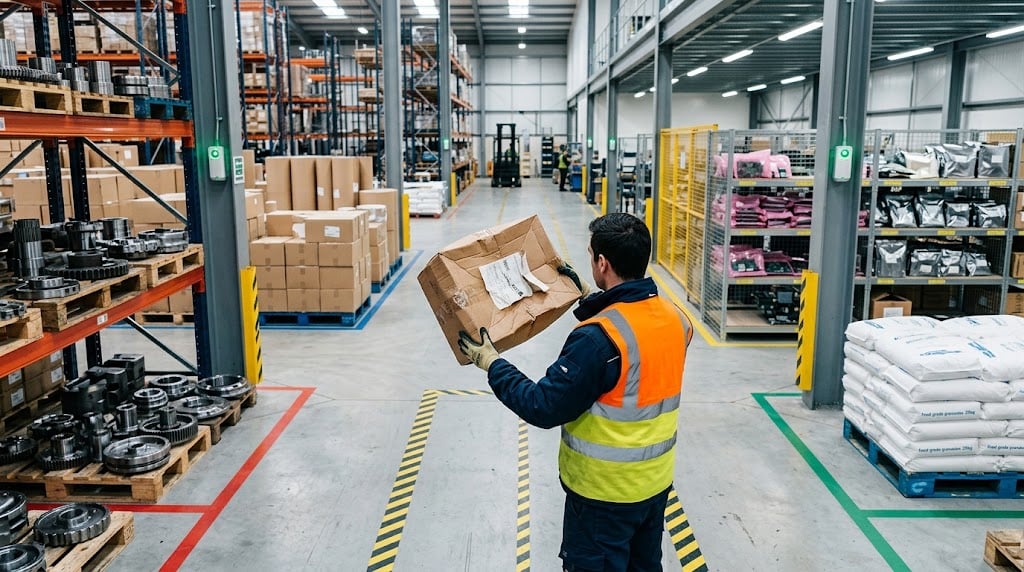
Large open or semi-open manufacturing and warehouse facilities in arid regions are well-suited to direct evaporative cooling. The continuous fresh air introduction at scale keeps worker zones cooler without the capital expenditure that refrigerant cooling at the same square footage would require. In these applications, industrial humidifier systems that combine evaporative cooling with targeted humidity control can address both thermal comfort and material or process humidity requirements simultaneously.Data Center Evaporative Pre-Cooling
Indirect evaporative cooling is used upstream of data center air handling units to reduce inlet air temperature before mechanical cooling takes over. Lowering inlet air temperature reduces the mechanical cooling load, which directly affects energy consumption at facilities where cooling accounts for a substantial fraction of total power draw. Indirect systems are specified for this application precisely because server halls require humidity to be maintained within ASHRAE TC 9.9 recommended humidity envelopes for data centers, with RH typically maintained between 20% and 80%, and introducing moisture-laden air directly into a server hall would violate those limits. F or data center humidification systems, precision evaporative control is not a supplementary feature but a core specification requirement.Industrial Adiabatic Humidification
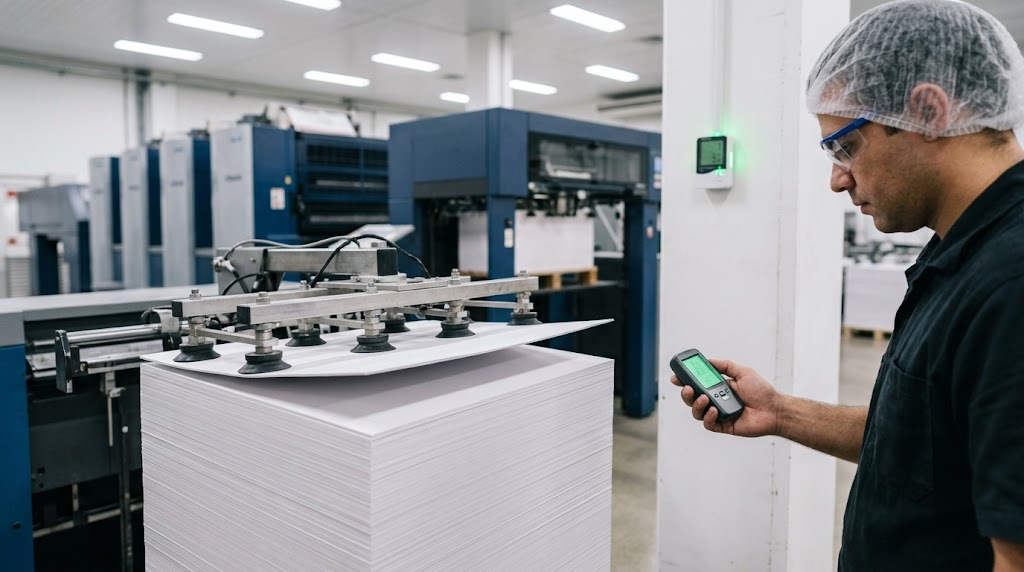
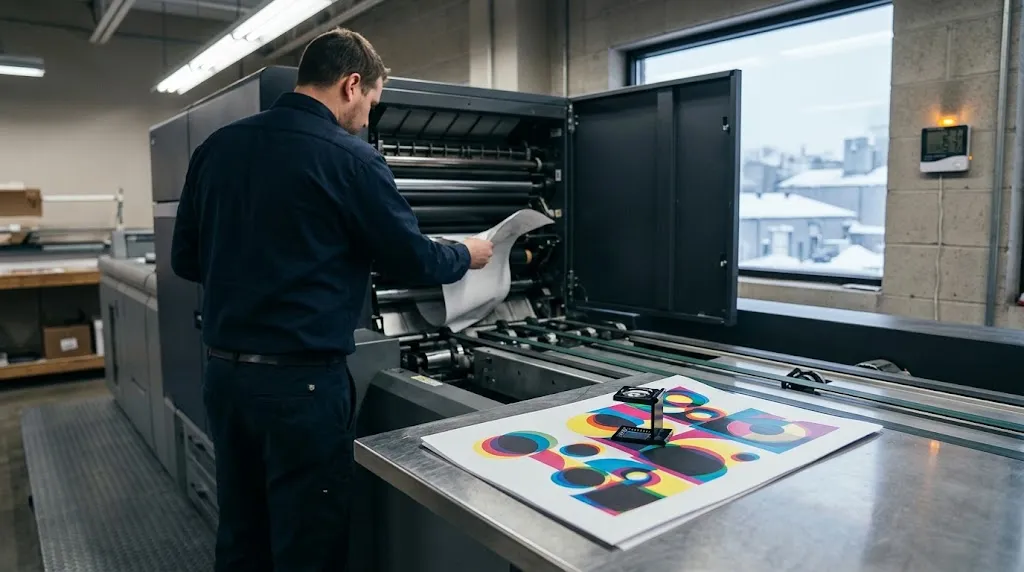
Adiabatic humidification is the precision application of the evaporative cooling principle in controlled indoor environments where the goal shifts from maximum cooling to simultaneous, tightly controlled humidity and temperature management. Adiabatic systems atomize water into fine droplets that evaporate fully into the airstream, adding moisture while producing a proportional adiabatic cooling effect. Electronics manufacturing facilities, pharmaceutical production suites, and printing facilities are common applications where relative humidity tolerances are tight and out-of-spec conditions carry direct production or compliance consequences.Adiabatic Humidification at Industrial Scale: How Smart Fog Applies Evaporative Cooling Principles
Precision adiabatic humidification requires that every water droplet introduced into an airstream evaporate completely before reaching any surface. Incomplete evaporation means surface wetting, equipment exposure, and humidity distribution that varies across the space rather than holding at the target set point. The engineering challenge is producing a droplet population that is consistent enough in size that evaporation rate across the entire droplet grid is predictable and uniform.Equal-Sized Droplet Grid and Self-Evaporation
Smart Fog adiabatic humidifiers use compressed air and water mixed through a proprietary nozzle to produce an equal-sized droplet grid. Each droplet carries a slight electrical charge that prevents re-aggregation: droplets repel each other rather than combining into larger, slower-evaporating formations. Because every droplet evaporates fully before reaching any surface under proper system design, the system simultaneously adds humidity to the air and produces an adiabatic cooling effect proportional to the moisture added. This is the same latent heat of vaporization mechanism described earlier in this article, applied at controlled industrial precision. The non-wetting behavior applies to surfaces under proper system design; direct exposure to the fog stream will wet a surface. This operating principle connects directly to the Smart Fog technology overview and distinguishes Smart Fog from spray-based or traditional misting systems, which do not guarantee complete evaporation before surface contact.Precision Humidity and Temperature Control for Industrial Facilities
The performance outcomes of this approach address the precision and reliability requirements of facilities where humidity fluctuation carries direct operational consequences. Key specifications include:- Humidity range: up to 99% RH maintained with plus or minus 1-2% precision
- Surface wetting: non-wetting under proper system design, with no condensation on equipment, racks, or materials
- Water efficiency: 100% of water introduced evaporates into the air; no water consumption from surface runoff or drainage
- Maintenance interval: no moving parts in the humidification process; maintenance intervals designed to extend up to every two years
- Installation: no certified technician required; Smart Fog designs and delivers the complete engineered system