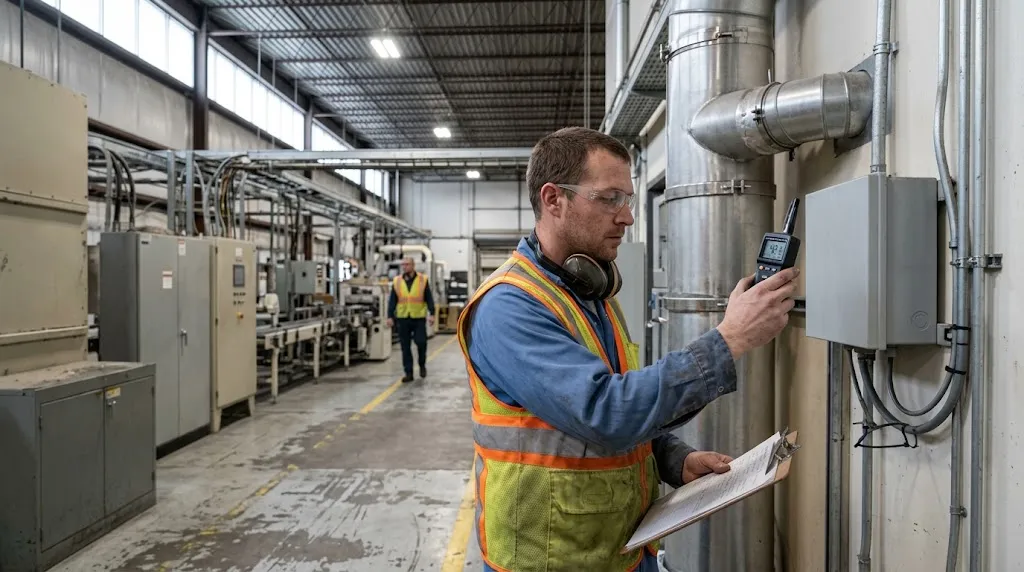
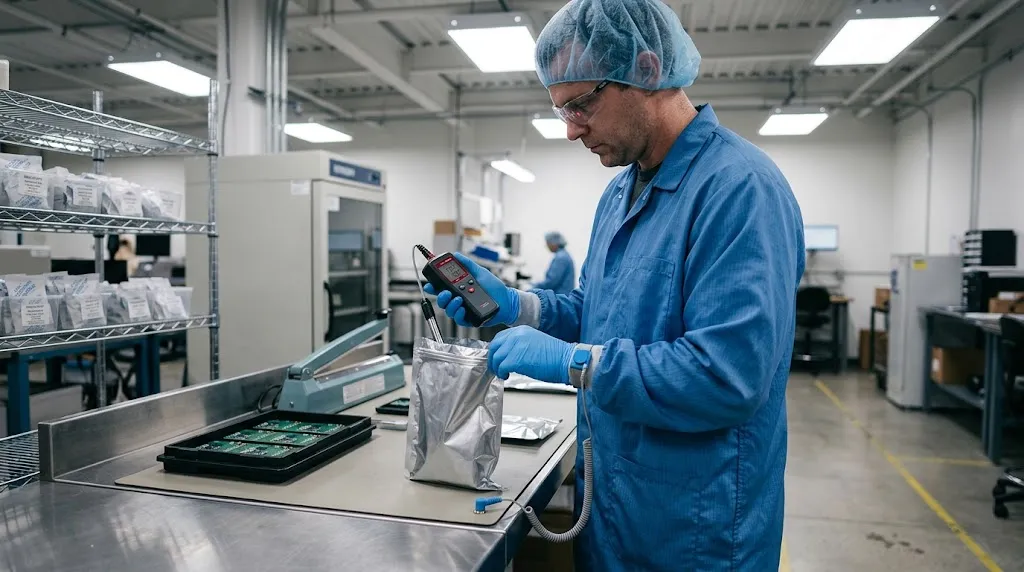
- Environmental stability is essential for aerospace precision manufacturing.
- Relative humidity control directly impacts material performance and electronics reliability.
- Stable humidity levels help reduce static discharge risk in sensitive assembly areas.
- Non-wetting precision humidification supports consistent conditions without condensation.
- Consistency in environmental control protects long-term product reliability.
Why Environmental Stability Is Critical in Aerospace Manufacturing
In aerospace production, precision is not achieved by chance. It is built into the environment. Temperature, airflow, and humidity all influence how materials behave during machining, bonding, curing, assembly, and finishing.Relationship Between Controlled Conditions and Component Precision
Controlled environmental conditions help ensure aerospace components meet strict design tolerances. Temperature changes can cause materials to expand or contract. Humidity changes can lead to moisture absorption or desorption, altering material properties and dimensional stability. This happens particularly in environments where prolonged low moisture conditions influence dimensional accuracy and tolerance control in aerospace components, including the effects of dry air on aerospace component precision. Here’s how environmental variation impacts component precision and performance:- Temperature Variations: Cause material expansion or contraction, leading to dimensional inaccuracies.
- Humidity Fluctuations: Result in moisture absorption or release, causing changes in mechanical and structural properties.
Impact of Environmental Variability on Production Consistency
Environmental instability does not always create immediate failure. Often, it shows up as subtle inconsistency across production runs. Materials may respond differently from one batch to another. Surface finishes may cure unevenly. Electronics may pass testing but degrade prematurely. Common consequences include:- Variability in material behavior
- Increased rework and extended production timelines
- Higher scrap rates
- Reduced confidence in long-term reliability
Environmental Risks in Aerospace Manufacturing Facilities
Aerospace facilities must manage multiple environmental risks simultaneously. Humidity, temperature shifts, airborne particles, and static discharge; all part of the broader environmental risks in aerospace production facilities.Humidity, Temperature, and Airborne Contamination Risks
High humidity can allow materials to absorb moisture, potentially affecting structural integrity or surface bonding. Low humidity, on the other hand, increases static discharge risk in electronics areas. Temperature fluctuations influence dimensional stability and curing performance. Airborne contamination can compromise precision assembly and finishing processes. Below are the environmental factors, their potential risks, and mitigation strategies:- Elevated Humidity: Causes moisture absorption and material degradation, mitigated through precision humidity control and controlled storage.
- Low Humidity: Leads to static buildup and increased ESD risk, managed with stable humidity control.
- Temperature Fluctuations: Result in dimensional instability and electronic stress, reduced through temperature-controlled environments and proper insulation.
- Airborne Contamination: Causes component damage and surface defects, minimized with cleanroom environments and advanced filtration systems.
Static Electricity and Electrostatic Discharge Concerns
Static electricity and electrostatic discharge remain serious risks in aerospace electronics and avionics assembly. Even small discharge events can damage sensitive circuitry or weaken components that later fail under operational stress. Effective ESD risk management includes:- ESD-safe workstations and flooring.
- Protective packaging and grounding protocols.
- Personnel training on static control practices.
- Maintaining stable relative humidity to reduce charge buildup.
How Humidity Affects Aerospace Materials and Components
Aerospace materials, including composites and metals, are sensitive to humidity because moisture can alter mechanical properties and dimensional stability. Even small fluctuations can affect long-term performance.Moisture Sensitivity of Composite Materials and Resin Systems
Composite materials are widely used in aerospace for their strength-to-weight advantages, but they are particularly sensitive to moisture. Absorbed moisture can reduce stiffness and strength, and may affect curing consistency. Resin systems are also vulnerable to humidity changes. Excess moisture can gradually weaken resin adhesion and increase the risk of delamination. These risks are reduced when materials are stored and processed in stable, controlled environments. Non-wetting precision humidification systems help maintain uniform humidity without creating surface condensation. By delivering self-evaporating moisture that fully disperses into the air, they support consistent processing conditions while protecting sensitive materials.Dimensional Stability in Metal and Polymer Components
Humidity also influences the dimensional stability of metal and polymer components. Changes in relative humidity can cause expansion, contraction, or surface reactions that affect precision assembly. Certain polymers may absorb moisture and swell, altering mechanical behavior. Some metals may face increased corrosion risk in persistently high-humidity environments. Here are the effects of high humidity on different materials and their mitigation strategies:- Composite Materials: Causes moisture absorption and reduced mechanical properties, mitigated through controlled storage and stable humidity management.
- Polymer Components: Leads to dimensional changes and mechanical variation, managed with drying processes and humidity control during processing.
- Metal Components: High humidity results in corrosion and surface degradation, reduced through protective coatings and controlled storage conditions.
Role of Environmental Conditions in Aerospace Electronics and Avionics
Controlled environments are essential for manufacturing reliable aerospace electronics and avionics. These systems require stable temperature and humidity to prevent performance degradation and early failure.Static and Moisture Risks in Assembly Areas
Low humidity increases the risk of static electricity buildup and its broader static electricity impact on sensitive systems, which can result in electrostatic discharge and damage delicate circuitry. Excess humidity can contribute to corrosion or short circuits. Maintaining stable relative humidity is one of the most effective ways to reduce electrostatic discharge risk in electronics assembly areas. Facilities typically implement:- ESD-safe workstations and flooring
- Protective packaging and grounding procedures
- Stable humidity control systems
- Air filtration to reduce airborne contamination
Environmental Requirements for Sensitive Electronic Systems
Sensitive electronic systems used in aerospace applications have specific environmental requirements to ensure their reliability and performance. Sensitive aerospace electronic systems require:- Controlled temperature ranges
- Stable relative humidity levels
- Protection from electrostatic discharge
- Clean, filtered air
Temperature, Airflow, and Humidity Interdependence in Production
Temperature, airflow, and humidity are closely linked in aerospace manufacturing, and relying solely on thermal regulation without balanced moisture management demonstrates why temperature control alone fails in aerospace facilities. A change in one directly affects the others, influencing material behavior, curing performance, and overall component reliability.Environmental Stability Across Production Zones
Different production zones operate under distinct environmental needs. Assembly areas require stable temperature and relative humidity to prevent moisture-related material changes and to support dimensional accuracy. These conditions must operate within clearly defined bands aligned with ideal humidity levels for aerospace manufacturing facilities. Cleanrooms demand tight control of airborne contamination along with consistent humidity to reduce defect risk. Surface finishing zones depend on controlled temperature and humidity to maintain coating consistency and curing performance. Achieving stability across these areas requires coordinated control of temperature, airflow, and humidity so that one variable does not unintentionally disrupt another.Effects of Airflow Design on Moisture Distribution
Airflow design directly influences how moisture is distributed throughout a facility. Even with proper humidity levels, poor airflow can create localized pockets of moisture or dry zones. Balanced airflow supports even humidity distribution and reduces the likelihood of condensation or uneven material response. Below is how airflow design impacts moisture distribution and production outcomes:- Laminar Flow: Promotes uniform moisture distribution, helping reduce humidity-related defects in production.
- Turbulent Flow: Creates uneven moisture zones, increasing the risk of defects and rework.
Environmental Control in Aerospace Surface Finishing Processes
Surface finishing quality depends heavily on environmental control. Coating, painting, and anodizing processes are sensitive to both temperature and humidity. Stable relative humidity, typically maintained within a controlled operating range, supports predictable adhesion and curing behavior.Influence of Humidity on Coating Adhesion and Drying
Humidity directly affects how coatings bond and cure. Elevated humidity can slow drying times and reduce adhesion strength, while unstable conditions may lead to inconsistent film formation. Excess moisture can also contribute to surface condensation, resulting in visible defects such as spotting or uneven texture. This is particularly critical in aerospace manufacturing environments where uniformity and long-term durability are required. Maintaining stable, controlled humidity is essential to supporting consistent coating performance. Advanced non-wetting humidification technologies are designed to regulate relative humidity evenly throughout a space without introducing surface moisture when properly engineered, helping protect both coating quality and sensitive components.Surface Finish Variability Due to Environmental Instability
Fluctuations in temperature and humidity can cause surface finish variability, affecting appearance, texture, and long-term durability. To reduce this risk, aerospace manufacturers maintain stable temperature and humidity levels while ensuring proper airflow and filtration. When environmental conditions remain consistent, surface finishes are more uniform, defects are reduced, and overall component performance meets the strict standards required in aerospace manufacturing.Cleanroom and Controlled Environment Requirements
The aerospace industry depends on controlled environments to protect manufacturing precision. Cleanrooms and controlled spaces are designed to minimize contamination and maintain consistent temperature and humidity.Environmental Needs for High-Precision Assembly
High-precision assembly areas require strict environmental control to prevent contamination and protect dimensional accuracy. This includes maintaining stable cleanliness levels, temperature, and relative humidity, typically within a controlled operating range. Key environmental controls include:- Air filtration systems to reduce particulate contamination.
- Temperature control systems to maintain consistency.
- Precision humidity control systems to prevent moisture-related issues and reduce static buildup.
Zoned Environmental Control in Manufacturing Facilities
Zoned environmental control divides manufacturing facilities into dedicated areas, each maintained at conditions appropriate for the processes performed within them. Below are the environmental conditions and processes associated with each operational zone:- Cleanroom: High cleanliness with controlled temperature and humidity, used for high-precision assembly and component production.
- Assembly Area: Moderate cleanliness with controlled temperature and stable humidity, used for component assembly and system integration.
- Storage Area: Controlled temperature and humidity conditions, used for component storage and material handling.
Operational Risks of Poor Environmental Control
When environmental control is inconsistent, operational risk increases. Humidity, temperature shifts, and airborne contamination directly influence component quality and long-term reliability. Environmental instability can lead to material degradation, surface variability, or electronic stress, all of which affect production outcomes.Rework, Production Delays, and Quality Failures
Poor environmental control can result in defects that require rework or cause production delays. High humidity may allow moisture absorption in sensitive materials, while low humidity increases static electricity risk.- Moisture absorption in composites can contribute to delamination and reduced structural integrity.
- Static buildup can damage sensitive electronic components.
- Fluctuating temperature and humidity can cause surface finishing variability.
Long-Term Reliability and Safety Implications
Environmental conditions during manufacturing influence the long-term performance and safety of aerospace components. Exposure to unstable conditions can reduce durability or contribute to premature failure. Here are the environmental factors and their impacts on components:- High Humidity: Causes moisture absorption and increases corrosion risk in components.
- Low Humidity: Leads to static buildup and increased material brittleness.
- Temperature Fluctuations: Result in expansion, contraction, and internal stress that can affect component integrity.