

Surface temperature must be at least 5°F above the dew point temperature before any coating is applied. That requirement appears in product data sheets, project specifications, and inspection protocols across industrial and protective coatings work, and violating it produces coating failures that look nothing like a humidity problem.
This article explains why the 5°F threshold exists, what physically happens to a surface as it approaches dew point temperature, how to measure compliance in the field, and why substrate type and enclosed environments change the risk calculation entirely.
Key Takeaways
- Surface temperature must be at least 5°F (approximately 3°C) above the ambient dew point temperature before any coating is applied, as specified in SSPC-PA 1 for industrial protective coatings.
- A surface can appear and feel completely dry while carrying enough surface moisture to prevent proper paint adhesion, because moisture condensation begins forming at the exact point where surface temperature equals dew point temperature.
- Measuring compliance requires two separate readings; an IR or contact thermometer for the surface and a dew point meter or psychrometric calculator for the air. Ambient relative humidity alone is not sufficient.
- Steel substrates present the highest dew point risk because metal conducts heat rapidly, causing surface temperature to drop faster than ambient air temperature in shaded areas or during cooling periods.
- In enclosed painting environments, humidity stratification means a single ambient reading taken at center height can differ significantly from conditions at the coated surface level.
- Relative humidity (RH) at or above 85% is a recognized secondary threshold in protective coatings work, and both the dew point margin and the RH ceiling must be satisfied before application proceeds.
What the +5°F Rule Actually Means
Dew point temperature is the temperature at which air becomes fully saturated and condensation begins to form on any surface at or below that temperature. When surface temperature equals the dew point, invisible moisture condensation forms on that surface even if it looks clean and dry to the eye. Paint applied over that moisture film fails to bond to the substrate because the adhesion chemistry requires direct contact between the coating and the substrate surface.
The 5°F margin exists as a buffer against that failure mode. Surface temperature can shift by small increments due to shade, wind exposure, or substrate conductivity, and relying on exact equality between surface temperature and dew point provides no safety margin against those fluctuations. The buffer is engineered into the rule precisely because field conditions are not static.
Why a Dry-Looking Surface Can Still Fail Paint Adhesion
Condensation at the dew point threshold is a film-level phenomenon, not visible droplets. The surface feels dry and passes a visual inspection while carrying enough bound surface moisture to disrupt the adhesion chemistry between coating and substrate. This is the mechanism behind coating failures on jobs where ambient conditions appeared acceptable: the applicator read air temperature and relative humidity but did not measure surface temperature independently.
Blistering and peeling that develops weeks after application often traces back to this condition. The coating cured but never bonded properly, and the failure reveals itself only after the film has been stressed by temperature cycling or mechanical load.
Where the 5°F Number Comes From
The 5°F margin is specified in SSPC-PA 1, the SSPC painting standard governing application of coating for industrial and protective coatings. Internationally, ISO 8502-4 governs measurement of substrate conditions before coating and expresses the equivalent margin as 3°C, approximately 5.4°F. When project specifications or inspection standards apply, those take precedence over paint manufacturer guidelines published in a product data sheet. Residential TDS sheets may carry different guidance, and applicators working under industrial or marine project specifications should always confirm which standard governs the work.
How to Measure Dew Point and Surface Temperature in the Field
No competitor article addresses how to actually take these measurements on site. This is the most consequential gap in available guidance, because the 5°F rule is only as reliable as the readings used to evaluate it. Three primary humidity measurement tools are used in coatings inspection, each with a defined role and a specific limitation.
- Sling psychrometer: Measures wet bulb temperature and dry bulb temperature. Used with psychrometric tables or a psychrometric calculator to derive dew point temperature. Governed by ASTM E337, the standard method for measuring humidity with a psychrometer. Its limitation is user technique: improper whirling speed or inadequate equilibration time introduces error.
- Electronic hygrometer with dew point output: Measures ambient temperature and relative humidity electronically and calculates dew point directly. Faster and less technique-dependent than a sling psychrometer. Its limitation is calibration drift; the sensor requires periodic verification against a known reference.
- Dedicated dew point meter: Instruments such as the Elcometer 319 measure dew point temperature directly and display the calculated margin between dew point and surface temperature when paired with a surface probe. These are the preferred tool for inspection work because they reduce calculation errors and provide a direct compliance reading.
Surface temperature is measured separately using an IR thermometer or contact thermometer placed directly on the substrate being coated.
Readings should be taken at or near the surface level of the substrate, not at head height in open air. Shaded and sun-exposed surfaces on the same structure can read differently. On large steel structures, inspectors take readings at multiple locations because conditions vary across the face of the substrate. Conditions also change across a workday, so readings taken at 8 a.m. are not valid for work performed at 2 p.m. when temperature is rising and RH is shifting.
Calculating the 5°F Margin Step by Step
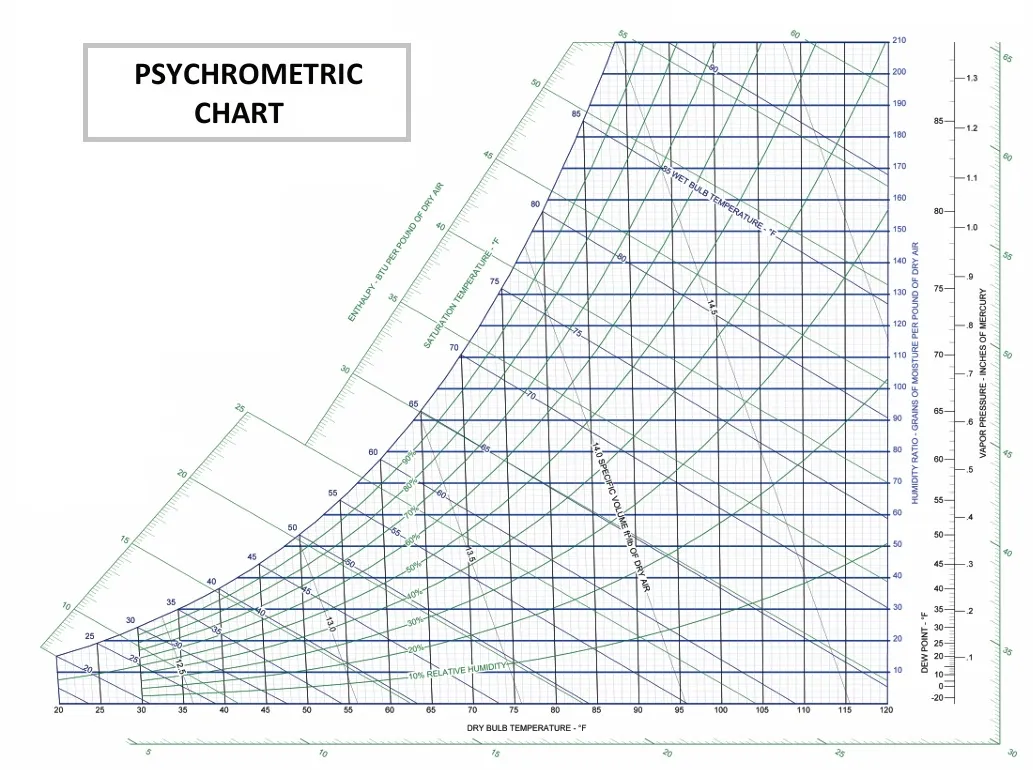
A concrete worked example: ambient temperature is 70°F, relative humidity is 65%, and the calculated dew point temperature is 57°F. Minimum required surface temperature is 57°F plus 5°F, equaling 62°F. A surface reading of 61°F fails the rule even though ambient conditions look moderate.
Dew point meters and psychrometric calculators perform this calculation automatically, but applicators who understand the relationship can evaluate borderline conditions with judgment rather than treating any single number as an unconditional pass. For a quick site-side estimate, the dew point calculator provides the same calculation without a dedicated meter.
How Relative Humidity Alone Is Not Enough
High relative humidity does not by itself confirm a dew point violation, and a moderate RH reading does not confirm safety. A facility at 70% RH with a warm substrate may be well within the 5°F margin. The same 70% RH reading with a cold steel substrate could represent a direct violation. Understanding dew point and humidity as separate variables is fundamental to applying the rule correctly. Both variables must be measured independently on every job.
Substrates That Are Most Vulnerable to Dew Point Violations
The 5°F rule applies to a real surface temperature reading, not an estimate based on ambient air temperature. That distinction matters because different substrate materials respond to temperature changes at different rates, and the gap between ambient temperature and actual surface temperature can be significant depending on material, orientation, and time of day.
Why Steel Demands the Closest Attention
Metal conducts heat efficiently in both directions, which means a steel substrate in shade at dawn can be at or below ambient air temperature due to radiative cooling overnight. The ambient thermometer reads a higher temperature while the steel substrate is at or near dew point. This is when coating failure occurs invisibly: the applicator checks conditions, ambient readings appear acceptable, and the surface is still non-compliant.
On humidity for spray painting applications involving steel, never assume that air temperature reflects surface temperature. Protective coatings inspectors working under NACE SP0188 take surface readings at multiple points on large steel structures for exactly this reason.
Wood and masonry conduct heat more slowly, which means surface temperature changes more gradually. These substrates hold temperature longer and present a lower risk of rapid dew point violations, though they are not immune. Sun-heated concrete may run significantly warmer than ambient air and creates a different set of coating problems related to solvent evaporation and cure rate rather than surface moisture.
Timing Matters: Why Painting While Temperatures Rise Is Safer
The direction of temperature change matters as much as the current reading. When ambient temperature is rising, surface temperature also rises, moving away from dew point. When ambient temperature is falling after a warm afternoon, surface temperature on a steel substrate can drop toward dew point faster than the ambient reading suggests.
Beginning coating work while temperatures are rising and surfaces are warming reduces the risk of encountering dew point conditions mid-application. Starting in declining temperature conditions on a steel substrate creates the highest risk of the shift occurring after work has begun but before the coating has cured.
Dew Point Risk in Enclosed Painting Environments
All three commonly referenced treatments of this rule frame dew point risk as a weather problem: morning conditions, direct sun, outdoor scheduling. That framing does not apply to the environments where industrial applicators most often work. Tank interiors, structural steel inside buildings under construction, pipe interiors, and partially enclosed shipyard sections do not benefit from changing outdoor weather, and the humidity behavior in these spaces is more complex than a single ambient reading can capture.
How Humidity Stratification Creates Undetected Risk
Warm, humid air rises and cooler air settles near floors and cold surfaces. In enclosed spaces with limited air movement, this creates zones where surface temperatures and dew point margins differ significantly from the center-of-room ambient reading. An applicator working from a single ambient measurement in a poorly ventilated enclosed space may be applying coatings over surfaces that are at or near dew point, particularly near cold steel floors or corners.
Ventilation requirements under OSHA 1910.94, the standard governing ventilation for spray finishing operations and NFPA 33 affect how air circulates in enclosed spray environments, which directly affects where humidity concentrates. Multiple readings at different heights and positions relative to the substrate are required in these environments. Understanding the common environmental causes of paint booth failures that arise from inadequate environmental monitoring helps applicators design a more complete measurement protocol.
When Controlling the Environment Is the Only Reliable Option
In high-value industrial coating projects performed in enclosed facilities, the solution is not scheduling around weather. It is controlling the environment directly. Maintaining stable relative humidity at a defined set point inside a painting facility, booth, or building eliminates the dew point variable that outdoor and semi-enclosed applicators must manage through scheduling and repeated measurement.
This is the operating principle behind humidity control in industrial paint booth environments. When the enclosure holds a stable, known RH condition, the dew point temperature is predictable, and surface temperature compliance can be verified once rather than re-checked continuously through a shifting workday.
Humidity Control in Industrial Painting Environments
In enclosed industrial painting facilities, dew point compliance is an environmental control problem, not a scheduling problem. The outdoor applicator adjusts timing based on weather conditions and surface readings. The industrial facility operator needs a system that holds a defined humidity condition continuously, so that the dew point margin is a known, stable quantity rather than a variable that must be managed manually throughout every shift.
Precision Humidity Management for Paint Booth Operations
Precision adiabatic humidification that produces an equal-sized droplet grid allows facility operators to define and hold a humidity condition at a controlled set point. This approach, applied in ideal humidity levels for industrial paint booths operations, maintains RH within plus or minus 1 to 2 percent of the set point continuously. Holding RH below the 85% upper threshold while keeping ambient conditions stable enough that surface temperatures remain above the dew point margin eliminates the scheduling uncertainty that outdoor applicators manage manually.
Smart Fog systems operate on this principle, maintaining stable RH without moving parts in the humidification process. Key performance characteristics relevant to industrial painting conditions:
- Set point precision: RH maintained within plus or minus 1 to 2% of the defined set point, allowing operators to verify compliance without continuous manual monitoring.
- Continuous operation: No moving parts in the humidification process means the system holds conditions through an entire shift without interruption.
- Maintenance interval: Systems are designed for maintenance intervals extending to every two years, reducing operational interruption in production environments.
If dry air impacting coating adhesion is also a concern, the same precision control that keeps RH below the dew point risk threshold can be used to maintain RH above the level where static buildup, excessive solvent evaporation, and surface drying become problems.
Non-Wetting Operation in Coating-Sensitive Environments
Any humidification system that deposits moisture on surfaces defeats its own purpose in a painting environment. The primary failure mode being managed is surface moisture, and introducing it through the humidity control system would invalidate the dew point compliance the system is meant to support.
Smart Fog systems use self-evaporating droplets that absorb into the air before reaching surfaces under proper system design. This allows RH to be raised or maintained without depositing moisture on the substrate being coated, the equipment in the booth, or the surrounding structure. The humidity control systems that govern this behavior are engineered specifically for environments where surface moisture is both the risk being managed and the failure mode being prevented.
One caveat applies: direct exposure to the fog stream will wet a surface. Proper system design is required to maintain non-wetting performance across the coated environment. Smart Fog designs the full system, not a component kit, to ensure those conditions are met.
Final Thoughts
The +5°F surface rule governs a physical threshold, not an administrative preference. Moisture condensation forms at the exact point where surface temperature meets dew point temperature, and paint adhesion fails on surfaces carrying that invisible film. The 5°F margin accounts for the fact that surface temperature and dew point are both variables that shift with substrate type, shade, wind, time of day, and enclosure conditions.
For field applicators, the rule requires two independent measurements, not an ambient RH reading alone. For industrial facilities conducting coating operations in enclosed environments, the more reliable approach is controlling the environment to a stable, known condition rather than measuring and re-measuring through a shifting workday. Understanding what is relative humidity as a dynamic variable, not a fixed ambient condition, is the foundation of both approaches.
Facilities that conduct coating operations in enclosed environments and need stable, verifiable humidity conditions to satisfy dew point compliance requirements should contact Smart Fog engineers to discuss precision humidity management for paint booth and industrial coating environments.
FAQ
What is the dew point rule for painting and where does it come from?
The dew point rule for painting requires that surface temperature be at least 5°F (approximately 3°C) above the ambient dew point temperature before any coating is applied. The rule is specified in SSPC-PA 1, the industry standard governing industrial protective coatings application in the United States. ISO 8502-4 governs equivalent substrate condition measurement in international contexts. A project specification or inspection protocol that cites either standard governs the work; a manufacturer’s product data sheet is not the final word once one of those documents is in play.
What is the minimum surface temperature required before applying paint?
The minimum surface temperature required before applying paint is at least 5°F above the calculated dew point temperature. If the dew point temperature is 57°F, surface temperature must measure at least 62°F before application proceeds. This threshold applies regardless of how dry the surface appears or what the ambient air temperature reads. Surface temperature must be measured directly on the substrate, not estimated from ambient conditions.
How do you calculate whether surface temperature is safe for coating application?
To calculate dew point compliance, measure ambient temperature and relative humidity with a dew point meter, electronic hygrometer, or sling psychrometer, then use a psychrometric calculator to derive the dew point temperature. Separately measure surface temperature with an IR thermometer or contact probe placed directly on the substrate. Subtract the dew point temperature from the surface temperature. If the result is 5°F or greater, the surface is within compliance. If the margin is less than 5°F, coating application must be delayed.
What happens to paint adhesion when coatings are applied near the dew point?
When coatings are applied at or near the dew point threshold, invisible moisture condensation forms on the substrate surface. That moisture film prevents the coating from bonding directly to the substrate material, disrupting the adhesion chemistry the coating requires. The result is coating failure that may not appear immediately. Blistering and peeling often develop weeks or months after application as the weakly bonded film is stressed by temperature cycling, mechanical load, or environmental exposure.
What tools do you use to measure dew point and surface temperature on a job site?
The three primary humidity measurement tools for coatings inspection are a sling psychrometer (wet bulb and dry bulb thermometer pair used with psychrometric tables), an electronic hygrometer with dew point output, and a dedicated dew point meter such as the Elcometer 319. Surface temperature itself is captured independently, with an IR thermometer or a contact probe held directly against the substrate. Readings should be taken at the surface level of the substrate being coated, not at head height in open air, and repeated as conditions change through the workday.
Why does steel present a higher dew point risk than wood or masonry?
Steel conducts heat efficiently in both directions, which means a steel substrate can lose heat faster than the surrounding air during cooling periods. A steel structure in shade at dawn may be at or below the dew point temperature while ambient air reads several degrees higher. Wood and masonry conduct heat more slowly, so surface temperature changes more gradually and the gap between ambient temperature and surface temperature is typically smaller. On steel substrates, surface temperature must always be measured directly and never estimated from ambient air readings.
What is the maximum relative humidity for painting, and is it the same as the dew point rule?
The maximum relative humidity threshold commonly cited for protective coatings work is 85% RH. This threshold is independent of the dew point margin calculation. Both requirements must be satisfied before application proceeds: surface temperature must be at least 5°F above the dew point temperature, and ambient relative humidity must be below 85%. A surface that passes the dew point margin check at 84% RH still meets both thresholds. A surface at 60% RH with a cold steel substrate that falls within 5°F of dew point fails the dew point rule despite the low RH reading.
How do enclosed painting environments change the dew point calculation compared to outdoor conditions?
Enclosed painting environments introduce humidity stratification that a single ambient reading cannot capture. Warm, humid air rises while cooler air settles near floors and cold surfaces, creating zones where surface temperatures and dew point margins differ from center-of-room readings. Ventilation patterns required under OSHA 1910.94 and NFPA 33 for spray application environments also affect where humidity concentrates in the space. That variability is why a single reading isn’t enough indoors: enclosed work calls for checking multiple heights and positions across the substrate rather than one spot-check. Facilities conducting regular coating operations in enclosed spaces often control enclosure humidity directly to a stable set point, eliminating the need for continuous manual re-measurement as conditions shift.