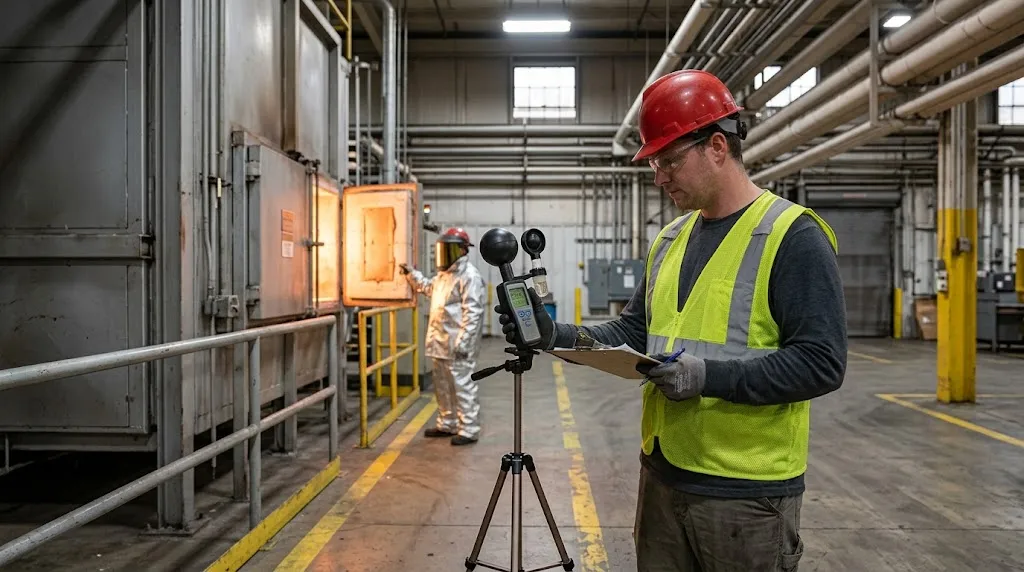
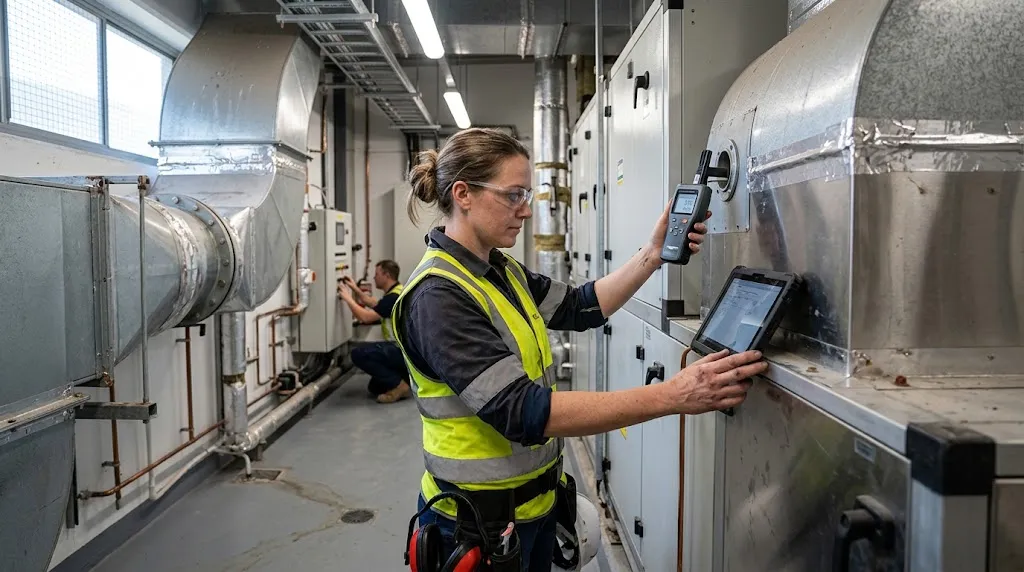
- Stable environmental conditions are essential for high-quality finishes.
- Precision humidity control supports consistent adhesion and drying.
- Booth size, airflow, and coating type influence system selection.
- High exhaust environments require engineered humidity stability.
- Proper system design improves productivity and finish consistency.
Why Paint Booth Environments Require Precision Humidity Control
Paint booth environments operate under high airflow conditions that can rapidly disrupt moisture stability. Without precision control, relative humidity can fluctuate, leading to variability in coating behavior. Precision humidity control ensures that moisture levels remain consistent across the entire booth, even under continuous exhaust and airflow. This stability reduces coating variability and supports repeatable finish quality.Impact of High Airflow on Moisture Stability
High airflow rates can quickly strip moisture from the booth environment, causing rapid shifts in relative humidity. These fluctuations are one of the key environmental conditions affecting coatings, as they influence viscosity, curing consistency, and static behavior during application. Common impacts of unstable humidity in high-airflow booths include:- Variations in coating adhesion
- Inconsistent drying performance
- Increased finish defects
Risks of Inconsistent Humidity in Coating Applications
Fluctuating humidity introduces variability into the coating process. When moisture levels change unexpectedly, coating performance becomes less predictable, and the impact of low moisture is often seen in adhesion issues, uneven drying, and finish defects. Below is how inconsistent humidity affects paint quality:- Poor adhesion caused by unstable relative humidity, resulting in reduced coating durability.
- Uneven drying caused by rapid moisture fluctuations, leading to surface irregularities.
- Finish defects caused by environmental instability, contributing to rework, scrap, and productivity loss.
Evaluating Humidity Control Systems for Paint Booth Conditions
Selecting a humidity control system requires evaluating how well it performs under demanding paint booth conditions. The system must maintain stable relative humidity despite high exhaust rates and changing production loads. Performance is measured by stability, response speed, and distribution uniformity.Ability to Maintain Stable RH in High Exhaust Environments
In high exhaust environments, maintaining consistent relative humidity requires a system engineered for continuous airflow conditions. The solution must distribute humidity uniformly without creating localized wetting or condensation. Achieving optimal paint booth humidity under these conditions is essential to protect coating adhesion, drying consistency, and electrostatic performance. Key evaluation factors include:- Ability to maintain stable RH under constant airflow
- Uniform distribution throughout the booth
- Precision environmental monitoring and control
Response Time to Production Load Changes
Production loads in industrial paint booths often fluctuate throughout shifts. A humidity control system must respond quickly to these changes to maintain consistent environmental conditions. Important considerations include:- Real-time environmental monitoring
- Automated response capability
- Rapid stabilization following load shifts
Engineered for High-Exhaust Paint Booths
Smart Fog is designed to maintain stable relative humidity in continuous high-airflow environments like paint booths. By producing self-evaporating droplets that evaporate before contacting surfaces under proper system design, Smart Fog delivers uniform, non-wetting humidity control that supports stable booth performance under demanding exhaust conditions.
Comparing Humidification Technologies in Paint Booth Applications
Selecting the right humidification technology is critical for maintaining stable environmental conditions in paint booth environments. Different systems vary in response time, energy efficiency, distribution uniformity, and suitability for high-airflow conditions. The appropriate choice depends on booth size, exhaust rates, coating type, and the level of precision required for finish quality.Steam-Based Humidification Systems
Steam systems generate vapor by heating water and releasing it into the air. They are capable of responding quickly to humidity demand changes and are commonly used in industrial environments. However, steam systems typically require significant energy input and supporting infrastructure. In high-airflow paint booths, steam may struggle to maintain uniform distribution without localized temperature shifts. Steam can be effective in some applications but may not always provide the most energy-efficient or airflow-compatible solution for large industrial booths.Ultrasonic Humidification Systems
Ultrasonic systems use high-frequency vibration to disperse moisture into the air. They are known for energy efficiency and fine humidity control in smaller or enclosed environments. However, ultrasonic systems may require highly treated water and can be sensitive to airflow patterns. In large paint booths with continuous exhaust, maintaining uniform humidity stability can be challenging. Ultrasonic solutions are often better suited for smaller zones where airflow rates are moderate.Adiabatic Humidification Approaches
Adiabatic systems use compressed air and water through engineered nozzles to generate self-evaporating droplets that disperse evenly into the air. When properly engineered, these droplets evaporate before reaching surfaces, increasing humidity without creating localized wetting or condensation. This evaporation behavior is especially important in high-airflow paint booth environments, where continuous exhaust can quickly destabilize moisture levels and challenge environmental control. Key advantages include:- Rapid response to airflow changes
- Uniform humidity distribution
- Evaporation before surface contact under proper system design
- Energy-efficient operation compared to steam systems
Built for Continuous High-Airflow Operation
Smart Fog applies adiabatic humidification through engineered nozzle technology that sustains stable relative humidity even under constant exhaust conditions. By dispersing evenly and evaporating before surface contact under proper system design, it maintains environmental stability without introducing surface moisture in demanding paint booth environments.
Performance Considerations for Finish Quality
Humidity control must support finish performance, not compromise it. The system should maintain environmental stability without introducing condensation, localized saturation, or uneven distribution. Two critical performance factors are non-wetting operation and uniform moisture distribution.Maintaining Conditions Without Surface Wetting
Surface wetting can lead to defects, extended drying times, and coating inconsistencies. A properly engineered humidity control system must maintain stable relative humidity without allowing visible moisture accumulation on floors, walls, equipment, or substrates. Non-wetting performance refers to surface conditions during normal operation. Environmental humidity should increase without condensation or corrosion risk. Precision control and proper distribution are essential to achieving this balance.Uniform Moisture Distribution Across Booth Zones
Large paint booths often contain multiple airflow zones. If humidity distribution is uneven, coating performance can vary between sections of the booth. Uniform moisture distribution ensures:- Consistent drying behavior
- Stable electrostatic performance
- Predictable coating adhesion
- Reduced finish variability
Operating Cost and Maintenance Considerations
Selecting a humidity control system requires evaluating long-term operating cost, energy efficiency, and maintenance requirements, not just initial installation expense. Total cost of ownership includes energy consumption, service intervals, system reliability, and potential production downtime. In high-production paint booth environments, reliability and stability directly influence efficiency and finish quality.Energy Consumption Across System Types
Energy demand varies significantly across humidification technologies, with heat-based systems typically consuming more power than adiabatic solutions. Here’s a general comparison of system performance characteristics:- Steam-based systems are associated with higher energy consumption and are infrastructure-intensive from an operational efficiency standpoint.
- Ultrasonic systems have moderate energy demand and are sensitive to airflow and water quality.
- Adiabatic systems require lower energy demand and are well-suited for high-airflow environments.
Maintenance Requirements and Downtime Risk
Maintenance frequency and system complexity directly affect downtime risk. Systems that require frequent component replacement or intensive servicing can interrupt production schedules. Key maintenance considerations include:- Accessibility of components for routine service
- Frequency of cleaning or inspection requirements
- Availability of technical support and spare parts
- System reliability under continuous industrial use
Matching System Type to Booth Requirements
No single humidity control solution fits every paint booth configuration. System selection must align with booth size, airflow intensity, coating sensitivity, and production volume. Proper matching ensures environmental stability without over-sizing or under-performing.Booth Size, Air Changes, and Production Volume
Large paint booths with high air exchange rates require systems capable of maintaining stable relative humidity despite continuous exhaust. High production volumes demand consistent environmental performance across shifts. Important factors include:- Booth volume and airflow rate
- Frequency of air changes
- Production throughput and load variability
- Required environmental response speed
Coating Type and Finish Sensitivity
Different coatings respond differently to humidity fluctuations. Some finishes are highly sensitive to environmental instability, requiring precise humidity control to maintain adhesion, drying consistency, and surface quality. Selection considerations include:- Coating formulation sensitivity
- Required finish tolerance levels
- Adhesion and curing characteristics
- Acceptable variability range
Integration With Existing Booth Infrastructure
A humidity control system must integrate seamlessly with existing paint booth infrastructure to maintain stable environmental performance. Proper integration ensures that airflow, temperature regulation, and exhaust systems operate in coordination rather than in conflict. Successful integration supports consistent coating conditions without disrupting established booth performance.Compatibility With HVAC and Exhaust Systems
Humidity control systems must function in harmony with HVAC and exhaust systems, particularly in high-airflow paint booth environments. Poor coordination can create turbulence, uneven distribution, or unstable environmental conditions. Key compatibility considerations include:- Matching airflow rates to maintain balanced distribution
- Ensuring control system interoperability
- Coordinating humidity stability with temperature regulation
Retrofit Considerations for Existing Facilities
Retrofitting an existing paint booth requires careful evaluation to maintain stable humidity control. Key retrofit considerations include:- Infrastructure assessment involving evaluation of HVAC systems, exhaust capacity, and airflow characteristics, with high importance assigned to this review.
- Required modifications to identify mechanical or control upgrades needed for proper system integration, with medium importance.
- Proper system sizing to ensure system capacity aligns with booth volume and airflow rates, also designated as high importance.
Monitoring and Automation Capabilities
Advanced monitoring and automation are essential for maintaining repeatable environmental conditions in industrial paint booths. Precision control reduces variability in coating performance and supports consistent finish quality across production runs. Automation transforms humidity control from manual adjustment to engineered environmental management.Sensors and Environmental Control Systems
High-precision sensors provide continuous measurement of relative humidity, temperature, and airflow behavior. Integrated environmental control systems use this data to maintain stable conditions in real time. Core system capabilities include:- Accurate RH measurement and tracking
- Temperature and airflow monitoring
- Automated environmental adjustments
- Centralized control interfaces for performance oversight
Maintaining Repeatable Conditions Across Production Runs
Consistency across shifts and production cycles is critical for predictable coating performance. Advanced automation allows facilities to replicate optimal environmental conditions without manual recalibration, reinforcing how stable humidity improves coating consistency and finish reliability. Key performance benefits include:- Repeatable finish quality
- Reduced production variability
- Lower rework and material waste
- Improved operational efficiency
Common Mistakes When Selecting Paint Booth Humidity Systems
Selecting the wrong humidity control system can undermine paint quality, increase operating costs, and create ongoing environmental instability. Many performance issues stem not from the coating itself, but from poorly matched environmental control. Two of the most common mistakes are undersizing the system for airflow demands and focusing on equipment type instead of long-term environmental stability.Undersizing for Airflow Demands
High airflow paint booths continuously exchange air, which can rapidly destabilize humidity levels. If a system is undersized relative to exhaust rates and air changes, it will struggle to maintain stable relative humidity under operating conditions. Undersizing can lead to:- Inconsistent humidity across booth zones
- Increased static-related variability
- Uneven drying behavior
- Reduced finish consistency
Prioritizing Equipment Type Over Environmental Stability
Another common mistake is focusing on the technology label rather than performance capability. While system type matters, the primary objective should be maintaining stable, uniform relative humidity across the booth. Environmental stability must take priority over individual equipment features. The selected system should:- Maintain consistent RH under high airflow
- Respond quickly to load changes
- Distribute humidity uniformly
- Support finish-sensitive coatings
How Smart Fog Supports Humidity Stability in Paint Booth Environments
Paint booth environments demand precision environmental control, particularly in finish-sensitive applications. Smart Fog is a non-wetting precision humidification system that produces self-evaporating droplets to deliver stable, uniform humidity control. Its engineered approach maintains consistent relative humidity even in high-airflow, high-exhaust paint booth environments.Supporting Finish-Sensitive Applications Without Surface Wetting
Smart Fog releases self-evaporating droplets that dissipate into the air before reaching surfaces under proper system design. This allows humidity levels to increase without creating condensation or surface moisture accumulation on floors, walls, equipment, or substrates. Non-wetting refers to surface conditions during normal operation. Direct exposure to the fog stream will feel wet, but properly designed systems do not cause environmental wetting or corrosion risk. This stability supports finish-sensitive coatings where environmental precision is critical.Maintaining Consistent Conditions in High Airflow Booths
High-airflow paint booths can rapidly strip moisture from the air, making environmental stability difficult to maintain. Smart Fog is engineered to distribute humidity uniformly throughout the booth, even under continuous exhaust conditions. By maintaining stable relative humidity across production cycles, Smart Fog supports:- Reduced static-related variability
- More predictable transfer behavior
- Consistent finish quality
- Reduced rework and material waste