Enclosed waste processing facilities generate fine airborne particulate during shredding, sorting, compacting, and material transfer operations. Controlling that particulate without introducing surface moisture is a technically constrained engineering challenge:...
Controlled relative humidity (RH) within the range recommended by ASHRAE Standard 55 reduces airborne particulate suspension, suppresses static electricity generation, and limits the dry-air mucosal irritation that drives sick-day frequency in industrial facilities....
Harvested produce loses moisture the moment it leaves the field. Without sufficient relative humidity (RH) in storage, that moisture migrates from produce tissue into the surrounding air, causing measurable weight loss, visible deterioration, and shortened shelf life....
The purchase price of an industrial humidifier is rarely the largest cost a facility will pay. For most operations, the gap between capital cost and total cost of ownership over a five-to-ten-year horizon is substantial, and decisions made on sticker price alone...
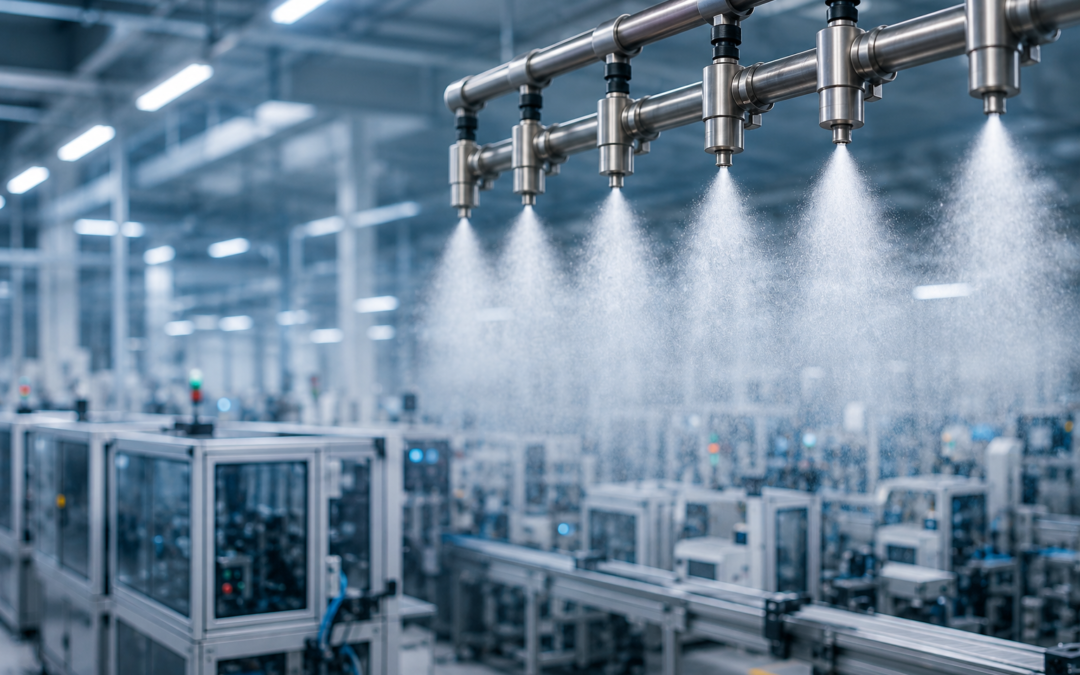
Industrial humidifier technologies differ fundamentally in how they generate and deliver moisture, and that difference determines whether a facility achieves stable, precise humidity control or exposes equipment and materials to surface wetting, excessive maintenance,...
Certain industrial environments require humidity control in zones that cannot be served by fixed or in-duct systems, making mobile industrial humidifiers the operationally correct choice. This article identifies which industries require portable industrial...