

 Made in USA

- ASHRAE Standard 55 recommends RH between 30 and 60 percent for occupied spaces; facilities operating below this range experience increased airborne particulate suspension, higher static discharge frequency, and greater mucosal irritation among workers.
- Nasal and bronchial mucous membranes function as the body's primary filtration layer for airborne particles, and low RH dries these membranes, impairing their ability to trap inhaled contaminants and increasing susceptibility to airborne illness.
- Hygroscopic airborne particles absorb moisture as RH rises within the recommended range, increasing in mass and settling out of the breathing zone more rapidly, which reduces worker inhalation exposure during a shift.
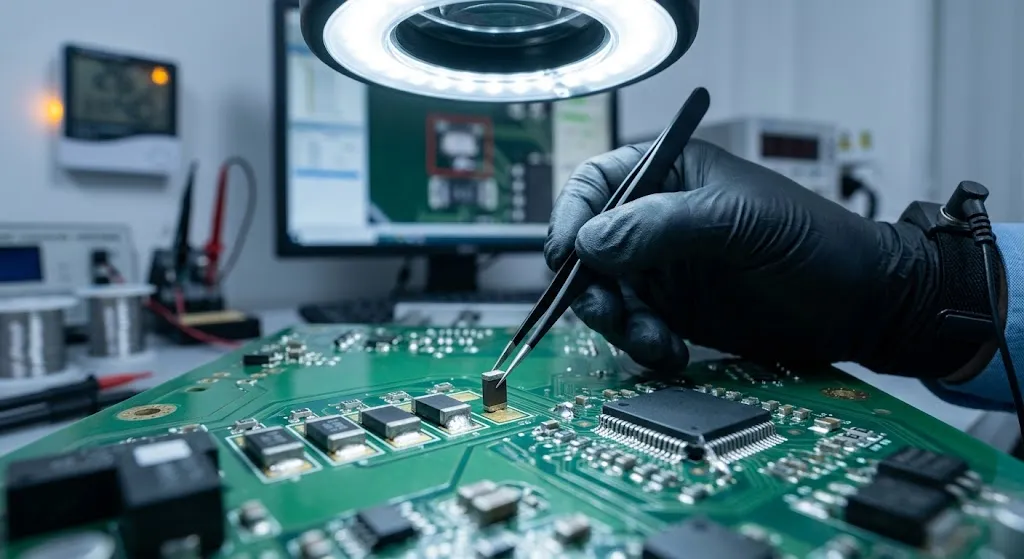
- Static electricity generation increases significantly below 40 percent RH, causing electrostatic discharge (ESD) events that damage sensitive components, interrupt production, and require worker time to investigate and rework.
- Non-wetting precision humidification systems that produce self-evaporating droplets can maintain stable RH in occupied industrial spaces without wetting floors, surfaces, or equipment under proper system design.
- Industrial humidification systems with no moving parts in the humidification process, maintenance intervals up to two years, and plus or minus 1 to 2 percent RH precision are appropriate for continuous 24/7 facility operation without manual intervention.
What Relative Humidity Has to Do with Worker Health in Industrial Facilities
ASHRAE Standard 55 sets the RH range for occupied spaces at 30 to 60 percent. Below 30 percent, three mechanisms converge to reduce worker health outcomes and output.The ASHRAE Humidity Range for Occupied Industrial Spaces
Proper humidity in the 30 to 60 percent range supports both occupant comfort and stable airborne particle behavior. When humidity levels fall below this floor, particles remain lighter and suspended longer, surfaces accumulate electrostatic charge, and workers experience the physiological effects of dry air throughout a shift. Facilities that treat RH as a secondary HVAC parameter, rather than a controlled variable, operate outside this range for extended periods, particularly in winter when outdoor air moisture drops.How Dry Air Affects Mucosal Defenses and Sick-Day Frequency
Nasal and bronchial mucous membranes are the body's first-line filtration layer for inhaled particles. Low RH dries these membranes, reducing their ability to trap contaminants before they reach the lower respiratory tract. The result is increased susceptibility to airborne illness and the dry-air symptoms, including throat irritation, sinus congestion, and eye discomfort, that reduce worker concentration and drive elevated sick-day rates in winter months.How Low Humidity Increases Airborne Particulates in Industrial Spaces
Airborne particles do not behave uniformly across RH conditions. Their mass, suspension time, and breathing-zone concentration all vary with ambient moisture levels, a relationship that has direct implications for indoor air quality in manufacturing, warehousing, and processing environments.Why Particles Stay Airborne Longer in Dry Conditions
In low-humidity environments, hygroscopic particles lack the moisture needed for growth and remain lighter and smaller, staying suspended at breathing height for longer periods. As RH rises within the recommended range, these particles absorb moisture, increase in mass, and settle out of the breathing zone more rapidly. The practical result is that facilities running below 30 percent RH expose workers to higher airborne concentrations across the full duration of a shift. The categories of airborne particles most affected in industrial settings include:- Process dust: Generated by cutting, grinding, mixing, or conveying operations; remains suspended longer in dry air and increases inhalation exposure.
- Mold spores: Lightweight biological particles that stay airborne at low RH and settle more quickly when moisture levels rise within the recommended range.
- Biological aerosols: Viral and bacterial particles that exhibit longer suspension times in low-humidity conditions due to reduced hygroscopic growth and slower gravitational settling.
Smart Fog Dust Suppression and Air Quality Applications
For facilities where airborne particulate control is a primary requirement alongside humidity management, Smart Fog dust suppression systems are engineered specifically for industrial environments where both functions are needed. These applications are distinct from general humidification and are designed for spaces where particulate concentrations create occupational exposure concerns.Static Electricity in Industrial Facilities: The Humidity Connection
Air acts as an electrical insulator, and the insulating resistance of air increases as RH falls. Below approximately 40 to 45 percent RH, charge accumulates on surfaces, equipment, and personnel rather than dissipating, creating conditions for ESD events that damage components, interrupt processes, and consume worker time.Why Static Discharge Increases Below 40 Percent RH
As RH drops, surface conductivity decreases and electrostatic charge has no path to dissipate. Most ESD-sensitive manufacturing standards, including ANSI/ESD S20.20, reference humidity control as a passive static mitigation measure, with RH above 40 percent reducing charge accumulation on worker clothing, flooring, and equipment surfaces. Humidity control at this threshold does not replace active ESD grounding programs, but it addresses the ambient condition that makes electrostatic accumulation more likely.Production and Equipment Costs of Static Events
Every ESD event carries a productivity cost, whether from a damaged component requiring rework, a process restart after a static-induced fault, or the investigation time required to identify the cause. For facilities managing ESD control systems alongside humidity, the connection between RH and static frequency is a direct line to defect rates and output. The industries where static-related productivity loss is most significant include electronics assembly, printing and publishing, pharmaceutical packaging, and general manufacturing with automated conveying or robotic handling. For a detailed treatment of static prevention in sensitive manufacturing environments, see how to prevent static electricity in electronics manufacturing.Why Facility Engineers Avoid Humidification and Why Non-Wetting Systems Change That Calculation
The objection to humidification in occupied industrial spaces is technically legitimate, not a knowledge gap. Conventional spray-based or high-pressure fog systems can deposit moisture on floors, equipment, and stored materials when not precisely engineered, creating slip hazards, corrosion conditions, and mold risk that are operationally worse than the original dry-air problem. This is the primary reason many facilities accept suboptimal humidity levels despite understanding the health and productivity case for humidity control.The Wetting Problem with Traditional Humidification Systems
Conventional humidifiers that produce large or variably sized droplets depend on airflow and evaporation distance to absorb moisture before surface contact. When system design does not account precisely for air volume, temperature, and distribution geometry, water deposits on floors, equipment surfaces, electrical enclosures, and stored product. The downstream consequences, including corrosion, mold growth, and slip hazards, represent liability and maintenance costs that engineers weigh against the benefits of humidification. That calculation has historically discouraged deployment in many industrial spaces.How Self-Evaporating Droplets Eliminate Surface Wetting Risk
When a droplet grid is engineered for uniform size and each droplet carries a slight charge to prevent re-aggregation, the droplets absorb into the air before reaching any surface, delivering the targeted RH increase without surface deposition. This enables humidification at high RH levels, up to 99 percent, without the surface wetting and mold risk associated with conventional systems. This non-wetting behavior applies to surfaces under proper system design; direct exposure to the fog stream will produce wetting.What to Look for in an Industrial Humidification System for Occupied Facilities
Evaluating a commercial and industrial humidifiers specification for an occupied facility requires a different checklist than selecting a commercial unit for a single office space. The criteria that separate systems built for industrial continuous operation from lighter-duty alternatives are specific and consequential.Precision and Stability: Why Plus or Minus Two Percent RH Matters
Many industrial processes and occupant health outcomes depend on holding RH within a narrow band, not approximating a target. Systems with large fluctuation ranges or slow correction times leave facilities outside the optimal window for extended periods, negating the particulate settling and static suppression benefits that depend on consistent moisture levels. Reviewing the industrial humidifiers complete buyer's guide provides a full framework for evaluating specifications across these dimensions. The evaluation dimensions that matter most for occupied industrial facilities:- Humidity precision: The system must hold RH within plus or minus 1 to 2 percent of the setpoint, as wide fluctuation ranges undermine both process stability and occupant comfort outcomes according to ASHRAE humidifier performance and design guidance.
- Non-wetting performance: The system must be designed to evaporate droplets before surface contact under proper installation; occupied industrial spaces cannot tolerate condensation on floors, equipment, or ductwork.
- Maintenance interval: Systems requiring weekly cleaning or frequent nozzle servicing introduce labor costs and reliability gaps; extended service intervals are the appropriate standard for continuous industrial use.
- Installation requirements: Systems that integrate with existing heating, ventilation, and air conditioning (HVAC) infrastructure or deploy directly into the space without certified technician requirements reduce both cost and installation downtime.
- Continuous operation capability: Facility humidification must run 24/7 without manual intervention; set-and-forget operation is the functional baseline for industrial deployment.
- System completeness: A fully engineered system designed for the facility's layout and load is more reliable than a component kit requiring third-party integration.
Maintenance Demands and Total Cost of Ownership
The direct cost of humidifier maintenance intervals is visible; the indirect costs are not. Systems requiring frequent nozzle cleaning or technician visits introduce the risk of unplanned downtime between service events in addition to the scheduled labor cost. In a critical facility area, a humidifier going offline during a winter dry period can push RH below the ASHRAE floor within hours. Low-maintenance systems with multi-year service intervals reduce both the recurring cost and the operational risk of humidity control gaps.How Smart Fog Industrial Humidification Systems Are Designed for Occupied Facilities
Precision adiabatic humidification that produces an equal-sized droplet grid addresses the core technical objection to deploying humidity control in occupied industrial spaces: surface wetting. When each droplet is uniform in size and slightly charged to prevent re-aggregation, the droplets self-evaporate before reaching any surface, adding moisture to the air without depositing water on floors, equipment, ducts, or stored product. This is the mechanism that makes high-RH humidification viable in worker-occupied facilities where surface wetting creates safety and corrosion risk.Non-Wetting Precision in Occupied Industrial Spaces
Smart Fog industrial humidifier systems are built on a proprietary nozzle that mixes compressed air and water to produce the equal-sized droplet grid described above. The slight charge on each droplet prevents re-aggregation, ensuring self-evaporation before surface contact and enabling RH maintenance up to 99 percent with plus or minus 1 to 2 percent precision. Key performance characteristics for occupied facility deployment:- Maintains RH within plus or minus 1 to 2 percent of setpoint with minimal fluctuation, supporting stable conditions within.
- Operates without wetting floors, surfaces, equipment, or products under proper system design; direct exposure to the fog stream will produce wetting.
- Suitable for direct-space deployment or integration with HVAC humidification systems depending on facility layout and load requirements.
- Designed for energy-efficient operation with 100% water efficiency; every drop evaporates into the air, with no drainage or recirculation required.