 Made in USA


Industries / Laboratories
Laboratory humidification
Laboratory humidification helps control static during weighing and moisture exchange during sample conditioning. Set the relative humidity required by the method, then size for the makeup air needed when fume hoods and process exhaust operate.

How much does a change in exhaust matter?
A laboratory humidifier must replace moisture lost with the air that leaves the building. Use the outdoor makeup-air flow and its incoming moisture content. The total supply or recirculation rate can give a very different answer.
Moisture load at two makeup-air rates
Analytical weighing
Log conditions beside the balance or instrument, away from the humidifier discharge and direct supply air. Check calibration, drafts and sample handling when investigating drift.
Sample conditioning and materials testing
Use the test method to identify the required temperature, RH tolerance, exposure time and measurement uncertainty. A chamber and the surrounding laboratory may have different requirements.
Variable exhaust and shared rooms
Map which zones receive the same supply air and which exhaust operates continuously. Record the intended occupied and unoccupied modes and which equipment remains active overnight.
Build the specification around the laboratory method
Two laboratories with the same floor area may need different humidity control systems. One conditions materials for a defined test method. Another houses heat-generating equipment, analytical balances and a variable-air-volume exhaust system. Ask the laboratory manager which result or instrument is sensitive to relative humidity and ask facilities which air system serves that location.
Write the target as a testable condition. If a method explicitly calls for 23°C and 50% RH, specify the permitted deviation, timing and where the sensors go. A room reading taken at a door cannot establish that a sample was held at the required conditions throughout conditioning. Separate instrument uncertainty, controller tolerance, spatial variation and recovery time. Use the equipment manufacturer’s instructions and approved protocol to select the values.
Laboratory ventilation and containment requirements take priority when the humidification load rises. Determine how much conditioned makeup air is required at the design exhaust rate. The facilities engineer and environmental health and safety team should review any proposed change to hood operation, pressure relationships or occupied schedules. NIH’s Design Requirements Manual provides a facility design reference for NIH projects.
Match the humidifier to the test space
For laboratory humidification, define the smallest zone that needs the specified conditions. Compare a common air handler with point-of-use environmental control at a bench, room or conditioning area.
Direct-space humidification
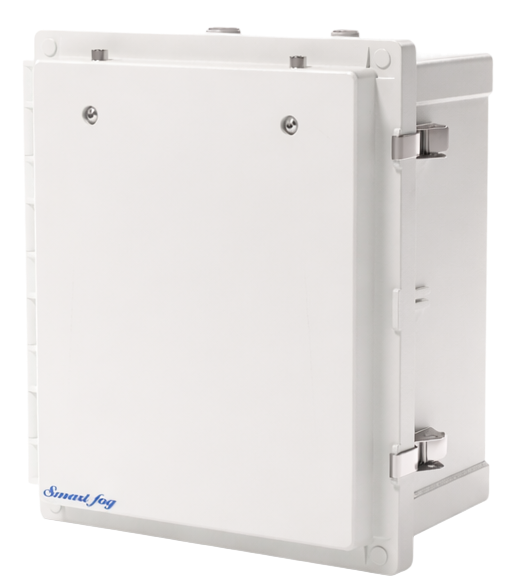
Direct-space humidification can serve an independently controlled room. Lay out the unit and reference sensor around the actual sample location, avoiding direct discharge onto benches or sensitive equipment.
View ES100 specificationsIn-duct humidification
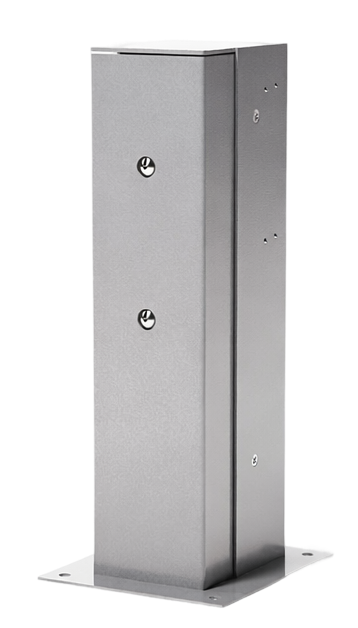
Use the in-duct option for a compatible air handler serving rooms with similar requirements. Check minimum airflow, duct clearance and the humidity load at the maximum design exhaust condition.
View TS100 specifications| Model | Moisture output | Compressed air |
|---|---|---|
| ES100-1 / TS100-1 | 6 L/h | 70 L/min |
| ES100-2 / TS100-2 | 12 L/h | 140 L/min |
Published air supply pressure is 100–120 psi for ES100 and 100 psi for TS100. Confirm utilities, capacity and installation conditions against the project submittal.
Make the acceptance test repeatable
Map the room under normal work
Choose representative bench locations and a return reference. Record temperature and relative humidity with synchronized instruments and note active hoods, door openings and heat-generating equipment.
Run a scheduled mode change
Trend the response from one approved exhaust or occupancy mode to another. Record the time outside the agreed humidity band and any temperature shift. Preserve the lab’s required ventilation and pressure cascade throughout testing.
Document service and control
Identify water-quality sampling and filter access, the compressed-air supply and the sensor calibration interval. Define alarms, data retention and responsibilities with the laboratory quality or facilities team.
When a room humidifier is only part of the answer
A laboratory humidifier adds moisture. If summer intake air or a process adds excess moisture, the project may also need a cooling coil or desiccant system to remove it. Check heat gains, air temperature and dew point before changing a setpoint. For materials that need a narrow environmental band, compare room-level control with a dedicated conditioning chamber. Use the same acceptance locations and operating assumptions when comparing costs.
Troubleshooting humidity control in laboratories
Effective humidity control starts with a record of what changed. In a laboratory setting, the same humidity level can produce different test results if samples were conditioned for different lengths of time or the balance sits in a supply draft. Record the method, room temperature and relative humidity alongside the result.
A balance reading drifts on dry days
Low humidity can allow static charge to persist on weighing containers. Analytical balances can also respond to drafts, temperature differences and vibration. Compare the balance enclosure with a calibrated room sensor. Follow the instrument procedure for static control, conditioning time and repeat weighing before changing humidity control for the entire laboratory.
A sample gains or loses mass before testing
Hygroscopic materials exchange moisture with the surrounding air. Compare the specified conditioning period with time spent at the bench after the sample leaves controlled storage. Stable humidity at both locations supports repeatable results. For sensitive materials or biological samples, use the approved handling method and record excursions against it.
The room goes dry when a hood opens
Match the alarm time to exhaust demand and makeup-air temperature. Check the outdoor moisture condition and the available humidification capacity at maximum approved exhaust. Continuous monitoring reveals changes that a daily spot check can miss. Keep containment and safety ventilation requirements in force throughout the investigation.
Precise humidity control also depends on where the laboratory measures it. A sensor in a return grille averages conditions from several benches. A local sensor near sensitive equipment can reveal a draft or heat source. Use calibration records, a mapping exercise and the permitted uncertainty to decide whether the laboratory can demonstrate proper humidity control for the method.
Laboratory humidification questions
What is the ideal humidity range for a laboratory?
Start with the instrument requirements, sample preparation protocol and test method. There is no universal research-lab setpoint. Different methods may need different humidity levels or a local chamber even when people share a room.
How do I specify precise humidity control at a bench?
Identify the point of use, allowable variation and reference instrument. Measure through an occupied shift and a ventilation transition. A quoted sensor accuracy alone does not establish the room’s achievable tolerance.
What water does a laboratory humidifier need?
Check feedwater against the selected unit specification, including relevant dissolved minerals and any facility water-quality limits. Where reverse osmosis or DI treatment is used, verify quality at the point of use and include service access.
How are laboratory humidification systems sized?
Provide outdoor design conditions, conditioned temperature and relative humidity, minimum and maximum makeup airflow, operating hours and known internal moisture sources. For a variable-exhaust laboratory, size peak output and check stable operation at the low-load condition.
Which humidification systems suit laboratory use?
Steam humidification is isothermal: a separate heat source produces the steam. Adiabatic humidification draws heat from the air as water evaporates. In laboratory environments where the process is sensitive to residue, specify the water purity and how it will be verified. For steam systems, check steam quality and distribution. For atomizing systems, specify demineralized water where required and verify the evaporation distance. Compare energy consumption, maintenance costs and effects on supply temperature at the same design load.
How do you demonstrate accurate humidity control for a test method?
Define acceptable conditions, conditioning time and what happens if the band is exceeded. Use continuous monitoring where the procedure requires it. Relative humidity plays a role in sample evaporation, moisture uptake and static on analytical balances. Link the temperature and humidity record to the test results so the reviewer can evaluate sample integrity. Equipment accuracy, room uniformity and the permitted tolerance are separate entries in the acceptance plan.
Review your laboratory humidity requirements
Tell us what is being measured or conditioned, where the tolerance applies and how exhaust changes over the day. Add your target temperature and RH if known.