

 Made in USA

- An evaporative cooler lowers air temperature through adiabatic cooling: water absorbs sensible heat from the surrounding air as it converts to vapor, with no refrigerant required.
- Direct evaporative coolers add moisture to the supply air; indirect systems use a heat exchanger to cool air without raising indoor relative humidity (RH), making each design suited to different facility conditions.
- Evaporative cooling loses effectiveness above approximately 60 percent RH; facilities in the southeastern United States or other high-humidity regions will see limited temperature drop from direct systems.
- Commercial evaporative coolers require a continuous supply of fresh outdoor air and a corresponding exhaust pathway; operating one in an enclosed space without exhaust raises indoor humidity without delivering meaningful cooling.
- Evaporative cooling systems that recirculate water must be maintained under a water management program compliant with ASHRAE Standard 188 to prevent Legionella growth.
- Adiabatic humidification systems from Smart Fog apply the same evaporative cooling principle through an equal-sized droplet grid that fully evaporates before reaching any surface, enabling simultaneous temperature reduction and precision humidity control under proper system design.
How Does an Evaporative Cooler Work?
The evaporative cooling process is rooted in a straightforward physical principle: water absorbs heat from the surrounding air as it transitions from liquid to vapor, the same mechanism that cools human skin through perspiration. As the water absorbs sensible heat, the dry-bulb temperature of the air drops, and that cooled air is delivered into the space. In a conventional evaporative cooler, three components work together:- Water pump: circulates water over cooling pads or evaporative media.
- Fan: draws warm outdoor air through the saturated media, promoting evaporation and lowering air temperature before it enters the facility.
- No refrigerant or compressor: the process runs on evaporation alone.
The Role of Wet-Bulb Temperature
Wet-bulb temperature is the most reliable indicator of evaporative cooling potential in a given environment. A large gap between dry-bulb temperature (the standard air temperature reading) and wet-bulb temperature signals low ambient humidity and strong evaporative cooling capacity. A small gap indicates that the air is already carrying substantial moisture and has limited ability to absorb more. Facility managers do not need to perform psychrometric calculations to use this concept. The practical rule is straightforward: the wider the gap between the two readings, the more cooling an evaporative cooler can deliver. Wet-bulb temperature data for a specific location provides far more accurate guidance than a general regional rule of thumb.Direct vs. Indirect Evaporative Cooling: What Is the Difference?
The choice between direct and indirect evaporative cooling determines whether the cooled air delivered to a space will also carry additional moisture. That distinction drives system selection for most commercial and industrial buyers. For deeper analysis of the technology and its role in facility HVAC strategy, see our guide on evaporative cooling. How cooling is delivered:- Direct evaporative cooling: Warm air passes through wet cooling pads and exits humidified and cooled; water evaporation occurs directly into the supply air stream.
- Indirect evaporative cooling: A secondary heat exchanger transfers cooling to the supply air without allowing moisture to enter; the supply air stays dry.
- Two-stage hybrid systems: A first-stage indirect section pre-cools the air without adding humidity, then a second direct stage delivers additional temperature drop.
- Direct evaporative cooling: Indoor RH rises as cooled air is introduced; this is acceptable in dry climates but problematic in humid or moisture-sensitive environments.
- Indirect evaporative cooling: Indoor RH remains largely unchanged because moisture does not enter the supply air stream.
- Two-stage hybrid systems: Humidity increase is lower than direct cooling alone because the indirect pre-cooling stage limits the subsequent direct-stage moisture addition.
- Direct evaporative cooling: Performs well where ambient RH stays below 50 to 60 percent; suited to arid western regions and desert regions such as Arizona, Nevada, and inland California.
- Indirect evaporative cooling: Extends usable range to more humid climates because humidity addition to the space is eliminated.
- Two-stage hybrid systems: Most effective in moderate climates where neither direct nor indirect alone achieves adequate temperature reduction.
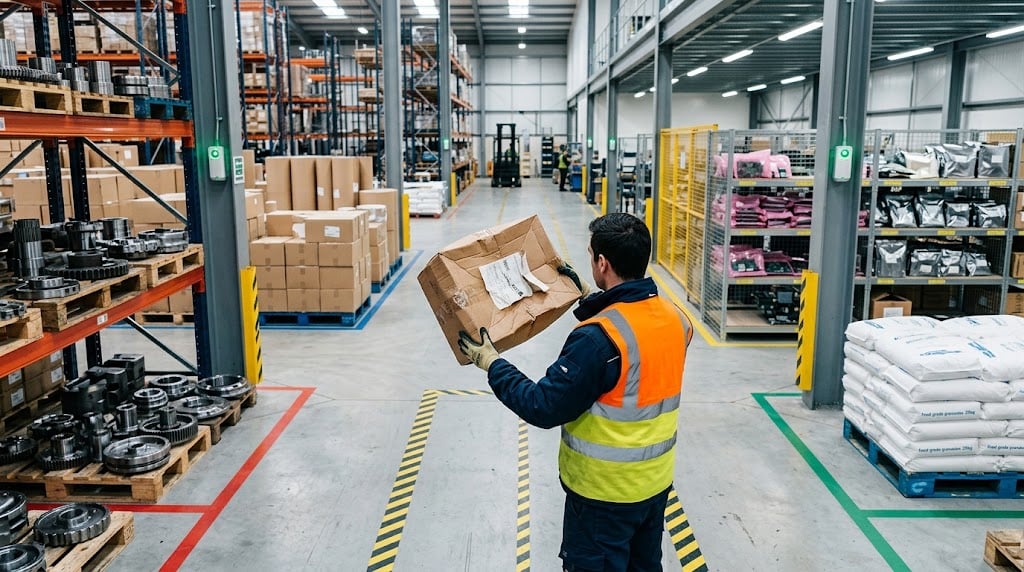
- Direct evaporative cooling: Open warehouses, manufacturing floors, loading docks, and large semi-open spaces where moisture addition is tolerable.
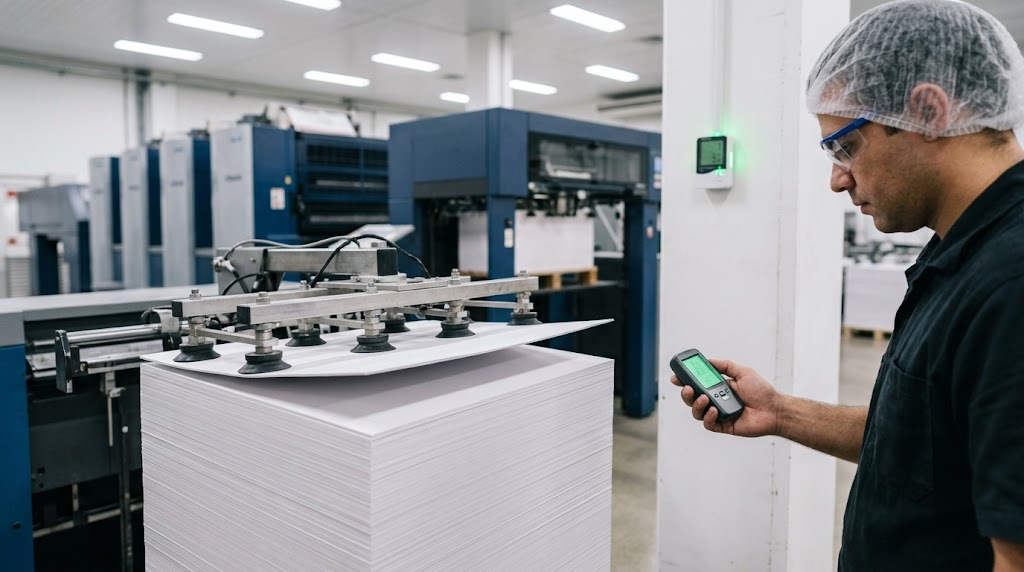
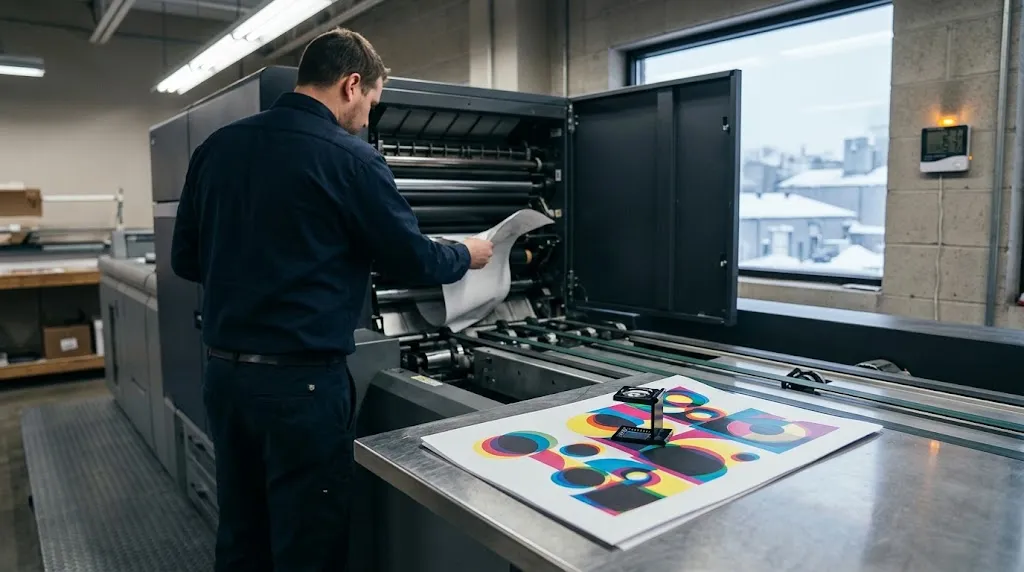
- Indirect evaporative cooling: Temperature-sensitive manufacturing, printing facilities, and enclosed spaces where added humidity would damage products or processes.
- Two-stage hybrid systems: Large commercial buildings and industrial facilities requiring energy efficiency alongside indoor air quality management.
- Direct evaporative cooling: Requires continuous fresh air supply and dedicated exhaust pathways to prevent humidity accumulation.
- Indirect evaporative cooling: Ventilation is still required but the risk of indoor humidity buildup from the cooling process itself is minimal.
- Two-stage hybrid systems: Designed with integrated air handling, so ventilation is addressed within the system architecture.
Hybrid Two-Stage Systems
Two-stage systems achieve a larger overall temperature drop than either stage alone by combining their strengths. The indirect first stage removes heat without adding moisture, delivering pre-cooled, dry air to the second stage. That pre-cooled air then passes through a direct evaporative stage, which produces a further temperature reduction while limiting total humidity increase because the air temperature is already lower. This design appears most commonly in large commercial and industrial applications where both energy efficiency and indoor air quality require active management.Evaporative Cooler vs. Air Conditioner: Key Differences for Commercial Facilities
The core mechanical difference between an evaporative cooler and a conventional air conditioning system determines where each is appropriate. Evaporative coolers use adiabatic phase change with no refrigerant. Refrigerant-based cooling uses vapor-compression refrigeration, which extracts heat and moisture from circulating air regardless of outdoor humidity. Cooling mechanism:- Evaporative cooler: Cools air through water evaporation; no refrigerant, no compressor.
- Air conditioning: Cools air through vapor-compression refrigeration using a refrigerant circuit.
- Evaporative cooler: Raises indoor RH in direct systems; indirect systems have minimal humidity impact.
- Air conditioning: Reduces indoor RH as a byproduct of condensing moisture on the evaporator coil.
- Evaporative cooler: Effective in low humidity and dry climates; performance declines significantly above 60 percent RH.
- Air conditioning: Effective in any climate because it manages both heat and moisture extraction.
- Evaporative cooler: Powers a water pump and a fan; electricity consumption is substantially lower than vapor-compression systems.
- Air conditioning: Powers a compressor, which carries significantly higher electrical demand than fan-and-pump configurations.
- Evaporative cooler: Requires fresh air circulation and exhaust pathways to function correctly; cannot operate effectively in sealed recirculating environments.
- Air conditioning: Operates in sealed, recirculating environments without requiring continuous fresh air intake.
- Evaporative cooler: Requires regular cooling pad inspection, water system cleaning, and bleed-off management.
- Air conditioning: Requires refrigerant maintenance, filter replacement, and coil cleaning; typically less sensitive to water quality.
When an Evaporative Cooler Is the Right Choice
Evaporative coolers and conventional air conditioning suit different facility and climate conditions:- Evaporative coolers: best in hot, dry climates with ambient RH consistently below 50 percent. Open-plan spaces, including warehouses, manufacturing floors, and loading docks, suit direct systems well because fresh air circulation is naturally available.
- Conventional air conditioning: more appropriate for enclosed humid climates, server rooms, cleanrooms, and any facility where introducing additional moisture would damage products, equipment, or processes.
Does an Evaporative Cooler Work in High Humidity?
Evaporative coolers lose effectiveness as ambient relative humidity rises. The mechanism is direct: air that is already carrying substantial moisture has less capacity to absorb additional water vapor, which reduces the temperature drop the cooler can deliver. At RH above approximately 60 percent, cooling output from a direct evaporative cooler is substantially reduced. Above 70 to 75 percent RH, the practical cooling effect is minimal in most direct systems. Indirect systems extend the usable humidity range somewhat because they do not add moisture to the supply air. However, even indirect systems rely on evaporative cooling on the secondary side of the heat exchanger, and extreme ambient humidity will still limit overall performance. Regional framing provides a useful starting point for system selection:- Well-suited regions: Arid western states including Arizona, Nevada, New Mexico, and inland California, where low humidity conditions persist through cooling season.
- Limited suitability: Southeastern United States, Gulf Coast states, and coastal regions where summer RH regularly exceeds 70 percent.
- Variable suitability: Inland mid-continent facilities where seasonal humidity fluctuates; wet-bulb temperature data for the specific location provides more accurate guidance than regional generalizations.
How Facility Conditions Affect Performance
Outdoor climate is one variable. Internal heat loads, occupancy density, equipment exhaust, and whether the space is enclosed or semi-open all affect how well an evaporative cooler performs inside a given facility. A facility with high heat loads from machinery may find that evaporative cooling functions best as a supplemental system rather than a primary one, particularly when units are positioned to direct airflow at heat-generating equipment or personnel rather than conditioning the full building volume.Commercial and Industrial Evaporative Cooler Configurations
Commercial and industrial buyers face a wider range of configuration options than residential buyers. The three primary deployment types differ by installation scale, HVAC integration requirements, and the nature of the cooling task. For integration with building-level air handling infrastructure, our page on HVAC humidification systems covers the broader HVAC integration picture. Deployment type:- Portable evaporative cooler: Standalone unit moved to where spot cooling is needed; no ductwork required.
- Ducted central evaporative system: Installed as part of an air handling system; conditions a whole building or large zone.
- Industrial adiabatic system: Precision-engineered evaporative cooling integrated into HVAC infrastructure for simultaneous temperature and humidity management.
- Portable evaporative cooler: Suited to warehouses, loading docks, event spaces, and open manufacturing floors where central systems cannot reach specific zones.
- Ducted central evaporative system: Suited to whole-building conditioning in appropriate dry climates; common in large commercial facilities in desert regions.
- Industrial adiabatic system: Suited to manufacturing, data centers, printing, electronics, and pharmaceutical facilities with tight environmental specifications.
- Portable evaporative cooler: Requires a water connection and an exhaust pathway; minimal installation complexity.
- Ducted central evaporative system: Requires ductwork integration, air handling infrastructure, and adequate exhaust design.
- Industrial adiabatic system: Requires engineering assessment, compressed air supply, and integration with facility controls and HVAC.
- Portable evaporative cooler: No HVAC integration; operates independently.
- Ducted central evaporative system: Directly integrated with central air handling; requires coordination with the HVAC design.
- Industrial adiabatic system: Designed as part of the facility's environmental control architecture, with precision feedback control.
Sizing an Evaporative Cooler for a Large Facility
Evaporative cooler sizing for commercial and industrial applications is calculated from the volume of air to be conditioned, the target temperature drop, and the ambient wet-bulb temperature. Air changes per hour (ACH) is the standard sizing metric for industrial applications. Undersized systems will fail to cool the space effectively; oversized direct systems may raise indoor humidity above acceptable thresholds. Industrial facilities should commission a dedicated engineering assessment rather than rely on rule-of-thumb calculations.Operational Requirements and Risks to Know Before You Install
Two operational factors that most evaporative cooler guides omit are the ones most likely to cause problems after installation: ventilation requirements and water quality management. Ventilation. A direct evaporative cooler requires a continuous supply of fresh outdoor air and a corresponding exhaust pathway. Without adequate exhaust, the cooler adds moisture to a closed space without removing warm air, raising indoor humidity and eliminating the cooling effect. ASHRAE Standard 62.1 establishes the ventilation design requirements that govern commercial facility air supply. The OSHA General Duty Clause requires employers to maintain safe working conditions, which includes managing heat-related risk and indoor air quality in occupied facilities. Ventilation requirements vary by facility type, occupancy load, and climate. Fresh air circulation rates must be confirmed during system design, not assumed after installation. Facilities that already manage ventilation for air quality purposes, such as manufacturing plants operating under industrial hygiene programs, are generally better positioned to add evaporative cooling without creating humidity accumulation problems. Water quality and Legionella risk. Evaporative cooling systems that recirculate water rather than supply fresh water on each cycle create conditions that can support Legionella pneumophila growth if water temperature and biocide levels are not managed. This is not a reason to avoid evaporative cooling; it is a standard operational requirement for any commercial water system. ASHRAE Standard 188 governs water management planning for building water systems, including evaporative cooling equipment, and commercial operators should have a documented water management program in place before commissioning any recirculating evaporative system.Maintenance Schedule for Commercial Evaporative Coolers
Commercial evaporative cooler maintenance and upkeep centers on four recurring tasks:- Cooling pad and media inspection: Pads degrade over time and must be inspected and replaced on a schedule determined by water quality and run hours.
- Water distribution system cleaning: Nozzles, distribution lines, and sumps require periodic cleaning to prevent mineral scale and biological growth.
- Bleed-off and drain cycle management: Controlled bleed-off removes concentrated minerals from recirculated water, preventing scale buildup on cooling pads and internal components.
- Filter inspection: Air filters upstream of the evaporative media require regular inspection and replacement to maintain airflow and system efficiency.
How Smart Fog Adiabatic Systems Apply Evaporative Cooling with Precision
Adiabatic cooling that fully evaporates water droplets before they reach any surface eliminates the two core limitations of conventional evaporative cooler designs: surface wetting and media maintenance. This is the operating principle behind Smart Fog adiabatic humidifiers. Compressed air and water are combined through a proprietary nozzle to produce an equal-sized droplet grid. Each droplet is slightly charged to prevent re-aggregation, and every droplet fully evaporates in the air column before reaching any surface, under proper system design. The non-wetting behavior applies under those conditions; direct exposure to the fog stream will wet a surface. The adiabatic cooling effect is the same physical process as a conventional evaporative cooler. The difference is in how precisely and cleanly that process is executed.Adiabatic Cooling Without Surface Wetting
In a conventional direct evaporative cooler, air contacts wet cooling pads and exits the system with elevated RH and a potential for moisture carryover onto nearby surfaces and equipment. Smart Fog's equal-sized droplet grid eliminates the wet medium entirely. Because every droplet evaporates in the air column under proper system design, the adiabatic cooling effect is delivered without pad maintenance, without surface wetting, and without the uneven moisture distribution that large-media systems produce. This matters most in facilities where conventional swamp cooler designs would damage equipment or products. Electronics manufacturing environments, for example, require humidity management within tight tolerances because RH below 30 percent promotes electrostatic discharge (ESD) while RH above 60 percent risks condensation on circuit boards. Conventional direct evaporative coolers cannot deliver the precision required in that range. Smart Fog systems are engineered for exactly those conditions, as detailed in the Smart Fog technology overview.Precision Humidity and Temperature Control in Industrial Facilities
Conventional evaporative coolers operate without the precision feedback control that facilities with tight environmental specifications require. Smart Fog evaporative cooling humidifiers maintain RH up to 99 percent with plus or minus 1 to 2 percent precision. The humidification process has no moving parts, and maintenance intervals are designed to extend up to every two years. Key performance characteristics relevant to industrial facility selection:- Humidity precision: Maintains RH up to 99 percent with plus or minus 1 to 2 percent precision, with minimal fluctuation.
- Surface interaction: Droplets self-evaporate before reaching surfaces under proper system design, making the system suited to equipment-dense environments.
- Maintenance interval: No moving parts in the humidification process; maintenance intervals extend up to every two years.
- Operational mode: Designed for 24/7 continuous industrial operation without requiring constant adjustment.
- System completeness: Smart Fog delivers a fully engineered system, not a component kit, with no certified technician required for installation.