 Made in USA

- In an adiabatic process, water evaporates using the sensible heat already present in the surrounding air, requiring no external heating element or refrigeration cycle.
- Steam humidification systems consume approximately 0.6 to 0.75 kWh of electrical or thermal energy per kilogram of moisture added; adiabatic systems require only 0.05 to 0.10 kWh per kilogram for water pressurization and delivery, placing the efficiency difference close to one order of magnitude.
- Adiabatic cooling effectiveness is bounded by the ambient wet-bulb temperature; in arid climates with large wet-bulb depressions, significant sensible cooling is achievable, while in humid climates where wet-bulb temperatures approach dry-bulb temperatures, the achievable temperature drop approaches zero.
- Adiabatic pre-cooling extends the annual hours of free cooling available to data center operators by reducing inlet air temperature to heat exchangers before mechanical refrigeration engages, directly improving Power Usage Effectiveness (PUE).
- Facilities operating any system that introduces water into an airstream are subject to Legionella risk management obligations under ASHRAE Standard 188, which requires a written Water Management Plan.
- The 90% energy reduction figure reflects the upper range of a per-kilogram comparison between adiabatic and steam systems; actual savings depend on system design, operating pressure, and whether waste heat recovery is incorporated into the steam system.
What "Adiabatic" Actually Means
The word "adiabatic" derives from the Greek for "not passable," meaning no heat crosses the boundary between the system and its surroundings from an external source. In an adiabatic process, any temperature change results from internal energy exchange within the system itself, not from an external heating or cooling input. This is the thermodynamic distinction that makes adiabatic systems fundamentally different in their energy economics from steam-based alternatives. In the specific context of evaporative cooling and humidification, the relevant process is adiabatic evaporation. Water introduced as a liquid into an airstream absorbs latent heat from the air itself to complete the phase change. The air loses sensible heat, its temperature drops, and the water becomes vapor. No external energy source drives the evaporation.The Role of Latent Heat
The latent heat of vaporization is the energy absorbed per kilogram of water as it transitions from liquid to vapor. For water at standard conditions, this value is approximately 2,260 kJ/kg, as established in standard thermodynamic references. In an adiabatic humidification system, this energy is drawn entirely from the sensible heat of the surrounding air. That transfer is the physical mechanism behind the efficiency advantage: the air cools because it is supplying the evaporation energy that a steam system would otherwise generate with electricity or fuel.Adiabatic Cooling vs. Evaporative Cooling: Are They the Same Thing?
Evaporative cooling is the broader category; adiabatic cooling describes the thermodynamic character of a specific type of evaporative process. All adiabatic cooling of this type involves evaporation, but not all evaporative systems operate adiabatically:- Direct adiabatic systems: simultaneously cool and humidify by adding moisture directly to the supply air.
- Indirect adiabatic systems: use the evaporative process to cool a secondary fluid or heat exchanger surface, delivering cooling without altering supply air moisture content.
How Adiabatic Cooling Systems Work in Practice
Understanding the hardware architecture of an adiabatic cooling system matters because the configuration determines which facilities it suits and what secondary effects it produces. Two primary configurations exist: direct and indirect. The choice between them depends on whether adding moisture to the conditioned space is acceptable, desirable, or prohibited.Direct Adiabatic Cooling
In a direct adiabatic cooling system, water is atomized into the supply airstream, evaporating as it travels and simultaneously lowering air temperature and raising relative humidity (RH). This configuration suits environments that need both effects together: manufacturing floors requiring humidity and temperature control, printing facilities managing paper moisture content, and data center hot aisle containment applications where supply air enters the space directly. The risk in direct systems is surface wetting if droplet size is poorly controlled or water is introduced too aggressively, causing larger droplets to reach surfaces before evaporating.Indirect Adiabatic Cooling and Adiabatic Pre-Cooling
Indirect adiabatic cooling uses the evaporative process on the exterior of a heat exchanger or secondary fluid loop, improving its heat rejection capacity without adding moisture to the conditioned supply air. Adiabatic pre-cooling is the specific application most relevant to heating, ventilation, and air conditioning (HVAC) systems and data center cooling infrastructure. By evaporating water upstream of a dry cooler, cooling tower, or chiller condenser, the system reduces the ambient air temperature entering the heat exchanger. This allows the facility to operate in free cooling mode at higher ambient air temperatures than the equipment's rated switchover point, reducing compressor runtime and improving the Coefficient of Performance (COP) of the overall cooling plant. Evaporative cooling humidifiers operate on this same principle, delivering simultaneous cooling and humidity control from a single water distribution system.The Energy Comparison: Adiabatic vs. Steam vs. Mechanical Cooling
The 90% energy reduction claim requires more than a headline figure to be useful to an engineer building a business case. The difference between adiabatic and steam systems is structural, not marginal, because the two technologies use completely different energy pathways to accomplish the same result: adding moisture to air.Why Steam Humidification Is Energy-Intensive
Steam humidification systems consume external electrical or thermal energy to raise water from ambient temperature to 100°C before it enters the airstream. That phase transition requires approximately 2,260 kJ/kg for vaporization alone, plus the sensible heating energy to bring water from its supply temperature to boiling point. Total electrical energy input for isothermal steam systems typically falls in the range of 0.6 to 0.75 kWh per kilogram of moisture added. In cooling seasons, steam also introduces sensible heat into the supply air, which works against the cooling load and creates a secondary energy penalty for any mechanical system that must then remove that heat.How Adiabatic Systems Reduce Energy Input
An adiabatic cooling system delivers water as a liquid and uses the sensible heat already present in the air as the evaporation energy source. The only external energy input required is the pressure to transport and atomize water through the distribution system. This typically falls in the range of 0.05 to 0.10 kWh per kilogram of moisture added. For HVAC humidification systems operating in facilities where both humidity and temperature control are required, the adiabatic process delivers simultaneous cooling from the same water input, replacing two separate energy interventions with one.What the 90% Figure Actually Means
The 90% efficiency comparison is most accurate when comparing adiabatic humidification directly against isothermal steam humidification on a per-kilogram-of-moisture-added basis. Using the figures stated above: 0.07 kWh (adiabatic midpoint) versus 0.68 kWh (steam midpoint) gives a reduction of approximately 90%. This is an approximation. Actual facility-level savings depend on local energy costs, system operating pressure, water quality, and whether the steam system incorporates waste heat recovery. The three technology types compared across key dimensions: This is currently organized by dimension-across-technologies, which forces you to jump around to compare any one technology. Here it is regrouped by technology instead, so each one reads as a complete picture: The three technology types compared side by side: Adiabatic- Energy input: 0.05 to 0.10 kWh/kg, from water pressurization only.
- Heat effect: reduces dry-bulb temperature as moisture is added (a cooling benefit).
- Water consumption: 100% efficient under properly designed systems, every kilogram delivered evaporates into the air.
- Best suited to: ambient air below saturation; cooling benefit diminishes as wet-bulb temperature approaches dry-bulb temperature.
- Energy input: 0.6 to 0.75 kWh/kg, including sensible heating to boiling point and sustained vaporization.
- Heat effect: adds sensible heat to supply air alongside moisture, working against cooling loads.
- Water consumption: losses occur through condensate drainage and blowdown cycles in boiler-fed systems.
- Best suited to: any climate, no wet-bulb constraint, since it doesn't rely on evaporation to cool.
- Energy input: 0.15 to 0.30 kWh/kg, no boiling required, but electrical transducer energy is consumed.
- Heat effect: minimal, temperature effect close to neutral.
- Water consumption: efficient, but untreated water can leave white mineral dust behind after evaporation.
- Best suited to: any climate, no wet-bulb constraint.
Where Adiabatic Cooling Performs Well, and Where It Does Not
Adiabatic cooling is not climate-agnostic. Its performance ceiling is set by the ambient wet-bulb temperature, not the dry-bulb temperature, which means geographic location is a primary engineering input when specifying a system for its cooling effect.Understanding the Wet-Bulb Temperature Limit
The wet-bulb temperature is the temperature at which evaporation from a wetted surface ceases because the surrounding air is already saturated. The maximum achievable adiabatic temperature drop equals the difference between the current dry-bulb temperature and the wet-bulb temperature, the wet-bulb depression. A larger depression means more cooling potential; a depression approaching zero means the system can't deliver meaningful sensible cooling, though it retains its full humidification capability. Two geographic contrasts illustrate the range clearly:- Phoenix, Arizona: design wet-bulb temperatures of 22 to 24°C against dry-bulb design temperatures exceeding 40°C, giving a depression of 16 to 18°C and substantial cooling potential.
- Houston, Texas: wet-bulb temperatures frequently exceeding 27 to 28°C against dry-bulb temperatures only 3 to 5°C higher, leaving almost no depression for meaningful cooling.
Industries and Climates Where Adiabatic Systems Are Most Effective
The operational profile where adiabatic cooling delivers the most value combines low ambient humidity during peak heat load periods with a facility need for both cooling and humidification simultaneously:- Semi-arid and continental climate zones: meet this profile for the majority of their operating year.
- Data center applications: adiabatic pre-cooling supplements but doesn't replace mechanical cooling, extending free cooling hours without requiring the system to achieve full sensible cooling on its own.
- Humid climates: where moisture addition is the primary requirement rather than temperature reduction, the system still delivers full humidification performance. The cooling effect is reduced by psychrometric process constraints, not the humidification performance.
Industrial and Data Center Applications of Adiabatic Cooling
The value of an adiabatic cooling system in a specific facility depends on whether the problem being solved is heat removal, humidity control, or both simultaneously. The answer differs by industry, and the specification criteria differ accordingly.Data Center Cooling: Extending Free Cooling Hours with Adiabatic Pre-Cooling
Data center cooling represents one of the most well-documented applications of adiabatic pre-cooling. Cooling infrastructure accounts for a significant portion of total facility power in most data centers, and improving PUE by even a fraction of a point translates to measurable annual energy cost reduction at scale. By reducing the ambient air temperature entering a dry cooler before mechanical refrigeration engages, adiabatic pre-cooling extends the number of annual hours during which the facility can operate in refrigerant-free cooling mode. Facilities designing to ASHRAE thermal guidelines for IT equipment operate within temperature and humidity ranges that the system must maintain precisely. The ASHRAE A2 class, the most commonly specified for enterprise data centers, defines a supply air temperature range of 10 to 35°C and a humidity range of 20 to 80% RH with a maximum dew point of 21°C. Data center humidification systems must be sized and controlled to hold within these limits without overshooting RH during pre-cooling operation.Industrial Process Cooling and Humidification
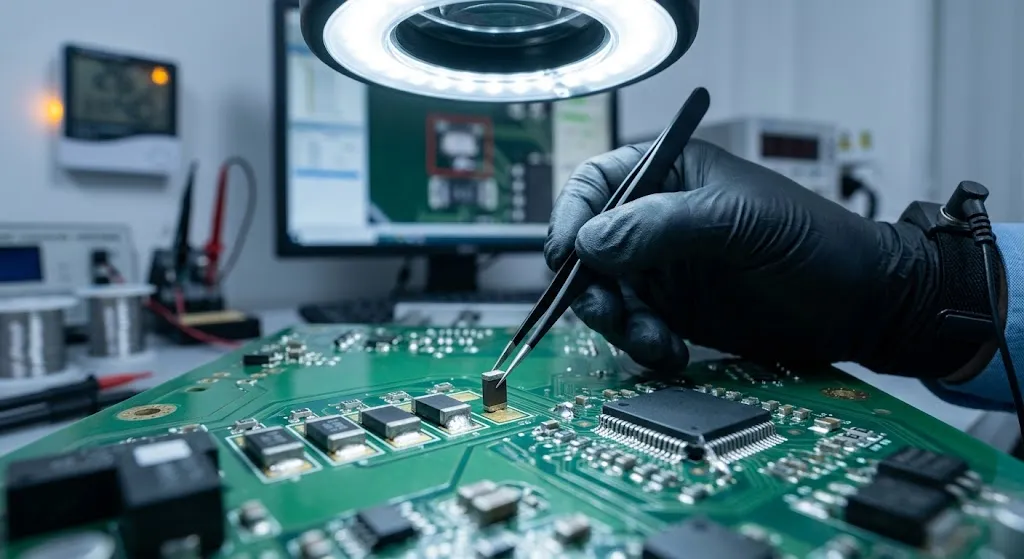
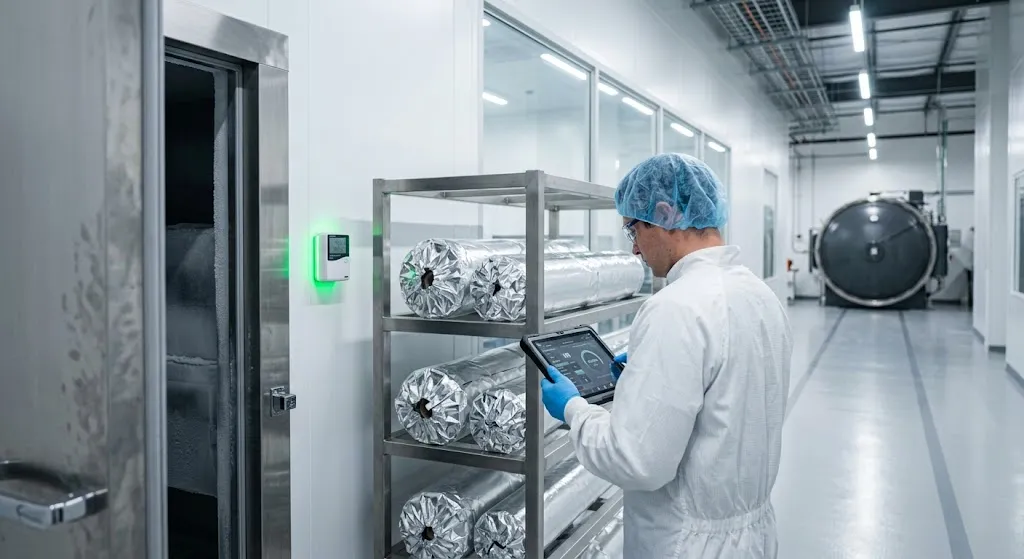
Industrial process cooling applications benefit from the adiabatic system's ability to deliver simultaneous temperature reduction and humidity control from a single water distribution system. Printing facilities require paper moisture content to be maintained within tight tolerances, typically 45 to 55% RH, to prevent misregistration, static buildup, and dimensional instability. Electronics manufacturing environments require RH above 40% to suppress electrostatic discharge (ESD) risk, per IEC 61340-5-1 guidance for ESD-sensitive assembly areas. Pharmaceutical manufacturing environments treat process humidity as a Good Manufacturing Practice (GMP) compliance parameter, with specific RH targets defined in batch records and environmental monitoring protocols. In each case, an adiabatic cooling system addresses both the thermal and moisture requirements without requiring separate refrigeration and humidification infrastructure.Legionella Risk Management and Compliance Considerations
Any system that introduces water into an airstream creates conditions where Legionella bacteria can proliferate if water temperature, stagnation, and biofilm formation are not actively managed. This applies to adiabatic pre-coolers, direct evaporative systems, and precision fog humidification systems alike. It is a legally relevant compliance area that no facility operating such a system can ignore.ASHRAE Standard 188 and Water Management Plans
ASHRAE Standard 188-2021 Legionellosis: Risk Management for Building Water Systems requires facilities operating systems that expose water to airstreams to develop and maintain a written Water Management Plan. The plan must identify hazard points within the water system, define the control measures applied at each point, and document the verification protocols used to confirm those measures are functioning. This is not optional guidance. In many jurisdictions it carries regulatory force, and its absence is cited in Legionella outbreak investigations as a contributing compliance failure. Legionella proliferates most aggressively in water held between 20 and 45°C with low flow or stagnation. System designs that minimize water residence time, maintain water below this temperature range in transit, and eliminate dead legs in distribution piping reduce risk materially. In the United Kingdom, HSE Approved Code of Practice L8 governs the same risk category under separate but structurally similar requirements. Smart Fog systems are delivered as complete engineered installations rather than component kits. The distribution architecture is designed to minimize stagnation and water residence time, which is directly relevant to Legionella control obligations. Facilities should still develop a Water Management Plan specific to their installation, consistent with ASHRAE Standard 188 requirements.How Smart Fog's Adiabatic Humidification System Works
Adiabatic humidification that produces a precisely controlled, equal-sized droplet grid eliminates the surface-wetting risk that characterizes poorly controlled evaporative systems. This is the operating principle behind Smart Fog's Smart Fog adiabatic humidifiers. Compressed air and water are combined through a proprietary nozzle to produce a droplet grid where every droplet is the same size and carries a slight electrostatic charge that prevents re-aggregation. Because the droplets cannot combine into larger droplets, each one self-evaporates before reaching any surface. This qualifies as an adiabatic humidification process because the water evaporates using the sensible heat of the surrounding air, not an external heat source. The system requires no heating element. The only energy input is the compressed air and water pressure needed to operate the nozzle, placing Smart Fog firmly within the low-energy adiabatic category described in the energy comparison section above. The evaporative cooling effect is a thermodynamic consequence of the process, not a dedicated industrial cooling mechanism for large heat loads. The system is appropriate for facilities requiring precision humidity control with the incidental benefit of adiabatic temperature reduction.Equal-Sized Droplet Grid and Self-Evaporation
The equal-sized droplet grid is the engineering mechanism behind Smart Fog's non-wetting performance. Because every droplet is uniform in size and carries a slight charge, no droplet reaches equipment, racks, printed materials, or pharmaceutical product before evaporating under properly designed installations. This prevents surface wetting, condensation, and the corrosion risk that condensation introduces in sensitive manufacturing environments. Systems where droplet size varies introduce the possibility that larger droplets travel further and contact surfaces before evaporating, which is the failure mode that produces wetting in less precisely controlled high-pressure misting systems. The non-wetting characteristic applies under proper system design; direct exposure to the fog stream will wet a surface, as with any water-based system.- Droplet uniformity: Equal-sized droplet grid prevents re-aggregation and ensures consistent evaporation distance.
- Electrostatic charge: Slight charge on each droplet prevents droplets from combining mid-air into larger, surface-reaching drops.
- Self-evaporation: Every droplet evaporates before reaching surfaces under properly designed installations, preventing wetting and condensation.
- Water efficiency: 100% of delivered water evaporates into the air; no surface runoff, no drain requirements under proper design.
Precision, Maintenance, and System Design
Smart Fog systems maintain humidity up to 99% RH with plus or minus 1 to 2% precision, operating continuously with no moving parts in the humidification process itself. Maintenance intervals extend to every two years. The system is delivered as a complete engineered solution, meaning the water management and distribution architecture is designed as a whole rather than assembled from components by the facility team.- Humidity range: Up to 99% RH with plus or minus 1 to 2% precision.
- Maintenance interval: Designed for maintenance intervals up to every two years.
- System delivery: Complete engineered installation, not a component kit; distribution architecture is designed to minimize stagnation.
- Operation: 24/7 continuous industrial operation with no moving parts in the humidification process.
- Installation: No certified technician required for installation.