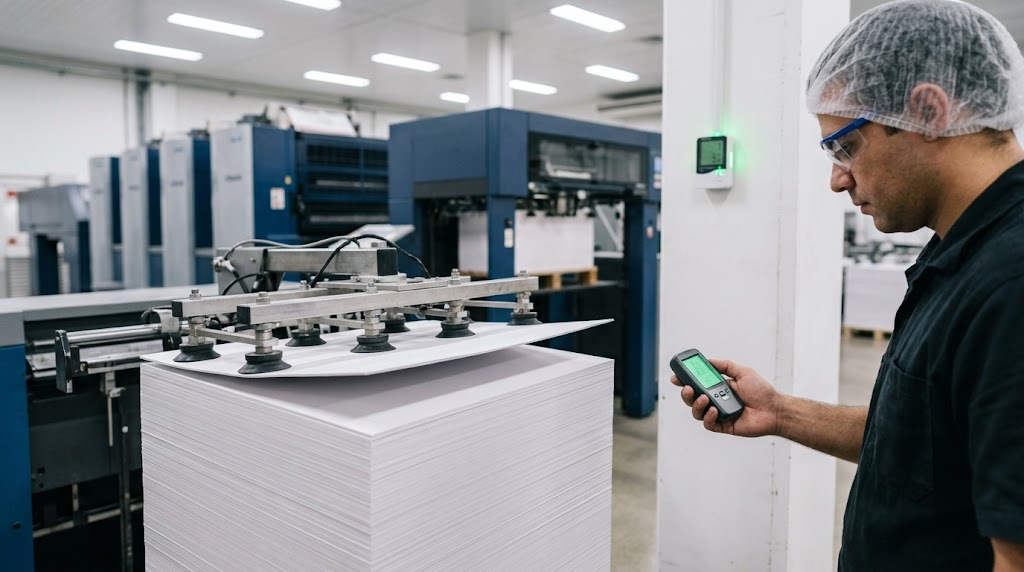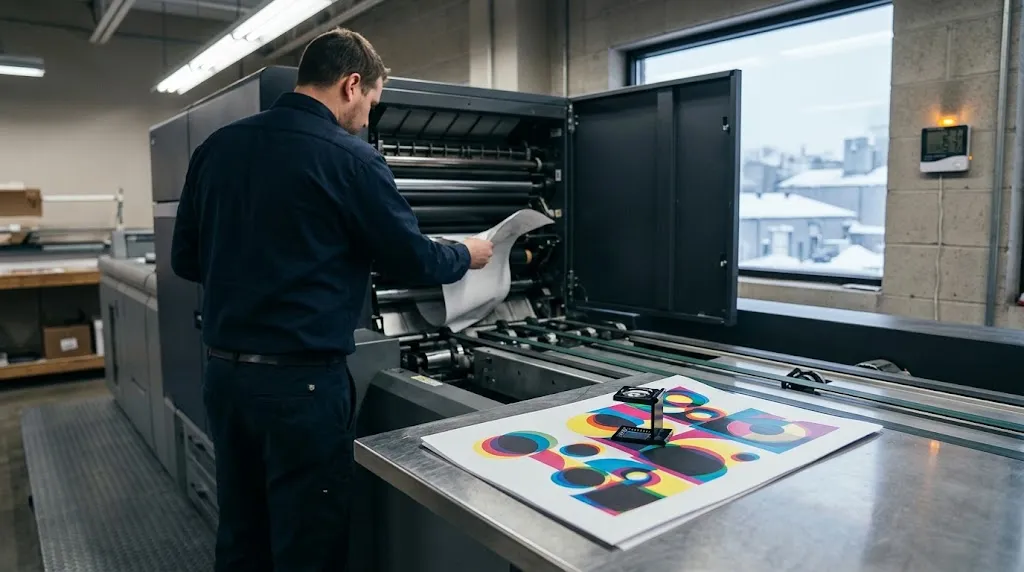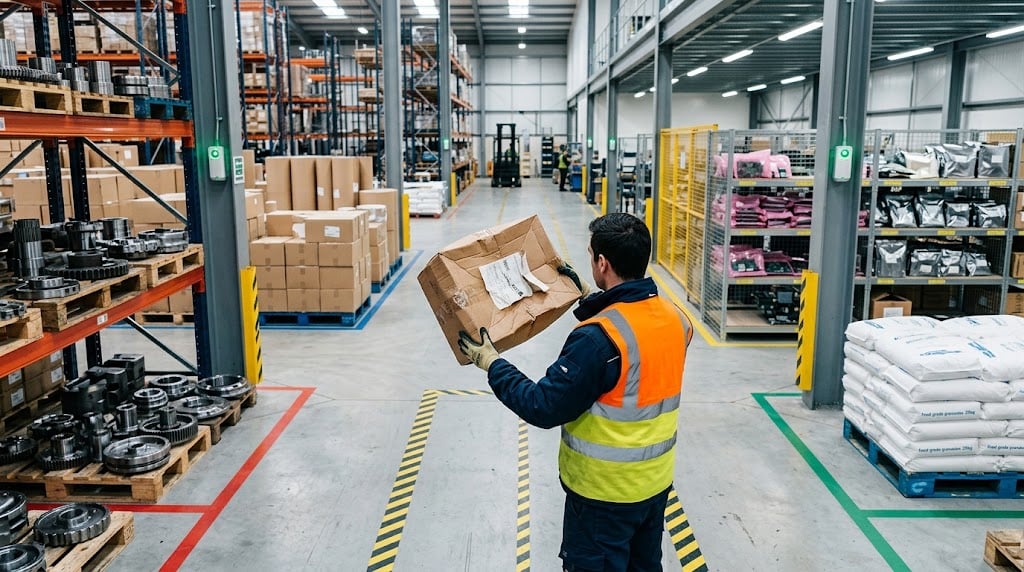


 Made in USA

- Commercial buildings must test for a distinct set of air pollutants including CO2, volatile organic compounds (VOCs), particulate matter, formaldehyde, radon, and relative humidity (RH), each requiring a different measurement method and regulatory threshold.
- ASHRAE Standard 62.1 benchmarks CO2 at approximately 1,000 ppm as an indicator of inadequate ventilation in occupied commercial spaces; readings above this threshold signal insufficient outdoor air exchange.
- Low-cost continuous air quality monitors provide real-time data but carry documented accuracy limitations, including calibration drift and cross-sensitivity; sensor output is generally not sufficient for legal disputes, compliance documentation, or post-remediation clearance.
- Building age, HVAC configuration, and occupant density directly determine which pollutants to prioritize: pre-1980 structures carry elevated formaldehyde and asbestos risk, while high-density spaces with limited natural ventilation require CO2 and ventilation rate monitoring as a primary compliance concern.
- Certain IAQ situations, including post-flood mold remediation, tenant complaints with legal implications, and OSHA complaint investigations, require chain-of-custody laboratory sampling conducted by a certified Industrial Hygienist rather than a consumer-grade monitor.
- Humidity is a measurable, regulated IAQ parameter: ASHRAE guidance targets 30% to 60% RH for occupied commercial spaces, and sustained readings outside that range create conditions that promote mold growth, particulate suspension, and occupant health complaints.
Why Commercial IAQ Testing Differs from Residential Testing
Commercial buildings present IAQ challenges that residential guides are not designed to address. Higher occupant density elevates CO2 and biological contaminant loads faster than in any residential setting, and commercial HVAC systems recirculate air across multiple zones, meaning a pollutant source in one area can affect occupants throughout the building. The regulatory framework governing commercial spaces, including OSHA's General Duty Clause and ASHRAE 62.1, carries legal consequences that simply do not apply to a homeowner testing with a consumer monitor. The structural differences that distinguish commercial IAQ assessment from residential testing include:- Multi-zone HVAC complexity: A single-point reading in one room does not characterize whole-building air quality when air is shared across multiple air handling units and return plenums.
- Occupant density: Higher concentrations of occupants accelerate CO2 and water vapor accumulation, especially in spaces with limited natural ventilation.
- Regulatory obligations: OSHA's General Duty Clause and ASHRAE 62.1 create enforceable compliance requirements that do not exist in residential settings.
- Pollutant source variety: Office renovations, mechanical rooms, cleaning products, and industrial processes introduce a wider range of air pollutants than a typical home environment.
- Legal documentation standards: Complaints, lease disputes, and insurance claims in commercial settings require defensible, chain-of-custody test data, not consumer sensor logs.
The Regulatory Baseline for Commercial Buildings
ASHRAE Standard 62.1 is the primary ventilation standard governing commercial indoor air quality in the United States. It sets minimum outdoor air supply rates and establishes CO2 concentration benchmarks as a proxy for ventilation adequacy. Compliance documentation requires more than a consumer-grade sensor reading. OSHA's General Duty Clause provides the enforcement mechanism: employers who fail to investigate and address IAQ complaints in occupational settings can face citation and liability even in the absence of a specific IAQ standard.How HVAC Complexity Changes the Testing Requirement
A commercial HVAC system with multiple air handling units, return air plenums, and supply zones creates a fundamentally more complicated testing environment than a residential system. Pollutant concentrations can vary significantly across zones depending on occupancy, supply air volume, and local emission sources. A single-point reading at a thermostat cannot represent the full range of conditions occupants experience across a large floor plate or multi-story building.Which Pollutants to Test for in a Commercial Building
Effective IAQ testing begins with pollutant prioritization, not with equipment selection. Each pollutant has a distinct commercial source, a documented health or operational consequence, a named regulatory threshold, and a measurement method that may differ from every other analyte on this list. Treating all air pollutants as interchangeable is the single most common error in commercial IAQ programs. Carbon Dioxide (CO2)- Commercial source: Occupant respiration; accumulates in spaces with inadequate outdoor air supply.
- Consequence: Elevated CO2 is associated with reduced cognitive performance, consistent with research cited by ASHRAE in its ventilation guidance.
- Threshold: ASHRAE 62.1 uses approximately 1,000 ppm above outdoor ambient as a ventilation adequacy benchmark.
- Measurement method: Non-dispersive infrared (NDIR) sensors; suitable for continuous monitoring.
- Commercial source: Cleaning products, adhesives, paints, furnishings, and off-gassing from new construction materials.
- Consequence: Formaldehyde exposure and other VOC exposures are linked to sick building syndrome complaints and respiratory irritation.
- Threshold: WHO Indoor Air Quality Guidelines set a 30-minute reference level of 0.1 ppm for formaldehyde specifically; broader VOC mixtures lack a single universal limit.
- Measurement method: Photoionization detector (PID) or passive sorbent tube sampling sent to an accredited laboratory for speciated analysis.
- Commercial source: HVAC filtration failures, occupant activity, outdoor air infiltration, and industrial processes.
- Consequence: Fine particulates penetrate deep into respiratory tissue; elevated indoor concentrations above outdoor background suggest an indoor generation source.
- Threshold: EPA National Ambient Air Quality Standard for PM2.5 sets a 24-hour average of 35 micrograms per cubic meter as the regulatory threshold.
- Measurement method: Optical particle counters or laser photometers for continuous monitoring; gravimetric filter sampling for regulatory-grade documentation.
- Commercial source: Soil gas infiltration through foundation cracks, slab penetrations, and below-grade openings.
- Consequence: Radon is the second leading cause of lung cancer in the United States, according to the EPA's health risk data on radon.
- Threshold: EPA action level is 4 picocuries per liter (pCi/L); buildings at or above this level warrant mitigation.
- Measurement method: Long-term charcoal canister or electret ion chamber testing; minimum 90-day sampling window for a defensible long-term measurement.
- Commercial source: Combustion appliances, vehicle exhaust from attached parking, and faulty HVAC equipment.
- Consequence: Even moderate concentrations cause headache, nausea, and impaired cognition; high concentrations are life-threatening.
- Threshold: OSHA's permissible exposure limit is 50 ppm as an eight-hour time-weighted average; any reading above 9 ppm in a non-industrial commercial space warrants investigation of combustion sources.
- Measurement method: Electrochemical sensors; a carbon monoxide detector is standard in occupied commercial spaces and required by many building codes.
- Commercial source: Water intrusion, roof leaks, HVAC condensate pans, and areas of sustained high humidity.
- Consequence: Mold spore concentrations above outdoor background levels in occupied spaces indicate active amplification and require professional remediation assessment.
- Threshold: No universal numerical standard; indoor concentrations higher than outdoor background, or species associated with water damage detected indoors, are the standard professional judgment criteria.
- Measurement method: Air cassette sampling or surface swab samples analyzed by an accredited laboratory.
- Commercial source: Ambient conditions modulated by HVAC; humidity levels are controllable, not just measurable.
- Consequence: Sustained RH below 30% promotes electrostatic charge accumulation, airborne particulate suspension, and occupant respiratory irritation. Sustained RH above 60% creates conditions where mold spores can colonize surfaces and allergens indoors such as dust mites proliferate.
- Threshold: ASHRAE Standard 62.1 and related standards target 30% to 60% RH for occupied commercial spaces.
- Measurement method: Capacitance-based humidity sensors integrated into HVAC controls or standalone humidity meters and monitors deployed across zones.
Building Age and Construction Type as a Testing Priority Guide
Building characteristics directly determine which pollutants deserve priority attention, yet no widely available IAQ guide addresses this connection. Four building profiles each carry a distinct testing priority:- Pre-1980 construction: elevated risk for asbestos-containing materials and formaldehyde-emitting adhesives and insulation products, making those analytes higher priority.
- Recently renovated or newly furnished spaces: elevated VOC sources regardless of building age, since off-gassing from adhesives, coatings, and composite materials peaks in the first months after installation.
- Tight, energy-efficient buildings with limited natural ventilation: should prioritize CO2 and VOC monitoring as a consequence of reduced dilution airflow.
- Below-grade spaces or slab-on-grade foundations in radon-prone geographic zones: should prioritize radon testing before other analytes.
Occupant Density and Its Effect on Pollutant Accumulation
Occupant density is a primary IAQ variable in commercial environments because each occupant generates CO2 and water vapor continuously. In high-density spaces such as open-plan offices, call centers, or assembly areas, carbon dioxide levels can rise above 1,000 ppm within an hour if the ventilation system does not supply adequate outdoor air. Research connecting elevated CO2 to measurable cognitive performance effects makes CO2 monitoring particularly relevant for productivity-sensitive commercial environments where cognitive output is the primary operational output.Testing Methods: Continuous Monitors, Point-in-Time Kits, and Professional Assessment
Three distinct testing paths are available to commercial facility managers, and the appropriate choice depends on the pollutant, the purpose, and whether the results need to be legally defensible. No single method is universally superior. Each has a defined scope, accuracy profile, and appropriate use case. Continuous air quality monitors- Pollutants covered: CO2, humidity, temperature, PM2.5, and VOC index in real time.
- Result turnaround: Immediate; continuous data logging.
- Accuracy and legal sufficiency: Low-cost sensors are subject to calibration drift, cross-sensitivity to interfering compounds, and altitude or temperature effects. The EPA guidance on low-cost air pollution sensors documents these limitations explicitly. Sensor data is generally not sufficient for legal, regulatory, or insurance contexts.
- Typical cost range: Consumer-grade units range from a few hundred to a few thousand dollars; professional-grade networked systems carry higher capital and integration costs.
- Best-fit scenario: Baseline trending, occupancy-driven ventilation management, and ongoing compliance monitoring for CO2 and humidity.
- Pollutants covered: Formaldehyde, mold species identification, asbestos, and long-term radon measurement using passive sorbent tubes, swab samples, or air cassettes sent to an accredited laboratory.
- Result turnaround: Days to weeks depending on laboratory processing time.
- Accuracy and legal sufficiency: Produces chain-of-custody documentation suitable for professional and regulatory contexts when processed by an American Industrial Hygiene Association (AIHA)-accredited laboratory.
- Typical cost range: Individual analyte kits vary widely; radon kits are among the most affordable, while mold and formaldehyde sampling packages carry moderate laboratory fees.
- Best-fit scenario: Targeted analyte investigation, pre-renovation asbestos screening, and long-term radon measurement.
- Pollutants covered: Full spectrum; a certified Industrial Hygienist (CIH) designs the sampling strategy based on facility-specific risk factors.
- Result turnaround: One to four weeks including laboratory analysis and written report.
- Accuracy and legal sufficiency: Fully defensible; includes professional credentials, chain-of-custody documentation, and accredited laboratory analysis.
- Typical cost range: Commercial building assessments vary significantly by building size, analyte scope, and regional market; facility managers should obtain multiple quotes from CIH-credentialed firms.
- Best-fit scenario: Legal disputes, OSHA complaint investigations, post-remediation clearance, and pre-purchase or pre-lease due diligence.
What Low-Cost Sensors Can and Cannot Tell You
The accuracy limitations of consumer and prosumer air quality monitors are documented by the EPA and are worth understanding before interpreting any sensor output. Three sensor types carry distinct caveats:- Electrochemical VOC sensors: report a VOC index rather than a concentration of any specific compound, so an elevated reading identifies a potential problem but can't identify which chemical is present or at what concentration.
- NDIR CO2 sensors: generally more accurate and more suitable for ventilation adequacy monitoring than VOC sensors.
- Laser particle counters (PM sensors): affected by humidity. Water droplets at high relative humidity can register as particles and inflate PM readings, a data quality issue worth understanding when reviewing humidity sensors alongside PM sensor data.
When Professional IAQ Assessment Is Legally or Practically Required
Several commercial IAQ situations make a consumer air quality monitor legally or practically insufficient, since none of them satisfy the burden of evidence: consumer monitors lack chain-of-custody documentation, accredited laboratory analysis, and the professional credentials of a CIH.- Tenant-landlord disputes involving mold, water damage, or VOC exposure
- Post-remediation clearance testing after a mold abatement project
- Pre-purchase or pre-lease due diligence for a commercial property
- OSHA complaint investigations
- Industrial hygiene assessments triggered by occupant health complaints
A Step-by-Step IAQ Testing Workflow for Commercial Buildings
A structured testing workflow prevents the most common IAQ assessment failure: selecting instruments before defining the question. The following sequence applies to any commercial building IAQ program, from a baseline assessment to a complaint-driven investigation.- Conduct a building walkthrough. Before selecting any test, survey the building for potential pollution sources. Note occupant complaints, visible water damage or staining, recent renovations, HVAC maintenance history, and building age. These inputs determine which pollutants deserve priority and which zones require sampling.
- Define the scope of testing. Identify which zones or areas to prioritize, which pollutants are highest priority based on building characteristics and complaints, and whether the purpose is baseline monitoring, complaint investigation, or compliance documentation. Scope definition prevents over-testing low-risk areas and under-testing high-risk ones.
- Select measurement tools appropriate to each pollutant and purpose. Match each analyte to the method established in the prior section: continuous monitoring for CO2, humidity, and PM2.5; laboratory sampling for formaldehyde, mold species identification, asbestos, and long-term radon. The legal sufficiency requirement for each purpose drives the method selection.
- Establish measurement locations and duration. Commercial multi-zone buildings require sampling in representative areas across zones, not just at a single central point. Some analytes require extended sampling windows: radon requires a minimum of 48 to 90 days for a long-term measurement, and formaldehyde passive sorbent tubes typically require 8- to 24-hour deployment.
- Collect and document measurements with full contextual data. Record date, time, zone, occupancy conditions, HVAC operating status, and outdoor conditions at the time of measurement. Contextual variables affect every reading, and undocumented measurements cannot be compared to future results or used in a regulatory context.
- Compare results to established thresholds. Evaluate each result against ASHRAE 62.1, WHO Indoor Air Quality Guidelines, EPA reference values, or applicable state regulations. The interpretation section below provides the specific threshold values for each pollutant.
- Determine corrective action. Results indicating elevated concentrations of air pollutants direct the facility manager toward one or more of: source removal, ventilation improvement, air filtration upgrades such as a HEPA air purifier for particulate capture, or environmental control adjustment for temperature and humidity. Identify whether professional remediation is required before proceeding.
Documenting Results for Compliance and Liability Purposes
Documentation is not optional in a commercial setting. Test results, measurement conditions, instrument calibration dates, and corrective actions taken should be maintained in a facility record as part of the building's ongoing IAQ management program. OSHA does not set a single enforceable IAQ standard but can cite employers under the General Duty Clause if occupant IAQ complaints are not investigated and addressed with documented follow-through. Facilities pursuing LEED or WELL Building Standard certification carry additional documentation requirements for IAQ testing, outdoor air rates, and environmental health monitoring that must be maintained throughout the certification period.Setting Up Continuous Monitoring for Ongoing Compliance
Point-in-time testing establishes a baseline but does not catch seasonal variation, occupancy changes, or HVAC performance degradation over time. Continuous monitoring for CO2, humidity, temperature, and PM2.5 provides the ongoing data stream needed to detect drift before it becomes a compliance or occupant health issue. Humidity monitoring is a standard component of IAQ continuous monitoring programs because RH affects both occupant comfort and the conditions under which biological contaminants can establish. Understanding what is relative humidity and how it interacts with other IAQ parameters is foundational to interpreting continuous sensor data correctly.Interpreting IAQ Test Results: What the Numbers Mean
Test data without a reference framework is not actionable. The following thresholds and their source standards give building managers and EHS officers a usable basis for evaluating each result. Each threshold is listed with its originating standard so readers can verify independently. Carbon Dioxide- Below 800 ppm: Generally indicates adequate ventilation in an occupied commercial space.
- 800 to 1,000 ppm: Caution zone; ventilation rates should be reviewed against ASHRAE 62.1 outdoor air requirements.
- Above 1,000 ppm above outdoor ambient: ASHRAE 62.1 benchmark threshold indicating inadequate outdoor air supply; ventilation system adjustment is warranted.
- At or below 0.1 ppm: Within WHO Indoor Air Quality Guideline 30-minute reference level.
- Above 0.1 ppm: Source investigation and improved ventilation are warranted; formaldehyde exposure at elevated concentrations is a documented respiratory irritant and known carcinogen per the WHO.
- Below 9 micrograms per cubic meter (annual average): Within EPA's 2024-revised National Ambient Air Quality Standards primary annual standard.
- Above 35 micrograms per cubic meter (24-hour average): At or above EPA regulatory threshold; indoor concentrations consistently above outdoor background suggest an indoor generation source requiring investigation.
- Below 2 pCi/L: Generally considered acceptable by EPA guidance.
- 2 to 4 pCi/L: EPA recommends considering mitigation.
- At or above 4 pCi/L: EPA action level; EPA radon action level guidance recommends mitigation for buildings at this concentration.
- At or below 9 ppm: Within typical background range for non-industrial commercial spaces.
- Above 9 ppm in a non-industrial commercial space: Warrants investigation of combustion sources; a functioning carbon monoxide detector should be present in any occupied space with combustion appliances.
- Above 50 ppm (8-hour TWA): OSHA permissible exposure limit for occupational settings; immediate investigation is required.
- 30% to 60% RH: ASHRAE target range for occupied commercial spaces; within this range, humidity levels do not independently contribute to mold, particulate, or static risk.
- Below 30% RH: Actionable condition; promotes electrostatic charge, airborne particulate suspension, and occupant respiratory irritation.
- Above 60% RH: Actionable condition; creates mold colonization risk and elevates biological contaminants and indoor air quality through dust mite proliferation and allergen buildup.
When Results Require Immediate Action vs. Scheduled Remediation
Result urgency falls into three tiers:- Prompt action and professional consultation: carbon monoxide above OSHA's action threshold, radon at or above 4 pCi/L, and mold species present at concentrations suggesting active growth in occupied spaces.
- Scheduled investigation and ventilation review: CO2 above 1,000 ppm, VOC readings elevated above background, or formaldehyde approaching the WHO 0.1 ppm reference level.
- Environmental control adjustment: sustained humidity outside the 30% to 60% RH range, a medium-priority condition addressed before it creates the biological contaminant conditions that require a more costly response.
Humidity as a Testable, Controllable IAQ Parameter in Commercial Buildings
Humidity readings outside the ASHRAE-recommended range of 30% to 60% RH are not a comfort issue. They are a documented IAQ condition with measurable consequences for occupant health, biological contaminant risk, and building material integrity. A facility that monitors humidity continuously but lacks a precision control system is measuring a problem it cannot consistently solve.How Precision Humidity Control Addresses IAQ Risk Factors
The IAQ risk profile associated with out-of-range humidity runs in two directions:- Below 30% RH: airborne particulate remains suspended longer since dry conditions reduce droplet aggregation and settling; electrostatic charge accumulates on surfaces and personnel; and occupant respiratory mucosal surfaces become drier, increasing susceptibility to airborne irritants.
- Above 60% RH: condensation risk increases on cooler surfaces, creating conditions where mold spores can colonize; dust mite populations increase; and building materials including drywall, insulation, and wood absorb moisture progressively.
Specifying Humidity Control for a Commercial IAQ Program
When a building manager or EHS officer identifies humidity as an out-of-spec IAQ parameter, the specification decision involves more than selecting a humidifier. Reactive portable units and steam-based systems introduce their own IAQ risks:- Surface wetting from oversaturation
- Microbial growth in steam reservoirs
- Mineral deposits from ultrasonic units that can register as particulate on a PM sensor