

 Made in USA

No single humidification technology is universally superior. The correct specification depends on which performance criteria govern your facility.
This article compares steam, evaporative and dry fog humidification systems across five criteria. Energy cost, precision and maintenance burden come first, followed by moisture output and surface wetting risk. It then maps each technology to the industrial environments where it performs most reliably.
If you're reading this, you've already decided your facility needs industrial-grade humidity control. The question is which technology to specify. That answer should come from a structured evaluation, not a vendor claim.
Key Takeaways
Each technology wins on different criteria. The right choice depends on what your facility can't compromise on. These points summarize the trade-offs covered in this comparison.
- Steam humidification boils water into sterile vapor, removing microbial risk at the point of generation. It also needs approximately 0.7 kilowatt-hours (kWh) of electricity per kilogram of water evaporated. That makes steam the most energy-intensive industrial humidification technology.
- Evaporative humidification is inherently self-regulating, since evaporation slows as relative humidity (RH) rises. Its large water reservoirs and wetted media, however, create standing Legionella and biofilm risk. Managing that risk calls for an active water treatment program, supported by guidance in ASHRAE Guideline 12-2020.
- Dry fog humidification produces an equal-sized droplet grid in which each droplet carries a slight charge that prevents re-aggregation. Under proper system design, droplets self-evaporate before touching any surface for non-wetting control up to 99% RH. Precision holds at plus or minus 1 to 2%.
- High-pressure fogging and dry fog are both classified as adiabatic humidification. They aren't equivalent, though. High-pressure systems can produce larger, non-uniform droplets that may reach surfaces. True dry fog systems produce equal-sized, self-evaporating droplets.
- Steam humidifiers are the preferred technology in pharmaceutical manufacturing and hospital operating theaters. Sterile vapor output satisfies contamination control requirements that adiabatic systems can't meet without extra water treatment infrastructure. Where contamination control is a regulatory requirement, steam becomes the mandatory specification.
- Dry fog systems need no certified technician for installation and have no moving parts in the humidification process. They also support maintenance intervals of up to two years. That combination gives them a lower total cost of ownership than steam in most non-sterile industrial applications.
How Each Technology Produces Humidity: The Underlying Mechanisms
Understanding how each technology turns water into airborne moisture is the foundation for evaluating trade-offs. The operating principle sets energy demand, output characteristics and the risk profile your facility inherits.
Steam Humidification
Steam humidification heats water to boiling and releases the vapor into the air or ductwork. It's classified as isothermal humidification because the process adds heat energy to the airstream. The phase change from liquid to vapor requires approximately 0.7 kWh of electrical energy per kilogram of water evaporated.
That makes steam the most energy-intensive method available. Its output is sterile at the point of generation, since sustained boiling destroys viable microorganisms before the vapor leaves the system.
Evaporative Humidification
Evaporative humidification passes air through or over a wetted medium, letting water evaporate naturally into the airstream. No external heat source drives evaporation, which is why the method is classified as adiabatic. The energy for evaporation comes from the air itself, which cools slightly in the process.
As ambient RH rises, evaporation slows automatically and creates a self-regulating effect. The output isn't sterile, though. Its quality depends entirely on the condition of the water reservoir and wetted media.
Dry Fog Humidification
Dry fog humidification combines compressed air and water through a precision nozzle to produce an equal-sized droplet grid. Each droplet carries a slight electrostatic charge that stops droplets from re-aggregating into larger masses. Under proper system design, the droplets self-evaporate before reaching any surface.
High-pressure misting is also classified as adiabatic. Unlike dry fog, it can produce larger or non-uniform droplets that may not fully evaporate before surface contact. That difference matters wherever surface wetting is a disqualifying risk.
Five-Criteria Comparison: Steam, Evaporative, and Dry Fog
Industrial buyers evaluating commercial and industrial humidifiers need a consistent framework for comparing technologies against facility constraints. Five dimensions drive specification decisions at industrial scale. Energy consumption and humidity precision lead the list, followed by maintenance burden, moisture output capacity and surface wetting risk.
Energy Consumption
Energy cost is a long-term operating cost driver, not a one-time specification factor. Over a five-year horizon, technology type determines a significant share of your facility's humidification-related electricity spend.
- Steam: Steam has the highest energy demand of the three types. The phase change from liquid to vapor is thermodynamically fixed at approximately 0.7 kWh per kilogram of water evaporated. That cost can't be engineered away, since it's a property of water rather than a flaw in any particular steam humidifier.
- Evaporative: Evaporative systems have the lowest energy demand. Natural evaporation needs only fan energy to move air across wetted media. With no heat input required, this is the most energy-efficient option where precision isn't the governing constraint.
- Dry fog: Dry fog needs compressed air energy to drive the nozzle mechanism. That places it between steam and pure evaporative systems in energy cost. No heat energy is consumed for the phase change.
Humidity Precision and Control Range
Precision matters when process tolerances are tight. Electronics manufacturing, printing and pharmaceutical environments typically specify RH within narrow bands, where a five-percentage-point variance can affect product quality or yield.
- Steam: Modulated steam output can hold reasonable precision in many applications. Distribution lag in large spaces still limits set-point accuracy. Sustained precision at high RH levels is hard to achieve through steam distribution alone.
- Evaporative: Self-regulating behavior becomes a precision limitation above approximately 70% to 80% RH. As air approaches saturation, evaporation slows and the system loses authority to drive humidity higher. Mississippi State University Extension's evaporative cooling systems research describes the same loss of effectiveness as humidity rises. Set-point control at elevated RH isn't reliable with evaporative technology.
- Dry fog: Dry fog maintains up to 99% RH with plus or minus 1 to 2% precision. The equal-sized droplet grid and controlled nozzle output keep humidity consistent across a wide range. That includes high-RH applications where other technologies can't hold a tight set point.
Maintenance Burden
Maintenance frequency affects total cost of ownership more than most procurement evaluations account for. Technician time, parts costs and production interruptions all accumulate over a multi-year service horizon.
- Steam: Steam systems need regular descaling of heating elements and periodic electrode cleaning. Scale buildup from minerals in supply water is a routine obligation, not an exception. Service intervals depend on water hardness and usage volume.
- Evaporative: Evaporative systems need frequent media or wick replacement. They also need an active water treatment program to prevent biofilm. Without consistent treatment, wetted media becomes a microbial growth site. This is an ongoing obligation, not a periodic task.
- Dry fog: The humidification process contains no moving parts. Maintenance intervals extend up to every two years under normal operating conditions. That difference compounds significantly over a five-year ownership period compared with steam or evaporative systems.
Moisture Output Capacity
All three technologies can be scaled for industrial use. The governing constraint differs by technology type and facility configuration.
- Steam: Output is limited by electrical load capacity and the infrastructure needed to distribute steam across large spaces. High-volume steam humidification demands significant electrical supply and distribution engineering.
- Evaporative: Output depends on the airflow volume moving across the wetted media surface area. Larger media installations can serve larger spaces. The output ceiling is still tied to air handling capacity.
- Dry fog: Dry fog scales by adding nozzle units. Output can be matched to facility size and geometry. It avoids both the electrical load limits of steam and the airflow dependence of evaporative systems.
Surface Wetting Risk
Surface wetting risk is the defining selection criterion for electronics, printing, pharmaceutical and food processing environments. Wetting sensitive equipment or product can mean damaged inventory, process failures or contamination events.
- Steam: Steam delivered through properly designed distribution stays in vapor form under normal operating conditions. Surface wetting from a well-designed steam system isn't a typical concern.
- Evaporative: Wetting risk is low under normal operation when systems are correctly sized and media is maintained. The risk appears if media degrades or the system oversaturates.
- Dry fog: Under proper system design, self-evaporating droplets disperse into the air before reaching any surface. Surfaces, equipment racks, products and ductwork stay dry as a result. Direct exposure to the fog stream itself will still wet the surface it contacts. Correct installation matters as much as design in delivering that result.
High-pressure misting doesn't share this behavior, since its larger or non-uniform droplets may not fully evaporate before they hit a surface. For a deeper look at dry fog against steam and ultrasonic technology, see the dry fog vs steam vs ultrasonic humidification comparison.
Regulatory and Microbial Risk Considerations by Technology Type
Technology selection carries regulatory and liability implications that the criteria above don't fully capture. That compliance dimension matters most to environmental health and safety (EHS) officers, pharmaceutical quality assurance leads and hospital facility directors. For them, it can decide which technologies are permissible before any performance evaluation begins.
ASHRAE Standards and Technology Permissibility
The baseline document is ASHRAE Standard 62.1, which sets minimum ventilation rates and indoor air quality requirements for occupied commercial and industrial spaces. It limits indoor RH to 65% or less in spaces served by mechanical cooling systems, which frames how humidification is specified. Meeting that limit is a design requirement, not a discretionary target.
ASHRAE Guideline 12 addresses microbial risk more directly. Its current 2020 edition, which replaced the 2000 version, gives detailed guidance on managing Legionella risk in building water systems. It also supports implementation of ASHRAE Standard 188, which sets minimum Legionella risk management requirements.
Under this water management framework, each technology carries a different compliance posture. Steam systems produce sterile output and present no microbial risk at the point of generation. Dry fog systems limit the opportunity for microbial colonization by keeping reservoir dwell time minimal.
Evaporative systems sit at the other end of that scale. Those with large reservoirs and wetted media face the most direct scrutiny when water treatment programs are inadequate.
Legionella and Biofilm Risk by Technology
Legionella risk isn't uniform across humidification technologies. The Centers for Disease Control and Prevention (CDC) publishes guidance on controlling Legionella in building water systems. It identifies standing water, warm temperatures and low disinfectant levels as conditions that support Legionella growth.
Technology type decides how much of that risk profile a humidification system inherits. Ranked from lowest to highest risk, the three main technology groups compare as follows.
- Steam (lowest risk): Steam humidifiers present the lowest microbial risk. Sustained boiling destroys viable organisms before output leaves the system.
- Dry fog (lower risk): Dry fog systems carry lower risk than evaporative and ultrasonic technologies. Water moves through them rapidly with minimal reservoir dwell time.
- Evaporative and ultrasonic (highest risk): Evaporative humidifiers with large reservoirs and continuously wetted media carry the highest risk without an active biocide management program. Ultrasonic humidifiers present comparable risk because they aerosolize untreated water directly. That bypasses any heat-based treatment step.
Dry fog systems aren't sterile output systems. They aren't an appropriate replacement for steam where regulatory mandates require sterile humidity. Their risk reduction compared with evaporative technology is mechanistic, not equivalent to steam's pathogen-elimination basis.
When Each Technology Is the Right Choice: Industrial Use Cases
The criteria above define trade-offs in the abstract. Applied to specific facility types, they let you locate your situation within the framework. You can then identify the right specification without a sales call.
When Steam Humidification Is Specified
Steam is the required specification when contamination control is a regulatory obligation, not a performance preference. Sterile output at the point of generation is the only humidification characteristic that meets certain pharmaceutical, hospital and cleanroom requirements without extra water treatment infrastructure. Steam is the correct specification in these facilities and scenarios.
- Pharmaceutical manufacturing: Process air in these environments must meet contamination control requirements. Aerosolized water from non-sterile sources is a disqualifying risk. Specifications for pharmaceutical manufacturing humidification in sterile zones often reference steam as the default.
- Hospital operating theaters and critical care environments: Humidification in these clinical spaces can't introduce airborne contamination.
- Cleanrooms requiring a sterile air supply: Facilities using cleanroom humidifiers in these spaces must meet ISO 14644-1 classifications for airborne particle concentration. Where sterile air is also mandated, aerosolized water from non-sterile sources is ruled out.
- Facilities with existing steam infrastructure: Clean steam supply is already available in these facilities. The marginal cost of using it for humidification is lower than installing an alternative system.
When Evaporative Humidification Is Specified
Evaporative humidification is the appropriate specification for large-volume spaces that need general RH maintenance. It fits best where energy cost is the dominant constraint. Its self-regulating behavior is an advantage here, since the system can't over-humidify beyond the ambient saturation point.
- Large general warehouses: RH maintenance within plus or minus 5% to 10% is acceptable in these spaces. The facility must also be able to support an active water treatment program.
- General industrial manufacturing spaces: Process sensitivity is low in these areas. The priority is broad-area conditioning at minimal energy cost.
- Large-volume conditioning without tight set-point requirements: Airflow volume in these spaces is sufficient to drive evaporation across large media installations.
Evaporative humidification requires a committed water treatment program. Without it, the microbial and compliance risk covered in the regulatory section applies directly to your facility.
When Dry Fog Humidification Is Specified
Dry fog is the appropriate specification when precision humidity control is required at or above 70% RH. It also fits when surface wetting is a disqualifying risk, or when a facility needs 24/7 operation with minimal maintenance. Facilities that want a complete engineered system rather than a component kit fit the profile too.
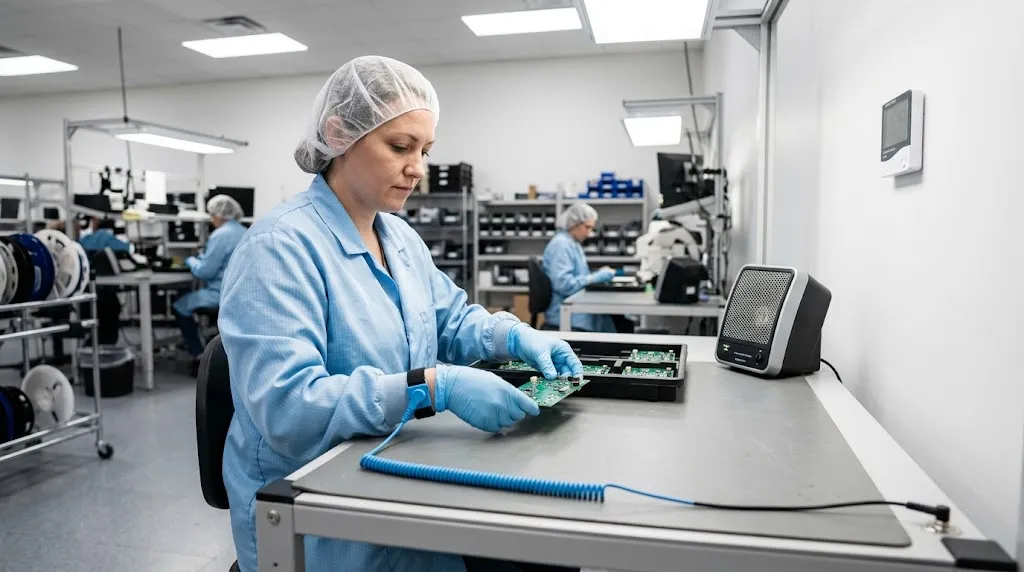
- Electronics and semiconductor manufacturing: Electrostatic discharge (ESD) control in these facilities is commonly supported by RH at or above 45% to 50%. Wetting printed circuit boards or wafers is a yield-critical failure mode. That makes non-wetting delivery under proper system design central to electronics manufacturing humidification.
- Data centers: In these facilities, data center humidification systems must hold RH within ASHRAE-recommended ranges for server hardware. Server racks and equipment must stay dry throughout.
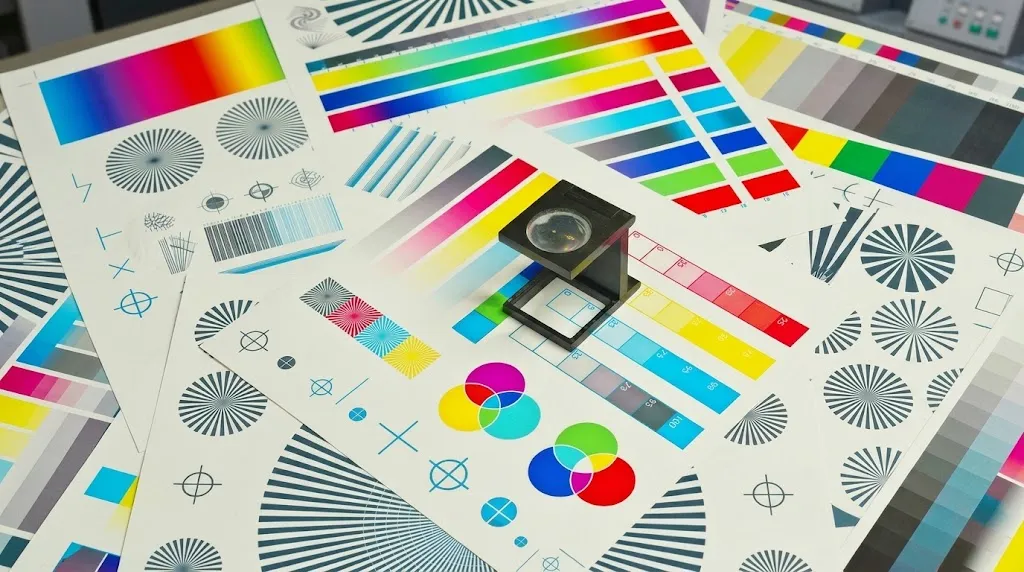
- Printing facilities: Paper moisture content must stay within tight tolerances to prevent misregistration and dimensional instability. Effective printing facility humidity control typically targets 45% to 55% RH with minimal variance.
- Food processing and cold storage: In these environments, food processing humidification must maintain product moisture and keep surfaces dry. It also must avoid creating conditions that support microbial growth.
- Aerospace and defense manufacturing: Sensitive materials and precision assemblies in these facilities can't tolerate surface moisture during production.
Facilities still weighing adiabatic options can compare the two main approaches directly. For a detailed technical comparison, see dry fog vs high-pressure fog systems.
How Smart Fog Delivers Dry Fog Humidification at Industrial Scale
The comparison above points to one conclusion for wetting-sensitive facilities. Under proper system design, an equal-sized droplet grid removes the surface-wetting risk that drives their specification decisions.
Electronics, printing, data center and food processing operations all share that risk. This operating principle is the foundation of Smart Fog's industrial humidification systems.
The Equal-Sized Droplet Grid: Why Non-Wetting Is a Mechanical Outcome, Not a Feature Claim
Compressed air and water are combined through a proprietary nozzle to produce an equal-sized droplet grid. Each droplet carries a slight electrostatic charge that keeps droplets from merging into larger masses that would settle on surfaces. Equal in size and kept apart, the droplets self-evaporate into the surrounding air before reaching any surface under proper system design.
That behavior follows from the physics of the droplet grid, not from a marketing assertion. Surfaces, equipment racks and server hardware stay dry when the system suits the facility's geometry and airflow. Printed circuit boards and sensitive materials are protected the same way.
Three system characteristics define that outcome. Each one follows directly from the nozzle design.
- Droplet behavior: The equal-sized droplet grid and its slight charge prevent re-aggregation. Together, they keep droplets airborne until they evaporate.
- Non-wetting scope: Non-wetting applies to surfaces within the designed operating envelope under proper system design. Objects placed directly in the fog stream will get wet. That's a physics statement about how the system works, not a design flaw.
- Technology classification: Dry fog is adiabatic. It's distinct from both high-pressure misting and steam.
You can explore the full mechanism on the Smart Fog technology overview page.
Precision, Efficiency, and Maintenance at Industrial Scale
Precision humidity control and low maintenance burden are the two operational outcomes that make dry fog the right fit for the facilities identified above. Smart Fog's industrial humidifier systems are designed to deliver both at once across 24/7 continuous industrial operation. The key specifications break down as follows.
- Precision: Systems maintain up to 99% RH with plus or minus 1 to 2% precision. They hold set points that evaporative systems can't reach at high RH levels.
- Water efficiency: Water efficiency is 100%, since every drop evaporates into the air. No water is wasted. Drainage isn't required either. Under proper system design, no water accumulates on surfaces.
- Moving parts: The humidification process has none. Reliability doesn't depend on mechanical components that wear under continuous operation.
- Maintenance intervals: Intervals extend up to every two years. That compares with the ongoing obligations of steam descaling and evaporative media replacement.
- Installation: No certified technician is required. Smart Fog delivers a complete engineered system, not a component kit that needs separate integration work.
- Operation: Systems run in set-and-forget mode at industrial scale. They're made in the USA with high-quality components.
These systems are designed for direct compatibility with existing heating, ventilation and air conditioning (HVAC) infrastructure. Facilities evaluating HVAC humidification systems integration options can find configuration details on the dry fog commercial humidifier technology page.
Final Thoughts
Every technology in this comparison serves a distinct facility profile. Steam is the mandatory specification where sterility is a regulatory requirement. Evaporative fits large-volume general conditioning when low energy cost matters more than precision.
Dry fog is the correct specification where requirements center on precision above 70% RH and minimal maintenance, with no surface wetting under proper system design. The selection isn't a matter of preference. It follows from your facility's performance requirements, compliance obligations and total cost of ownership over the system's life.
The criteria in this article provide the framework. Whichever technology satisfies all your governing criteria is the correct specification, regardless of type. Facility engineers and procurement leads building a specification for precision-critical or non-wetting environments can contact Smart Fog engineers to discuss design requirements for their facility.
FAQ
What is the most energy-efficient type of industrial humidifier?
Evaporative humidification is the most energy-efficient type of industrial humidifier, since its energy input is limited to fan operation. Dry fog humidification needs compressed air energy and sits between evaporative and steam in energy cost. Steam humidification is the most energy-intensive option at approximately 0.7 kWh per kilogram of water evaporated.
What are the main differences between steam and evaporative humidification in industrial settings?
Steam and evaporative humidification differ mainly in energy use, output sterility and microbial risk. Boiling water into sterile vapor gives steam humidification a significantly higher energy cost. Evaporative humidification uses no heat energy and produces non-sterile output with Legionella and biofilm risk unless water is actively treated.
What makes dry fog humidification non-wetting, and does it work for all industrial surfaces?
Dry fog humidification is non-wetting under proper system design, since its equal-sized droplets carry a slight charge and self-evaporate before reaching any surface. The effect covers every industrial surface within the system's designed operating envelope. Anything placed directly in the fog stream's path will still get wet.
Which type of industrial humidifier carries the highest Legionella risk, and how is that risk managed?
Evaporative and ultrasonic humidifiers carry the highest Legionella risk among common industrial humidifier types. Both hold water in reservoirs or wetted media at temperatures that can support bacterial growth without heat-treating their output. Managing that risk takes an active biocide water treatment program, regular media replacement and system monitoring in line with ASHRAE Guideline 12-2020.
Steam sits at the low-risk end of the spectrum, since boiling kills viable organisms before output leaves the system. Dry fog systems carry lower risk than evaporative and ultrasonic technologies due to minimal reservoir dwell time.
What ASHRAE standards govern industrial humidification technology selection?
The main ASHRAE documents for humidification technology selection are Standard 62.1, Guideline 12-2020 and Standard 188. Standard 62.1 sets minimum ventilation and indoor air quality requirements for occupied spaces, including the RH bands systems operate within. Guideline 12-2020 supports Standard 188 with detailed guidance on managing Legionella risk in building water systems.
When is steam humidification required over adiabatic alternatives in industrial facilities?
Steam humidification is required over adiabatic alternatives when a facility has a regulatory mandate for sterile humidity output. This requirement applies to pharmaceutical manufacturing, hospital operating theaters and cleanrooms where a sterile air supply is mandated. In these settings, adiabatic technologies including dry fog can't meet the sterility requirement without additional treatment infrastructure.
Facilities without a sterility mandate may not need steam's sterile output. Steam then carries the highest energy cost of any industrial humidification type with little offsetting benefit.
What types of industrial facilities are best suited to dry fog humidification systems?
Dry fog humidification is best suited to facilities that need precision control above 70% RH or protection from surface wetting. It also fits operations that require 24/7 running with minimal maintenance.
Typical examples include electronics and semiconductor manufacturing, data centers and printing facilities. Food processing and cold storage fit as well, along with aerospace, defense and non-sterile pharmaceutical environments.
How does dry fog humidification differ from high-pressure misting in industrial applications?
Dry fog differs from high-pressure misting because its equal-sized, lightly charged droplets self-evaporate before surface contact under proper system design. High-pressure misting can produce larger or non-uniform droplets that may not fully evaporate before they hit a surface. Droplet behavior decides which adiabatic technology is acceptable in wetting-sensitive facilities such as electronics manufacturing or data centers.