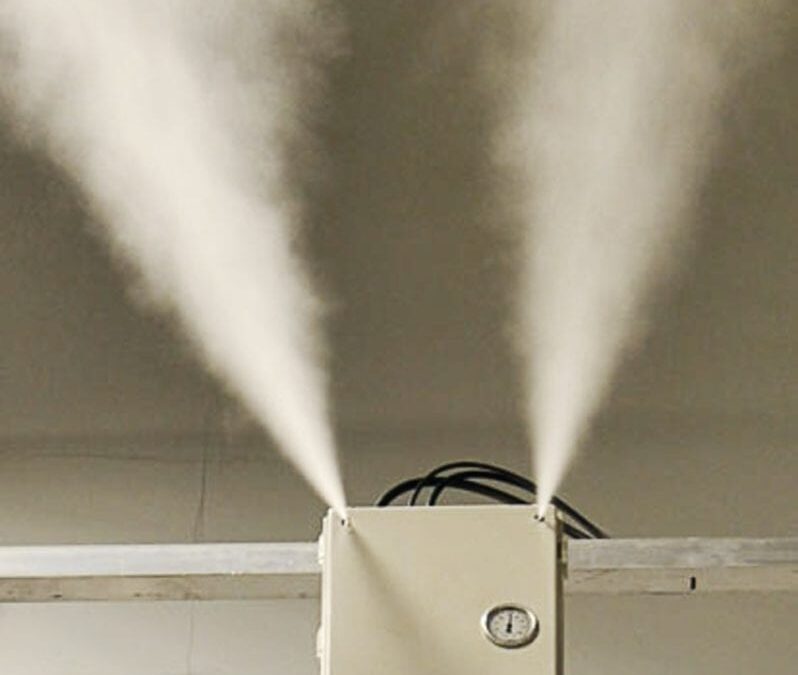
The purchase price of an industrial humidifier is rarely where the real cost lies. Facilities that evaluate humidification on upfront price alone routinely discover that maintenance labor, add-on components, energy consumption, and humidity failures accumulate into...
Low relative humidity (RH) is a recognised environmental contributor to sick building syndrome (SBS), and maintaining RH within a research-supported range is one of the most controllable interventions available to facility operators. This article explains the causes...
Precise humidity control in industrial and commercial facilities protects equipment, preserves materials, reduces electrostatic discharge (ESD) risk, and supports workforce health and heating, ventilation, and air conditioning (HVAC) efficiency. This article covers...
Precise humidity control means two things simultaneously: maintaining a target relative humidity (RH) level within a tight tolerance with minimal fluctuation, and delivering moisture that evaporates completely before contacting any surface. A system that achieves one...
Humidifier lifespan varies significantly by system type. Portable ultrasonic and evaporative units typically last 2 to 5 years under regular residential use. Whole-house heating, ventilation, and air conditioning (HVAC)-connected systems are rated for 10 to 15 years....
Vertical farms require precision humidity control between 60-80% RH across multiple growing levels without the natural ventilation that traditional greenhouse operations depend on. Unlike greenhouse facilities that benefit from outdoor air exchange and thermal mass...