 Made in USA

- Purchase price typically represents the smallest share of total humidification cost over a system's operational life; maintenance labor, energy consumption, add-on components, and humidity failure costs are where TCO accumulates.
- Many humidification systems require supplemental fans, evaporative chambers, or drain pans that are not included in initial pricing but are necessary for the system to function as specified.
- Steam humidifiers require thermal energy to heat water to vapor, making them the highest energy-input option; compressed-air systems eliminate the thermal load entirely.
- ASHRAE defines recommended relative humidity (RH) ranges for most facility types; systems unable to maintain precision within those ranges introduce compliance and product quality risk.
- Electrostatic discharge (ESD) damage caused by low humidity is a documented cost driver in electronics, pharmaceutical, and defense environments, where ASHRAE guidance on minimum humidity levels for occupied spaces recommends a minimum of 30% RH.
- Smart Fog systems are engineered for maintenance intervals up to two years with no moving parts in the humidification process, reducing the two largest recurring cost categories for most industrial facilities.
Where Industrial Humidification Costs Actually Come From
Purchase price is typically the smallest component of total humidification cost over a system's operational life. Understanding where costs actually accumulate requires a framework built around total cost of ownership (TCO), not unit price. The five cost categories this article covers are: add-on component costs, energy consumption, maintenance labor, unplanned downtime, and the cost of humidity failures themselves. Each is commonly underestimated at procurement because proposals often price hardware, not operational consequences.Purchase Price vs. Total Cost of Ownership
TCO includes initial purchase, installation, energy, maintenance labor, repair parts, unplanned downtime, and the cost of process or product failures caused by inadequate humidity control. Systems with lower purchase prices frequently carry higher TCO because of maintenance demands and undisclosed add-on requirements. A system that is inexpensive to buy but requires quarterly service visits, supplemental infrastructure, and manual monitoring will cost more over five years than a higher-priced system designed to operate without those demands.Why Industrial Facilities Face Different Cost Pressures Than Residential Installations
Industrial humidification runs continuously, often 24 hours a day, across large conditioned footprints where humidity variation directly affects product quality, equipment performance, and regulatory compliance. A residential humidifier that underperforms creates discomfort; an industrial humidifier that underperforms can generate product losses, equipment damage, and compliance failures. The cost consequences of humidity excursions in manufacturing, pharmaceutical, or cold storage environments are categorically different from anything a residential heating, ventilation, and air conditioning (HVAC) system faces.The Hidden Cost of Add-On Components
Many humidification systems are sold as components priced in isolation, and the infrastructure required to make them function as specified often arrives as a separate line item after installation. One documented example: a facility purchased an energy-efficient adiabatic humidification system, experienced surface wetting and uneven humidity distribution after commissioning, and was then advised by the supplier to outfit the facility with additional fans throughout, at additional cost, with imperfect results. That is not an unusual outcome; it is a predictable consequence of buying a component rather than a complete system. Common add-on requirements that may not appear in initial proposals include evaporative chambers, drain pans, supplemental distribution fans, and additional water treatment components. Reviewing commercial humidifiers: types, technologies, and how to choose before finalizing a proposal helps procurement teams identify which technology types carry these dependencies.What "Complete Solution" Means in Humidification Procurement
A component kit provides hardware: nozzles, manifolds, or controllers that require separate engineering, installation, and commissioning scope. A complete engineered system is designed, delivered, and commissioned as a unit with no undefined integration gaps. Smart Fog, for example, designs and delivers the full system with no certified technician required for installation. When evaluating any humidification proposal, the question is not only what the hardware costs, but what additional scope, infrastructure, and labor the system requires before it can perform as specified.Questions to Ask Before Signing a Humidification Proposal
Before committing to any humidification system, procurement teams should confirm answers to the following:- Is drain infrastructure required, and who supplies and installs it?
- Are supplemental fans or evaporative chambers included in the quoted scope?
- What happens if humidity does not distribute evenly after commissioning?
- Who is responsible for commissioning, and what does the system verification process include?
- What are the expected maintenance intervals and who performs service?
Maintenance Costs and Service Interval Economics
Maintenance cost in humidification is driven by three architectural factors: the number of moving parts, the presence of high-voltage or heating components, and whether the system wets surfaces or creates standing water. Each factor determines how frequently a system must be serviced and how much labor each service event requires. Systems with moving parts wear on a predictable schedule and require component replacement. Systems that create condensation or standing water require more frequent cleaning and sanitation to prevent mold growth. Systems using high-voltage heating elements carry both energy cost and component replacement cost over time. Understanding humidifier maintenance intervals and what to expect across technology types allows facilities to calculate approximate annual maintenance labor before a system is purchased.How Technology Type Affects Maintenance Frequency
Maintenance burden varies significantly across humidification technology types. The relevant dimensions are moving parts, heating element wear, surface wetting risk, and nozzle or filter service requirements. Moving parts:- Steam: Heating elements, pumps, and control valves require scheduled inspection and replacement.
- Ultrasonic: Transducer components are sensitive to mineral fouling and require regular cleaning.
- Adiabatic: Fan motors and evaporative media require periodic service if distribution design is inadequate.
- Compressed-air precision (Smart Fog): No moving parts in the humidification process; no wear-driven component replacement schedule.
- Steam: Condensation risk at points of vapor delivery if system sizing or placement is incorrect.
- Ultrasonic humidifier: Mineral-laden droplets can settle on surfaces if water quality is not managed.
- Adiabatic: Surface wetting risk if evaporation distance is insufficient or distribution is uneven.
- Compressed-air precision (Smart Fog): Self-evaporating droplet grid eliminates surface wetting under proper system design.
What Maintenance Intervals to Expect Across System Types
Service frequency is a direct multiplier on annual maintenance labor cost. For context on how long do commercial humidifiers last and what service demands look like over a system's life, many commercial humidifiers require quarterly or semi-annual service. Steam systems with heating elements often require descaling on a similar schedule. Smart Fog systems are engineered for maintenance intervals up to two years, requiring only water and air filter service. A facility running continuous industrial humidification can calculate maintenance cost by multiplying service frequency by labor hours per event and projecting that across the system's intended operational life.Energy Consumption as a Recurring Humidification Cost
Energy cost in humidification is a function of both the technology selected and the annual operational hours. A facility running humidification continuously across a large footprint accumulates substantial energy cost that must be factored into TCO. The energy input mechanism determines how that cost scales. For HVAC humidification systems integrated into large facilities, the difference between technology types represents a meaningful recurring utility line item. The dry fog vs. steam vs. ultrasonic humidification technology comparison covers these energy mechanisms in detail for facilities evaluating options at the specification stage.Steam vs. Adiabatic vs. Compressed-Air Energy Input
Energy mechanism by technology type:- Steam: Requires thermal energy to heat water to vapor, making it the highest energy-input option in most configurations and carrying significant utility cost in continuous operation.
- Adiabatic: Lower energy than steam for the humidification process itself, but may require supplemental fan energy when distribution design is inadequate, partially offsetting that advantage.
- Compressed-air precision (Smart Fog): Uses compressed air and water at the nozzle with no thermal input; compressed air has its own energy cost but eliminates the steam thermal load entirely.
Calculating Energy Cost Over a System's Operating Life
The calculation framework is straightforward: identify the system's energy input type and rating, multiply by annual operational hours, and apply local utility rates. Facilities should request energy consumption specifications from every vendor under evaluation and build that figure into multi-year TCO modeling. A system that appears cost-competitive at purchase may carry a materially higher energy cost over five to ten years of continuous operation, which changes the procurement decision.The Cost of Humidity Failures
The cost of a humidification failure often exceeds the cost of the system itself. That is not a dramatic claim; it reflects the documented consequences of operating outside recommended humidity ranges in environments where product quality, equipment integrity, or regulatory compliance depends on stable humidity control. ASHRAE Standard 55 defines recommended relative humidity ranges for most facility and occupancy types. Systems that cannot hold precision within those ranges introduce compliance risk, product loss, and equipment damage as recurring cost categories, not one-time events.Low Humidity Costs: Static Electricity, Product Damage, and Dry Air Effects
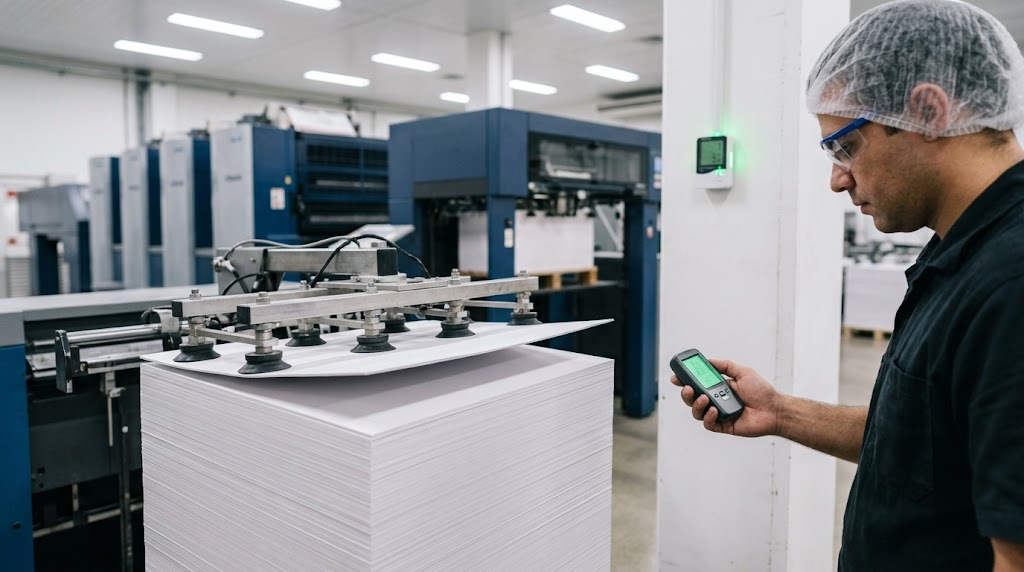
When relative humidity falls below recommended thresholds, static electricity becomes a direct production cost. In electronics manufacturing, PCB production, and pharmaceutical powder handling, ESD events damage components and product with consequences that accumulate quickly. ASHRAE recommends maintaining a minimum of 30% RH in occupied spaces, and many electronics and defense manufacturing standards require tighter control to manage ESD risk. Dry air also degrades hygroscopic materials: paper products lose dimensional stability below 45% RH, wood products crack, and food products dry out in ways that affect yield and shelf life.High Humidity and Surface Wetting Costs: Mold, Corrosion, and Product Loss
Over-humidification and surface wetting create a different set of costs: mold growth on products or building surfaces, corrosion on equipment and storage racks, and product loss in environments where humidity distribution is uneven. The crop damage scenario described earlier in this article is one example; pharmaceutical and food processing facilities face analogous risks when humidity exceeds validated ranges or when a system wets surfaces rather than evaporating water vapor into the air. A non-wetting humidification system, under proper system design, removes surface wetting from the cost calculation entirely, because no liquid contacts surfaces, racks, or products in normal operation.How Smart Fog Eliminates the Most Common Humidification Cost Drivers
Producing an equal-sized droplet grid of self-evaporating droplets is the architectural decision that eliminates the largest cost categories covered in this article. Because each droplet fully evaporates before reaching any surface under proper system design, condensation does not form, drain pans are not required, and supplemental fans are not needed to prevent surface wetting. The add-on component cost category is removed by the physics of the system, not by a service agreement. A note on the non-wetting characteristic: it applies to surfaces under proper system design. Direct exposure to the fog stream will wet the surface in question. This applies to any application where personnel or objects are placed directly in the discharge path. The Smart Fog technology overview details the operating principles behind the equal-sized droplet grid and how system design parameters are established for each facility type.No Add-On Requirements Under Proper System Design
Smart Fog designs and delivers a complete humidification system, not a component kit requiring separate integration scope. Key cost-reduction characteristics under proper system design include:- No drain pans required: self-evaporating droplets eliminate standing water as an infrastructure requirement.
- No supplemental fans required: the equal-sized droplet grid distributes humidity without additional air movement equipment.
- No evaporative chambers required: droplets evaporate in the air column before contact with any surface.
- No certified technician required for installation: the system is engineered for straightforward commissioning.
Maintenance Intervals, No Moving Parts, and Precision at 99% RH
Three operational specifications define the cost profile of Smart Fog systems relative to the cost categories this article has covered. To understand how these compare to other approaches, check out our Smart Fog advantages page for the full specification basis.- Maintenance intervals: Engineered for service intervals up to two years, with only water and air filter replacement required. This reduces annual maintenance labor cost compared to systems requiring quarterly or semi-annual service events.
- No moving parts: No wear-driven component replacement schedule in the humidification process, eliminating the recurring repair parts cost that affects systems with pumps, fans, or moving nozzle assemblies.
- Precision at 99% RH: Smart Fog maintains humidity levels up to 99% RH with plus or minus 1 to 2 percent precision, keeping facilities within ASHRAE-recommended humidity ranges without manual monitoring overhead. Reviewed alongside humidity control systems options, this precision level eliminates the product risk cost associated with humidity excursions.