

 Made in USA

- An in-duct humidifier mounts inside the supply duct and uses existing HVAC airflow to distribute humidity throughout the facility, requiring only a water supply connection and control integration for installation.
- The three main in-duct technology types are bypass evaporative, fan-powered evaporative, and steam injection; each differs in moisture generation method, absorption distance requirement, precision, and maintenance burden.
- Inadequate absorption distance is one of the most common causes of duct wetting and scale accumulation in improperly specified in-duct systems; droplet uniformity directly determines how much straight ductwork a system requires.
- Industrial facilities often require plus or minus 1-2% relative humidity (RH) precision, continuous 24/7 operation, and non-wetting delivery, humidifier performance thresholds that bypass evaporative systems are not capable of meeting.
- The Smart Fog TS100 uses compressed air and water through a proprietary nozzle to produce an equal-sized droplet grid that self-evaporates before contacting duct walls or downstream components, under proper system design, enabling humidity delivery up to 99% RH with plus or minus 1-2% precision.
- Maintenance intervals for well-engineered adiabatic in-duct systems can extend to every two years, compared with monthly or seasonal service requirements for bypass evaporative and steam systems.
What Is an In-Duct Humidifier and How Does It Fit Into an HVAC System
An in-duct humidifier is installed directly inside the supply duct, upstream of the conditioned space, so the HVAC blower carries humidified air through the facility distribution network. The humidistat or humidity sensor communicates with the system controller to modulate output, functioning alongside the thermostat as part of the building's environmental control infrastructure. In-duct placement distinguishes this format from direct-space or room-mounted units, which humidify air within the room itself rather than within the duct system. Because the HVAC system's existing airflow handles distribution, in-duct integration is efficient for large spaces, multi-zone facilities, and environments where uniform humidity across the floor is a requirement. The two primary installation inputs are the water supply connection and the control integration with the building management system. No separate fan or blower is required; the air handling unit provides the transport energy. Key installation positions for in-duct humidifiers:- Downstream of the heating coil in the supply duct, where air temperature supports evaporation
- Upstream of final distribution branches, to allow maximum absorption distance before bends and diffusers
- Integrated with duct-mounted humidity sensors that feed real-time RH data to the control system
In-Duct vs. Direct-Space Humidifiers
In-duct systems deliver humidity through the HVAC distribution network, using duct velocity and thermal energy for both evaporation and transport. Direct-space systems, such as the Smart Fog ES100 direct-space humidifier, humidify the room air directly, independent of ductwork. In-duct placement is generally preferred for large facilities, multi-room distribution, and controlled environments where humidity uniformity across zones is a design requirement.How an In-Duct Humidifier Works: The Core Mechanism
Water is introduced into the moving airstream inside the duct, where heat and airflow velocity cause it to evaporate and mix with the dry air before distribution. In adiabatic systems, the thermal energy for evaporation comes from the air itself, which produces a slight temperature drop downstream. Steam injection systems introduce pre-evaporated vapor directly, bypassing the evaporation step and the absorption distance requirement that adiabatic delivery demands. The humidity sensor or humidistat signals the system to add moisture when measured RH falls below the setpoint, and the control loop adjusts output in response to real-time conditions without manual intervention. When a system is undersized, oversized, or installed without adequate absorption distance, the consequences are direct: ductwork condensation, scale buildup, and surface wetting on downstream components or furnished spaces. Properly sizing the system for the airstream conditions is not optional engineering; it is the condition under which non-wetting performance is achieved.The Role of Absorption Distance in Duct Humidification
Absorption distance is the length of straight ductwork required for droplets to fully evaporate before reaching a bend, a coil, a diffuser, or a conditioned surface. Inadequate absorption distance is one of the most common causes of duct wetting and scale accumulation in improperly specified systems. Droplet uniformity and energy content determine how much straight duct run a given system requires; non-uniform droplets re-aggregate, increasing effective droplet mass and extending the evaporation distance unpredictably.Humidity Sensors and Automated Control
Commercial-grade humidity control systems use automated control loops that adjust moisture delivery based on real-time sensor feedback, removing the need for manual adjustment. The humidity controllers translate sensor readings into output commands, holding the humidity level within the target band continuously. In industrial environments operating 24/7, this automated response is the mechanism that sustains precision over extended periods without operator intervention.Types of In-Duct Humidifiers
The commercial humidifiers types and technologies available for in-duct installation differ not just in how they generate moisture, but in the engineering trade-offs they impose on the facility. Choosing the wrong type for an industrial application results in either inadequate precision, excessive maintenance, or surface wetting risk inside the ductwork itself. Moisture generation method- Bypass humidifier: Passes furnace or air handling unit airflow over a water panel or evaporative pad; moisture enters the airstream passively through evaporation. Requires a bypass duct connection off the main supply duct.
- Fan-powered evaporative: Uses a dedicated internal fan to force air across evaporative media, independent of furnace airflow; more consistent output than a bypass humidifier but still media-dependent.
- Steam humidifier: Heats water with an electric element to generate steam, then injects vapor directly into the duct; no airstream evaporation required.
- Bypass humidifier: Moderate; dependent on media saturation level and duct airspeed. Over-saturation or low airspeed increases condensation risk.
- Fan-powered evaporative: Similar to bypass; media condition and airspeed govern saturation risk.
- Steam humidifier: Low under normal operating conditions; vapor is already evaporated at the point of injection.
- Bypass humidifier: Requires adequate downstream straight duct for full evaporation and mixing.
- Fan-powered evaporative: Requires downstream absorption distance; consistent fan output reduces but does not eliminate the requirement.
- Steam humidifier: Minimal absorption distance required; vapor disperses rapidly into the airstream.
- Bypass humidifier: Water panel or evaporative pad requires periodic replacement; scale accumulation on the panel is common in hard-water installations.
- Fan-powered evaporative: Media replacement plus fan motor inspection; more mechanical components than a bypass humidifier.
- Steam humidifier: Heating element descaling is required on a regular schedule; higher maintenance frequency than adiabatic alternatives.
- Bypass humidifier: Limited; output depends on furnace operation and ambient temperature. Not suited for tight RH tolerance.
- Fan-powered evaporative: Better than bypass but still limited by media and fan variability. Not suited for plus or minus 1-2% RH control.
- Steam humidifier: Capable of reasonable precision; energy cost is higher and heating element degradation affects long-term stability.
Adiabatic In-Duct Humidification
Adiabatic in-duct systems use compressed air and water atomized through a nozzle to produce a fine droplet grid that self-evaporates in the airstream. The thermal energy for evaporation comes from the air itself rather than an external heat source, drawing less energy than electric steam systems and producing no steam. Precision and non-wetting performance in an adiabatic system depend on droplet uniformity; non-uniform droplets re-aggregate and may not fully evaporate, while an equal-sized, slightly charged droplet grid resists re-aggregation and evaporates predictably, reducing surface wetting risk and absorption distance requirements.What Industrial Facilities Require From In-Duct Humidification
Residential and light-commercial in-duct humidifiers are designed for comfort, not precision. Industrial facilities operate under different engineering constraints: tighter RH tolerance, continuous operation, non-wetting delivery, and integration with building management or SCADA systems. A whole-house humidifier designed for a furnace system is not an appropriate specification for a pharmaceutical cleanroom or a data center raised floor environment. Per HVAC humidification systems design standards for controlled environments, the gap between residential and industrial humidity requirements is defined by both precision and consequence. Facilities where humidity deviates from setpoint by more than a few percent face direct operational or compliance risk, not just discomfort. Industrial sectors with the most demanding in-duct humidity requirements:- Data centers: ASHRAE TC 9.9 recommends maintaining RH between 20% and 80% to prevent electrostatic discharge (ESD) events and condensation on server hardware; non-wetting delivery is a minimum requirement to protect active equipment.
- Pharmaceutical manufacturing: GMP regulations require documented humidity control within defined RH bands; process deviations from humidity excursions can trigger batch failure and regulatory findings.
- Electronics and PCB manufacturing: Electronics manufacturing humidification requires consistent RH above 40% to suppress ESD, which can damage components at energy levels below human perception; per ANSI/ESD S20.20, controlled environments must maintain defined humidity thresholds.
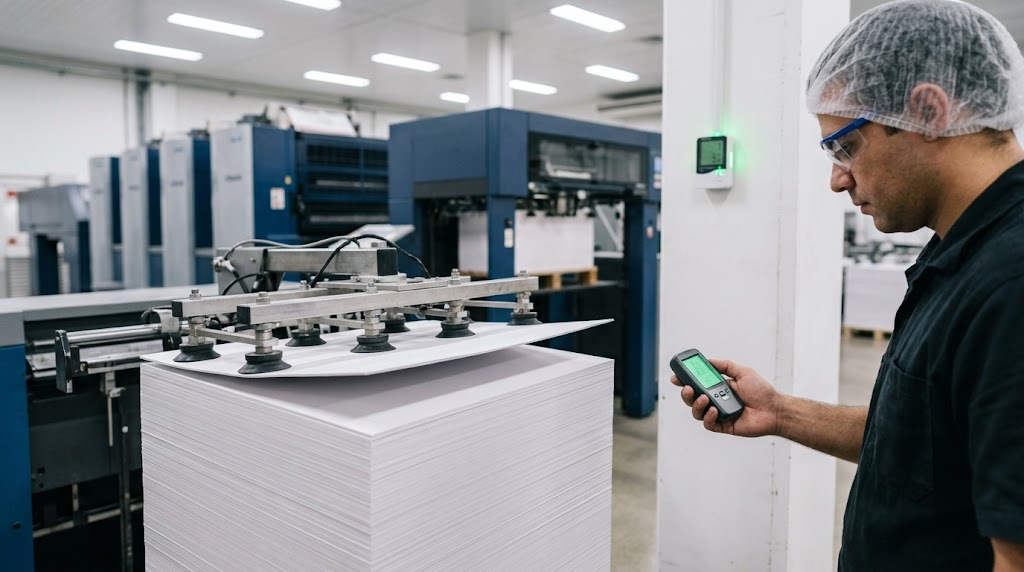
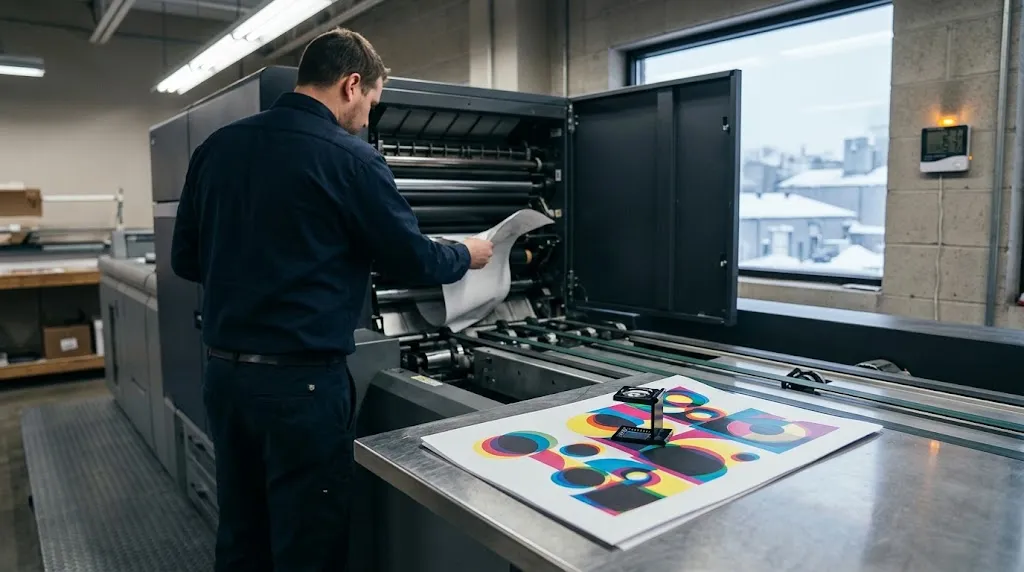
- Printing facilities: Paper moisture content varies with ambient RH, affecting registration, curl, and ink adhesion; maintaining a stable indoor air environment prevents sheet-to-sheet variation.
Non-Wetting Delivery as an Industrial Requirement
Non-wetting delivery is not a premium feature in industrial settings; it is a minimum specification. Surface wetting inside ductwork causes corrosion, scale buildup, and potential downstream contamination of conditioned spaces. Wetting on server racks, printed circuit boards (PCBs), or pharmaceutical production equipment creates immediate operational and compliance risk that cannot be corrected after the fact. Non-wetting performance requires that all droplets evaporate before any surface contact. This depends on droplet uniformity, charge separation to prevent re-aggregation, and proper system design for the installation. Under proper system design, Smart Fog systems humidify without wetting surfaces; direct exposure to the fog stream will wet the surface.Precision Humidity Control in Controlled Environments
Plus or minus 1-2% RH precision means the system must respond quickly to humidity fluctuations, deliver moisture in exact quantities, and operate from sensors providing continuous real-time feedback. Bypass evaporative systems are not capable of this precision; output depends on furnace cycling and media saturation, which introduces variability that exceeds the required tolerance. Adiabatic systems with automated control loops and no moving parts in the humidification process are designed to achieve and hold tight tolerances across extended operating periods without the degradation in output accuracy that heating element wear introduces in steam systems.Smart Fog TS100: In-Duct Humidification for Industrial Facilities
Producing an equal-sized droplet grid with a slight charge on each droplet is what separates adiabatic in-duct delivery from conventional evaporative or steam approaches. Each droplet resists re-aggregation and self-evaporates before reaching any duct wall, downstream coil, or conditioned surface, under proper system design. This is the operating principle of the Smart Fog TS100 in-duct humidifier, engineered specifically for the industrial precision and non-wetting requirements this article describes. The TS100 is not a component kit. It is a complete engineered solution designed for 24/7 continuous industrial operation with no moving parts in the humidification process. Key performance specifications:- Humidity delivery up to 99% RH with plus or minus 1-2% precision
- 100% water efficiency: every droplet evaporates into the airstream
- No moving parts in the humidification process
- Maintenance intervals that extend up to every two years
- Installation does not require a certified technician
- Non-wetting delivery under proper system design; direct exposure to the fog stream will wet the surface
How the TS100 Integrates With Existing Ductwork
The TS100 mounts inside the supply duct and connects to a compressed air supply and a water supply line. The existing HVAC airstream handles distribution; no ductwork redesign is required in most applications. Automated humidity control responds to sensor feedback continuously, maintaining the target humidity level without manual intervention and integrating with existing building management infrastructure.Performance Specifications and Facility Applications
The TS100 is commonly specified across facilities where indoor air quality, equipment protection, and process compliance converge on humidity as a critical variable. The industrial humidifiers buyer's guide details selection criteria across facility types; for the TS100, the most common applications are:- Data center humidification: Non-wetting delivery protects server hardware while maintaining ASHRAE TC 9.9 RH recommendations without condensation risk on active equipment.
- Pharmaceutical manufacturing humidification: Precise RH control within documented bands supports GMP compliance and prevents humidity-related process deviations.
- Electronics and PCB manufacturing: Consistent humidity above 40% RH suppresses ESD events; non-wetting delivery eliminates condensation risk on sensitive board assemblies.
- Printing facilities: Stable indoor air prevents paper moisture variation that causes curl, misregistration, and adhesion failure.
- Cleanrooms and cold storage: Precision delivery maintains process conditions without introducing surface moisture that compromises sterile or temperature-controlled environments.