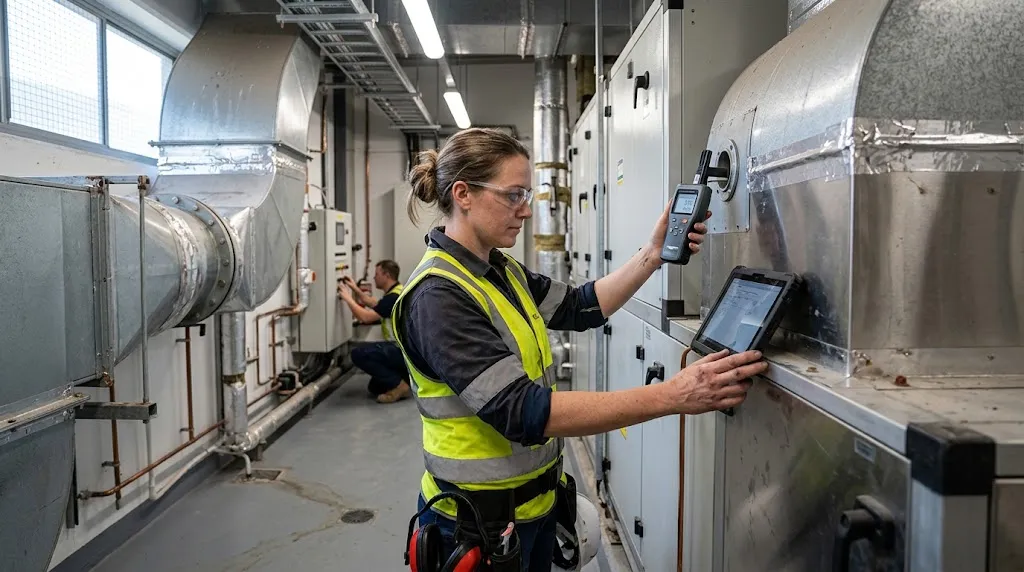
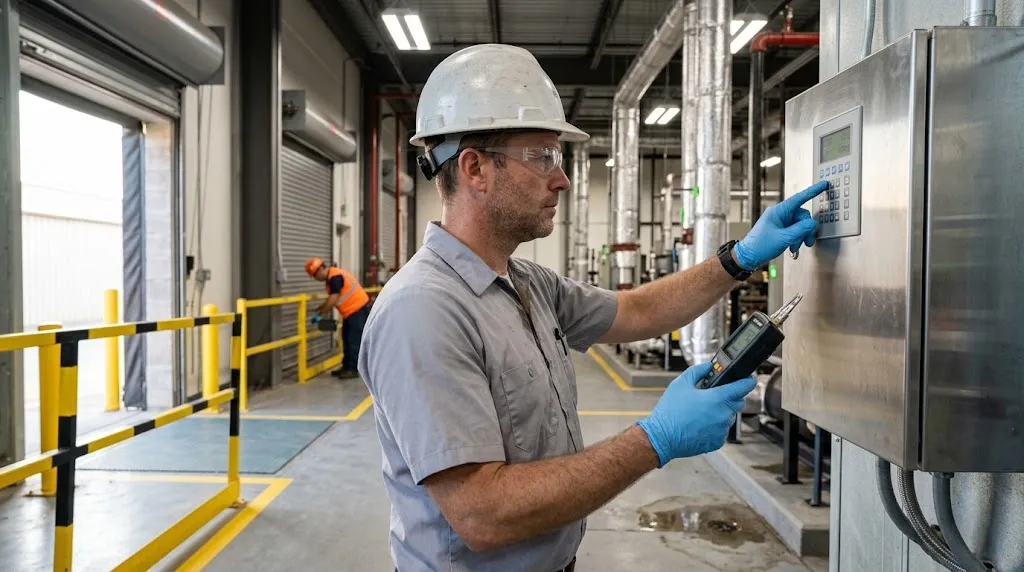
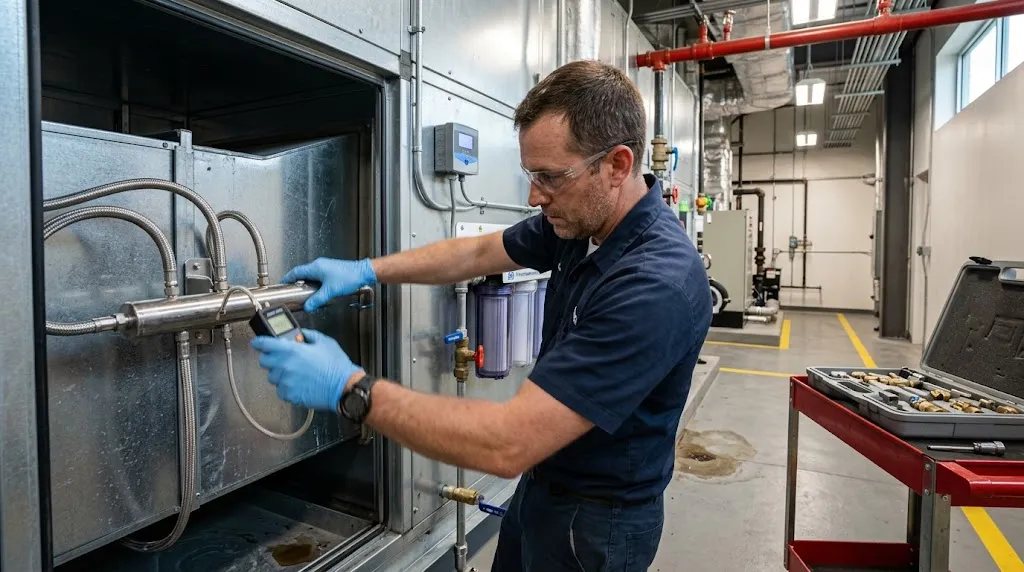
- Automated control helps keep indoor humidity more consistent
- Stable moisture levels help protect property and sensitive equipment
- Modern controllers make humidity management easier and more precise
- Better humidity control supports comfort and indoor air quality
- Reliable systems help prevent problems caused by sudden air changes
What a Humidity Controller Does
A humidity controller acts as the central system for managing moisture levels in a space. It connects sensors with climate equipment to keep indoor air within a set range without constant manual adjustment.The Sensing and Control Loop Explained
A humidity controller works through a continuous feedback loop that monitors and adjusts conditions in real time. A sensor tracks current relative humidity and sends data to the controller, which activates a humidifier or dehumidifier when levels move outside the set range. Once the target level is reached, the system shuts off to avoid excess moisture or dryness. This cycle repeats automatically, keeping conditions stable even as external weather changes.Setpoint, Deadband, and Response: How Stability Is Achieved
System stability depends on key settings that control when and how the equipment operates. The setpoint defines the target humidity, while the deadband creates a buffer to prevent rapid on-off cycling that can wear out components. These settings help the controller respond only when needed, improving efficiency and extending equipment life. A well-configured system maintains consistent conditions and protects sensitive environments from moisture-related issues.Humidistat vs Humidity Controller: What's the Difference
Both devices regulate moisture, but they differ in how precisely they control the environment. A basic humidistat works as a simple switch, while a modern controller uses advanced logic to maintain tighter, more stable conditions.How a Humidistat Works
A humidistat functions as an on-off switch that activates a humidifier or dehumidifier when humidity crosses a set limit. It is simple and effective but cannot adjust output levels or prevent fluctuations. Because it relies on basic logic, it often leads to wider swings in humidity. This makes it suitable for general use but less reliable in precision environments.How a Proportional Humidity Controller Works
A humidity controller uses digital sensors and continuous feedback to maintain a stable range instead of a single threshold. It can manage both humidity and temperature for more refined control. This allows the system to avoid rapid cycling and maintain consistent conditions. As a result, it delivers better accuracy and smoother environmental stability.Why the Difference Matters for Precision Environments
In controlled environments, even small fluctuations can affect results and performance. Advanced controllers help maintain stable conditions, which is critical for sensitive applications. Here is how they compare in real use:- Stability improves with controllers that reduce sudden humidity swings
- Integration allows monitoring of both temperature and moisture together
- Reliability increases with accurate digital sensors and real-time control
Types of Humidity Controllers
Humidity controllers range from simple switches to advanced systems built for precise environments. Choosing the right type depends on how much control, accuracy, and automation your setup requires.On/Off Humidistats
These are basic devices that work like a switch, turning a humidifier or dehumidifier on or off at a set level. They are easy to install and suitable for simple setups where precision is not critical. Because they rely on fixed thresholds, they can cause noticeable fluctuations. This makes them better for general use rather than controlled environments.Digital Humidity Controllers
Digital controllers offer higher accuracy and better stability through real-time monitoring. They use sensor probes and advanced logic to maintain tighter humidity ranges. Many models also support remote monitoring through WiFi, making them convenient for continuous tracking. This makes them ideal for growing rooms and other controlled spaces.Temperature and Humidity Controllers
These controllers manage both temperature and humidity together, which is important for environments like incubators. They can control multiple devices such as heaters, fans, or foggers at the same time. This dual control helps maintain a stable microclimate. It is especially useful where both heat and moisture directly affect outcomes.Integrated Industrial Controllers
Industrial controllers are designed for demanding, large-scale environments. They are typically installed in panels and built for long-term, reliable operation. These systems offer strong durability and consistent performance. They are best suited for commercial facilities where downtime is not acceptable.What Commercial and Industrial Environments Require from a Controller
Large-scale environments demand highly reliable humidity control with minimal room for error. From greenhouses to labs and storage facilities, including those that rely on humidity-controlled storage to protect sensitive materials, controllers must manage complex conditions continuously without manual intervention.Precision Tolerances and Setpoint Stability
In commercial setups, even small humidity changes can impact yield and product quality. Advanced controllers use two-way logic to both add and remove moisture, keeping conditions tightly within the desired range. This stability helps prevent losses caused by inconsistent environments. It is a key factor that separates industrial-grade systems from basic consumer devices.Sensor Placement and Zone Control
Accurate control depends heavily on proper sensor placement across the environment. Sensors must reflect true average conditions, not localized moisture sources that can distort readings. Using remote probes and zone-based monitoring helps avoid micro-climates. This ensures consistent humidity across the entire facility.Continuous Operation and Fail-Safe Behaviour
Industrial systems must operate continuously without failure. Controllers often include alarms and fail-safe modes to prevent damage if sensors disconnect or conditions drift. These features protect sensitive environments and ensure stable operation even during unexpected issues. Reliable systems reduce risk and maintain process consistency. To understand how different environments rely on these systems, here are the key requirements:- Mushroom cultivation requires high humidity with accurate probe-based monitoring and controlled humidification
- Commercial brewing depends on stable curing conditions supported by ambient humidity tracking and two-way control
- Greenhouses focus on growth optimization through zone monitoring and balanced moisture control
- Cold storage relies on enclosure-based sensing and fail-safe logic to protect stored products