Selecting an industrial humidifier system for winter operation requires evaluating technology type, humidification capacity, energy efficiency, water quality requirements, and maintenance burden before specifying anything. This guide covers each criterion in sequence, including the compliance thresholds that constrain the specification for regulated industries.
Facility engineers and procurement managers who skip key design considerations for steam humidification in HVAC systems often discover the gap after installation. This is when a system sized for total volume fails to maintain relative humidity (RH) at the workstation level, or when a steam-based system consumes more energy than its specification implied.
Key Takeaways
- When cold outdoor air is heated to indoor temperatures without moisture addition, indoor RH can fall to approximately 10%, far below the ASHRAE Standard 62.1 30 to 60% RH recommendation for occupied commercial and industrial spaces.
- Industrial humidifier technologies divide into three functional categories: adiabatic systems, direct injection steam humidifiers, and heated tank humidifiers, each with distinct energy profiles, water quality requirements, and surface wetting risk.
- Humidification capacity must be calculated against facility volume, air change rate, target RH setpoint, and winter-low inlet conditions before any system can be correctly sized.
- Water quality, specifically hardness and total dissolved solids, directly determines which humidifier technology is viable for a given facility.
- Compliance-driven industries including pharmaceuticals, electronics manufacturing, and healthcare must treat RH targets defined by FDA, ISO, and ASHRAE standards as prerequisite inputs to system selection, not post-purchase considerations.
- Maintenance intervals vary significantly by technology: heated-tank and evaporative systems typically require weekly or monthly attention, while properly engineered adiabatic systems can extend service intervals to two years or longer.
Why Winter Is the Critical Time to Address Industrial Humidity
Winter creates a predictable and recurring humidity failure event in industrial facilities. The mechanism is straightforward: cold outdoor air drawn into a building through the heating, ventilation, and air conditioning (HVAC) system carries very little absolute moisture. When that air is heated to indoor temperatures, its capacity for moisture increases, but the actual moisture content stays the same, causing RH to collapse sharply.
What Happens to RH When You Heat Cold Air
The psychrometric relationship between temperature and humidity explains the seasonal pattern. A kilogram of outdoor air at 0°C and 80% RH carries roughly 3 grams of water vapor. Heated to 21°C, that same air mass may register below 15% RH without added moisture. Published data from AHRI indicates indoor RH can fall to approximately 10% in cold climates when outdoor air is heated without humidification, a level comparable to desert conditions.
ASHRAE Standard 62.1 sets the lower threshold for occupied commercial and industrial spaces at 30% RH, meaning winter conditions routinely push facilities into non-compliant territory before operations begin.
Winter Humidity Failures by Facility Type
The operational consequences differ by facility type, but all of them carry cost. In electronics and printed circuit board (PCB) manufacturing, RH below 30% increases electrostatic discharge (ESD) events, which can damage components and cause yield losses. Electronics manufacturing humidification requirements typically target 45 to 55% RH for this reason.
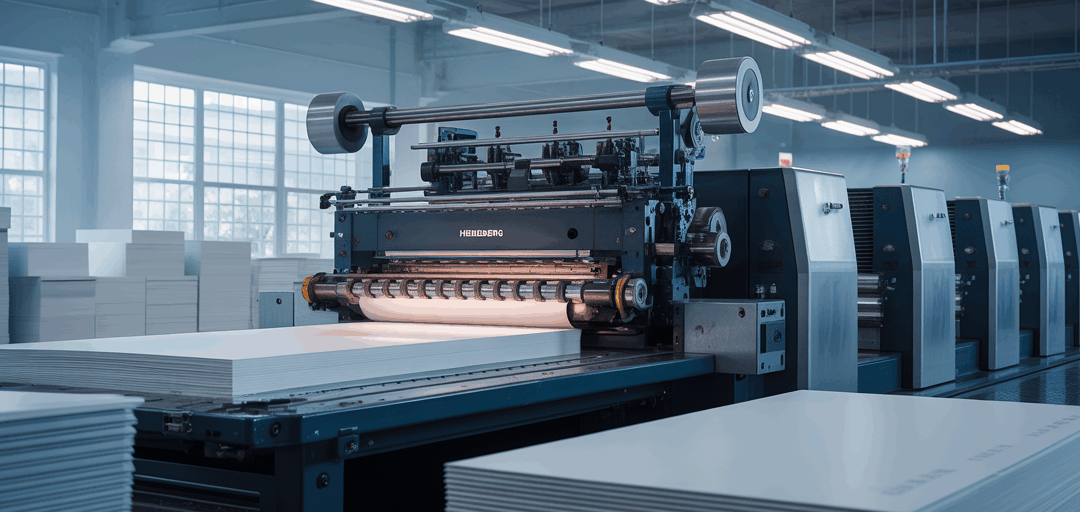
Printing operations experience paper shrinkage and static-driven misfeeds when RH drops below 40 to 45%. Pharmaceutical and food processing facilities face RH specification violations that can trigger quality deviations or production holds. Data center humidification guidelines from ASHRAE A2 class standards recommend 8 to 80% RH, but static risk increases sharply below 40%.
The Three Core Industrial Humidifier Technology Types
Technology selection is the first decision point in any humidifier specification, because each category carries different trade-offs that affect energy cost, water quality requirements, surface wetting risk, and maintenance burden. Reviewing a detailed technology comparison: dry fog vs steam vs ultrasonic helps clarify these distinctions before shortlisting vendors.
Adiabatic Humidification Systems
Adiabatic systems add moisture to air through evaporation without generating heat. Compressed air and water fog systems use pressurized air to atomize water into self-evaporating droplets. High-pressure misting systems use pump pressure to achieve fine droplet production. Both approaches carry a cooling byproduct through the latent heat of evaporation, which may be an advantage in process cooling applications but requires evaluation against winter heating budgets.
Fine-droplet adiabatic systems are sensitive to water quality: mineral content and total dissolved solids must be controlled to prevent nozzle fouling. Smart Fog adiabatic humidifiers and evaporative humidifier designs in this category require pre-treated or deionized water for reliable long-term performance.
Isothermal Steam and Heated Tank Systems
Direct injection steam humidifiers and heated tank systems both generate moisture by heating water, adding thermal energy to the airstream alongside humidity. A steam humidifier uses electrical resistance or gas heating to produce steam that is injected directly into the duct or space. Heated tank designs maintain a reservoir at near-boiling temperature and release vapor continuously.
Both isothermal approaches tolerate harder water more readily than adiabatic systems, but heating elements and tank surfaces accumulate mineral buildup and require regular descaling, typically monthly to quarterly depending on water hardness. Energy consumption is meaningfully higher than adiabatic alternatives: isothermal systems typically consume 0.7 to more than 1 kWh of electricity per pound of moisture evaporated.
The added heat load can offset some winter heating demand, which is an application-specific tradeoff worth calculating.
Moisture addition method:
- Adiabatic (fog/compressed air): Atomizes water into self-evaporating droplets using compressed air; no heat input required.
- Direct injection steam humidifier: Generates steam via electrical or gas heating and injects it into the airstream.
- Heated tank: Heats a water reservoir to release vapor continuously into the conditioned space.
Energy consumption:
- Adiabatic (fog/compressed air): Consumes compressed air energy; no water heating required.
- Direct injection steam humidifier: High electrical or gas consumption, typically 0.7 to over 1 kWh per pound of moisture.
- Heated tank: Similar high electrical draw to steam; energy scales with tank capacity and thermal losses.
Surface wetting risk:
- Adiabatic (fog/compressed air): Low risk when droplets self-evaporate before contacting surfaces under proper system design.
- Direct injection steam humidifier: Low wetting risk at the output point when correctly placed; condensation risk if steam contacts cold surfaces.
- Heated tank: Condensation risk near the unit if vapor contacts cold ducts or surfaces before full dispersion.
Water quality requirements:
- Adiabatic (fog/compressed air): Requires pre-treated or deionized water to prevent nozzle fouling and mineral buildup.
- Direct injection steam humidifier: More tolerant of harder water, but requires descaling of heating elements.
- Heated tank: Similar tolerance to steam; scaling on tank walls and elements requires periodic cleaning.
Maintenance burden:
- Adiabatic (fog/compressed air): Low in properly engineered no-moving-parts systems; service intervals can extend to two years.
- Direct injection steam humidifier: Monthly to quarterly descaling; periodic electrode or element replacement.
- Heated tank: Monthly to quarterly cleaning; tank and element inspection required regularly.
How to Calculate the Humidification Capacity You Need
Humidification capacity is expressed in pounds of moisture per hour or gallons per day and must be calculated against actual facility conditions before a system can be correctly specified. Vendors who quote capacity without asking for these inputs are not sizing a system; they are guessing. Facilities evaluating options will find additional sizing methodology in the industrial humidifiers complete buyer’s guide.
The key inputs for any capacity calculation are:
- Facility volume in cubic feet (length × width × ceiling height).
- Air changes per hour from the HVAC design specification.
- Winter design inlet conditions: outdoor temperature and outdoor RH at design-day low.
- Target RH setpoint, informed by operational requirements or compliance thresholds.
- Indoor temperature setpoint, which determines the psychrometric relationship between moisture content and RH.
These inputs produce the pounds-per-hour figure that defines minimum humidification capacity. HVAC humidification systems specifications typically incorporate ventilation rates per ASHRAE Standard 62.1, which affects how much unconditioned outdoor air the system must treat at any given time.
Facilities operating in climates with design-day outdoor temperatures below 0°C will require substantially higher capacity than facilities in milder winter regions, even at identical target setpoints.
Why High-Ceiling Facilities Need Distribution Design, Not Just Capacity
Correct total capacity is necessary but not sufficient in facilities with high ceilings. Warm, moist air tends to rise, concentrating humidity near the ceiling while cooler, drier air settles at workstation level. A system sized accurately for total volume may still fail to maintain the target RH at floor level if distribution points are not positioned to counteract stratification. Square footage coverage alone does not resolve this: a system serving 50,000 square feet with a 40-foot ceiling needs a distribution design that accounts for vertical air movement, not just horizontal spread. This failure mode appears repeatedly in real-world deployments where total capacity was specified correctly but distribution layout was not engineered.
What to Tell Your Vendor Before Requesting a Quote
Arriving at a vendor conversation with the right inputs shortens the specification process and improves the accuracy of any system recommendation. Before requesting a quote, facilities should have the following ready:
- Facility volume and ceiling height at the zone requiring humidity control.
- HVAC air change rate from the design specification.
- Winter design conditions: outdoor temperature and outdoor RH at seasonal low.
- Target RH setpoint and any tolerance requirement (e.g., per pharmaceutical temperature and humidity requirements), plus or minus 2%.
- Any compliance thresholds that define the acceptable RH window.
Compliance and Regulatory RH Requirements by Industry
In regulated industries, RH targets are not operational preferences; they are defined by standards and carry audit, quality, and regulatory consequences. Specifying a humidifier without knowing the required RH window is an incomplete specification. Selecting humidity control systems for compliance-driven applications requires treating the regulatory threshold as the primary constraint before evaluating any technology.
General commercial and industrial spaces: ASHRAE Standard 62.1 recommends 30 to 60% RH for occupied spaces as a baseline for occupant health and air quality.
Pharmaceutical manufacturing: FDA 21 CFR Part 211 and ICH Q6A guidance set typical operating ranges at 45 to 55% RH for many manufacturing operations, though product-specific limits vary. Pharmaceutical manufacturing humidification systems must maintain these targets continuously, not just on average.
Electronics and cleanrooms: Cleanroom humidification under ISO 14644 typically targets 30 to 60% RH, with tighter tolerances in higher ISO classification environments where ESD risk is the primary driver.
Healthcare facilities: Hospital and healthcare humidification under ASHRAE Standard 170 specifies 30 to 60% RH for most patient care areas, with operating rooms requiring tighter control, typically 20 to 60% RH depending on room classification.
When Humidity Control Is a Compliance Requirement
Facilities with compliance obligations face a specific risk that purely operational facilities do not. Falling outside the specified RH range can trigger quality deviations, audit findings, product holds, or regulatory citations depending on the industry. This reframes the system selection decision: the humidifier is not just operational infrastructure, it is part of the quality management system.
Specifying a system that cannot reliably maintain the required RH range introduces compliance risk that compounds over the system’s operational life.
Precision Requirements and What Plus or Minus Means in Practice
A system rated to maintain RH within plus or minus 5% and one rated within plus or minus 1 to 2% are not equivalent when operating against a compliance window of 45 to 55% RH. The 10-point compliance window is entirely consumed by the control error of a plus or minus 5% system, leaving zero margin. A system operating at plus or minus 1 to 2% precision preserves 6 to 8 points of usable margin. Monitoring RH with a calibrated hygrometer at the process zone, not just at the supply point, is necessary to verify that the system’s rated precision is being achieved at the location that matters for compliance.
Maintenance Requirements and Total Cost of Ownership
Purchase price is one input into total cost of ownership. Maintenance burden, water consumption, and energy draw over a multi-year operational horizon often exceed the initial equipment cost in high-use industrial environments. Buyers who evaluate commercial and industrial humidifiers on sticker price alone consistently underestimate operational cost.
Water Efficiency and What 100% Efficiency Means
Water efficiency in humidification, as outlined in ASHRAE humidifier technical guidance, is the ratio of water consumed to moisture actually delivered to the air. A system that drains excess water, produces runoff, or requires periodic tank flushing consumes more water than its evaporation rate implies.
A 100% water-efficient system means every unit of water introduced into the system evaporates into the air, with no drain loss, no overflow, and no flush cycles. For facilities with water costs, metered usage fees, or sustainability reporting obligations, the difference between 70% and 100% water efficiency compounds materially over a full operating season.
Maintenance Intervals: What Industrial Operations Actually Cost
A system requiring monthly technician service accumulates 12 service events per year. Over a five-year operational life, that is 60 scheduled maintenance events, each carrying labor cost, potential downtime, and consumable replacement. An ultrasonic humidifier or evaporative humidifier with media replacement schedules typically falls into this category.
Systems with no moving parts in the humidification process have fewer wear points and fewer scheduled maintenance events by design, with properly engineered systems extending humidifier maintenance intervals to every two years. Before purchasing, buyers should request the full maintenance schedule from any vendor: cleaning frequency, nozzle or media replacement cadence, required water quality treatment, and the estimated labor hours per service event.
At the end of evaluation, the checklist for total cost of ownership should include:
- Maintenance interval and labor cost per service event.
- Consumables required and their replacement frequency.
- Water consumption rate at target RH setpoint, accounting for any drain or flush loss.
- Electrical draw at full output, expressed in kWh per pound of moisture evaporated.
- Water pre-treatment requirements and their associated operational cost.
How Smart Fog Addresses the Industrial Humidifier Buying Criteria
Adiabatic humidification that produces an equal-sized droplet grid addresses both the surface wetting risk and the precision limitations that define the trade-offs between steam, ultrasonic, and conventional fog technologies. This is the operating principle behind Smart Fog’s industrial systems. Compressed air and water are mixed through a proprietary nozzle; each droplet carries a slight electrostatic charge that prevents re-aggregation and enables full evaporation before any surface contact under proper system design.
This non-wetting performance applies to surfaces under proper system design; direct exposure to the fog stream, such as placing a hand directly into it, will cause wetting.
Precision Humidity Control for Compliance-Sensitive Facilities
Smart Fog technology supports humidity control up to 99% RH with plus or minus 1 to 2% precision. Against the compliance windows described in this article, that precision level preserves usable RH margin in pharmaceutical, cleanroom, healthcare, and electronics applications where a wider tolerance system would consume the entire allowable range. Key performance specifications for compliance-sensitive evaluation:
- Precision: up to plus or minus 1 to 2% RH, maintained continuously, per ASHRAE humidifier technical guidance.
- Operating range: humidity control up to 99% RH, per ASHRAE humidifier standards.
- Water efficiency: 100%, with no drain loss or flush cycles, per EPA laboratory water efficiency guidelines.
- Maintenance interval: designed for service up to every two years.
- Moving parts in humidification process: none.
System Design, Not Just Hardware
The distribution stratification problem described in the capacity section is addressed through engineered system design, not component selection. Smart Fog delivers a complete engineered solution, meaning the distribution grid is designed for the specific facility geometry, including high ceilings, large floor areas, and multi-zone HVAC configurations.
This distinguishes a full system from a component kit: the coverage pattern, nozzle placement, and grid layout are specified to the facility, not left to the installer. Facilities evaluating options for large industrial spaces, warehouses, or multi-zone manufacturing environments should confirm whether a vendor is delivering a designed system or a hardware package.
Final Thoughts
Winter humidity management in industrial facilities is an engineering problem with a defined seasonal trigger and measurable compliance consequences. Technology selection, capacity calculation, water quality planning, and maintenance cost evaluation each affect whether a humidifier delivers the performance a facility actually requires. Facilities that treat system selection as a checklist exercise rather than a specification process consistently encounter the same failure modes: undersized capacity, poor distribution design, excessive maintenance burden, or control precision that cannot hold compliance-window tolerances.
For facilities with an imminent winter specification decision, contact Smart Fog engineers to request a facility assessment and receive a system recommendation based on actual load conditions, compliance requirements, and facility geometry.
FAQ
What is the best type of industrial humidifier for a warehouse with high ceilings?
For warehouses with high ceilings, distribution design matters as much as total system capacity. Warm, moist air rises and cooler, drier air settles near the floor, so a system sized correctly for total volume can still fail to maintain target relative humidity at the workstation level without proper nozzle placement. Adiabatic fog-based systems with an engineered distribution grid are well suited for these environments because they allow precise placement of humidification points to counteract stratification. Confirm that any vendor is delivering a designed system with a distribution layout specified to your facility geometry, not just a capacity-matched hardware package.
How do I calculate the humidification capacity I need for my facility this winter?
Humidification capacity is calculated from five inputs: facility volume in cubic feet, air changes per hour from the HVAC design specification, winter design inlet conditions (outdoor temperature and outdoor relative humidity at seasonal low), target RH setpoint, and indoor temperature. These inputs produce a pounds-of-moisture-per-hour figure that defines the minimum system capacity. Facilities in climates with design-day temperatures below 0°C require substantially higher capacity than milder-winter locations, even at identical target setpoints. Provide these inputs to your vendor before requesting a quote.
What is the difference between adiabatic and isothermal industrial humidifiers?
Adiabatic humidifiers add moisture through evaporation without heating the water, producing a cooling effect as a byproduct. Isothermal humidifiers, including direct injection steam and heated tank designs, generate steam by heating water, adding both moisture and thermal energy to the airstream. Adiabatic systems consume less energy because they do not heat water, but they are more sensitive to water quality and require pre-treated or deionized water. Isothermal systems tolerate harder water but require regular descaling and consume significantly more electricity, typically 0.7 to over 1 kWh per pound of moisture evaporated.
What humidity level should an industrial facility maintain in winter according to ASHRAE humidifier guidelines?
ASHRAE Standard 62 addresses ventilation requirements.1 recommends a relative humidity range of 30 to 60% for occupied commercial and industrial spaces. Winter conditions can push indoor RH below 10% when cold outdoor air is heated without moisture addition, well below this floor. Facilities with compliance obligations in pharmaceuticals, healthcare, or cleanroom environments have tighter thresholds defined by their applicable standards, typically 45 to 55% RH for pharmaceutical manufacturing under FDA 21 CFR Part 211 and 30 to 60% RH for healthcare facilities under ASHRAE Standard 170.
How much does it cost to operate an industrial humidifier over a full winter season?
Operating cost depends on technology type, facility size, water quality requirements, and energy rates. Adiabatic systems consume compressed air energy but do not heat water, making their energy draw lower than isothermal alternatives. Steam and heated tank systems typically consume 0.7 to over 1 kWh per pound of moisture evaporated, which compounds significantly over a full winter season in large facilities. Water consumption rate, pre-treatment costs, and maintenance labor also factor into seasonal operational cost. Request full-load electrical draw, water consumption rate at target RH, and maintenance schedule from any vendor before comparing total cost of ownership.
How often does an industrial humidifier need to be maintained or serviced?
Maintenance frequency depends on technology type and system design. Heated tank and evaporative humidifier systems typically require monthly to quarterly cleaning, descaling, and media or element inspection. Ultrasonic humidifier designs also require regular mineral deposit management. Adiabatic systems with no moving parts in the humidification process have fewer wear points and lower maintenance frequency; properly engineered systems can extend service intervals to every two years. Confirm the full maintenance schedule, including consumable replacement cadence and labor requirements, before purchasing any system.
What water quality requirements apply to industrial fog-based humidification systems?
Fog-based adiabatic humidification systems require pre-treated or deionized water because mineral content and total dissolved solids cause nozzle fouling and mineral buildup over time, degrading performance and increasing maintenance frequency. Water hardness, measured in grains per gallon or milligrams per liter, is the primary variable: harder source water requires more aggressive pre-treatment. Facilities should assess their source water quality before specifying any fine-droplet humidification system and include water treatment equipment in the total system cost. Steam and heated tank systems tolerate harder water but still require descaling of heating elements and surfaces.
Which industries have regulatory requirements that define specific indoor humidity ranges?
Several industries operate under temperature and humidity requirements for pharmaceuticals that define mandatory RH ranges. Pharmaceutical manufacturing under FDA 21 CFR Part 211 typically targets 45 to 55% RH for production environments, with product-specific variations. Healthcare facilities under ASHRAE Standard 170 require 30 to 60% RH for most patient care areas. Electronics and cleanroom facilities under ISO 14644 typically maintain 30 to 60% RH, with tighter tolerances in higher classification environments. General commercial and industrial occupied spaces fall under ASHRAE Standard 62.1, which recommends 30 to 60% RH. In all these environments, the RH target is a prerequisite input to system selection because it defines the precision requirement the humidifier must meet.