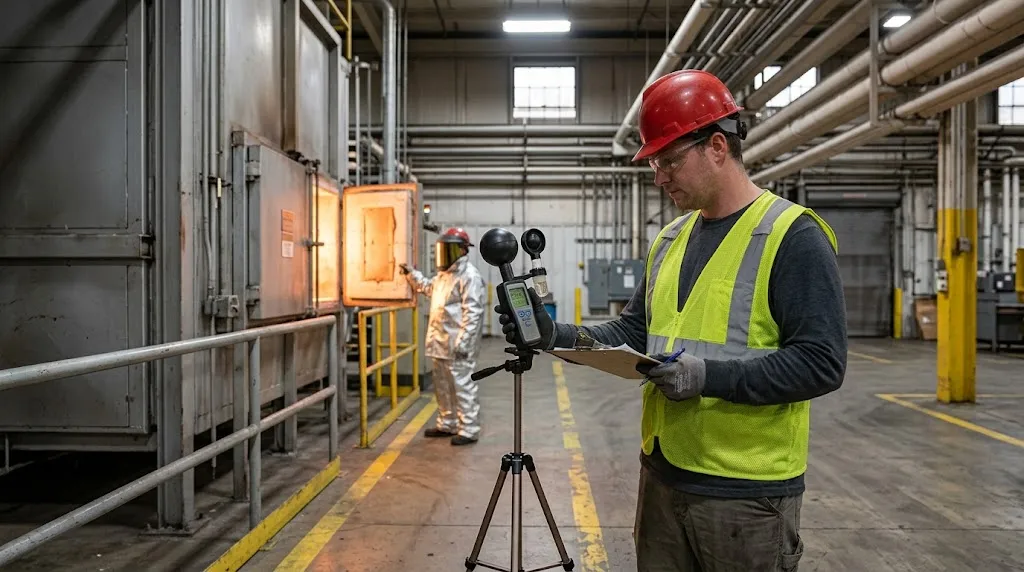
- Maintaining optimal humidity levels is crucial for data center reliability.
- ASHRAE guidelines offer a recommended humidity range for data centers.
- Low humidity increases the risk of ESD and equipment damage.
- Effective environmental monitoring is key to preventing humidity-related issues.
- A well-calibrated HVAC system is essential for maintaining the right humidity levels.
What “Low Humidity” Means in Data Centers
Relative humidity plays a critical role in data center operations, and understanding low humidity is vital for effective humidity control in data centers. For context, relative humidity (RH) is the percentage of water vapor in the air compared to the maximum amount the air can hold at a given temperature.What Counts as Low Relative Humidity in Server Rooms
Low relative humidity in server rooms is generally considered to be below 20%. At this level, the risk of electrostatic discharge (ESD) increases significantly. ESD can damage sensitive electronic components, leading to equipment failure and downtime. Industry guidelines typically recommend maintaining RH levels between 40% and 60% to minimize the risk of ESD and ensure optimal operating conditions for data center equipment.How and Why Dry Air Develops Inside Data Centers
Dry air in data centers does not occur randomly; it typically results from environmental control and operational factors that reduce relative humidity over time. Common causes include:- Overcooling from HVAC systems: Excessive cooling lowers the air’s ability to retain moisture, reducing RH levels.
- HVAC system limitations: Systems focused mainly on temperature may not adequately manage humidity balance.
- Airflow imbalances: Uneven air distribution can create localized dry zones within the facility.
- Seasonal climate changes: Cold or dry outdoor air introduced into the system can lower indoor humidity.
- Outside air intake: Fresh air ventilation can dilute indoor moisture, especially in dry weather conditions.
How Low Humidity Damages Data Center Hardware
Data centers operating in low-humidity environments face increased risks of hardware damage due to electrostatic discharge. Low humidity can cause significant damage to data center hardware, primarily through electrostatic discharge (ESD) and accelerated wear on critical components.Electrostatic Discharge (ESD) Risks to Servers, Switches, and Power Systems
Electrostatic discharge is a major concern in data centers with low humidity. ESD occurs when there is a transfer of electrostatic charges between objects at different potentials, leading to damage to sensitive electronic components. The risks associated with ESD are heightened in dry environments, where the lack of moisture allows static electricity to build up more easily. Key risks associated with ESD include:- Damage to sensitive electronic components
- Disruption of data transmission and processing
- Increased likelihood of equipment failure
- Potential for data loss and corruption
How Dry Air Accelerates Wear on Circuit Boards, Connectors, and Power Supplies
Dry air not only increases the risk of ESD but also accelerates the wear on critical hardware components. Circuit boards, connectors, and power supplies are particularly susceptible to the adverse effects of low humidity. The main effects of dry air on these components include:- Increased friction between moving parts, leading to mechanical wear.
- Deterioration of insulation materials, potentially causing electrical failures.
- Corrosion on connectors and circuit boards due to the absence of a protective moisture layer.
How Static Electricity Forms in Low-Humidity Data Centers
The development of static electricity in low-humidity environments is a critical issue for data center operators. Static electricity, or electrostatic discharge (ESD), occurs when there is a transfer of electrons between bodies at different electrical potentials. In dry conditions, the lack of moisture in the air allows static electricity to build up more easily, as the air is less conductive and cannot dissipate the charge.Why Static Builds Up When Air Is Too Dry
In low-humidity environments, the risk of static electricity increases because dry air is a poor conductor of electricity. When relative humidity drops below 30%, the air’s ability to dissipate static charges is reduced, allowing electrical charges to build up on surfaces, equipment, and personnel. When these charges discharge, static electricity damages hardware by stressing or destroying sensitive electronic components. Factors contributing to static buildup include:- Dry air due to low humidity.
- Friction between different materials.
- Movement of personnel and equipment.
Real-World ESD Damage Scenarios in IT Infrastructure
ESD events can have devastating consequences for data center equipment. A single discharge can damage sensitive components, leading to equipment failure, data loss, and costly downtime. Some real-world style scenarios include:- Static discharge onto a server circuit board: Can create microscopic internal damage, leading to delayed component failure and replacement.
- ESD impact on network switches: Silent discharge during handling or in dry environments can cause instability and localized downtime.
- Static damage to power supply units: Small ESD events can degrade sensitive power components, triggering unplanned outages.
- Latent hardware degradation: ESD often weakens microcircuits internally, causing intermittent faults that appear later rather than immediate failure.
Operational Risks of Running Data Centers in Dry Air
The operational risks of running data centers in dry air are multifaceted, affecting both the reliability of equipment and the overall efficiency of data center operations. Data centers operating in low-humidity environments are more susceptible to various operational challenges. These challenges can be broadly categorized into increased risk of downtime and equipment failures, as well as maintenance difficulties.Higher Risk of Downtime and Unplanned Equipment Failures
Low humidity can lead to an increased risk of electrostatic discharge (ESD), which can cause unplanned equipment failures and downtime. ESD can damage sensitive electronic components, leading to costly repairs and replacements. Moreover, dry air can accelerate the wear and tear on circuit boards, connectors, and power supplies, further increasing the likelihood of equipment failure.- Increased risk of ESD events
- Higher likelihood of equipment damage
- Potential for unplanned downtime
Maintenance Challenges Created by Chronic Low Humidity
Chronic low humidity in data centers also creates maintenance challenges. Equipment may require more frequent cleaning and inspection to prevent dust buildup, which can be exacerbated by dry conditions. Regular maintenance is crucial to prevent equipment failures and ensure optimal performance. This includes monitoring humidity levels, inspecting equipment regularly, and performing preventive maintenance tasks. By understanding the operational risks associated with low humidity, data center operators can take proactive steps to mitigate these risks and ensure the reliability and efficiency of their operations.Low Humidity vs Industry Guidance for Data Centers
The relationship between low humidity and industry guidance for data centers is critical in understanding equipment safety and operational reliability. Industry guidance, such as that provided by ASHRAE, plays a crucial role in defining safe operating conditions for data centers. ASHRAE's guidelines are widely adopted and respected within the data center community. These guidelines specify that data centers should operate within a certain range of relative humidity to ensure optimal conditions.How Industry Guidance Defines Safe Humidity
Industry guidance defines safe humidity levels based on extensive research and testing. According to ASHRAE, the recommended relative humidity range for data centers is between 20% and 80%. However, the optimal range is considered to be between 40% and 60%. Operating within this range is believed to minimize the risk of equipment damage from both high and low humidity. For instance, low humidity can lead to increased static electricity, while high humidity can result in condensation and moisture-related issues.Why Operating Near Minimum Thresholds Raises ESD Risk
Operating near the minimum humidity threshold (20% relative humidity) significantly increases the risk of Electrostatic Discharge (ESD) events. ESD can damage sensitive electronic components, leading to equipment failure and downtime. When the air is too dry, static electricity builds up more easily on surfaces and on personnel. This static electricity can then discharge onto sensitive equipment, potentially causing damage. Key factors that contribute to increased ESD risk in low humidity environments include:- Increased static electricity generation due to dry air.
- Higher voltage discharges in low humidity conditions.
- Increased risk of component damage from ESD events.
Why Low Humidity Happens in Data Centers
Understanding why low humidity happens in data centers requires examining both the data center's internal environment and external factors. Low humidity can arise from a variety of sources, making it a complex issue to address. Internal factors play a significant role in the development of low humidity within data centers. These include overcooling, limitations in HVAC systems, and imbalances in airflow.Overcooling, HVAC Limitations, and Airflow Imbalances
Overcooling is a common issue in data centers, where the cooling systems operate at a higher capacity than necessary, reducing the temperature and, consequently, the humidity levels. HVAC limitations can also lead to inadequate humidity control, as some systems may not be designed to handle the specific humidity requirements of a data center. Furthermore, airflow imbalances within the data center can cause certain areas to experience lower humidity levels due to the uneven distribution of cooled air. These airflow imbalances can occur due to poor layout design, inadequate rack configurations, or insufficient air containment strategies. They can lead to 'cold' spots where the air is drier than in other areas, potentially causing low humidity conditions.Seasonal Climate Changes and Outside Air Intake
External factors, such as seasonal climate changes and outside air intake, also significantly impact the humidity levels within data centers. During dry seasons or in arid climates, the outside air is drier. When this air is drawn into the data center, either through ventilation systems or during economizer cycles, it can lower the overall humidity inside the facility. Seasonal variations can cause significant fluctuations in humidity levels. For instance, during winter months in cold climates, the outside air is typically dry, and if this air is used for cooling or ventilation, it can reduce the humidity inside the data center. To mitigate these effects, data center operators must consider both internal and external factors and implement strategies to maintain optimal humidity levels.How Data Centers Prevent Problems from Low Humidity
Data centers with the best humidity management systems take proactive measures against low humidity operations. Low humidity can lead to equipment damage and downtime, making it essential to maintain optimal humidity levels. Effective humidification strategies can help mitigate these risks.Humidification Approaches for Dry Conditions
Data centers can employ various humidification systems to maintain optimal humidity levels. These include:- Steam humidifiers, which add moisture to the air using steam.
- Evaporative humidifiers, which use evaporation to humidify the air.
- Ultrasonic humidifiers, which create a fine mist to increase humidity.
Monitoring, Controls, and Proactive Humidity Management
In addition to humidification systems, monitoring and controls play a crucial role in maintaining optimal humidity levels. Advanced monitoring systems can detect changes in humidity and trigger corrective actions. This proactive approach helps prevent equipment damage and ensures continuous operation. Key components of proactive humidity management include:- Continuous monitoring of humidity levels.
- Automated controls to adjust humidification systems as needed.
- Regular maintenance of humidification equipment.