

 Made in USA

- Non-wetting humidification works by producing self-evaporating droplets that absorb into the air before reaching any surface, raising RH without depositing liquid water on equipment or materials under proper system design.
- Surface moisture from conventional spray-based or high-pressure misting systems causes documented failures in electronics manufacturing, pharmaceutical cleanrooms, printing facilities, and data centers.
- Industrial non-wetting humidifiers can maintain humidity up to 99% RH with plus or minus 1 to 2 percent precision, meeting the tight environmental tolerances required by process and regulatory standards.
- Non-wetting performance depends on both the droplet physics of the humidification technology and correct system engineering for the specific space. The technology alone does not guarantee the outcome.
- Industries including ** electronics manufacturing humidification, pharmaceutical production, and data center operations require surface-safe humidification as a compliance and process requirement.
- Industrial non-wetting systems are engineered for continuous operation with maintenance intervals significantly longer than those of portable ultrasonic humidifier or cool mist humidifier units, which typically require weekly cleaning.
What "Non-Wetting" Means in Industrial Humidification
"Non-wetting" is a measurable performance characteristic, not a marketing label. It describes a humidifier's ability to raise ambient RH without depositing liquid water on surfaces, equipment, products, or ductwork under proper system design, and it refers to an outcome, not an inherent property of any single component. Achieving it requires droplets to evaporate into the ambient air before contacting any surface. That depends on the droplet physics of the system being matched to the moisture-absorption capacity of the air in that specific environment. A technology that produces non-wetting results in one facility may wet surfaces in another if system design doesn't account for the space's dimensions, airflow patterns, and ambient conditions. In operational terms, non-wetting humidification means:- No wet spots or moisture films on equipment surfaces, racks, or machinery
- No condensation on ductwork, structural elements, or storage materials
- No moisture accumulation on work surfaces, substrates, or finished products
- Direct fog stream exposure: a hand placed directly into the fog stream will be wetted. The non-wetting characteristic applies to surfaces under proper system design, not to direct exposure to the fog output.
- System dependency: "non-wetting" is not an absolute property of all industrial humidifiers. It is an outcome that requires both the correct technology and correct system engineering.
How Self-Evaporating Droplets Prevent Surface Wetting
Non-wetting performance is achieved through droplet physics. When a humidification system produces an equal-sized droplet grid, where each droplet carries a slight electrostatic charge that prevents re-aggregation, the droplets remain individually suspended in the air column. They evaporate fully before reaching any surface, transferring humidity to the ambient air without depositing liquid water. Contrast this with conventional misting systems, where droplet size varies and larger droplets do not evaporate before contact. Those droplets reach surfaces, ductwork, and equipment, depositing moisture that accumulates over time. The mist output of a standard spray system is not engineered for complete aerial evaporation.Why Proper System Design Is Required
Correct nozzle placement, fog dispersion geometry, airflow interaction modeling, and coverage layout for the specific room dimensions are all required to achieve non-wetting performance in a real facility. These are not installation preferences. They are engineering requirements. A non-wetting technology applied without proper system design will still wet surfaces, because the droplets' evaporation path depends on the space they travel through, not just their physical properties.Why Surface Wetting Is an Operational Risk in Industrial Facilities
When a conventional humidifier deposits surface moisture in a sensitive industrial environment, the humidity setpoint may appear satisfied at the sensor while operational failures accumulate in the space. Understanding specific failure modes is necessary for justifying non-wetting humidification on engineering grounds.ESD and Electronics Damage from Surface Moisture
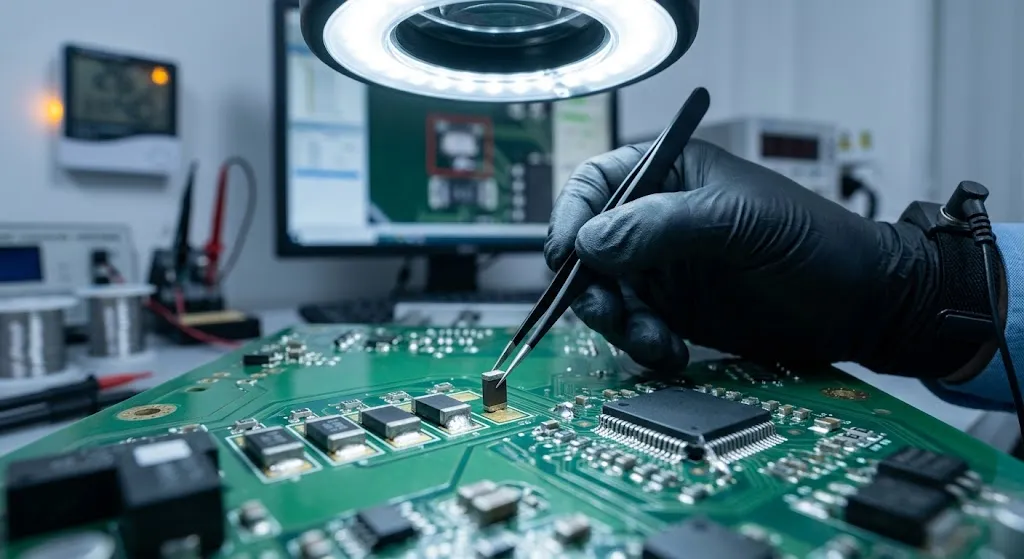
Surface moisture in electronics manufacturing and data centers creates electrostatic discharge (ESD) pathways that bypass grounding and static-control measures. Conductive moisture films on non-insulated surfaces allow charge to travel across paths that dry surfaces would block, leading to component damage and server hardware failure. Humidity control is a recognized ESD mitigation strategy, as referenced in ANSI/ESD S20.20 electrostatic discharge control program requirements. The humidification method must itself be non-wetting to avoid introducing the conductive surface moisture it is installed to counteract. A misting system that satisfies the RH setpoint while wetting nearby surfaces has not solved the ESD problem.- Affected industries: Electronics manufacturing, printed circuit board (PCB) production, data centers, and semiconductor fabrication
- Operational consequence: Component yield loss, server hardware failure, and electrostatic discharge events that static-control flooring and wrist straps cannot prevent once surface moisture is present
Contamination and Compliance Risks in Pharmaceutical and Food Facilities
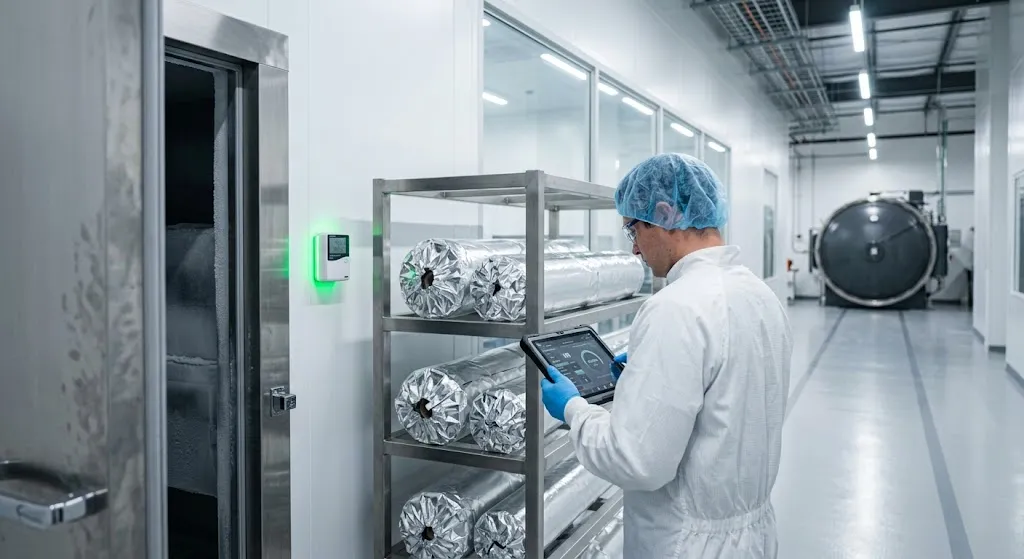
In pharmaceutical manufacturing, Good Manufacturing Practice (GMP) compliance requires controlled environmental conditions including humidity. Surface moisture introduced by humidification creates contamination risk that conflicts with cleanroom classification requirements under FDA 21 CFR Part 211 current good manufacturing practice regulations. Moisture on surfaces provides the conditions under which microbial contamination can develop, directly opposing the contamination-control purpose of a cleanroom. In food processing facilities, surface moisture creates conditions that food safety programs must manage under Hazard Analysis and Critical Control Points (HACCP) frameworks. Non-wetting humidification allows facilities in both sectors to maintain target RH without introducing surface moisture that triggers compliance issues or audit findings.- Affected industries: Pharmaceutical manufacturing, biotech, food processing, and packaging
- Operational consequence: GMP non-compliance findings, cleanroom reclassification risk, product contamination, and HACCP corrective action requirements
Which Facilities Require Non-Wetting Room Humidifiers
The facility types below require non-wetting humidification as an operational necessity, not a product preference. Electronics manufacturing and PCB production Target RH for ESD control is typically 40 to 60%, consistent with the IEC 61340-5-1 electrostatic control standard. Surface moisture in these environments introduces conductive pathways that ESD flooring and bonding cannot compensate for. Electronics manufacturing humidification must use technology that raises RH without wetting component storage, workbenches, or assembly surfaces. Pharmaceutical manufacturing and cleanrooms RH targets range from 30 to 60% depending on classification and product type, with tight tolerance requirements set by GMP standards. Surface moisture from a conventional system introduces microbial contamination risk and can invalidate cleanroom qualification. Cleanroom humidifiers must be non-wetting to meet environmental monitoring requirements without creating new contamination pathways. Data centers and server rooms ASHRAE recommends 40 to 60% RH in data center environments to prevent both ESD from dry air and condensation from excess moisture. Data center humidification systems must not deposit moisture on server hardware, cable runs, raised-floor systems, or air handling units. A conventional misting system that meets the setpoint while wetting rack hardware has introduced a greater risk than dry air would have. Industrial printing facilities Paper and substrate dimensional stability requires 45 to 55% RH. Surface moisture deposited by conventional humidification causes paper to absorb water unevenly, resulting in registration failure, substrate curl, and ink adhesion problems. Printing facility humidity control requires non-wetting technology that stabilizes substrate dimensions without contacting the media. Cold storage and food processing Condensation accelerates surface corrosion on racking and equipment, and introduces moisture that food safety programs must control. Cold storage humidification must maintain RH for product quality without creating surface moisture that conflicts with sanitation requirements or accelerates structural degradation. Healthcare facilities Patient care environments require RH maintained between 30 and 60% per ASHRAE Standard 170. Surface moisture from humidification in healthcare settings introduces contamination risk in areas where infection control is a primary operational requirement.Environments Where Conventional Humidifiers Create More Problems Than They Solve
In each facility type above, a conventional spray-based or high-pressure mist system can satisfy a humidity setpoint on paper while simultaneously causing the surface damage, contamination risk, or equipment failure that humidity control is meant to prevent. Pharmaceutical manufacturing humidification is a clear example: a system that reads 50% RH at the sensor while depositing moisture on cleanroom surfaces has not met its compliance objective. In these environments, non-wetting humidification is not a premium upgrade. It is the only technically sound option.How to Evaluate a Non-Wetting Room Humidifier for Your Facility
Selecting commercial and industrial humidifiers for non-wetting applications requires evaluating more than the advertised humidity output range. The criteria below separate systems that deliver genuine non-wetting performance from those that claim it.- Droplet generation technology. The system must produce a uniform, self-evaporating droplet grid rather than variable-size spray. An ultrasonic humidifier produces droplets through high-frequency vibration, but droplet size uniformity and evaporation rate vary with ambient conditions. Systems with variable droplet size cannot guarantee complete aerial evaporation across all operating conditions.
- Humidity precision and stability. A humidity control systems must hold setpoint continuously, not average to it over time. Plus or minus 1 to 2 percent RH precision is the appropriate standard for sensitive industrial applications. A system cycling between 45% and 55% RH when 50% is specified may still cause process variation in electronics assembly or pharmaceutical production.
- Complete engineered system versus component kit. In non-wetting applications, nozzle placement, airflow interaction, and coverage geometry determine whether the system prevents surface wetting. A component kit installed without facility-specific engineering will not reliably deliver non-wetting performance. A complete engineered system designed for the specific space is required.
- Maintenance requirements and service intervals. Non-wetting systems that foul nozzles or require frequent cleaning introduce operational risk and undermine their advantage. Systems requiring weekly or monthly nozzle maintenance are likely to experience performance degradation between service events. Water quality also affects maintenance frequency. Using treated water or, where appropriate, distilled water in sensitive applications reduces mineral accumulation in the distribution system.
- Water consumption efficiency. In a properly engineered non-wetting system, every droplet introduced into the space evaporates into the air. A system that leaves residual moisture on surfaces or in ductwork has not achieved true non-wetting performance and is operating below 100% water efficiency.
- Installation requirements. A system requiring certified technicians, ductwork modification, or dedicated electrical infrastructure adds implementation cost and timeline. Industrial humidifier systems that install without specialized certification reduce deployment friction in facilities with active operations.
Precision Specification: Why Plus or Minus 1-2% RH Matters
Many industrial processes and temperature and humidity requirements for pharmaceutical manufacturing standards require not just that humidity falls within a general range, but that it remains stable within a narrow band. A system that cycles widely around a setpoint may register as compliant on average while causing process variation during every cycle. Plus or minus 1 to 2 percent precision means the system holds the setpoint continuously, which is the only condition that satisfies both process stability and regulatory documentation requirements.Complete System vs. Component Kit: Why the Distinction Matters
Some ESD control systems and humidification products are sold as component kits that the facility must configure, install, and tune independently. In non-wetting applications, where the evaporation path of every droplet depends on nozzle placement, ceiling height, air circulation patterns, and coverage overlap, a component kit installed without facility-specific engineering creates unpredictable results. The technology may be capable of non-wetting performance. The installation, without engineering, may not deliver it.How Smart Fog Delivers Non-Wetting Humidification in Industrial Facilities
Producing a uniform, self-evaporating droplet grid requires both a specific droplet generation mechanism and a system engineered for the space it serves. These two requirements define the design logic behind Smart Fog's Smart Fog technology overview and explain why non-wetting performance is achievable at high humidity levels in sensitive industrial environments.Equal-Sized Droplet Grid: The Mechanism Behind Non-Wetting Performance
Compressed air and water are combined through a proprietary nozzle to produce an equal-sized droplet grid. Three properties of that grid produce the non-wetting outcome:- Equal sizing: droplets don't vary in mass, so evaporation is uniform across the coverage area.
- Slight electrostatic charge: prevents re-aggregation into larger formations.
- Individual suspension: because droplets don't cluster, they remain airborne long enough to evaporate fully before reaching any surface.
- Proper system design: the non-wetting characteristic applies to surfaces under correct installation and nozzle placement.
- Direct fog stream exposure: placing a hand into the output will wet the exposed surface. The outcome is controlled evaporation across the designed coverage area, not the elimination of liquid water from the output itself.
Performance Specifications for Sensitive Industrial Environments
Smart Fog systems are specified for the facility types covered in this article across the following performance parameters:- Humidity range: Control from 1% to 99% RH, maintaining setpoint with plus or minus 1 to 2 percent precision across continuous operation
- Water efficiency: 100% of introduced water evaporates into the air. No residual moisture accumulates on surfaces or in ductwork under proper system design.
- Moving parts: No moving parts in the humidification process, reducing mechanical failure points and supporting long-term operational reliability
- Maintenance intervals: Up to every two years, compared with the weekly cleaning schedules required by portable ultrasonic humidifier and cool mist humidifier units
- Installation: No certified technician required. Systems are delivered as complete engineered solutions, not component kits requiring facility-side configuration.
- Operation: Designed for continuous 24/7 industrial operation without manual intervention between service intervals