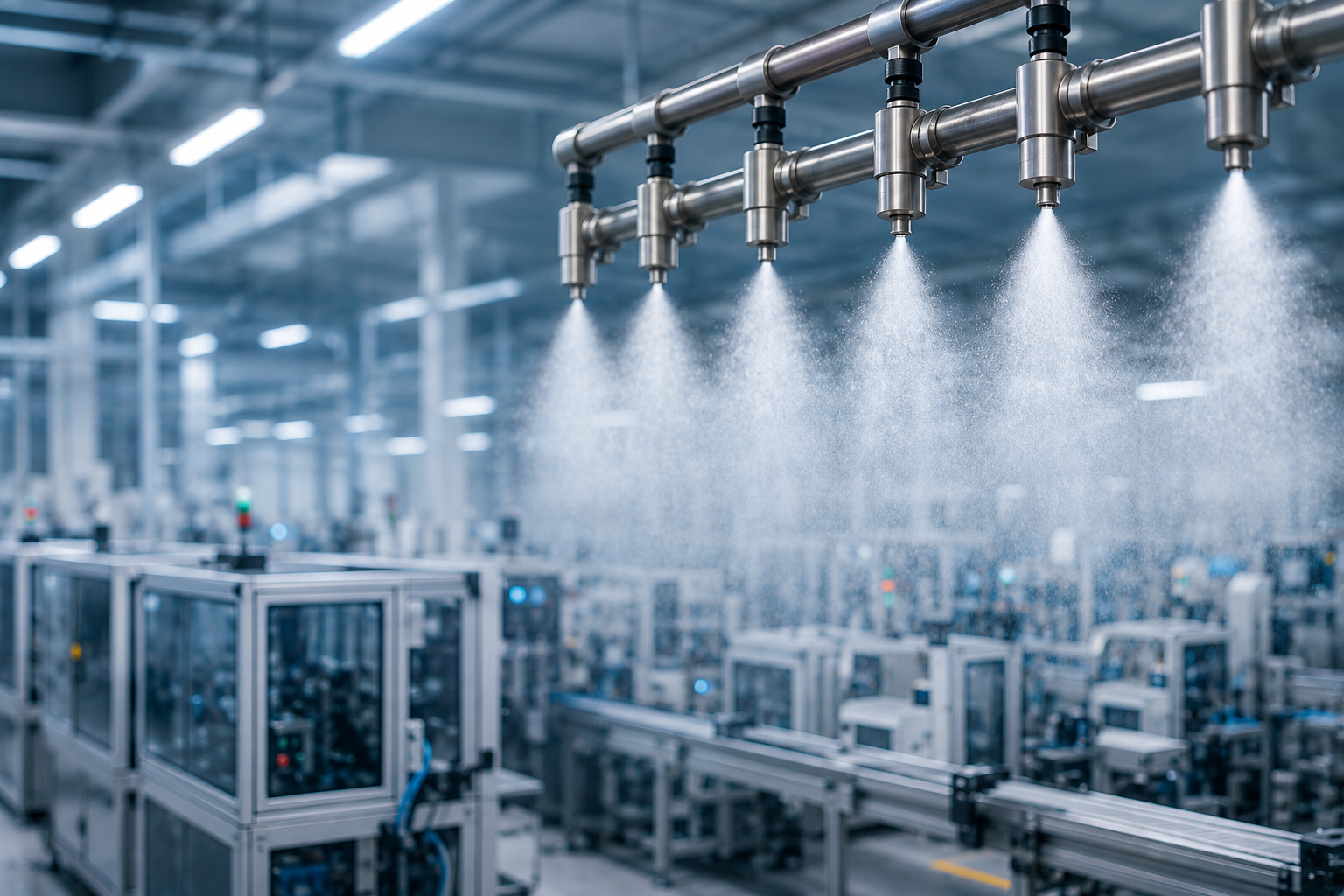



Explore recommended humidity ranges for automotive manufacturing and how stable environmental control improves coating quality, assembly accuracy, and electronics protection.
Ido Goldstein
Chief Technology Officer at Smart Fog
Author
Ido Goldstein is a technology innovator with deep expertise in humidity engineering, climate control, and non-wetting fog systems. He has spent years advancing energy-efficient and water-smart solutions that help industries like cleanrooms, data centers, wineries, and greenhouses maintain precise environmental control.
Passionate about technology with real-world impact, Ido also supports sustainable agriculture initiatives and nonprofit innovation. Through this blog, he shares practical insights on HVAC advancements, indoor air quality, and the science behind high-performing environments.
Why Humidity Control Matters in Vehicle Assembly for Quality, Safety, and Efficiency
Discover how humidity affects vehicle assembly quality, material stability, electronics safety, and production efficiency across modern automotive manufacturing facilities.
Why Static Electricity Is Common in Printing Rooms
Static electricity is common in printing rooms due to dry air, friction, and high-speed material movement, causing sheet sticking, misfeeds, dust attraction, and print defects that reduce print quality and production efficiency.
Managing Static and Airborne Risks in Aerospace Facilities
Managing static and airborne risks in aerospace facilities requires stable environmental control, especially precise humidity management. Controlled humidity helps prevent electrostatic discharge, reduce particle attraction, and protect sensitive aerospace assemblies from contamination and performance risks.
Reducing Static in Automotive Assembly Lines: Causes, Risks, and Effective Control Methods
Static electricity in automotive assembly lines can damage sensitive electronics and cause manufacturing defects. Learn the causes of static buildup and the most effective control methods used in modern automotive plants.
How Low Humidity Increases Infection Risk in Healthcare Environments
Low humidity can change how airborne particles behave in healthcare environments, allowing respiratory droplets to remain suspended longer. Maintaining balanced indoor humidity helps stabilize air conditions and supports infection prevention efforts in clinical spaces.
Environmental Control Methods for Automotive Plants: Systems, Strategies, and Best Practices
Environmental control systems help automotive plants maintain stable temperature, humidity, and air quality. These methods support consistent production quality, protect sensitive components, and improve manufacturing efficiency.
Choosing Aerospace Humidity Control Systems for Manufacturing
Aerospace manufacturing requires precise humidity control to protect sensitive components, minimize static and airborne risks, and maintain dimensional stability. The right system selection ensures consistent production quality, material integrity, and regulatory-ready environmental conditions.
Methods to Control Static in Printing Rooms
Static electricity in printing rooms causes paper jams, misfeeds, and defects in dry conditions. Controlling humidity, grounding equipment, and using ionization helps reduce charge buildup and maintain consistent print quality.
Methods for Reducing Static in Paint Booth Operations
Static electricity in paint booths lowers transfer efficiency, increases overspray, and disrupts finish consistency. This guide covers how humidity control, airflow stability, and environmental management reduce charge buildup and improve coating performance.