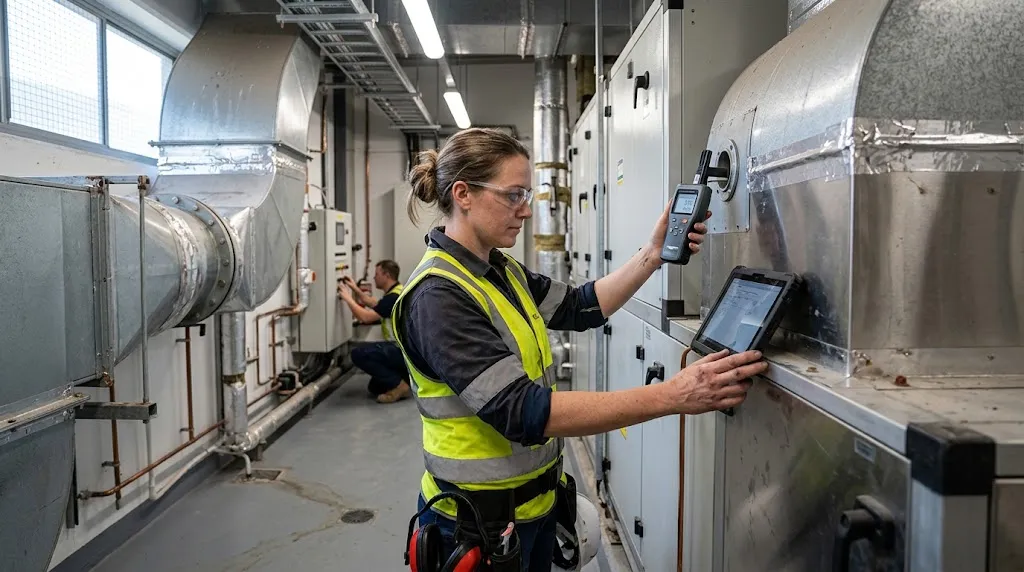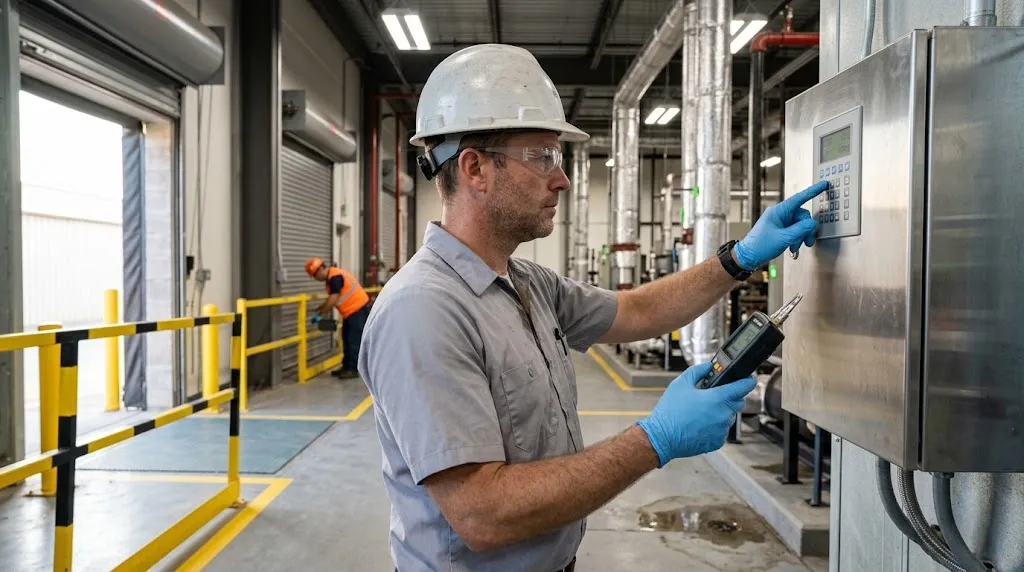


ESD control precautions include systematic grounding protocols, environmental monitoring, and compliance verification procedures that extend beyond individual protective equipment to facility-wide controls. Effective electrostatic discharge prevention requires structured implementation of ANSI/ESD S20.20 standards through documented procedures, personnel training, and environmental management systems that maintain humidity levels between 45-65% RH.
This implementation framework addresses the procedural gap between understanding ESD control requirements and executing compliant programs in electronics manufacturing, aerospace production, and other ESD-sensitive facilities. Facility managers and compliance officers need systematic approaches to establish EPA zones, verify equipment performance, and maintain documentation that satisfies regulatory audit requirements.
Key Takeaways
- ANSI/ESD S20.20 requires facility-wide ESD control programs with documented procedures, environmental monitoring, and systematic grounding verification rather than relying on individual protective equipment alone.
- EPA zone establishment requires specific humidity levels between 45-65% RH to prevent static charge buildup on personnel and materials, with continuous monitoring and data logging for compliance verification.
- Systematic grounding verification includes daily continuity testing of wrist straps, work surfaces, and facility ground points with resistance measurements between 1 megohm and 1 gigohm per standard protocols.
- Environmental monitoring protocols must document temperature, humidity, and ionization levels every 8 hours in ESD-sensitive areas with automated alarm systems for deviation response.
- Audit procedures require monthly verification of all ESD control measures, including equipment testing, training records, and environmental data review with documented corrective actions.
- Facility-level humidity control provides more reliable ESD prevention than localized ionizers or individual protective equipment by addressing the fundamental atmospheric conditions that enable static charge generation.

Understanding ESD Control Requirements and Standards
ANSI/ESD S20.20 establishes comprehensive requirements for ESD control programs that extend far beyond individual protective equipment to systematic facility management. The standard mandates documented procedures, personnel training, environmental controls, and regular audit protocols that treat electrostatic discharge prevention as an engineered facility system rather than personal responsibility alone.
The standard for electrostatic discharge control requires facilities to establish ESD-protected areas with specific environmental parameters, including humidity levels between 45-65% RH and temperature stability within defined ranges. Environmental monitoring must be continuous with documented data logging, not periodic spot checks. Personnel training must include hands-on verification of grounding procedures and material handling protocols, with documented competency assessments and regular retraining schedules.
Common misconceptions about ESD control focus on wrist straps and antistatic mats while overlooking systematic environmental controls that provide the foundation for effective static charge prevention. Atmospheric humidity below 45% RH enables rapid charge buildup on personnel and materials regardless of personal protective equipment. Individual precautions become less reliable when the facility environment itself promotes electrostatic charge generation through dry conditions and poor atmospheric conductivity.
ANSI/ESD S20.20 Program Requirements
Compliant ESD control programs must include five core elements: documented procedures for all ESD-sensitive operations, personnel training with verified competency, systematic grounding infrastructure, environmental monitoring with automated data collection, and regular audit protocols with corrective action procedures. The standard requires written SOPs for material handling, equipment operation, and emergency response that specify measurable performance criteria and verification methods.
Documentation requirements extend beyond equipment test logs to include training records, environmental data, incident reports, and audit findings with time-stamped corrective actions. Personnel certification must demonstrate practical competency in grounding procedures, material handling, and workstation setup through hands-on assessment, not classroom training alone.
Facility vs Individual Responsibility
Systematic facility controls provide more reliable ESD prevention than individual protective equipment because they address the atmospheric conditions that enable charge generation rather than attempting to dissipate charges after they form. Humidity control maintains atmospheric conductivity that prevents charge buildup on personnel and materials, while proper grounding infrastructure ensures charge dissipation pathways remain functional throughout the facility.
Individual protective equipment like wrist straps and antistatic footwear depends on consistent user behavior and equipment maintenance, creating multiple failure points that systematic environmental controls eliminate. Facilities that rely primarily on personal precautions experience higher rates of ESD damage because human factors introduce variability that engineered environmental systems avoid through automated monitoring and control.
EPA Zone Design and Implementation Checklist
EPA zone establishment requires systematic implementation of physical boundaries, environmental controls, and grounding infrastructure that creates measurable protection against electrostatic discharge. The process begins with facility assessment to identify ESD-sensitive operations and materials, followed by zone boundary definition, environmental system design, and verification testing that confirms compliance with ANSI/ESD S20.20 requirements.
Environmental control specifications include temperature and humidity requirements for pharmaceutical facilities such as humidity maintenance between 45-65% RH with continuous monitoring, temperature stability within ±2°C variation, and atmospheric ionization management where required. The humidity range prevents static charge buildup on personnel and materials while avoiding condensation risks that could damage electronic components. Temperature stability ensures consistent atmospheric conditions that support reliable charge dissipation through environmental conductivity.
Grounding infrastructure must provide verified pathways for charge dissipation from all work surfaces, equipment, and personnel contact points. Ground point installation requires resistance measurements between 1 megohm and 1 gigohm per ANSI/ESD S20.20 standard requirements specifications, with daily continuity testing to ensure ongoing functionality. Facilities that skip systematic grounding verification often discover inadequate charge dissipation pathways only after ESD damage occurs.
Physical Zone Establishment
Zone boundary definition includes physical barriers, access control procedures, and clear signage that identifies ESD-protected areas and entry requirements. Boundaries must prevent contamination from non-ESD-controlled areas while allowing necessary material and personnel flow. Entry protocols require verification that personnel and materials meet ESD control requirements before accessing sensitive operations.
Signage requirements include ESD warning symbols, humidity range displays, and emergency contact information positioned at all zone entry points. Access control procedures must specify required protective equipment, material handling protocols, and documentation requirements for zone entry. Physical barriers should prevent accidental contamination while maintaining necessary workflow integration with adjacent facility areas.
Environmental Control Setup
Humidity monitoring requires continuous measurement with automated data logging every 8 hours minimum, alarm systems for deviations outside the 45-65% RH range, and backup monitoring equipment to ensure system redundancy.
Atmospheric control specifications must address air circulation patterns that prevent charge accumulation while maintaining environmental stability. Air handling systems should minimize turbulence that could generate triboelectric charging while ensuring adequate circulation for humidity and temperature control. Integration with facility HVAC systems requires careful coordination to maintain ESD zone requirements without compromising broader facility environmental needs.
Grounding Infrastructure Installation
Ground point installation requires systematic placement at all work surfaces, equipment mounting points, and personnel contact areas with verified electrical continuity to facility ground systems. Installation procedures must ensure proper connection methods, adequate conductor sizing, and protection against mechanical damage that could compromise grounding effectiveness.
Resistance verification testing includes initial installation verification, daily continuity checks, and monthly comprehensive system testing with documented results. Test equipment must be calibrated to ensure accurate resistance measurements within the 1 megohm to 1 gigohm range specified by standards. Ground system testing should identify degraded connections before they compromise ESD protection rather than discovering failures through component damage.
Personnel Training and Handling SOPs
Personnel training for ESD control requires comprehensive coverage of grounding procedures, material handling protocols, and equipment operation with hands-on competency verification rather than classroom instruction alone. Training programs must address the physics of electrostatic charge generation, proper use of protective equipment, and systematic procedures for handling ESD-sensitive components throughout assembly and testing operations.
Effective training combines theoretical understanding of ESD principles with practical demonstration of grounding techniques, workstation setup, and material handling procedures. Personnel must demonstrate competency in wrist strap testing, proper mat usage, and systematic handling of sensitive devices including packaging, transport, and assembly protocols. Training verification includes written assessment and practical demonstration with documented competency records.
Material handling SOPs must specify procedures for unpacking, transport, assembly, and storage of ESD-sensitive components with clear criteria for acceptable handling techniques. Procedures should address common failure modes including improper grounding, inadequate packaging, and contamination from non-ESD-controlled areas. Integration of personal protective equipment with facility-level environmental controls ensures comprehensive protection through multiple barrier approaches.
Initial Training Requirements
Comprehensive ESD awareness training must cover the physics of charge generation, damage mechanisms in electronic components, and systematic prevention through facility controls and personal procedures. Personnel must understand how humidity, temperature, and material properties affect charge buildup and dissipation to make informed decisions about handling procedures and equipment use.
Hands-on grounding procedure training includes proper wrist strap connection, resistance testing, mat setup, and verification of ground continuity before beginning ESD-sensitive work. Personnel must demonstrate correct testing procedures for all personal protective equipment and understand acceptable resistance ranges for different equipment types. Practical training should include troubleshooting common equipment problems and proper response to test failures.
Ongoing Compliance Verification
Daily equipment check procedures require personnel to verify wrist strap functionality, work surface continuity, and ground point integrity before beginning ESD-sensitive operations. Check procedures must include specific acceptance criteria and clear response protocols for equipment failures or test results outside acceptable ranges.
Periodic retraining schedules should address equipment updates, procedure changes, and refresher ESD fundamentals training with documented competency assessment. Training records must include initial certification dates, periodic retraining completion, and competency verification results with corrective training for personnel who fail to meet requirements. Competency assessment procedures should include both written evaluation and practical demonstration to ensure comprehensive understanding.
Equipment Testing and Maintenance Protocols
Equipment testing protocols require systematic verification of wrist straps, work surfaces, ionizers, and facility grounding infrastructure according to ESD control system frequencies and acceptance criteria specified in industry standards. Daily testing procedures ensure ongoing functionality of personal protective equipment while periodic facility audits verify comprehensive system performance and identify degradation before it compromises protection effectiveness.
Testing schedules follow risk-based frequencies with daily verification of personal protective equipment, weekly testing of work surface grounding, and monthly comprehensive facility audits. Each test type requires specific equipment, documented procedures, and clear acceptance criteria based on ANSI/ESD S20.20 requirements. Test equipment must be calibrated according to manufacturer specifications and verified against known standards to ensure measurement accuracy.
Documentation requirements include individual test logs, equipment maintenance records, calibration certificates, and audit reports with corrective action tracking. Systematic record keeping enables trend analysis that identifies equipment degradation patterns and supports predictive maintenance scheduling. Environmental monitoring equipment requires particular attention because humidity and temperature control systems provide the foundation for effective ESD prevention.
Daily Equipment Verification
Wrist strap testing procedures require resistance measurement between 1 megohm and 1 gigohm using calibrated test equipment with documented results for each operator before beginning ESD-sensitive work. Test procedures must verify both wrist strap condition and proper connection to ground systems with clear protocols for addressing test failures or results outside acceptable ranges.
Work surface continuity testing includes resistance measurement from work surface to facility ground with acceptance criteria typically below 1 gigohm for conductive surfaces and between 1 megohm and 1 gigohm for dissipative surfaces. Ground point verification requires testing of all personnel contact points and equipment connection locations with documented resistance measurements and visual inspection for physical damage or corrosion.
Periodic System Audits
Monthly facility grounding tests require comprehensive evaluation of all ground connections, conductor integrity, and system continuity from individual work points to facility ground systems. Testing procedures must identify degraded connections, inadequate conductor sizing, and environmental factors that could compromise grounding effectiveness over time.
Environmental monitoring calibration includes verification of humidity and temperature measurement accuracy against traceable standards with documented calibration certificates and adjustment records. Calibration procedures must address sensor drift, display accuracy, and alarm function testing to ensure reliable environmental control system performance. Comprehensive system validation includes integrated testing of environmental controls, grounding infrastructure, and personnel protective equipment to verify overall ESD control program effectiveness.
Environmental Monitoring and Control Systems
Environmental monitoring for ESD control requires continuous measurement of humidity, temperature, and atmospheric conditions with automated data logging and alarm systems that ensure consistent atmospheric conductivity for static charge prevention. Humidity levels between 45-65% RH provide optimal conditions for charge dissipation while avoiding condensation risks that could damage electronic components or create safety hazards in manufacturing environments.
Temperature stability within ±2°C variation supports consistent atmospheric conditions that maintain reliable charge dissipation characteristics. Temperature fluctuations affect relative humidity measurements and atmospheric conductivity, making temperature control an essential component of systematic ESD prevention. Monitoring systems must account for thermal effects from equipment operation, lighting, and personnel activity that could create localized environmental variations.
Facility-wide humidity management provides more reliable ESD prevention than localized controls because atmospheric conditions affect charge generation and dissipation throughout the protected area. Ionizers and other localized devices address charge accumulation after it occurs rather than preventing charge buildup through environmental control. Systematic environmental management eliminates the variability inherent in reactive charge dissipation approaches.
Humidity Monitoring Requirements
Continuous monitoring systems must include multiple sensors positioned throughout ESD-protected areas to detect localized variations and ensure comprehensive environmental control. Data logging requirements include time-stamped measurements every 8 hours minimum with automated storage for audit trail documentation and trend analysis. Sensor placement should account for air circulation patterns, equipment heat sources, and personnel activity areas that could create environmental gradients.
Deviation response procedures require automated alarm systems that alert personnel when humidity levels exceed acceptable ranges with documented response protocols for correction. Alarm systems must include audible and visual indicators with clear escalation procedures for persistent deviations that could compromise ESD protection. Response protocols should specify immediate protective measures for ongoing operations and systematic correction procedures to restore compliant environmental conditions.
Integrated Environmental Controls
HVAC coordination requires careful integration of ESD zone environmental controls with broader facility air handling systems to maintain humidity and temperature requirements without compromising energy efficiency or other facility needs. Air circulation design must prevent charge-generating turbulence while ensuring adequate distribution of conditioned air throughout protected areas.
System reliability considerations include backup humidity control capacity, redundant monitoring equipment, and emergency response procedures for environmental control system failures. Reliability analysis should identify single points of failure that could compromise ESD protection and specify backup systems or procedures to maintain protection during equipment maintenance or unexpected failures. Integration with electronics manufacturing humidification systems ensures comprehensive environmental control that supports both ESD prevention and broader manufacturing requirements.
Compliance Documentation and Audit Procedures
Compliance documentation for ESD control programs requires systematic collection and retention of training records, equipment test logs, environmental monitoring data, and incident reports that demonstrate ongoing adherence to ANSI/ESD S20.20 requirements. Documentation systems must provide audit trails that verify systematic implementation of ESD control procedures and enable regulatory compliance verification during facility inspections or customer audits.
Audit preparation procedures include systematic review of all documentation, verification of training currency, equipment calibration status, and environmental control system performance with documented corrective actions for any deficiencies. Preparation should identify potential compliance gaps before external audits and ensure all required documentation is organized and readily accessible to auditors.
Record retention requirements follow regulatory and customer specifications but typically include 3-5 years of training records, equipment test logs, environmental data, and incident reports. Electronic documentation systems should include backup procedures and access controls that ensure data integrity while maintaining availability for audit purposes. Integration with broader quality management systems enables coordinated compliance management across multiple facility requirements.
Required Documentation Systems
Training records must include initial certification dates, periodic retraining completion, competency assessment results, and corrective training for personnel who fail to meet requirements. Documentation should verify that all personnel working in ESD-protected areas have current training with demonstrated competency in grounding procedures, material handling, and equipment operation.
Test logs require systematic recording of daily equipment verification, periodic system audits, and environmental monitoring data with time stamps, test results, and corrective actions for out-of-specification conditions. Equipment maintenance records must include calibration certificates, repair history, and replacement schedules that verify ongoing system reliability and measurement accuracy.
Audit Preparation and Response
Systematic audit procedures include pre-audit document review, facility inspection protocols, and personnel interviews that verify practical implementation of documented procedures. Audit preparation should include mock audits that identify potential deficiencies and verify that personnel can demonstrate competency in ESD control procedures under audit conditions.
Record presentation requires organized documentation that enables efficient audit review with clear evidence of systematic implementation and ongoing compliance. Corrective action protocols must specify timelines for addressing audit findings, verification of corrective effectiveness, and documentation of systemic improvements that prevent recurrence of identified deficiencies.
Smart Fog Humidity-Based ESD Control Systems
Precision humidity control between 45-65% RH eliminates the atmospheric conditions that enable static charge buildup on personnel and materials, providing systematic ESD prevention that supports comprehensive facility compliance programs. Smart Fog systems use compressed air and water through a proprietary nozzle to create an equal-sized droplet grid that self-evaporates before reaching surfaces, maintaining precise humidity levels without the surface wetting risks that could damage electronic components or create contamination concerns in cleanroom environments.
The non-wetting characteristic applies to surfaces under proper system design, enabling humidity control in electronics manufacturing areas where traditional humidification could compromise product quality or equipment operation. Every droplet evaporates into the air, providing 100% water efficiency without the waste streams or drainage requirements that complicate facility design and environmental compliance in manufacturing environments.
Precision Humidity Control for ESD Prevention
Equal-sized droplet generation creates predictable evaporation rates that maintain humidity levels within ±1-2% precision, supporting consistent atmospheric conductivity for reliable static charge dissipation. The controlled droplet size eliminates the variability in evaporation rates that causes humidity fluctuations in conventional humidification systems, enabling facilities to maintain the narrow humidity ranges required for optimal ESD prevention.
Automated system operation maintains target humidity levels without manual intervention, reducing the operational burden of environmental control while ensuring consistent compliance with ANSI/ESD S20.20 requirements. The absence of moving parts in the humidification process eliminates mechanical wear points that could cause system failures and compromise environmental control during critical manufacturing operations.
Integration with Comprehensive ESD Programs
Facility-wide environmental control supports systematic ESD control systems implementation that complements personnel training, protective equipment, and grounding infrastructure through reliable atmospheric management. Smart Fog systems integrate with existing HVAC infrastructure without requiring dedicated electrical circuits or ductwork modifications that complicate facility design and increase installation costs.
Environmental monitoring integration includes compatibility with facility data logging systems that document humidity levels for compliance verification and audit requirements. The system’s precision and reliability support the systematic environmental control approach that ESD control methods compared analysis shows provides more effective protection than reactive charge dissipation methods alone.
Final Thoughts
Systematic ESD control implementation requires structured procedures, compliance verification, and environmental monitoring that extend beyond individual protective equipment to facility-wide controls. Effective programs integrate personnel training, equipment testing, environmental management, and documentation systems that demonstrate ongoing compliance with ANSI/ESD S20.20 requirements through measurable performance criteria and systematic audit procedures.
Environmental control provides the foundation for reliable ESD prevention by addressing the atmospheric conditions that enable charge generation rather than attempting to dissipate charges after they form. Humidity control between 45-65% RH maintains atmospheric conductivity that prevents charge buildup on personnel and materials while supporting the comprehensive compliance frameworks that electronics manufacturing and aerospace facilities require for regulatory and customer audit requirements.
For facilities implementing systematic ESD control programs, contact Smart Fog engineers to discuss precision humidity control requirements that support comprehensive compliance frameworks.
FAQ
What are the mandatory elements of ANSI/ESD S20.20 compliance for manufacturing facilities?
ANSI/ESD S20.20 compliance requires five mandatory elements: documented procedures for all ESD-sensitive operations, personnel training with verified competency, systematic grounding infrastructure with measured performance, environmental monitoring with continuous data collection, and regular audit protocols with corrective action documentation. Facilities must establish ESD-protected areas with humidity levels between 45-65% RH and maintain comprehensive records that demonstrate ongoing systematic implementation.
How often must ESD control equipment be tested in electronics manufacturing environments?
ESD control equipment testing follows risk-based frequencies with daily verification of personal protective equipment including wrist straps and work surface continuity, weekly testing of workstation grounding systems, and monthly comprehensive facility audits of all grounding infrastructure and environmental controls. Each test requires documented results with specific acceptance criteria and clear response protocols for equipment failures or measurements outside specified ranges.
What humidity levels are required to prevent static electricity buildup in ESD-sensitive areas?
ESD prevention requires humidity levels between 45-65% RH to maintain atmospheric conductivity that prevents static charge buildup on personnel and materials. Humidity below 45% RH enables rapid charge generation through triboelectric effects, while levels above 65% RH risk condensation that could damage electronic components. Continuous monitoring with automated data logging ensures consistent environmental conditions that support reliable charge dissipation.
What documentation is required for ESD control program compliance audits?
ESD control compliance audits require comprehensive documentation including personnel training records with competency verification, equipment test logs with time-stamped results, environmental monitoring data showing continuous humidity and temperature control, incident reports with corrective actions, and audit findings with systematic improvement documentation. Records must demonstrate systematic implementation of documented procedures with measurable performance criteria and ongoing compliance verification.
How do facility-wide environmental controls compare to individual protective equipment for ESD prevention?
Facility-wide environmental controls provide more reliable prevention than individual protective equipment because they address the atmospheric conditions that enable charge generation rather than attempting to dissipate charges after they form, making them superior ESD control procedures. Humidity control between 45-65% RH maintains atmospheric conductivity that prevents charge buildup, while individual protective equipment depends on consistent user behavior and equipment maintenance that creates multiple potential failure points.
What are the specific grounding requirements for EPA zone establishment?
EPA zone grounding requirements include resistance measurements between 1 megohm and 1 gigohm for all ground connections, systematic ground point installation at work surfaces and equipment locations, daily continuity testing with documented results, and verified electrical connection to facility ground systems. Grounding infrastructure must provide charge dissipation pathways from all personnel contact points and ESD-sensitive equipment with regular testing to ensure ongoing functionality.
How should environmental monitoring data be integrated into ESD control compliance procedures?
Environmental monitoring integration requires continuous measurement of humidity and temperature with automated data logging every 8 hours minimum, alarm systems for deviations outside specified ranges, and systematic documentation that supports audit requirements and trend analysis. Monitoring data must demonstrate consistent environmental conditions that support ESD prevention with clear response protocols for correcting deviations and maintaining compliance with facility environmental control requirements.
What training verification procedures are required for personnel working in ESD-sensitive areas?
ESD training verification requires initial competency assessment through written evaluation and hands-on demonstration of grounding procedures, material handling protocols, and equipment operation with documented certification results. Personnel must demonstrate proper wrist strap testing, work surface setup, and systematic handling of sensitive devices with periodic retraining and competency reassessment to maintain current certification for ESD-sensitive area access.