




Evaporative Cooling for Hot Facilities: Temperature Drop to Expect
Evaporative cooling can drop facility temperatures by up to 20 to 30°F, but only under the right conditions. This guide explains the adiabatic cooling principle, how wet-bulb temperature controls your real-world result, and how to assess what drop your facility can actually achieve.

Heat Index Danger Levels & Worker Safety: A Field Reference Guide
The heat stress index chart identifies four danger zones, but reading the chart is only the first step. This guide translates each zone into the specific worker safety actions, work/rest ratios, and OSHA thresholds that EHS professionals need to act on.
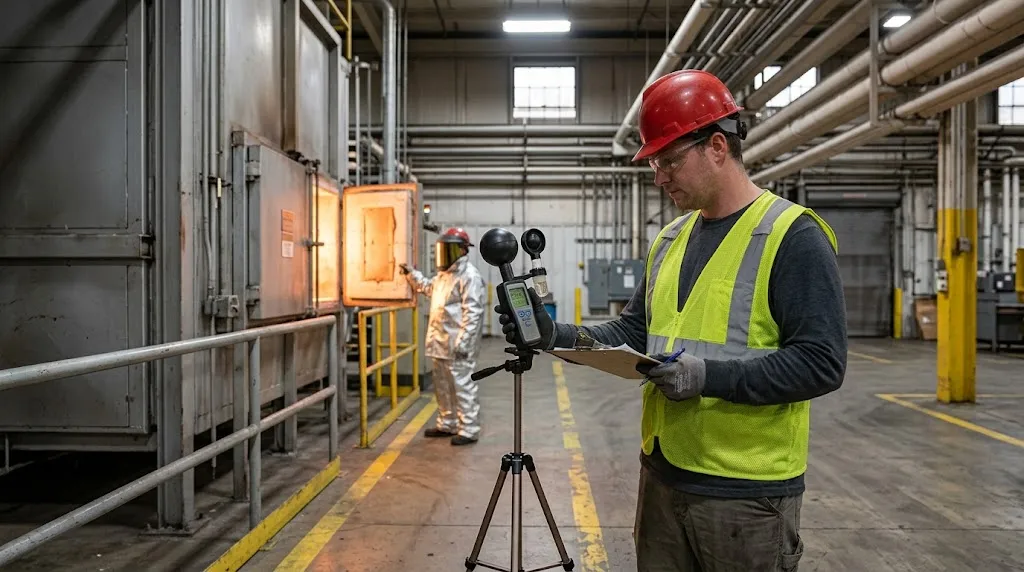
Heat Index vs WBGT vs Wet Bulb: What OSHA Uses
Heat index, WBGT, and wet bulb temperature each measure heat differently and carry different weight in OSHA’s heat illness prevention guidance. This article explains the differences, when they diverge, and which metric applies to workplace compliance.

How to Calculate Absolute Humidity (Formula + Example)
Absolute humidity measures the mass of water vapor per cubic meter of air. This guide explains the calculation formula, walks through a worked numerical example from RH and temperature inputs, and clarifies how g/m³ differs from other humidity units.

How to Calculate Enthalpy of Moist Air (Formula + Example)
Enthalpy of moist air is the total heat content of a dry air and water vapor mixture, expressed per unit mass of dry air. This guide presents the full formula, shows how to derive the humidity ratio from measurable conditions, and walks through a complete numerical example in both SI and Imperial units.

How to Calculate Heat Index (NOAA Formula + Chart)
Heat index is calculated using the NOAA Rothfusz regression equation, which combines air temperature and relative humidity. This guide covers the full formula, a step-by-step worked example, a reference chart, and the conditions under which the formula is and is not valid.
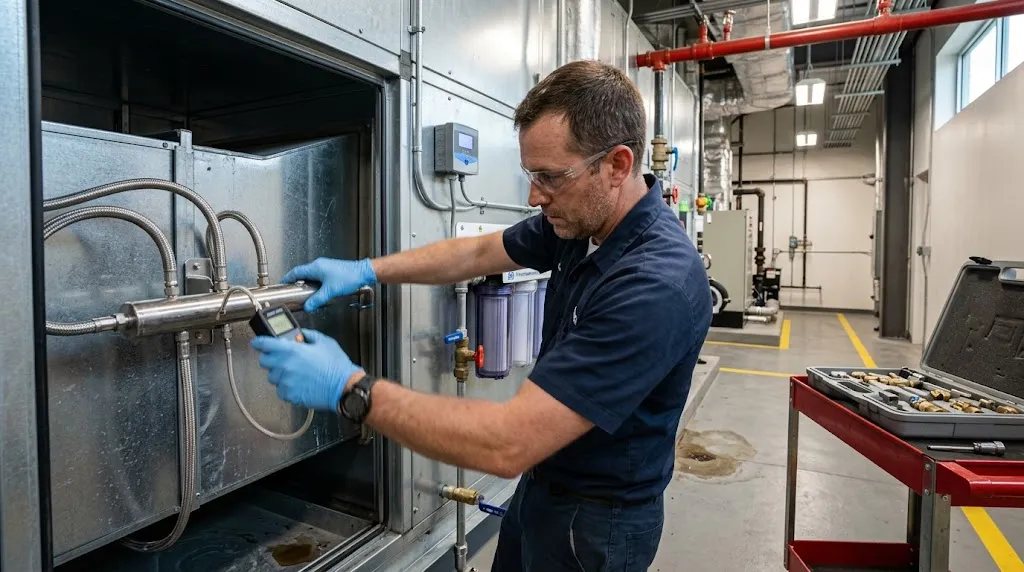
Steam vs Adiabatic Humidification: The Energy Math
Steam and adiabatic humidification differ by an order of magnitude in energy consumption. This article explains the thermodynamic reasons why, quantifies the operating cost gap, and identifies which facility profiles justify each technology on energy grounds.

What Is Absolute Humidity? (g/m³ Explained)
Absolute humidity measures the actual mass of water vapor present in a given volume of air, expressed in grams per cubic meter. Unlike relative humidity, it does not change when temperature changes. This article explains the definition, the unit, and why the distinction matters in practice.

What Is the Heat Index? (How ‘Feels Like’ Works)
The heat index is the “feels like” temperature — a number that combines actual air temperature with relative humidity to estimate how hot conditions feel to the human body. This guide explains the mechanism, risk thresholds, and the limits of the number itself.