Introduction — Your Most Overlooked Cleanroom Risk
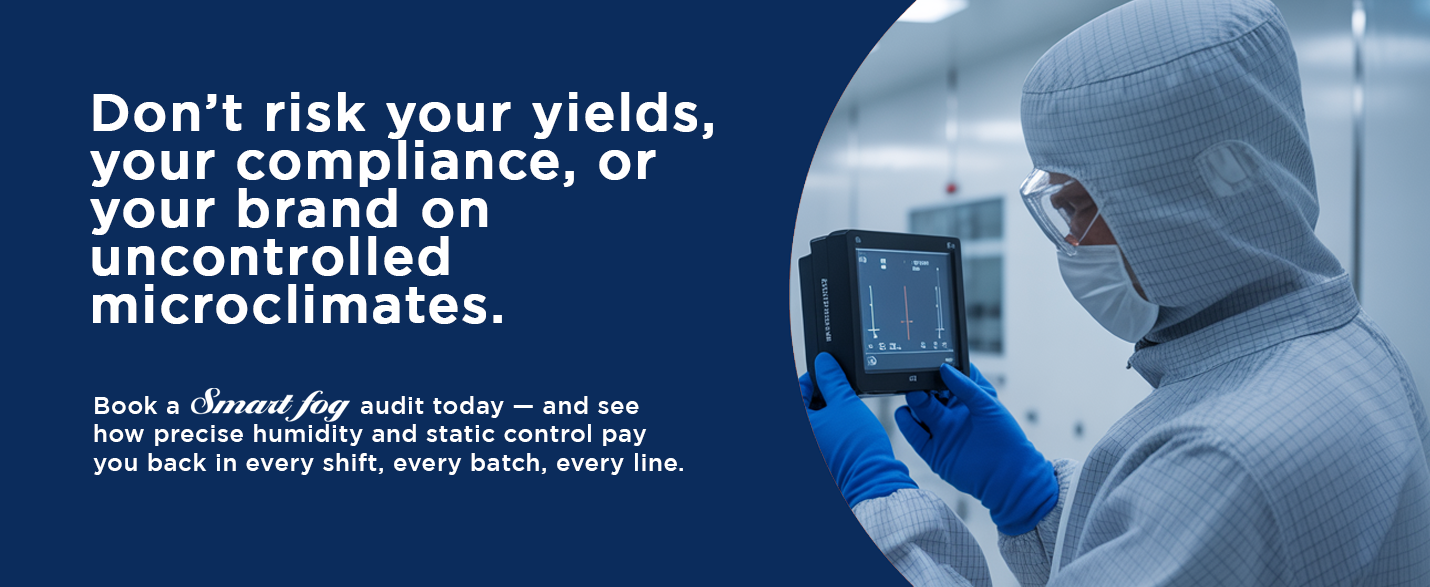
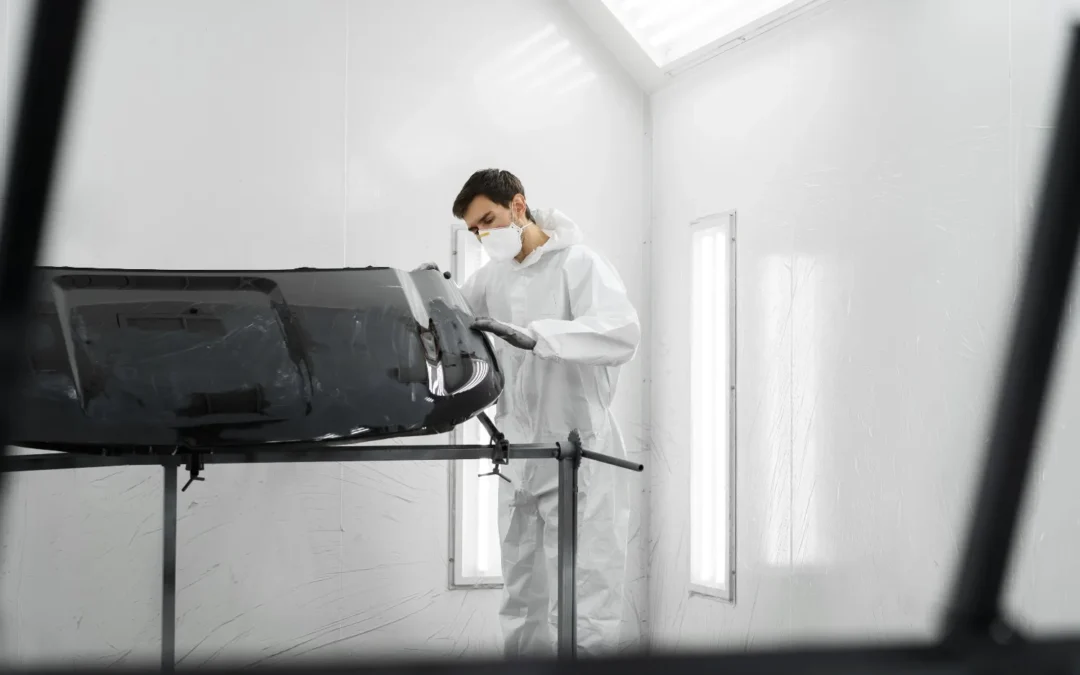
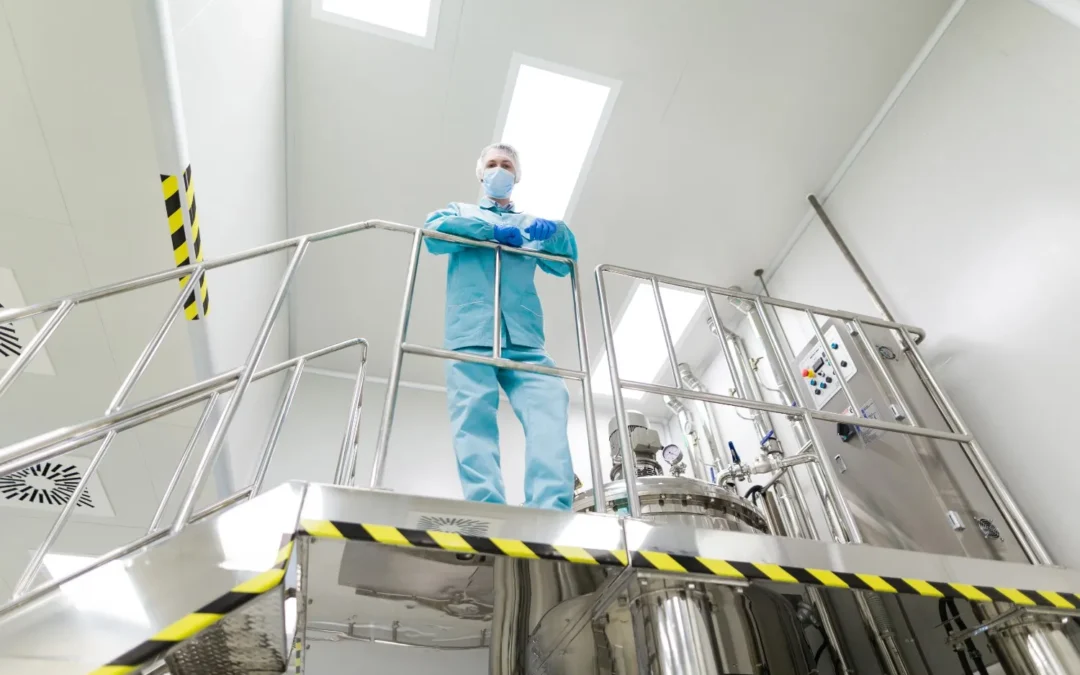
Step inside any state-of-the-art cleanroom — whether it’s for pharmaceutical filling, semiconductor wafer processing, advanced battery assembly, or medical device packaging — and it immediately feels under control. Staff wear full suits, HEPA and ULPA filters line the ceiling, differential pressures are meticulously logged. You might see particle counters clicking away, confirming compliance with ISO Class 7 or Class 5 limits.
On paper, everything appears perfect. Yet time and again, companies lose millions in wasted batches, compromised yields, or failed audits not because of obvious breaches, but due to subtle failures in humidity and static control that slip under the radar.
Why? Because most GMP environments are designed primarily around particulate counts and positive pressure. Humidity is treated as an afterthought — something roughly targeted by the HVAC to keep personnel comfortable, or to meet a generic range listed in a facility spec. But in reality, relative humidity is a fundamental environmental parameter that directly drives:
- Electrostatic charge build-up on surfaces, packaging films, and even people.
- Particle suspension times, affecting how long contamination stays airborne.
- The probability of condensation on cold surfaces, encouraging bacterial growth in pharma rooms or micro-corrosion in electronics.
Get humidity wrong by even ±5-10% and your compliant room becomes a quiet liability — out of ISO spec at the microzone level, threatening product sterility or circuitry yield long before alarms sound. This post breaks down exactly why tight humidity and static control are mission-critical for GMP & cleanroom operations, and how a more targeted approach protects your compliance, your yield, and your most expensive assets.
Why Relative Humidity is the Keystone of ISO Cleanroom Performance
It’s easy to see cleanroom performance purely through the lens of particle counts: ISO 14644 or EU GMP Grade A/B rooms require rigorous thresholds of particles ≥0.5μm per cubic meter. That’s why your ceiling is lined with HEPA modules, why operators gown, and why air showers exist.
But what keeps those particles from lingering or traveling? The physics of aerosol behavior is governed by relative humidity. In dry air (<40% RH), particles stay suspended far longer. Tiny skin flakes, textile fibers, or microplastic bits shed from equipment float for minutes or hours instead of settling quickly. That increases the probability they traverse process-critical zones.
More dangerously, low humidity also creates a perfect environment for electrostatic charge accumulation. As air becomes dry, surfaces and films pick up charge simply from friction — a glove brushing a table, or a poly pouch dragged across a fill line. This static doesn’t just make things cling: in electronics or device assembly, it can discharge into sensitive circuits, quietly damaging wafers or leads. In pharma, it pulls floating particles right onto open sterile surfaces, compromising fill finish or blister integrity.
Conversely, excess humidity (>60% RH) introduces another risk: condensation. Air saturated near its dew point condenses on chilled lines, cold fill plates, or metal surfaces. That creates microfilm moisture — an ideal foothold for bacteria, mold, or unintended chemical reactions.
ISO 14644 and EU GMP don’t simply set particle specs — they expect you to control all environmental parameters that influence particles. That’s why the best-run cleanrooms explicitly maintain RH within tight bands (often ±2-3%), not just to meet comfort specs, but to preserve the physical behaviors that keep contamination under control. Smart Fog systems exist precisely to maintain this narrow range without forcing your HVAC into extreme cycles, protecting your cleanroom’s entire contamination control strategy.
The Silent Cost of Static: From Wafer Losses to Audit Findings
Static is the cleanroom’s invisible saboteur. Unlike a failed HEPA integrity test or a differential pressure alarm, static builds up with no direct indication until it causes damage. By the time operators notice films clinging, boxes sticking, or small electrical zaps, losses may already be embedded in your process yield.
In semiconductor or PCB assembly lines, ESD events as minor as 30 volts can damage certain gate oxide layers or lead geometries. Human beings can’t feel a discharge under ~3,500 volts, meaning your operators might be inadvertently damaging microelectronics hundreds of times a shift without knowing it. Finished units then fail downstream burn-in or field performance, triggering warranty nightmares.
In pharma or med device packaging, static attracts particles right out of the air. That means after all your filtration, gowning, and airlocks, your sterile product or sealed packs are suddenly exposed to dust, fiber, or microdroplets pulled onto films by static cling. Inspectors notice — seeing unexpected debris in inline checks or requiring deeper environmental cause analyses that slow releases.
The real killer? Static issues rarely shut a line down. Instead, they cause incremental rework, small lot rejections, or higher manual inspections. That costs far more over time than a single large downtime event, bleeding margins unnoticed.
Smart Fog systems prevent this by maintaining RH above the static risk threshold (~45%), while also flooding cleanrooms with natural negative air ions generated by the Lenard Effect. These ions continuously discharge surfaces, films, and even operators, without chemical treatments or bulky external ion bars. It’s an elegant, maintenance-light way to guard against a hidden six-figure risk.
Why Traditional HVAC Strategies Fail Cleanrooms on Humidity
Most cleanroom HVAC systems were designed around air changes per hour (ACH) and pressure differentials, critical for keeping outside air out and maintaining particulate dilution. They also typically rely on broad cooling and heating to adjust humidity. Here’s the catch:
- To remove moisture, HVAC over-cools air until it condenses on coils. This risks localized dew points inside ducts or ceiling plenums — micro-condensation sites that breed bacteria outside easy cleaning reach.
- Then, it must reheat air back up to maintain process temps or comfort, wasting enormous energy.
- Worse, the system cycles repeatedly. As RH drifts high again due to door openings or process loads, it repeats the cycle, creating large swings.
In cleanrooms, these swings are disastrous. One pass below 40% RH can trigger static accumulation on sensitive equipment. A spike above 60% can let condensation form inside a fill machine or on a cold metal pass-through. Neither shows on your average room sensor immediately, especially if your monitoring points are few or mounted away from process microzones.
Smart Fog tackles this by stabilizing RH directly inside your cleanroom envelope, holding tight ±2% ranges without relying on extreme cooling. That means less load on compressors, less cycling, and critically — far fewer micro-condensation risks hidden above your ceiling tiles or inside complex duct runs.

Cleaner Air with Lower Particle Loads — Without More HEPA or Ozone
When particle counts rise, most facilities instinctively look at filters. Bigger HEPA banks, more frequent changes, or secondary recirculation units are common upgrades. But all filters only capture particles that pass through them. They do nothing for contamination still drifting inside your room.
Relative humidity again changes the game. In balanced air (~50–55% RH), small particles gain mass by adsorbing micro-layers of moisture, increasing their settling rate. That means they naturally fall out faster instead of riding gentle convective currents indefinitely. When combined with Smart Fog’s natural negative ions, which encourage particles to clump and drop out, you effectively lower airborne counts before they ever reach a HEPA face or your product surfaces.
Critically, this happens without ozone generators or chemical ionisers. Smart Fog systems are UL 2998 zero ozone certified, using only pure water and the physics of air fragmentation. That means there’s no risk of oxidative damage to sensitive electronic substrates or reactive pharmaceutical ingredients — a growing audit concern in regulated environments.
The ROI: Lower Energy, Longer Equipment Life, Easier Audits
Most companies first look at Smart Fog to solve an immediate compliance scare — like unexplained particle spikes or repeated static-related failures. But the real financial case comes from the way these systems quietly save money every single day.
By stabilizing humidity at the process floor level, Smart Fog dramatically reduces how hard your HVAC needs to work. Compressors cycle less often, reheat banks stay idle longer, and energy costs drop. In many GMP facilities, HVAC can account for 40%+ of total electrical usage. Even a 15–20% reduction in heavy cycling means hundreds of thousands saved annually on multi-line campuses.
Just as importantly, compressors, coils, and duct systems last longer. They’re no longer stressed by repeated deep dehumidification cycles or forced reheats. Maintenance teams see fewer emergency calls and extend capital replacement timelines by years.
For quality teams, stable RH means fewer micro-condensation events, lower static readings, and simpler audit trails. With Smart Fog’s automated data logging, you can hand over humidity and ionisation compliance records at any ISO or FDA inspection, without hunting through HVAC logs that weren’t designed for tight GMP documentation.
FAQs: What Cleanroom Managers Always Ask
Q. Will this increase my risk of condensation on critical surfaces?
No. Smart Fog uses ultra-fine droplets that evaporate instantly in air. It raises ambient RH without wetting surfaces, unlike legacy misters.
Q. Is it safe for sensitive electronics or APIs?
Completely. It’s zero-chemical, zero-ozone, and purely physical. Certified UL 2998 and trusted in semiconductor fabs and sterile compounding.
Q. Can it tie into our building management system?
Yes. Systems integrate directly into your BMS for live monitoring and trend reports, simplifying your GMP documentation.
Q. Will it replace my HVAC?
Not at all. Your HVAC still handles temperature and pressure. Smart Fog simply offloads the humidity stabilization, letting HVAC run cleaner and cheaper.
Conclusion: Make Your Environment Work for You, Not Against You
Cleanrooms and GMP suites represent some of the highest capital and operational investments in any industry. Millions go into stainless finishes, validated sterilization cycles, gowning protocols, and tight process controls. But if your air’s humidity and static aren’t equally controlled, all that investment sits on a fragile foundation.
Smart Fog makes your cleanroom environment stable. That means:
- No micro-condensation events that encourage bacterial or mold footholds.
- No static surprises that damage wafers or pull particles onto sterile fills.
- Lower HVAC loads, longer compressor lives, smaller energy bills.
- Cleaner, simpler audit trails that build buyer and regulator confidence.