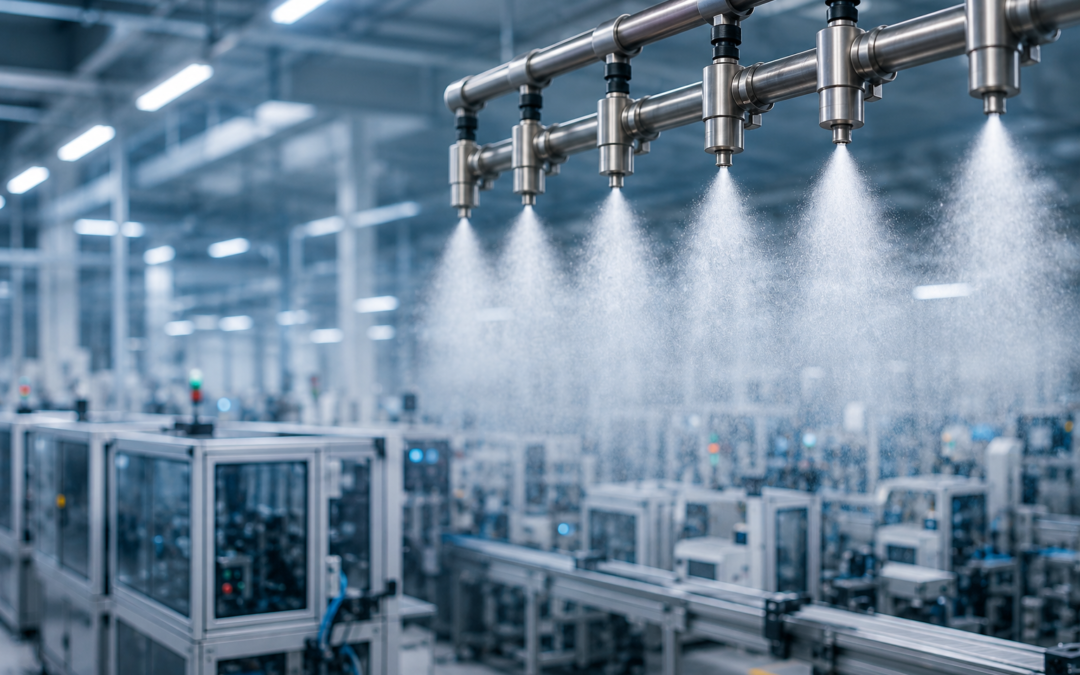
Disinfection fogging systems disperse EPA-registered chemical disinfectants as fine droplets to treat surfaces and airborne pathogens in enclosed spaces. These systems create a fog that carries antimicrobial agents throughout rooms, reaching areas that manual cleaning...
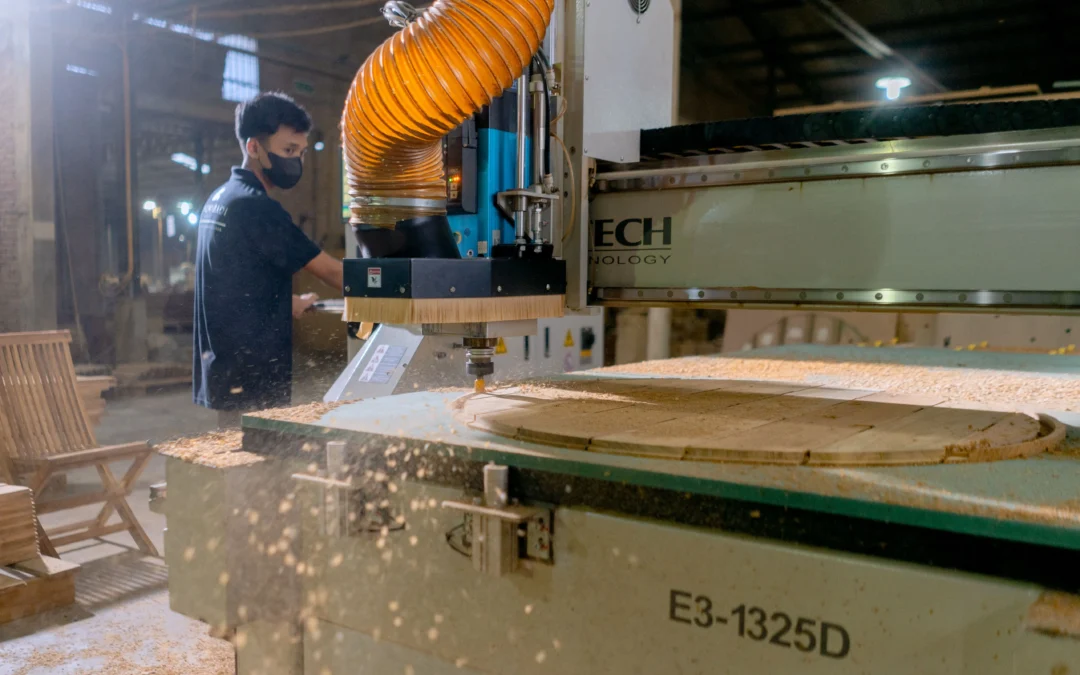
Humidity control reduces airborne sawdust and combustible dust hazards in wood manufacturing facilities through atmospheric moisture management and static electricity suppression. Higher ambient humidity levels cause dust particles to gain weight and settle faster,...
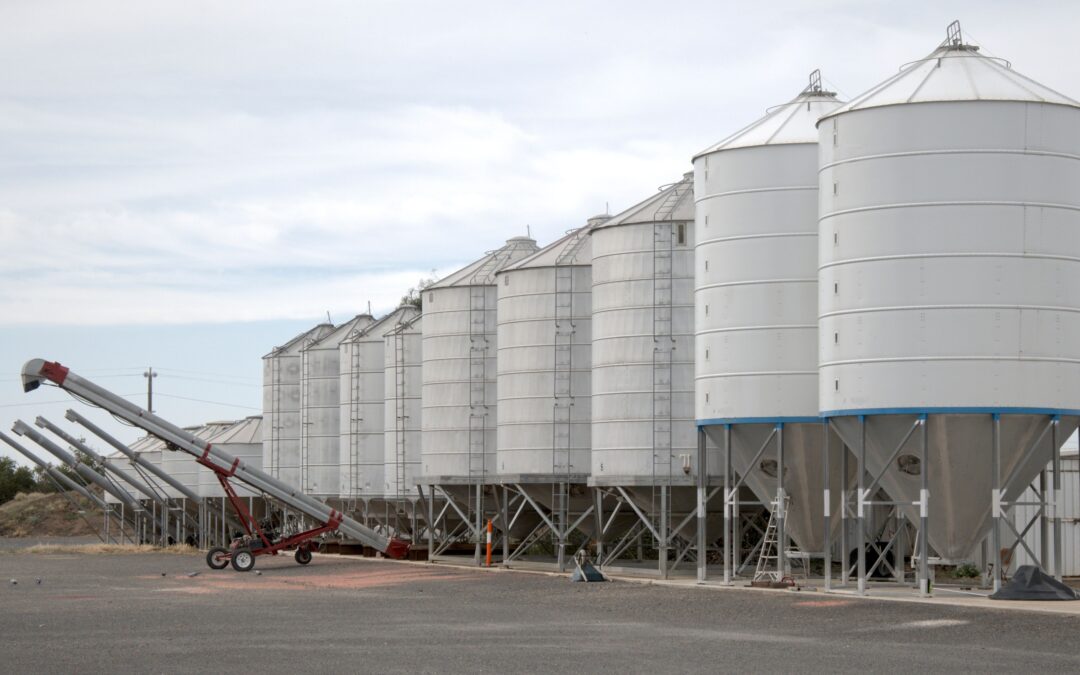
Grain storage facilities require precise humidity control to prevent commodity deterioration and weight loss that can reach 2-4% annually in uncontrolled environments. Stored grains like oats, wheat, and cereals maintain optimal quality when humidity levels remain...
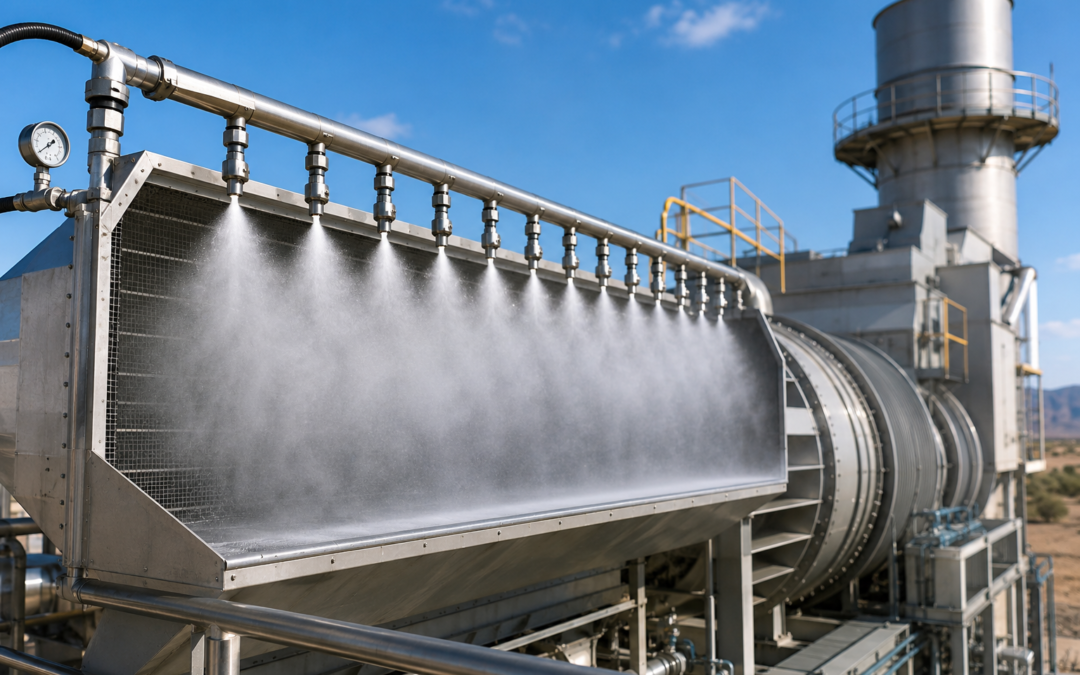
Gas turbine inlet fogging increases power output by cooling incoming air temperature before it enters the compressor. This evaporative cooling process reduces air density and improves mass flow through the turbine, delivering significant performance gains during peak...
Air atomization uses compressed air and liquid mixing to create fine droplets through twin-fluid technology, offering distinct advantages over hydraulic high-pressure systems in droplet control, pressure requirements, and spray uniformity. This twin-fluid approach...
Dry fog humidifiers produce self-evaporating droplets that maintain precise humidity control without wetting surfaces or equipment. Unlike traditional misting systems that create condensation and surface moisture, dry fog technology uses compressed air and water...