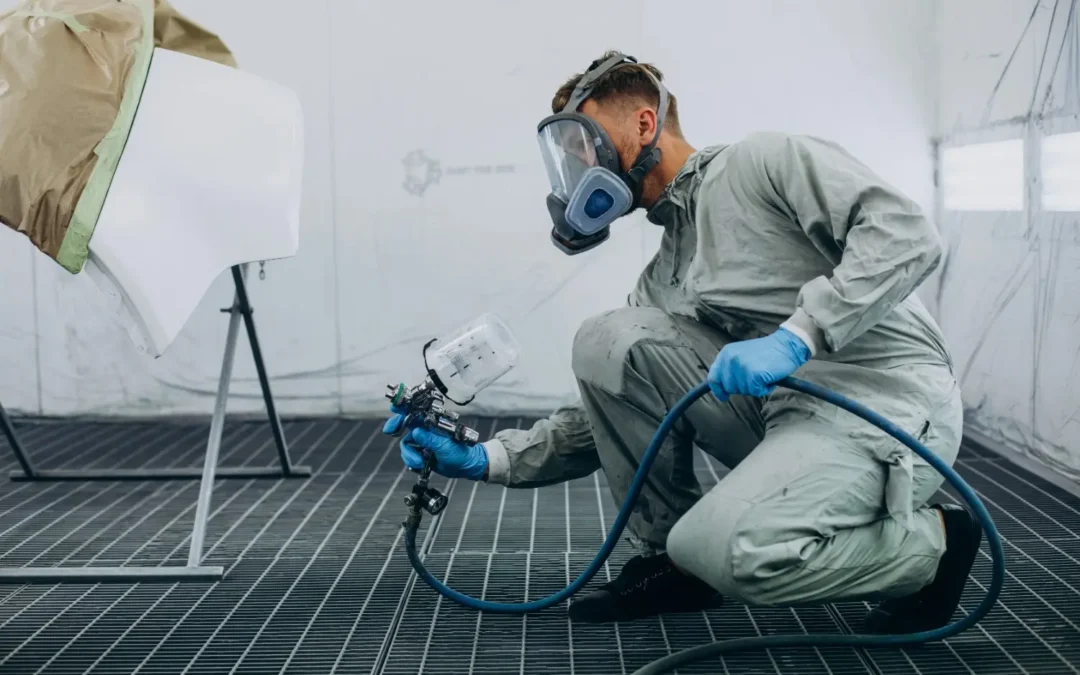
The ideal humidity for spray painting is between 40% and 65% RH. Above that range, coatings dry too slowly, trap moisture in the film, and develop defects such as blushing and fish-eye. Below 30% RH, paint flashes off too quickly before it reaches the surface, causing...
Static electricity is a persistent challenge in paint booth operations, directly impacting transfer efficiency, surface uniformity, and material usage. During spray application, electrostatic charges can attract airborne particles, distort spray patterns, and increase...
Static electricity is a persistent challenge in paint booths, contributing to finish defects, uneven coating distribution, and increased overspray. Controlling environmental conditions, particularly relative humidity, is one of the most effective ways to limit static...
Maintaining stable temperature and humidity levels is essential for consistent coating performance in industrial paint booths. Environmental instability directly affects adhesion, drying behavior, and overall finish quality. Selecting the right humidity control system...
A high quality finish in an industrial paint booth depends on more than just the paint. The surrounding environment, especially humidity, directly affects how paint flows, dries, and bonds to the surface. When humidity is too low or too high, it can lead to defects,...
Keeping humidity at the right level is essential in industrial paint booths. Moisture in the air directly affects how paint flows, dries, and bonds to a surface. When humidity drifts too low or too high, paint quality suffers and defects become more common. Dry air...