

 Made in USA

- Pharmaceutical cleanrooms operating under FDA or EU GMP guidelines typically target 45 to 65 percent RH, while semiconductor fabrication facilities often require 40 to 60 percent RH, with tolerance bands that demand humidification precision of plus or minus a few percentage points.
- When RH falls below 40 percent, electrostatic discharge (ESD) risk increases significantly in ISO-classified environments handling sensitive components, instrumentation, or pharmaceutical powders.
- Ultrasonic humidifiers can aerosolize minerals and microorganisms from the water supply directly into cleanroom air, raising airborne particle count and introducing contamination risk that other system types do not pose.
- Smart Fog systems produce an equal-sized, self-evaporating droplet grid that adds moisture to the air without wetting surfaces, equipment, or product under proper system design.
- Smart Fog maintains RH up to 99 percent with plus or minus one to two percent precision, supporting the validated, documented humidity control that GMP-compliant and ISO-classified environments require.
- Smart Fog systems have no moving parts in the humidification process, extend maintenance intervals up to two years, and do not require a certified technician for installation, reducing operational disruption in active cleanrooms.
What Humidity Requirements Apply to Laboratories and Cleanrooms
Cleanroom humidity requirements are not arbitrary ranges. They emerge from the interaction between process sensitivity, regulatory standards, and the physical behavior of materials and particles at specific RH levels. Understanding what a standard actually demands from a humidification system, not just the range it specifies, is the first step in selecting appropriate equipment. ISO cleanroom standards under ISO 14644 govern airborne particulate classification, but humidity control is addressed separately through GMP guidelines, ASHRAE guidelines, and industry-specific regulatory frameworks. The precision required to stay within a specified tolerance during continuous operation is the defining selection criterion, not just the installed capacity of the system.ISO and GMP Humidity Guidelines by Facility Type
Humidity targets vary by industry and application. Facilities evaluating cleanroom humidification systems should match their target range to the applicable standard:- Pharmaceutical cleanrooms (FDA/EU GMP): Typically target 45 to 65 percent RH, with some sterile manufacturing environments specifying tighter sub-ranges, according to temperature and humidity requirements for pharmaceutical facilities depending on process.
- Semiconductor fabrication facilities: Often maintain 40 to 60 percent RH to manage ESD risk and protect wafer and component integrity during handling.
- Laboratory conditioning and testing environments: Require application-specific RH ranges tied to test protocol validity, with stability across temperature cycling often more important than the absolute setpoint.
- General ISO-classified manufacturing: Follows ASHRAE guidelines and GMP requirements relevant to the product being manufactured, with temperature and humidity monitoring forming part of the environmental monitoring program.
Why the Proving Room and Controlled Oven Use Case Requires Precision
Proving rooms and controlled environment ovens present a specific humidification challenge: the system must hold a stable setpoint through temperature cycling without introducing surface moisture onto product or test equipment. Fluctuations in RH during a conditioning cycle can invalidate test results, requiring the cycle to restart and the data to be discarded. Three requirements separate appropriate systems from inadequate ones in this use case:- Consistent delivery that holds setpoint within a tight tolerance under varying thermal loads
- Non-wetting performance that keeps product and test equipment free of surface moisture
- RH stability during temperature transitions, not just at steady-state conditions
How Low Humidity Creates Risk in Controlled Laboratory Environments
Humidity deficiency in cleanrooms and laboratories generates three distinct categories of risk: electrostatic discharge events, elevated airborne particle counts, and regulatory or validation consequences. Each risk category operates independently and demands a separate technical response.Electrostatic Discharge Risk at Low Relative Humidity
When RH falls below 40 percent, air loses its ability to dissipate surface charge, allowing electrostatic buildup on equipment, personnel, and product. In ISO-classified environments, an ESD event can carry serious consequences:- Damage to semiconductors, printed circuit boards, or sensitive instrumentation
- Contamination of a pharmaceutical powder batch
- A triggered deviation record
Contamination and Airborne Particle Count Effects
Appropriately humidified air supports mild hygroscopic settling of airborne particulates. Under-humidified environments allow particles to remain suspended longer, which can elevate airborne particle count relative to a facility's ISO classification limit. Temperature and humidity monitoring in ISO-classified environments is a documented requirement, not a recommendation, because RH stability directly affects particle behavior and environmental baseline data. A humidification system that causes fluctuations in RH introduces variability into the environmental monitoring record, which can complicate interpretation of particle count trends during regulatory review.Regulatory and Validation Consequences of Humidity Instability
In GMP-regulated pharmaceutical manufacturing, an RH reading outside the validated range triggers a deviation record. Depending on severity and frequency, the consequences can escalate:- Batch rejection, if the excursion compromises product quality
- Re-validation of the affected process
- Invalidated test data in accredited testing laboratories, requiring the cycle to repeat under controlled conditions
Why Humidification Technology Choice Matters in Cleanrooms
Technology selection in cleanroom humidification is not interchangeable. Each approach introduces a different risk profile that must be evaluated against the contamination, static, and compliance requirements of the specific environment. Choosing the right humidifier for cleanrooms covers this selection framework in detail. The following comparison addresses the dimensions most relevant to cleanroom operators.Steam and Ultrasonic Risks in ISO-Classified Spaces
Both steam and ultrasonic systems introduce specific failure modes that are disqualifying in many cleanroom environments. These are not general disadvantages; they are mechanisms that directly conflict with ISO classification and GMP requirements. Surface wetting risk:- Steam humidification system: Introduces heat load into the controlled environment; condensate in distribution lines creates microbial growth risk.
- Ultrasonic humidifier: Generates aerosol from the water surface; surface wetting can occur if droplets travel beyond the evaporation zone.
- Non-wetting adiabatic (Smart Fog): Droplets self-evaporate before reaching any surface under proper system design; no surface wetting occurs on equipment, racks, or product.
- Steam humidification system: Mineral carryover risk if water treatment is inadequate; steam distribution lines can harbor condensate and biofilm.
- Ultrasonic humidifier: Aerosolizes minerals and microorganisms directly from the water supply into cleanroom air, increasing airborne particle count.
- Non-wetting adiabatic (Smart Fog): Compatible with a deionized water supply, which eliminates mineral aerosolization; no standing water in distribution lines reduces microbial growth risk.
- Steam humidification system: Requires consistent water treatment to prevent mineral carryover; scale buildup on heating elements affects output.
- Ultrasonic humidifier: Critically dependent on water purity; hard water used in an ultrasonic unit will aerosolize mineral content into the cleanroom.
- Non-wetting adiabatic (Smart Fog): Accepts deionized or purified water, which is the appropriate input for pharmaceutical cleanrooms and semiconductor fabrication facilities.
What Non-Wetting Adiabatic Humidification Means for Cleanroom Safety
The contamination control case for non-wetting adiabatic humidification rests on the mechanism: droplets that evaporate before contacting any surface cannot deposit minerals, introduce moisture, or alter surface chemistry. This is the property that makes the technology compatible with cleanroom environments where surface contamination from a humidification system is a disqualifying risk. The Smart Fog technology overview covers the operating principle in detail. The non-wetting claim applies under proper system design; direct exposure to the fog stream will wet surfaces, so nozzle placement and system design must account for this.Application Scenarios: Where Laboratory and Cleanroom Humidification Matters Most
The requirements differ enough across cleanroom and laboratory types that a generic humidification selection is unlikely to be appropriate for any of them. Each environment presents a distinct combination of humidity targets, contamination risk vectors, and regulatory constraints.Pharmaceutical and Biotech Cleanrooms
Pharmaceutical manufacturing humidification must satisfy GMP compliance requirements for validated environmental monitoring, with temperature and humidity monitoring records forming part of the batch documentation. In sterile manufacturing environments, the additional requirement is that the humidification system itself must not introduce microbial risk into the cleanroom air or onto product contact surfaces. A non-wetting system supplied with a deionized water supply and configured for proper system design satisfies both the precision and contamination control requirements of this environment.Semiconductor Fabs and Electronics Manufacturing Cleanrooms
Semiconductor fabrication facilities typically maintain 40 to 60 percent RH to manage ESD risk during wafer and component handling. Any humidification system used in a positive pressure cleanroom at this classification level must integrate cleanly with the existing HVAC system integration architecture without introducing particulates or aerosol into the filtered airflow. PCB manufacturer humidification requirements follow a similar logic: static electricity is the primary yield loss mechanism, and humidity is the primary passive mitigation method, making continuous, stable humidity delivery a production requirement rather than a facility amenity.Proving Rooms, Conditioning Ovens, and Laboratory Testing Environments
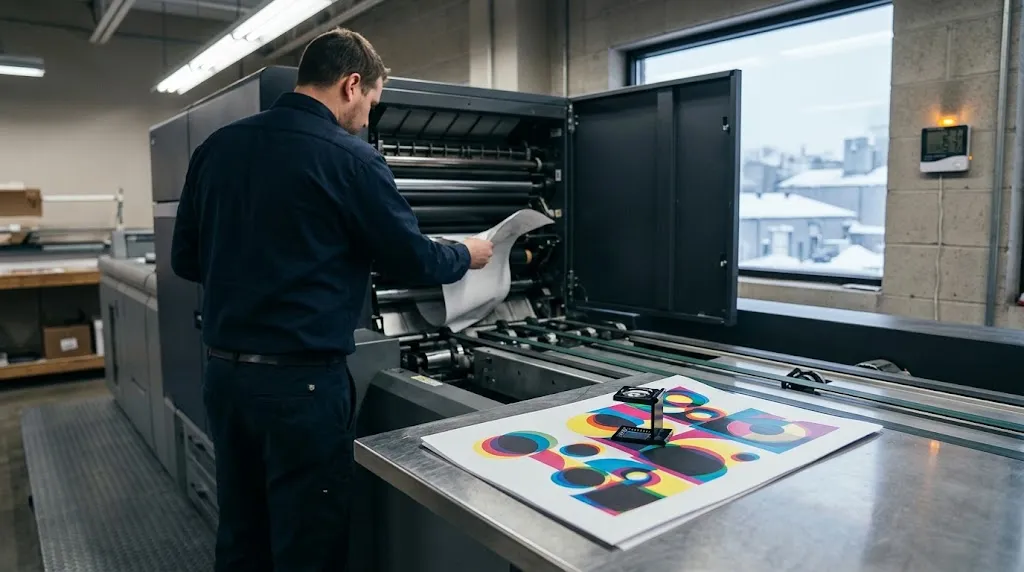
Proving rooms and conditioning ovens require stable RH delivery during temperature cycling, where HVAC-driven RH fluctuations are most likely to occur. A humidification system that cannot track its setpoint through a temperature transition will produce RH excursions that invalidate test results or product conditioning cycles. The laboratory humidification systems requirement here is setpoint stability under dynamic thermal conditions, not simply peak humidification capacity.What to Look for When Selecting a Cleanroom Humidification System
Engineering and procurement teams evaluating humidity control systems for cleanroom and laboratory environments should build their evaluation around the following criteria. Each criterion reflects a cleanroom-specific constraint that general humidifier specifications do not always address.Questions to Ask Before Specifying a Cleanroom Humidifier
- RH precision and tolerance: Can the system maintain the required setpoint within plus or minus two percentage points during continuous operation, including during temperature transitions?
- Non-wetting performance: Does the system introduce surface moisture onto equipment, product, laminar flow surfaces, or HVAC ducting under normal operating conditions?
- Water quality compatibility: Can the system accept a deionized water supply, and does the system design eliminate standing water in distribution lines?
- HVAC system integration: Does the unit install in-duct or in direct space, and how does it interact with positive pressure cleanroom airflow without introducing particulates?
- Maintenance burden in an active cleanroom: Does routine maintenance require cleanroom entry, process shutdown, or a certified technician?
- Humidity sensor calibration and monitoring compatibility: Can the system integrate with facility environmental monitoring and data logging systems for validated process documentation?
- Validation documentation: Does the manufacturer provide the installation qualification and operational qualification documentation that GMP-regulated facilities require for a validated humidification process?
How Smart Fog Addresses Cleanroom and Laboratory Humidification Requirements
Adiabatic humidification that produces an equal-sized droplet grid eliminates the surface-wetting risk that defines both steam and ultrasonic technologies. This is the operating principle behind Smart Fog's industrial systems, and it is the property that makes the technology applicable to cleanroom and laboratory environments where contamination risk from the humidification system itself is an active evaluation criterion.Precision and Non-Wetting Performance in Controlled Environments
Compressed air and water mix through Smart Fog's proprietary nozzle to produce an equal-sized droplet grid. Each droplet is the same size and slightly charged to prevent re-aggregation. The droplets self-evaporate before reaching any surface, which means the system adds moisture to the air without introducing mineral deposits, surface wetting, or aerosol contamination into the cleanroom environment. Key performance characteristics for cleanroom and laboratory applications:- Maintains RH up to 99 percent with plus or minus one to two percent precision, supporting validated environmental monitoring in GMP-regulated facilities.
- Compatible with a deionized water supply, eliminating mineral aerosolization risk that ultrasonic systems introduce.
- 100 percent water efficiency: every droplet evaporates into the air, leaving no residual moisture accumulating in the distribution path.
- Non-wetting under proper system design. Direct exposure to the fog stream will wet surfaces; nozzle placement must account for this in system design.
Low Maintenance and Continuous Operation for Active Cleanrooms
Cleanroom facilities cannot absorb frequent maintenance entries or unplanned process shutdowns driven by humidification system failures. Smart Fog systems address this constraint through design:- No moving parts in the humidification process, reducing mechanical failure risk during active cleanroom operation.
- Maintenance intervals extend up to two years, reducing the frequency of maintenance entry into controlled environments.
- Set-and-forget continuous industrial operation does not require process shutdown for routine upkeep.
- Smart Fog is a complete engineered system, not a component kit. Installation does not require a certified technician and is available in in-duct and direct-space configurations to suit existing HVAC architecture.