

- Uncontrolled humidity causes electrostatic discharge damage in electronics manufacturing, dimensional instability in precision parts, and surface contamination that leads to coating failures and product defects.
- Manufacturing humidity control systems must maintain relative humidity within plus or minus 5% of target levels and respond to load changes within 15 minutes to prevent process disruptions.
- Facility assessment requires calculating moisture loads based on air changes per hour, process-generated moisture, and infiltration rates to properly size humidification systems for continuous operation.
- Non-wetting humidification technologies eliminate the risk of surface moisture on equipment and products while maintaining precise control up to 99% RH with plus or minus 1-2% accuracy.
- System integration with existing HVAC infrastructure requires proper control sequencing and monitoring to prevent equipment conflicts and maintain energy efficiency throughout the facility.
- Maintenance demands vary significantly by technology type, with some systems requiring weekly attention while precision engineered systems operate for up to two years between service intervals.
Why Manufacturing Facilities Need Humidity Control
Manufacturing processes depend on stable environmental conditions to maintain product quality, protect sensitive equipment, and ensure worker safety. Humidity fluctuations create measurable problems that affect production output, increase reject rates, and damage valuable equipment through mechanisms that facility managers can prevent with proper environmental control.Product Quality and Process Stability
The direct effects of relative humidity on material properties and manufacturing processes cause immediate quality problems. Low humidity below 30% RH creates conditions where plastic components become brittle, paper and cardboard lose flexibility, and adhesives fail to cure properly. High humidity above 60% RH causes hygroscopic materials to absorb moisture, leading to dimensional changes that affect tolerances in precision manufacturing. Electrostatic discharge becomes a critical concern when RH drops below 40%, particularly in electronics manufacturing where static charges can destroy sensitive components. Wood products, textiles, and composite materials experience dimensional instability as moisture content changes with ambient humidity levels. Surface finish quality in painting and coating operations depends on controlled humidity to prevent defects like orange peel, fisheyes, and poor adhesion.Equipment Protection and Operational Reliability
Manufacturing equipment suffers accelerated wear and increased downtime when humidity levels fluctuate outside optimal ranges. Low humidity increases static electricity buildup on conveyor systems, packaging equipment, and automated machinery, leading to material handling problems and sensor malfunctions. Dust becomes more problematic in dry conditions as particles remain airborne longer and adhere to surfaces through static attraction. Metal components and precision tooling face corrosion risks when humidity exceeds 60% RH for extended periods. Electronic control systems, programmable logic controllers, and instrumentation require stable humidity conditions to maintain accuracy and prevent moisture-related failures. Proper humidity control extends equipment life, reduces unscheduled maintenance, and maintains the reliability manufacturing operations require.Understanding Manufacturing Humidity Requirements
Effective humidity control systems begin with establishing target ranges based on manufacturing processes, materials handled, and equipment requirements. Different industries require different humidity ranges, and facilities must understand these specifications before selecting control systems.Target Humidity Ranges by Manufacturing Type
Electronics manufacturing humidification typically requires 45-55% RH to prevent ESD damage while avoiding condensation on circuit boards and components. Pharmaceutical facilities often maintain 40-60% RH to meet regulatory requirements and prevent product degradation. Food processing operations require 50-70% RH depending on the specific products and packaging requirements. Automotive industry humidification maintains 40-60% RH in paint booths and assembly areas to ensure coating quality and prevent static buildup during component handling. Textile manufacturing requires 65-75% RH to maintain fiber flexibility and reduce breakage during processing. Paper and printing facilities need 45-55% RH to prevent curl, static, and registration problems.Measurement and Monitoring Protocols
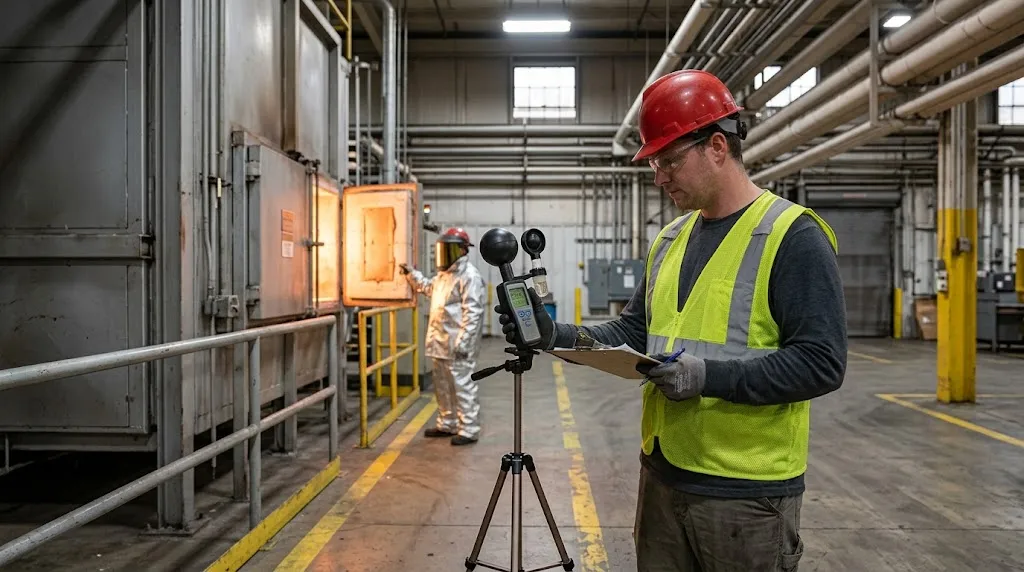
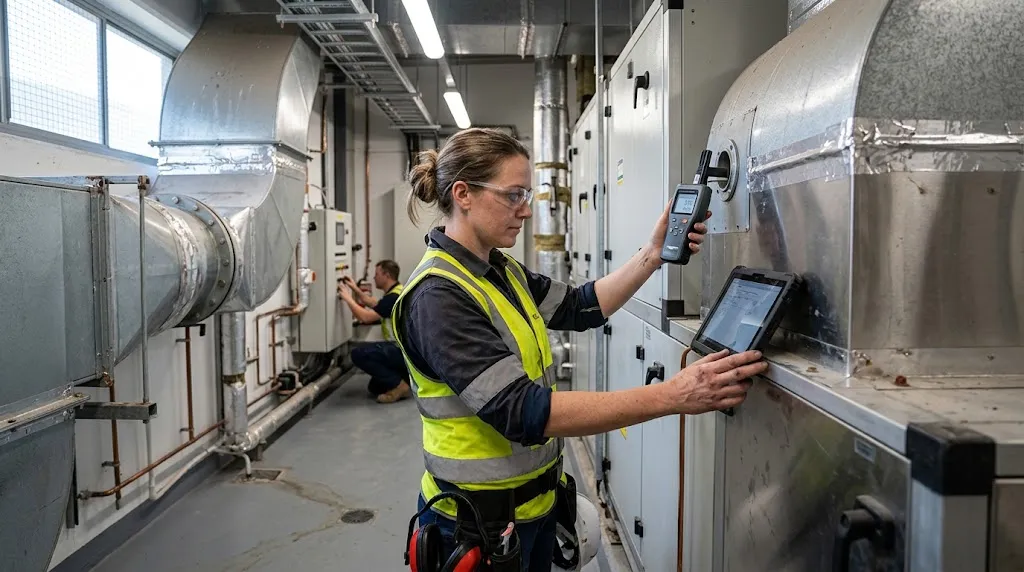
Baseline assessment requires installing calibrated hygrometers at multiple locations throughout the facility to map existing conditions and identify problem areas. Measurement points should include production areas, storage zones, and areas where materials enter or exit the building. Data logging over a minimum two-week period captures daily and weekly patterns that affect system sizing calculations. Monitoring protocols must account for thermal gradients and air circulation patterns that create humidity variations within the same space. According to ASHRAE Standard 55-2017, measurement accuracy of plus or minus 3% RH is required for meaningful environmental data. Control systems should maintain humidity within plus or minus 5% of setpoints during normal operation.Implementation Planning and System Integration
Successful humidity control implementation requires comprehensive facility assessment, accurate load calculations, and careful integration with existing building systems. The planning phase determines system capacity, installation requirements, and operational parameters that ensure reliable long-term performance.Facility Assessment and Load Calculations
Load calculations must account for facility volume, air exchange rates, and moisture sources to determine required humidification capacity. A typical manufacturing facility requires 2-4 pounds of moisture per hour per 1000 cubic feet of space, but this varies significantly based on ventilation rates and process loads. High air exchange rates increase moisture demand proportionally. Process-generated moisture from equipment, materials, and personnel must be quantified and included in load calculations. Infiltration through doors, windows, and building envelope creates additional moisture demand during dry seasons. HVAC system capacity, ductwork configuration, and existing controls affect integration requirements and installation complexity.Installation and Commissioning Considerations
System installation requires coordination with existing HVAC controls to prevent equipment conflicts and ensure proper operation. Humidification systems must be sized and positioned to provide uniform distribution without creating local moisture problems or dead zones. Commissioning includes verifying proper humidity distribution, control response times, and integration with building automation systems. Operational validation requires measuring humidity uniformity across the facility and confirming that the system maintains setpoints under varying load conditions. Control sequences must account for seasonal changes, production schedules, and equipment operation patterns. Documentation should include system specifications, maintenance requirements, and troubleshooting procedures for facility operators.Technology Options and Selection Criteria
Manufacturing facilities can choose from several humidification technologies, each with different performance characteristics, maintenance requirements, and installation considerations. Understanding these differences helps facility managers select systems that match their specific operational requirements and constraints.Precision and Control Capabilities
Steam humidification provides rapid response and high capacity but typically maintains humidity within plus or minus 3-5% of setpoints according to ASHRAE humidification guidelines. Ultrasonic systems offer good control precision but may struggle with uniform distribution in large spaces. Evaporative systems provide economical operation but slower response times and limited precision compared to other technologies. Non-wetting technologies eliminate surface moisture risks while maintaining precise moisture control throughout the facility. These systems can achieve humidity levels up to 99% RH with plus or minus 1-2% accuracy when properly designed and installed. Control response times affect how quickly systems adjust to changing conditions, with faster response preventing humidity overshoots that can damage products or equipment.Maintenance and Operational Considerations
Steam systems require regular boiler maintenance, scale removal, and water treatment to prevent mineral buildup and ensure reliable operation. Ultrasonic humidifiers need frequent cleaning and may require water treatment to prevent white dust formation. Traditional misting systems require nozzle cleaning and replacement due to mineral clogging and wear. Energy consumption varies significantly between technologies, with steam systems typically requiring the highest energy input due to heating requirements. Water quality sensitivity affects maintenance frequency and operational costs, particularly for systems that use tap water without treatment. Some precision engineered systems require maintenance only every two years, significantly reducing operational costs and downtime compared to systems requiring weekly or monthly attention.Smart Fog Non-Wetting Precision Humidification for Manufacturing
Compressed air and water mixed through a proprietary nozzle creates an equal-sized droplet grid where each droplet is slightly charged to prevent re-aggregation. The droplets self-evaporate before reaching surfaces, enabling precise humidity control up to 99% RH without wetting equipment, products, or facility surfaces under proper system design.Non-Wetting Technology for Manufacturing Environments
The self-evaporating droplets eliminate the surface moisture risks associated with traditional humidification methods while maintaining industrial-grade precision. This prevents condensation on equipment, reduces contamination risks, and eliminates concerns about moisture damage to sensitive products or materials. The technology operates as 100% water efficient with every drop evaporating into the air rather than settling on surfaces. ESD control systems benefit from this non-wetting approach because humidity can be maintained at optimal levels for static dissipation without creating moisture-related equipment problems. The equal-sized droplet grid ensures uniform humidity distribution throughout manufacturing spaces without the hot spots or dead zones common with other technologies.Industrial-Grade Reliability and Maintenance
The no moving parts design in the humidification process eliminates common failure points and reduces maintenance requirements to intervals extending up to every two years. This dramatically reduces operational costs compared to systems requiring weekly cleaning, monthly filter changes, or frequent nozzle replacement due to mineral buildup. Industrial humidification systems are designed for 24/7 continuous operation with minimal supervision. The compressed air and water infrastructure required for operation typically exists in manufacturing facilities, eliminating the need for dedicated electrical circuits, steam generation, or specialized water treatment systems that other technologies require. Smart Fog systems provide plus or minus 1-2% humidity control precision with response times fast enough to prevent process disruptions during changing production conditions. The complete engineered solution approach means facilities receive properly sized systems rather than component kits requiring additional design work and integration complexity.Final Thoughts
Humidity control in manufacturing prevents costly product defects, equipment damage, and operational inefficiencies while ensuring consistent quality and worker comfort. Effective implementation requires understanding facility-specific requirements, accurate load calculations, and selecting technology that delivers the precision and reliability manufacturing processes demand. System selection should prioritize precision, maintenance requirements, and integration simplicity over initial cost considerations. The total cost of ownership includes energy consumption, maintenance labor, replacement parts, and downtime costs that vary dramatically between different humidification technologies. For facilities requiring precision humidity control without surface wetting risks, request a humidification assessment to determine the appropriate system specifications for your manufacturing environment.Frequently Asked Questions
How do you control humidity in manufacturing facilities effectively?
Effective manufacturing humidity control requires establishing target RH ranges based on processes and materials, installing calibrated monitoring equipment throughout the facility, and selecting humidification systems capable of maintaining plus or minus 5% accuracy. Systems must integrate with existing HVAC infrastructure and respond to load changes within 15 minutes to prevent disruptions.What humidity levels are required for different manufacturing processes?
Electronics manufacturing typically requires 45-55% RH to prevent ESD damage, automotive paint operations need 40-60% RH for coating quality, and textile manufacturing requires 65-75% RH to maintain fiber flexibility. Food processing varies from 50-70% RH depending on products, while pharmaceutical facilities often maintain 40-60% RH for regulatory compliance.How do you calculate humidity load requirements for industrial facilities?
Calculate humidity loads by multiplying facility volume by air exchange rates and accounting for process-generated moisture and infiltration. Typical manufacturing facilities require 2-4 pounds of moisture per hour per 1000 cubic feet of space, but high ventilation rates and dry climates increase requirements proportionally.What are the maintenance requirements for manufacturing humidity control systems?
Maintenance requirements vary by technology type. Steam systems require regular boiler maintenance and water treatment, ultrasonic systems need frequent cleaning to prevent mineral buildup, while precision engineered systems with no moving parts can operate for up to two years between service intervals. Water quality affects maintenance frequency for all systems.How does humidity control prevent electrostatic discharge in manufacturing?
Maintaining relative humidity above 40% RH provides sufficient moisture in the air to dissipate static charges before they build to damaging levels. Dry air below 30% RH allows static electricity to accumulate on surfaces and personnel, creating discharge potentials that can destroy sensitive electronics or ignite flammable materials.What is the difference between wetting and non-wetting humidification systems?
Wetting systems like steam or traditional misting can create surface moisture, condensation, and potential contamination issues. Non-wetting systems produce self-evaporating droplets that add moisture to the air without wetting surfaces, equipment, or products under proper system design, eliminating moisture-related damage risks while maintaining precise humidity control.How do you integrate humidity control with existing HVAC systems in manufacturing?
Integration requires coordinating humidification controls with existing building automation systems, sizing equipment to match HVAC capacity, and positioning distribution points for uniform coverage. Control sequences must prevent equipment conflicts and account for seasonal changes, production schedules, and varying load conditions throughout the facility.What monitoring equipment is needed for manufacturing humidity control?
Install calibrated hygrometers with plus or minus 3% accuracy at multiple locations throughout production and storage areas. Data logging capabilities capture patterns over time, while real-time monitoring enables control system adjustments. Measurement points should include areas where materials enter or exit the building and locations with different thermal or ventilation conditions.