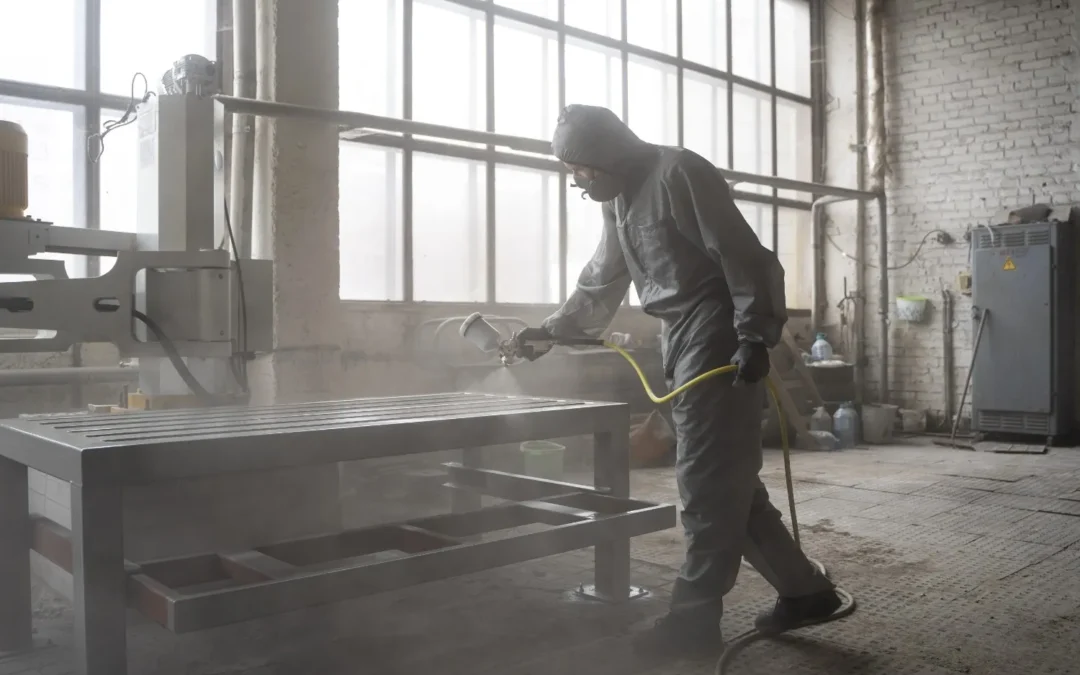
A consistent paint finish depends not only on materials and technique but also on stable environmental conditions. Humidity directly affects how paint dries and levels.
When humidity is too high, drying slows and defects become more likely. Keeping humidity within the right range supports even curing, smoother finishes, and more predictable results.
Key Takeaways
- Humidity impacts drying and finish quality
- Excess moisture increases defect risk
- Stable conditions improve consistency
Why Humidity Control Is a Core Driver of Paint Consistency
Paint does not behave the same way in every environment. Humidity directly affects how it sprays, flows, and cures, which is why controlling it is essential for consistent results.
The Relationship Between Humidity and Paint Behavior
Humidity influences paint viscosity, drying speed, and overall application performance. If the air is too humid, paint may dry slowly and become prone to runs or sags. If the air is too dry, it can dry too quickly, leading to dry spray and uneven finishes.
The ideal humidity level depends on the coating type and the specific application, but staying within a stable range keeps paint behavior predictable.
How Environmental Instability Creates Inconsistent Results
Paint booth environmental problems often occur due to fluctuations in humidity and temperature, which make it difficult to maintain uniform finishes. As conditions change throughout the day, drying times, film formation, and coating quality can vary, leading to defects and inconsistent results.
Here is a simple overview of how humidity levels affect paint performance:
- At low relative humidity below 30%, drying speed is fast, leading to dry spray and an uneven finish.
- At moderate relative humidity between 30–60%, drying speed is optimal, resulting in minimal defects.
- At high relative humidity above 60%, drying speed is slow, leading to runs, sags, and longer drying times.
Keeping humidity stable reduces variability, improves finish quality, and minimizes costly rework.
How Humidity Shapes Spray Behavior and Coverage
Spray quality is not just about the gun or the operator. Humidity plays a big role in how paint atomizes, travels through the air, and settles on the surface. When moisture levels are balanced, spray patterns stay consistent and coverage looks even.
Effects of Proper Moisture Levels on Spray Patterns
If the air is too dry, paint droplets can begin drying mid air. This leads to a dry, uneven spray pattern and a rough finish. When humidity is too high, the paint may stay too wet, increasing overspray and reducing control.
Keeping humidity within the ideal range helps paint atomize properly and spread evenly across the surface.
Here is a simple breakdown:
- At low humidity levels, spray behavior is dry and uneven, resulting in a rough, inconsistent finish.
- At optimal humidity levels, spray behavior is smooth and stable, producing an even, uniform finish.
- At high humidity levels, spray behavior leads to excess overspray, resulting in uneven and wasteful application.
Preventing Dry Spray, Spatter, and Uneven Application
Stable humidity reduces many common spray problems. With the right moisture balance, paint droplets remain properly formed, adhere better to the surface, and create a more predictable pattern.
This helps:
- Reduce dry spray caused by rapid evaporation
- Minimize spatter and bounce back
- Improve overall coverage and uniformity
By maintaining steady humidity levels, painters can improve finish quality while also reducing material waste and rework.
Role of Humidity Control in Paint Film Formation
Humidity has a direct impact on how a paint film forms from the moment it is applied until it fully cures. Application, drying, and curing are all influenced by the surrounding environment. If humidity is not controlled, the film can dry unevenly, leading to defects such as spotting, wrinkling, or inconsistent texture.
Maintaining a Stable Wet Edge and Uniform Film Build
A stable wet edge is essential for a smooth, even finish. The wet edge is the portion of the coating that remains open long enough to blend properly with the next pass. When humidity is balanced, the paint stays workable for the right amount of time, allowing for uniform film thickness.
If humidity is too low, the edge can dry too quickly. If it is too high, drying may slow unevenly. Either situation can disrupt film build and create visible defects. Stable humidity keeps the process controlled and predictable.
How Controlled Humidity Supports Uniform Curing
Curing is the stage where the coating hardens and develops its full strength. When humidity levels remain steady, the paint dries and cures at a consistent rate across the surface. This helps create a durable, long lasting finish.
In demanding environments such as automotive or industrial coatings, consistent curing is critical for performance. By maintaining proper humidity, manufacturers improve both the appearance and the long term reliability of the final coating.
What Improves When Humidity Is Controlled
When humidity remains within the ideal range, the paint process becomes more stable and predictable. Paint sprays and flows more evenly, and curing stays consistent. Finishes look smoother and more uniform, with fewer defects like dry spray or runs. Stable conditions also reduce rework and keep production running efficiently.
Smoother Surfaces and Fewer Visual Imperfections
Balanced humidity allows paint to flow and level properly before it dries. This helps reduce common visual defects such as orange peel, uneven gloss, or patchy texture.
When moisture levels are steady, you also avoid problems caused by extremes. Too much humidity can lead to surface moisture and haziness, while very dry air can cause rough finishes from rapid evaporation. Controlled conditions help maintain a smooth, uniform appearance.
Lower Rework and More Repeatable Quality
With humidity under control, results become more consistent from batch to batch. Drying times remain predictable, adhesion improves, and finish quality is easier to replicate.
Here is a quick summary of what improves:
By maintaining stable humidity, paint operations reduce variability, improve efficiency, and deliver more reliable results.
Finding the Right Humidity Balance for Consistency
Consistent paint results depend on keeping humidity within the right range. When conditions are balanced, paint flows, levels, and cures the way it is supposed to. When the air is too dry or too humid, problems start to show up quickly.
Dry Conditions and Uniformity Issues
In very dry environments, solvents evaporate too fast. This can cause the paint to thicken prematurely, making it harder to achieve even coverage. Surfaces may look rough, and dry spray becomes more likely.
Common effects of low humidity include:
- Rapid solvent evaporation
- Higher risk of dry spray
- Difficulty achieving a smooth, uniform finish
Wet Conditions and Variability Issues
High humidity can disrupt the paint process and reduce finish quality. When moisture levels are not balanced, drying behavior changes and defects become more likely.
Below is a simple overview of how different humidity levels affect paint performance:
- At low humidity levels, drying behavior involves fast evaporation, leading to dry spray and uneven coverage.
- At optimal humidity levels, drying behavior is balanced, resulting in a smooth, uniform finish.
- At high humidity levels, drying behavior involves slow evaporation, leading to runs, sags, and uneven curing.
To maintain this balance, many facilities use a combination of humidifiers and dehumidifiers. Stable conditions lead to better adhesion, fewer defects, and more consistent results.
How Humidity Control Improves Day-to-Day Production
Humidity control does more than protect finish quality. It keeps daily production stable by ensuring paint behaves consistently, reducing waste and unexpected disruptions. Effective moisture control for static also prevents charge buildup in low humidity, which can cause uneven spray patterns and overspray.
Maintaining balanced humidity allows paint particles to move and settle predictably, supporting smoother and more efficient operations.
Consistent Results Across Shifts and Seasons
One of the biggest advantages of controlled humidity in paint booths is consistency. When the booth environment remains stable, paint performance does not change from one shift to another or from summer to winter.
This predictability allows production teams to follow the same process with confidence. Fewer surprises mean fewer defects, less rework, and a more reliable output regardless of outside weather conditions.
Improved Transfer Efficiency and Material Usage
Humidity also influences how much paint actually reaches and stays on the target surface. At optimal levels, paint particles adhere better, which improves transfer efficiency and reduces overspray.
Here is a simple overview of how humidity affects efficiency:
- At low humidity levels around 20%, transfer efficiency decreases due to lower adhesion, resulting in higher material waste.
- At optimal humidity levels around 50%, strong adhesion improves transfer efficiency and supports controlled material usage.
- At high humidity levels around 80%, reduced control lowers transfer efficiency and leads to increased material waste.
When humidity is balanced, more paint lands where it should. This lowers material costs, improves efficiency, and reduces the environmental impact of the operation.
Technologies That Enable Consistent Humidity
Maintaining steady humidity levels does not happen by accident. It requires the right systems in place to respond to changing conditions inside the facility. In paint environments especially, reliable humidity control makes the difference between predictable results and recurring defects.
Humidification vs Dehumidification (When You Need Each)
Humidification is used when the air is too dry. By adding controlled moisture to the environment, it helps prevent issues like static buildup, dry spray, and uneven finishes. This is common in colder or arid climates where indoor air tends to lose moisture quickly.
Dehumidification is needed when the air holds too much moisture. Removing excess humidity prevents slow drying, runs, sagging, and curing problems. This is especially important in warm or humid regions where moisture levels naturally rise.
The choice between the two depends on local climate conditions and the specific coating requirements of the operation.
Modern Precision Control: Adiabatic Systems
Advanced paint booth climate control systems help maintain steady humidity levels. Adiabatic systems introduce moisture through controlled evaporation without raising air temperature.
Some advanced adiabatic technologies, like that employed by Smart Fog, generate ultra-fine, self-evaporating droplets that disperse evenly into the air and increase humidity without surface wetting when properly engineered and applied.
Together, these precision humidity control approaches help stabilize booth conditions, reduce paint defects, and improve overall process reliability.
Best Practices for Maintaining Paint Consistency Through Humidity Control
Maintaining consistent humidity regulation for paint booths requires more than just installing equipment. It involves regular monitoring, routine maintenance, and clear operating procedures. When these practices are followed, paint consistency improves and unexpected issues are minimized.
Monitoring, Calibration, and Preventive Maintenance
Keeping humidity under control requires regular monitoring and routine calibration. Sensors should be checked for accuracy, and systems maintained to prevent unexpected failures. A well maintained setup helps avoid uneven drying, finish defects, and adhesion problems while reducing downtime and keeping production on schedule.
Below is a simple maintenance schedule to support consistent performance:
- Sensor calibration should be completed monthly to ensure accurate humidity readings.
- System checks should be carried out quarterly to identify potential issues before they become major problems.
- Preventive maintenance should be performed bi-annually to reduce the risk of equipment failure and downtime.
Embedding Humidity Control in SOPs
Humidity control should also be built into standard operating procedures. When clear guidelines are part of everyday workflows, teams know what conditions to maintain and how to respond if levels shift.
This includes training staff to monitor humidity, operate control systems properly, and take corrective action when needed. Making humidity control part of routine practice creates a more stable production environment and supports consistent, high quality finishes.
Final Thoughts on How Humidity Control Improves Paint Consistency
Humidity control plays a central role in how paint flows, adheres, and cures. Because temperature and humidity interact continuously, both must remain within a defined range to prevent condensation, surface defects, and uneven finishes.
When humidity levels rise too high, drying slows and defects can increase. When humidity drops too low, paint application becomes more difficult to control. Maintaining stable environmental conditions supports smoother curing, fewer coating issues, and more consistent results throughout the year.
Engineered adiabatic humidification systems, such as Smart Fog, are designed to provide precise, non-wetting humidity control in industrial paint booths, helping manufacturers maintain stable environmental conditions without introducing surface moisture.
FAQ
How does humidity affect the painting process?
Humidity impacts the painting process by influencing the drying time, adhesion, and overall finish quality of the paint. High humidity can cause the paint to dry too slowly, while low humidity can cause it to dry too quickly.
What is the ideal humidity level for painting?
The ideal humidity level for painting varies depending on the specific paint and application, but generally falls within a relative humidity (RH) range of 40-60%. This range allows for optimal drying and curing conditions.
How does temperature and humidity affect paint adhesion?
Temperature and humidity can significantly impact paint adhesion. High humidity can lead to poor adhesion due to moisture-related issues, while extreme temperatures can affect the paint’s ability to bond with the surface.
What happens if the humidity is too high during painting?
If the humidity is too high during painting, it can cause issues such as orange peel, uneven finish, and poor adhesion. High humidity can also lead to condensation on the surface, compromising the paint job.
Can humidity control systems improve paint consistency?
Yes, humidity control systems can significantly improve paint consistency by maintaining a stable and optimal humidity level. This ensures that the paint dries and cures uniformly, resulting in a high-quality finish.