

Humidity affects weather by altering atmospheric water vapor content, which directly influences heat index calculations, storm development patterns, and barometric pressure systems that drive regional weather changes. Water vapor molecules displace heavier nitrogen and oxygen in the atmosphere, creating density differences that fuel convection patterns and precipitation formation.
This analysis covers the fundamental atmospheric mechanisms through which humidity shapes weather patterns, from heat index calculations that make 90 degrees F feel like 105 degrees F to the condensation processes that transform water vapor into precipitation systems.
Key Takeaways:
- Humid air contains more water vapor per cubic meter than dry air, reducing atmospheric density and creating pressure differences that drive weather circulation patterns.
- Heat index increases exponentially with humidity because water vapor prevents sweat evaporation, making 90 degrees F at 70% relative humidity feel like 105 degrees F heat index.
- Water vapor condenses into clouds when humid air cools to its dew point temperature, initiating precipitation through droplet nucleation and collision processes.
- Atmospheric humidity creates convection currents because moist air rises faster than dry air due to lower molecular density.
- Barometric pressure drops as atmospheric humidity increases because water vapor molecules weigh approximately 62% less than the nitrogen and oxygen they displace.
- Regional humidity patterns vary from 10-20% in desert climates to 80-90% in tropical coastal areas, directly affecting local weather system intensity and frequency.
How Water Vapor Changes Atmospheric Conditions
Water vapor fundamentally alters atmospheric physics through molecular displacement and density reduction. Each water molecule (H2O) has a molecular weight of 18 atomic mass units, while nitrogen (N2) weighs 28 and oxygen (O2) weighs 32. When water vapor enters the atmosphere, it displaces these heavier molecules, creating air masses with lower overall density.
This density difference drives atmospheric circulation patterns. Humid air masses rise more readily than dry air because they weigh less per unit volume. The rising motion creates low-pressure areas at the surface, drawing in surrounding air and establishing circulation patterns that become the foundation of weather systems.
Latent heat transfer amplifies these effects. When water evaporates, it absorbs approximately 2,260 kilojoules per kilogram of energy from the surrounding environment. This energy travels with the water vapor until condensation occurs, at which point the stored energy releases into the atmosphere. This energy transfer mechanism powers storm development and intensifies weather patterns far beyond what temperature differences alone could generate.
Water Vapor Density and Air Pressure
Atmospheric pressure decreases measurably as humidity increases because water vapor molecules are significantly lighter than the gases they replace. At sea level, completely dry air exerts 1,013.25 millibars of pressure, while air saturated with water vapor at the same temperature exerts approximately 6-8 millibars less pressure.
This pressure reduction creates horizontal pressure gradients that drive wind patterns. Air flows from high-pressure dry regions toward low-pressure humid areas, establishing the circulation patterns that move weather systems across geographic regions. The greater the humidity difference between adjacent air masses, the stronger the pressure gradient and resulting wind speeds.
Convection and Air Movement Patterns
Humid air rises through the atmosphere faster and more consistently than dry air due to its reduced density. This buoyancy effect creates thermal columns and convection cells that transport moisture vertically through atmospheric layers. As humid air rises, it expands and cools, eventually reaching its saturation point where condensation begins.
These convection patterns establish feedback loops. Rising humid air creates surface low pressure that draws in more moist air from surrounding areas. The continuous supply of water vapor sustains convection activity, leading to organized weather systems. Without adequate humidity, convection remains weak and weather systems lose their driving energy source.
Heat Index: How Humidity Makes Hot Weather Feel Hotter
Heat index quantifies the combined effect of air temperature and relative humidity on human thermal perception. The human body regulates temperature through perspiration evaporation, which removes approximately 2,430 kilojoules of heat energy per liter of sweat evaporated. High humidity reduces evaporation rates, preventing effective body cooling and creating the sensation of higher temperatures.
The relationship between humidity and perceived temperature follows an exponential curve rather than a linear progression. At 90 degrees F air temperature, increasing relative humidity from 40% to 70% raises the heat index from 91 degrees F to 105 degrees F. This 30-percentage-point humidity increase creates a 14-degree perceived temperature rise, demonstrating how humidity amplifies thermal stress far beyond its proportional increase.
Heat index calculations become critical for safety assessment at elevated temperature-humidity combinations. The National Weather Service issues heat advisories when heat index values reach 105-109 degrees F and excessive heat warnings above 110 degrees F. These thresholds reflect the point where physiological cooling mechanisms become insufficient to maintain normal body temperature.
The Science Behind Perceived Temperature
Human thermoregulation depends on heat transfer through four mechanisms: conduction, convection, radiation, and evaporation. At temperatures above approximately 70 degrees F, evaporation becomes the dominant cooling pathway. Sweat glands produce moisture that must evaporate from skin surfaces to remove heat energy from the body.
Evaporation rates are determined by the water vapor pressure gradient between skin surface and ambient air. When atmospheric humidity increases, this gradient decreases, slowing evaporation and reducing cooling effectiveness. At 90% relative humidity, evaporation virtually ceases regardless of sweat production rate, forcing the body to rely on less efficient cooling mechanisms.
The exponential heat index relationship occurs because small humidity increases create proportionally larger reductions in cooling capacity. Moving from 50% to 60% relative humidity reduces evaporation potential more significantly than moving from 20% to 30%, explaining why humid heat creates disproportionate thermal stress compared to dry heat at equivalent temperatures.
Heat Index Calculations and Thresholds
Heat index values are calculated using the Rothfusz equation, which incorporates both dry-bulb temperature and relative humidity to determine apparent temperature. The equation produces these representative combinations:
- 80 degrees F air temperature: 30% RH feels like 79 degrees F, 60% RH feels like 82 degrees F, 90% RH feels like 86 degrees F according to heat index calculations.
- 90 degrees F air temperature with varying humidity levels: 30% RH creates a heat index of 91 degrees F, 60% RH feels like 100 degrees F, 90% RH feels like 122 degrees F.
- 100 degrees F air temperature: 30% RH feels like 104 degrees F, 60% RH feels like 132 degrees F, with 90% RH exceeding safe heat index calculation ranges.
The National Weather Service categorizes heat index ranges into risk levels. Values from 80-89 degrees F indicate caution with possible fatigue during prolonged exposure. Heat index values of 90-104 degrees F require extreme caution due to heat cramps and heat exhaustion risk. Values above 105 degrees F create dangerous conditions with high probability of heat exhaustion and heat stroke during continued activity.
These thresholds guide occupational safety protocols. OSHA recommends work-rest cycles, increased water intake, and protective measures when heat index values exceed 91 degrees F. Industrial facilities often implement modified schedules or enhanced cooling systems when outdoor conditions reach these levels.
Humidity’s Role in Storm and Precipitation Formation
Precipitation formation requires atmospheric water vapor to reach saturation levels where condensation exceeds evaporation rates. This process begins when humid air masses cool to their dew point temperature, the specific temperature at which air becomes saturated and water vapor begins condensing into liquid droplets. The relationship between how rain and humidity is connected demonstrates this fundamental atmospheric mechanism.
Cloud formation occurs through heterogeneous nucleation, where water vapor condenses around microscopic particles called condensation nuclei. These particles, typically dust, pollen, salt crystals, or pollution particulates, provide surfaces for initial droplet formation. Without adequate condensation nuclei, even supersaturated air can remain vapor until nucleation sites become available.
Latent heat release during condensation provides the energy source that intensifies storm systems. Each gram of water vapor releases 2,260 joules when condensing to liquid form. In large storm systems, this energy release can equal the power output of hundreds of nuclear power plants, explaining how relatively small temperature and pressure differences can generate severe weather events when sufficient humidity is present.
From Water Vapor to Clouds
Water vapor molecules require specific conditions to transition from gas to liquid phase. Temperature reduction through adiabatic cooling represents the primary mechanism, occurring when air masses rise and expand due to decreasing atmospheric pressure at higher altitudes. For every 1,000 feet of altitude gain, air temperature typically decreases by approximately 5.4 degrees F until saturation occurs.
Condensation begins when relative humidity reaches 100% and continues as long as cooling persists. Initial droplets measure only 10-20 micrometers in diameter, too small to fall against atmospheric updrafts. Droplet growth occurs through collision and coalescence processes, where smaller droplets merge into larger ones capable of overcoming air resistance and reaching the ground as precipitation.
How Moisture Fuels Storm Development
Storm intensification depends directly on latent heat release from condensing water vapor. Rising air masses carry water vapor to higher altitudes where cooling triggers condensation. The resulting heat release warms the surrounding air, creating additional buoyancy that accelerates vertical motion and draws more humid air into the system.
This feedback mechanism explains why storms develop more rapidly and reach greater intensity over warm, humid regions compared to dry areas. Tropical systems demonstrate this principle, drawing energy from warm ocean surfaces that provide continuous water vapor supply. The condensation process can release enough energy to maintain storm circulation for days or weeks as long as adequate moisture remains available.
Regional Weather Patterns and Humidity Variations
Geographic location determines baseline humidity levels through proximity to water sources, elevation, and prevailing wind patterns. These regional variations create distinct climate zones with characteristic weather patterns that reflect local moisture availability and atmospheric circulation systems.
Seasonal humidity changes follow predictable patterns based on temperature cycles and precipitation distribution. Summer months typically show higher humidity as increased evaporation from surface water combines with warmer air’s greater water vapor capacity. Winter conditions generally reduce absolute humidity levels, though relative humidity may remain high due to lower air temperatures requiring less moisture for saturation.
Geographic Humidity Patterns
Areas with humid continental climate experience greater humidity swings ranging from 20-30% in winter to 50-70% in summer. Distance from water sources creates dependence on local precipitation and seasonal temperature patterns for moisture content.
Coastal regions: Maintain year-round humidity levels between 60-80% relative humidity due to continuous evaporation from adjacent water bodies. Ocean temperatures change slowly, providing consistent moisture sources that moderate seasonal humidity variations.
Tropical zones: Sustain relative humidity above 70% throughout the year, with absolute humidity reaching maximum levels due to consistently warm temperatures and abundant surface water for evaporation.
Desert climates: Maintain relative humidity below 30% most of the year, with absolute humidity remaining low due to minimal precipitation and high evaporation rates that remove available moisture quickly.
Mountain regions: Show altitude-dependent humidity patterns where lower elevations may be humid while upper elevations remain dry due to orographic precipitation effects and temperature-induced condensation at specific altitude bands.
Seasonal Humidity Cycles
Spring humidity patterns typically increase as warming temperatures accelerate evaporation from snow melt, soil moisture, and surface water. This seasonal moisture increase often triggers the development of severe weather systems as unstable air masses encounter varying humidity levels across different geographic regions.
Summer months deliver peak absolute humidity levels when warm air temperatures allow maximum water vapor capacity. However, relative humidity may decrease during afternoon hours as heating reduces the percentage of moisture relative to air’s total capacity, even while absolute moisture content remains high.
Fall and winter seasons show declining humidity as cooling temperatures reduce evaporation rates and air’s capacity to hold water vapor. Precipitation during these seasons often results from weather fronts rather than local convection, as reduced moisture availability limits the energy available for storm development.
Humidity and Human Comfort in Different Weather Conditions
Human comfort depends on the body’s ability to maintain thermal equilibrium through heat dissipation mechanisms that function optimally within specific temperature and humidity ranges. Research indicates comfort zones typically occur between 30-50% relative humidity at temperatures from 68-72 degrees F, where physiological cooling systems operate efficiently without excessive moisture loss or heat retention.
Humidity affects comfort through multiple pathways beyond temperature perception. Low humidity conditions below 30% relative humidity can cause respiratory irritation, dry skin, and increased static electricity generation. High humidity above 60% relative humidity promotes bacterial and mold growth while reducing evaporative cooling effectiveness, creating conditions that feel oppressive even at moderate temperatures.
Seasonal adaptation occurs as individuals acclimatize to regional humidity patterns over time. People living in consistently humid climates develop physiological adjustments including increased sweat production efficiency and modified behavioral patterns that accommodate reduced cooling capacity during high humidity periods.
Optimal Humidity Ranges for Comfort
Indoor ASHRAE comfort zone standards establish comfort zones based on operative temperature and humidity combinations through studies conducted by the American Society of Heating, Refrigerating and Air-Conditioning Engineers. The ASHRAE comfort standard defines acceptable conditions as 30-60% relative humidity with temperatures between 68.5-75 degrees F during winter and 75-80 degrees F during summer months.
According to research on productivity and health impacts of temperature variation, these effects occur outside optimal ranges. Relative humidity below 30% increases respiratory infections, eye irritation, and static electricity problems that affect equipment and materials. Humidity above 60% promotes dust mite populations, mold growth, and reduces cognitive performance due to thermal stress from impaired body cooling mechanisms.
Sleep quality correlates strongly with bedroom humidity levels. Research shows optimal sleep occurs at 30-50% relative humidity, where respiratory comfort combines with effective body temperature regulation during natural circadian cooling cycles that occur during rest periods.
Seasonal Comfort Adaptation
Winter comfort challenges arise from heating systems that reduce indoor relative humidity to 10-20% levels, well below optimal ranges. This occurs because heating outdoor air with low absolute moisture content further reduces relative humidity as temperature increases without adding moisture to the air mass.
Summer comfort problems develop when high outdoor humidity overwhelms air conditioning systems designed primarily for temperature control rather than moisture removal. Standard cooling systems may achieve target temperatures while leaving humidity above comfort thresholds, creating conditions where occupants feel warm despite low air temperatures.
Acclimatization periods typically require 7-14 days when individuals move between different climate zones. During this period, sweat production rates, cardiovascular responses, and behavioral patterns adjust to new temperature-humidity combinations. This adaptation explains why humidity levels that feel oppressive to visitors may be acceptable to local residents.
Smart Fog: Precision Humidity Control for Indoor Environments
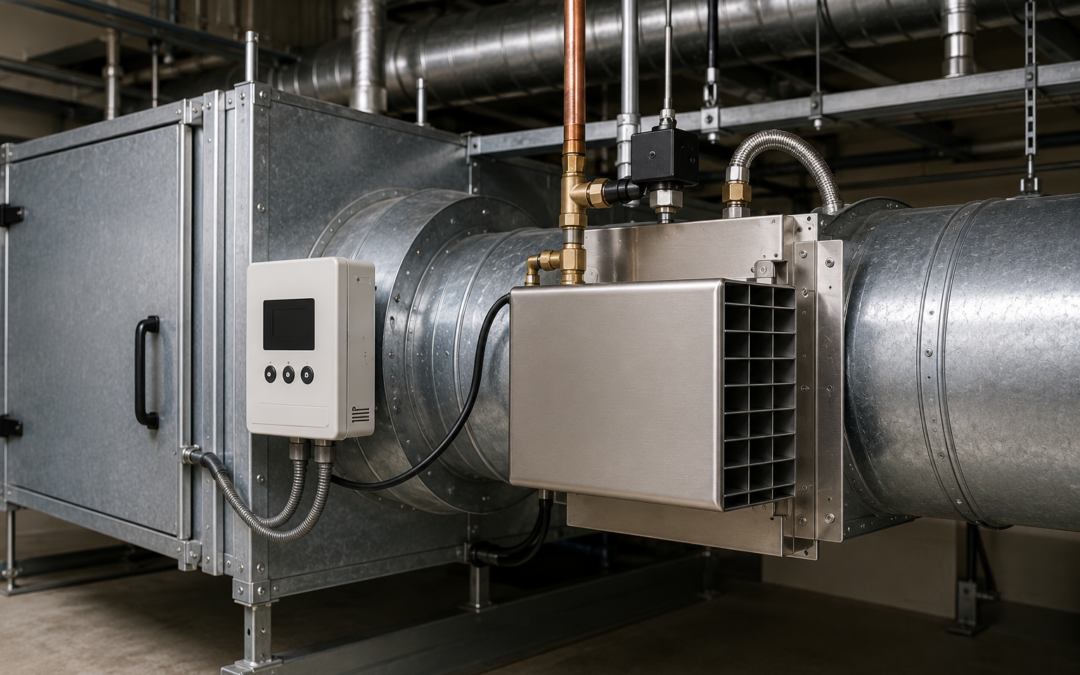
Adiabatic humidification systems that produce self-evaporating droplets provide precise humidity control independent of external weather conditions. This technology addresses the fundamental challenge of maintaining optimal indoor humidity levels when outdoor conditions fluctuate between seasonal extremes or daily weather variations that can affect facility operations and occupant comfort.
Smart Fog’s equal-sized droplet grid eliminates the surface wetting risks associated with conventional humidification methods while maintaining humidity precision within plus or minus 1-2% of target levels. The system operates through compressed air and water mixing that creates uniform droplet size distribution, ensuring complete evaporation before droplets contact surfaces, equipment, or materials under proper system design.
Non-Wetting Precision Technology
The proprietary nozzle design produces droplets that carry slight electrical charges preventing re-aggregation into larger droplets that could cause surface wetting. Each droplet evaporates independently, allowing precise humidity delivery up to 99% relative humidity without condensation formation on walls, equipment, racks, or products under proper system design.
This non-wetting capability enables humidity control in environments where surface moisture would damage sensitive equipment or materials. Electronics manufacturing, data centers, printing operations, and pharmaceutical facilities require precise humidity levels without the contamination risks that surface wetting creates through bacterial growth or material degradation.
System operation requires no moving parts in the humidification process, eliminating mechanical wear points that require frequent maintenance. The technology operates continuously with maintenance intervals extending up to every two years, providing reliable humidity control regardless of external weather pattern variations.
Facility Benefits Beyond Weather Variability
Humidity control systems engineered for industrial applications provide consistent indoor conditions that protect equipment from electrostatic discharge, prevent material shrinkage or expansion, and maintain process stability regardless of seasonal humidity fluctuations outside the facility.
Installation requires no certified technicians or specialized ductwork modifications, allowing facilities to establish precise humidity control without extensive infrastructure changes. The system operates on existing compressed air and water supplies, integrating with current facility utilities rather than requiring dedicated electrical circuits or steam generation equipment.
Commercial humidification systems deliver 100% water efficiency where every droplet evaporates into the air rather than being lost to surface wetting or drainage systems. This efficiency combines with low maintenance requirements to provide total cost of ownership advantages over conventional humidification technologies that require frequent cleaning, part replacement, or water waste management.
Final Thoughts
Humidity affects weather through fundamental atmospheric mechanisms that create the pressure differentials, convection patterns, and energy transfers driving regional climate systems. Understanding these relationships helps explain why coastal areas experience different weather patterns than inland regions, why heat index calculations become critical for safety assessment, and how storm systems derive their energy from water vapor condensation processes.
The exponential relationship between humidity and heat index demonstrates how small moisture increases create disproportionately large comfort impacts, particularly at higher temperatures where human cooling mechanisms depend on evaporation rates. Regional humidity variations from desert climates below 20% to tropical areas above 80% establish the environmental conditions that determine local weather system characteristics and seasonal patterns.
For facilities requiring consistent indoor humidity regardless of external weather variations, Smart Fog provides non-wetting precision humidification that maintains target levels within plus or minus 1-2% accuracy. The system’s equal-sized droplet grid technology eliminates surface wetting while delivering industrial-grade reliability for applications where humidity control affects equipment protection, process stability, or occupant comfort. Request a system assessment for facilities requiring precise humidity control independent of weather-driven fluctuations.
Frequently Asked Questions
How does humidity make hot weather feel hotter than the actual temperature?
Humidity prevents effective body cooling by reducing sweat evaporation rates. The human body dissipates heat primarily through perspiration evaporation, which removes approximately 2,430 kilojoules per liter of sweat. When atmospheric humidity increases, the vapor pressure gradient between skin and air decreases, slowing evaporation and reducing cooling capacity, making temperatures feel significantly hotter than actual air temperature readings.
What humidity level causes rain to form in the atmosphere?
Rain formation begins when relative humidity reaches 100% saturation and air temperature cools to the dew point. Water vapor condenses around microscopic particles at this saturation point, forming droplets that grow through collision and coalescence processes. The specific humidity percentage varies by temperature, as warmer air holds more water vapor before reaching saturation than cooler air masses.
Why does high humidity make thunderstorms more likely to develop?
High humidity provides the water vapor necessary for latent heat release during condensation. When humid air rises and cools, condensation releases approximately 2,260 joules per gram of water vapor, warming the surrounding air and creating additional buoyancy that accelerates vertical motion. This feedback mechanism draws more humid air into the system, intensifying storm development and sustaining circulation patterns.
At what humidity percentage does the heat index become dangerous?
Heat index reaches dangerous levels based on temperature-humidity combinations rather than humidity percentages alone. At 90 degrees F air temperature, 70% relative humidity creates a heat index of 105 degrees F, entering the dangerous category. At 100 degrees F air temperature, even 30% relative humidity produces a 104 degrees F heat index approaching hazardous conditions for prolonged exposure or physical activity.
How does humidity affect barometric pressure and weather patterns?
Humidity reduces atmospheric pressure because water vapor molecules weigh approximately 62% less than the nitrogen and oxygen they displace. Completely saturated air at sea level exerts 6-8 millibars less pressure than completely dry air. This pressure reduction creates horizontal gradients that drive wind patterns and establish circulation systems moving weather across geographic regions.
Why do coastal areas typically have higher humidity than inland regions?
Coastal areas maintain higher humidity due to continuous evaporation from adjacent water bodies. Ocean surfaces provide constant moisture sources, while inland regions depend on precipitation and seasonal temperature patterns for humidity levels. Ocean temperatures change slowly compared to land surfaces, creating more consistent year-round moisture availability near coastlines.
What humidity range feels most comfortable for humans in different temperatures?
Optimal comfort occurs at 30-50% relative humidity with temperatures between 68-75 degrees F according to ASHRAE comfort standards. This range allows effective body temperature regulation through perspiration while avoiding respiratory irritation from overly dry conditions or oppressive sensations from excessive moisture that impairs cooling mechanisms.
How do weather systems transport humidity from one region to another?
Weather systems transport humidity through atmospheric circulation patterns driven by pressure differentials and temperature gradients. Low-pressure systems draw humid air from surrounding high-pressure areas, creating wind patterns that carry moisture across geographic regions. Jet streams and frontal systems provide the large-scale circulation mechanisms that distribute atmospheric moisture between different climate zones.