

Vapor pressure deficit, or VPD, measures the difference between how much moisture the air can hold and how much it is currently holding, expressed in kilopascals (kPa). Cannabis growers use VPD because it reflects the real relationship between temperature, humidity, and plant transpiration more accurately than relative humidity alone.
This guide explains how to use a VPD calculator, what VPD ranges are typically targeted at each growth stage, how to interpret a reading, and what adjustments help bring the grow room back into range.
Key Takeaways
- A V{D chart for cannabis targets change by growth stage, not one fixed number.
- Low VPD usually means excess humidity and higher mold risk.
- High VPD usually means dry air, excess heat, and plant stress.
- Relative humidity is the fastest lever for correcting VPD.
- Stable humidity control is more valuable than chasing one exact VPD number.
What Is VPD and Why Does It Matter for Cannabis?
Vapor pressure deficit, or VPD, measures the difference between how much moisture the air can hold and how much moisture it is currently holding, expressed in kilopascals (kPa). In cannabis cultivation, growers use VPD because it gives a more accurate picture of plant stress and transpiration than relative humidity alone.
How VPD Governs Transpiration and Nutrient Uptake
VPD directly affects how quickly water moves from the root zone through the plant and out through the stomata on the leaf surface. When the air has the right drying power, transpiration stays active enough to support water movement, cooling, and nutrient transport without pushing the plant into stress.
That balance is critical because cannabis depends on consistent transpiration to move dissolved minerals from the roots into active growth tissue. If VPD is too low, water movement slows and nutrient uptake becomes less efficient. If VPD is too high, the plant can lose moisture too quickly, causing stomatal closure, reduced growth, and weaker overall performance.
Why RH Alone Is Not Enough: The Role of Temperature
Relative humidity only tells you how much moisture is in the air compared with its capacity at the current temperature. That means the same RH reading can produce very different plant responses depending on how warm or cool the room is.
For example, 50% RH at 70°F does not create the same drying conditions as 50% RH at 85°F. As temperature rises, the air can hold more moisture, which changes the relationship between temperature and vapor pressure that drives transpiration. This is why growers use VPD instead of RH alone when they need a more precise way to manage the grow environment.
How to Use the VPD Calculator
A VPD calculator converts temperature, relative humidity, and optional leaf temperature data into a single reading that shows how strongly the air is pulling moisture from the plant. This gives growers a faster way to judge whether the environment is too wet, too dry, or close to the target range for the current growth stage.
To use the calculator, enter the room air temperature and relative humidity, then add leaf temperature if that measurement is available. The output should show the VPD value in kPa and indicate whether the reading falls into a low, optimal, or high zone. Used consistently, this helps growers interpret environmental data quickly and decide whether to adjust humidity, temperature, or both.
To understand how different combinations affect the final reading, here is a simple reference:
VPD Chart: Target Ranges by Cannabis Growth Stage
Cannabis does not stay in the same VPD range from propagation through ripening. The target shifts by growth stage because transpiration demand, plant structure, and disease pressure all change as the crop matures.
Seedling and Clone Stage
Seedlings and clones perform best at a lower VPD because they are still developing roots and cannot tolerate aggressive moisture loss. At this stage, the environment should support gentle transpiration without drying out tender plant tissue.
A lower target range helps young plants establish themselves with less stress during early propagation. This is also the stage where overly dry air can slow development quickly and reduce early vigor.
Vegetative Stage
During vegetative growth, cannabis becomes more capable of handling stronger transpiration and higher light exposure. VPD can be raised gradually to support faster water movement, stronger structure, and more active development.
This stage benefits from a balanced environment that encourages growth without pushing the plant into excessive demand. Stable conditions matter more than aggressive adjustment, especially across the canopy.
Early Flower
Early flower requires a controlled increase in VPD as the plant shifts from vegetative growth into bud development. The goal is to maintain active transpiration while supporting the metabolic demands of the stretch period and early flower formation.
At this stage, growers need to watch both plant response and environmental stability closely. Large fluctuations in temperature or humidity can reduce consistency across the canopy and make climate control harder to manage.
Late Flower and Ripening
Late flower generally calls for a higher VPD range than earlier stages because excess moisture becomes a more serious risk as buds densify. Keeping the environment drier helps reduce mold pressure and supports a cleaner finishing period.
This stage requires tighter control because humidity spikes can create disease windows very quickly. Stable VPD and stable RH are especially important as the crop approaches harvest.
For a quick stage-by-stage reference, use the target ranges below:
- During the seedling and clone stage, target a VPD of 0.4 to 0.8 kPa with temperatures of 72 to 78°F and RH of 70% to 85% to support gentle transpiration during rooting and early establishment.
- During the vegetative stage, target a VPD of 0.8 to 1.1 kPa with temperatures of 75 to 85°F and RH of 55% to 75% to support active growth, water movement, and canopy development.
- During early flower and transition, target a VPD of 1.0 to 1.2 kPa with temperatures of 70 to 80°F and RH of 50% to 60% to balance stretch, bud initiation, and environmental stability.
- During late flower and ripening, target a VPD of 1.2 to 1.5 kPa with temperatures of 70 to 75°F and RH of 40% to 55% to lower moisture load, reduce mold pressure, and protect finish quality.
Understanding Your VPD Reading
Maintaining the correct cannabis VPD range is a balancing act that requires constant attention to your environmental sensors. When your plants stop thriving, the first place to look is your vapor pressure deficit readings to see if the air is pushing them toward stress.
VPD Too Low: Signs, Risks, and Causes
When VPD is too low, the air is holding too much moisture relative to temperature, which reduces the pressure driving transpiration. As that moisture movement slows, plants may show soft or drooping leaves, slower development, and weaker nutrient movement from the root zone into active growth tissue.
Low VPD also raises disease pressure because wet air and slower drying conditions make it easier for mold growth in high humidity conditions to build across the canopy. Common causes include excess humidity, weak ventilation, poor air movement, or dehumidification that cannot keep up with the moisture load inside the room.
VPD Too High: Signs, Risks, and Causes
When VPD is too high, the air is pulling moisture from the plant too aggressively. This can lead to excessive water loss, curled or dry leaf edges, reduced stomatal function, and slower development as the plant shifts energy toward stress response instead of steady growth.
High VPD is usually caused by low humidity, excessive heat, or both acting together. In practical terms, this often happens when lights add too much heat, airflow dries the room faster than expected, or humidification cannot maintain the target range for the current stage.
For a quick reference, here is what different VPD conditions usually indicate:
- VPD that is too low can cause slow transpiration, increased disease risk, and softer growth, and is commonly caused by excess humidity or poor ventilation.
- VPD that is too high can cause leaf dryness, plant stress, and reduced stomatal activity, and is commonly caused by low humidity or excess heat.
- Optimal VPD supports active transpiration and steady development and is typically achieved through balanced temperature and RH.
Leaf Temperature and the VPD Offset
VPD calculations become more useful when they reflect the conditions at the leaf surface, not just the room air. While most growers track ambient temperature, the plant responds to the temperature at the canopy, which can differ enough to change the real transpiration signal.
Why Canopy Temperature Differs from Air Temperature
Cannabis leaves do not always match the surrounding air temperature. Transpiration can cool the leaf surface below ambient conditions, while lighting intensity, airflow patterns, and canopy density can push certain zones warmer than the air around them.
Because stomata respond to the immediate conditions at the leaf surface, that gap changes the real pressure driving moisture loss. A room may look stable on paper, but if the canopy temperature is different from air temperature, the plant may be experiencing a different VPD than the grower expects.
How to Account for Leaf Temp in Your VPD Calculation
The most reliable way to account for leaf temperature is to measure it directly and use that value in the calculator instead of relying only on room air temperature. This produces a reading that is closer to the actual conditions driving transpiration across the canopy.
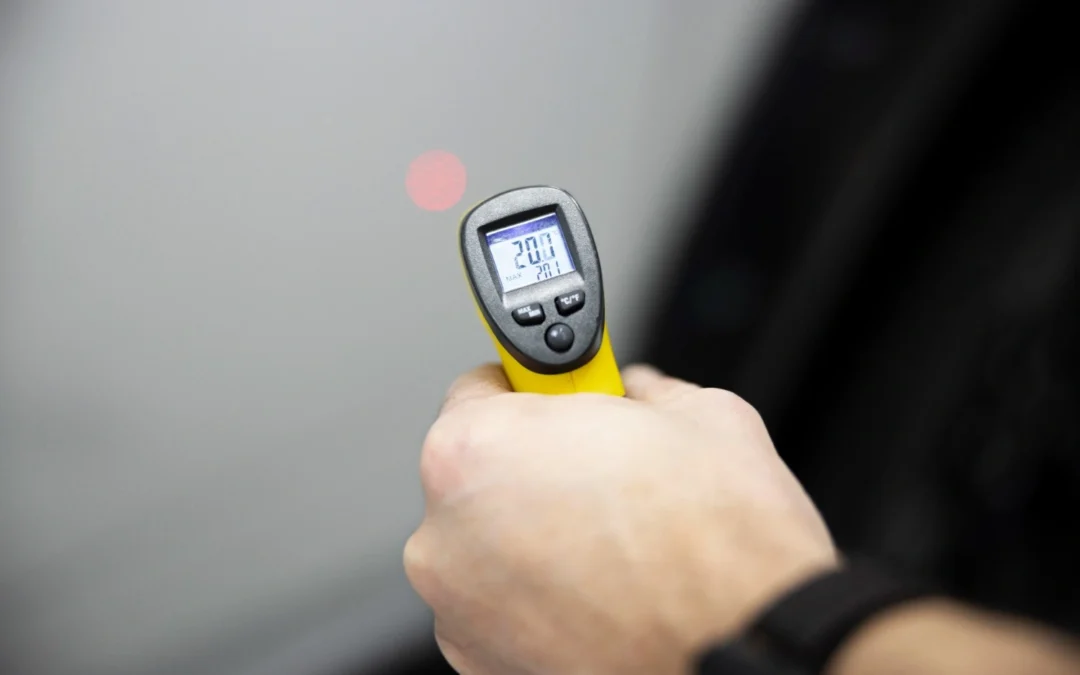
Growers usually measure leaf temperature using tools such as infrared thermometers for canopy temperature measurement, thermal imaging systems, or direct leaf probes depending on the level of precision required. Once that number is available, it can be added to the VPD calculation to improve accuracy and reduce the risk of making decisions based on incomplete environmental readings.
The most common tools used to check canopy temperature include:
- Infrared thermometers for quick spot checks on leaf surfaces.
- Thermal imaging cameras for broader canopy mapping and hot spot detection.
- Leaf probes for direct contact measurements where higher precision is needed.
How to Fix a VPD Problem in Your Grow Room
When your climate readings drift, you need a clear plan to restore balance. Monitoring your cannabis grow room is only the first step in a successful harvest. Once you identify that your Vapor Pressure Deficit is outside the ideal range, you must act quickly to protect plant health.
Adjusting RH: the Easiest VPD Lever
Relative humidity is usually the fastest and most practical way to move VPD in the right direction. If VPD is too high, the room is often too dry for the current temperature, so adding moisture can help reduce plant stress and bring transpiration back into a more stable range.
If VPD is too low, the room is often too humid, which means moisture needs to be removed so the canopy can dry more effectively. In larger or commercial spaces, this is where reliable humidification and dehumidification capacity matter, because weak control leads to larger RH swings and less stable plant response.
Adjusting Temperature
Temperature is the second main lever in VPD management because it changes how much moisture the air can hold. Even when relative humidity stays the same, a warmer room creates a different transpiration demand than a cooler one.
Temperature adjustments should be made carefully, especially under lighting systems that already add heat load to the canopy. Small changes are usually more effective than sharp corrections, because aggressive temperature shifts can create additional plant stress instead of improving the environment.
Why Precision and Stability Matter More Than Hitting a Single Number
A stable VPD range is usually more valuable than touching one exact target for a short time. Cannabis responds better to steady conditions across the photoperiod than to repeated swings, as environmental fluctuations directly affect plant growth and stress response.
This is why environmental control should focus on consistency, not just target chasing. When humidity and temperature stay stable, stomatal behavior stays more predictable, transpiration remains more even, and the crop is less likely to lose momentum because of preventable stress.
For a quick troubleshooting reference, use the guide below:
- When VPD is too high due to low humidity, increase humidification to lower moisture demand on the plant.
- When VPD is too low due to high humidity, increase dehumidification or airflow to improve drying conditions across the canopy.
- When high temperature spikes occur due to excess heat load, reduce heat input or improve cooling to lower canopy stress.
- When low temperature drops occur due to weak temperature control, stabilize heating conditions to maintain a more consistent VPD range.
Humidity Control for Consistent VPD Across Your Grow Facility
Consistent VPD across a grow facility depends on more than hitting a target number once or twice during the day. It depends on keeping temperature and relative humidity stable enough that plants experience the same general transpiration conditions across the canopy and throughout the photoperiod.
Why RH Fluctuation Undermines VPD Management
Relative humidity swings directly change VPD, even when the temperature stays close to the same range. When RH rises or falls too quickly, the drying power of the air changes with it, forcing plants to keep adjusting stomatal activity instead of maintaining a steady transpiration rate.
Over time, that instability makes the environment harder to manage and the crop less consistent. Sudden RH changes can create wet windows that raise mold risk, or dry windows that push the canopy into excess moisture loss, which is why stable humidity matters as much as the target itself.
What Facility-Level Humidity Control Delivers
Facility-level humidity control helps keep VPD within a narrower and more predictable range across the entire grow space. Instead of relying on scattered portable units or repeated manual adjustments, growers can maintain more uniform environmental conditions that support steadier transpiration, more consistent plant development, and better control over disease pressure.
This is where engineered systems make a measurable difference in commercial cultivation. For licensed cannabis facilities that need precise, stable humidity control, cannabis humidification systems such as Smart Fog are designed to support tight RH stability with non-wetting dry fog humidification and continuous operation across larger spaces. When humidity control stays stable, VPD management becomes more predictable from one zone of the canopy to another.
A well-managed facility also gains practical operational benefits from more stable environmental control:
- More consistent plant development across rooms and canopy zones.
- Less manual correction during daily environmental shifts.
- Lower mold pressure from uncontrolled humidity spikes.
- Better alignment between target setpoints and actual plant conditions.
Final Thoughts
VPD is one of the most useful environmental metrics in cannabis cultivation because it reflects how temperature and humidity work together at the plant level. Used correctly, it helps growers interpret transpiration demand, adjust conditions by growth stage, and respond more precisely when the environment moves out of range.
The strongest results come from maintaining stable temperature, stable humidity, and stage-appropriate VPD throughout the crop cycle. For licensed cannabis facilities that need precise, stable humidity control to keep VPD in range across the full canopy, explore Smart Fog’s cannabis humidification systems.
FAQ
What should my VPD be for cannabis?
The right VPD for cannabis depends on the growth stage rather than one fixed number for the full cycle. In general, seedlings and clones are kept at a lower VPD, vegetative plants move into a moderate range, and flowering plants usually perform in a higher range as the crop matures. Use the stage-by-stage VPD chart in the article as the primary reference point for target ranges.
Is 1.2 VPD too high?
It depends on the stage of growth. A VPD of 1.2 kPa is generally too high for seedlings and clones, can be appropriate for late vegetative growth or early flower, and may also fall within range during later flowering depending on the facility setpoint strategy. The reading should always be interpreted against the current growth stage, not in isolation.
What VPD causes mold?
Mold risk usually increases when VPD stays too low, because the air is holding too much moisture and the canopy does not dry effectively. In practical terms, low VPD conditions are often associated with high humidity, reduced transpiration, and wet periods around dense plant material, all of which increase the risk of disease pressure in flower. Preventing humidity spikes and maintaining stable environmental control is one of the main ways to reduce that risk.
Is a higher or lower VPD better?
Neither is universally better. The goal is not to keep VPD as high or as low as possible, but to keep it in the right range for the crop’s current stage. Lower ranges are generally used earlier in the cycle, while higher ranges are usually used later as plants mature and excess moisture becomes a greater concern.
What is the dew point of my grow room and why does it matter?
Dew point is the temperature at which the air becomes fully saturated and condensation begins. It matters in a grow room because high moisture conditions combined with cooler plant or equipment surfaces can create condensation, which increases disease and mold risk. Dew point is useful because it adds another way to judge whether the room is approaching a condensation window, especially during lights-off periods or when canopy and room temperatures differ.