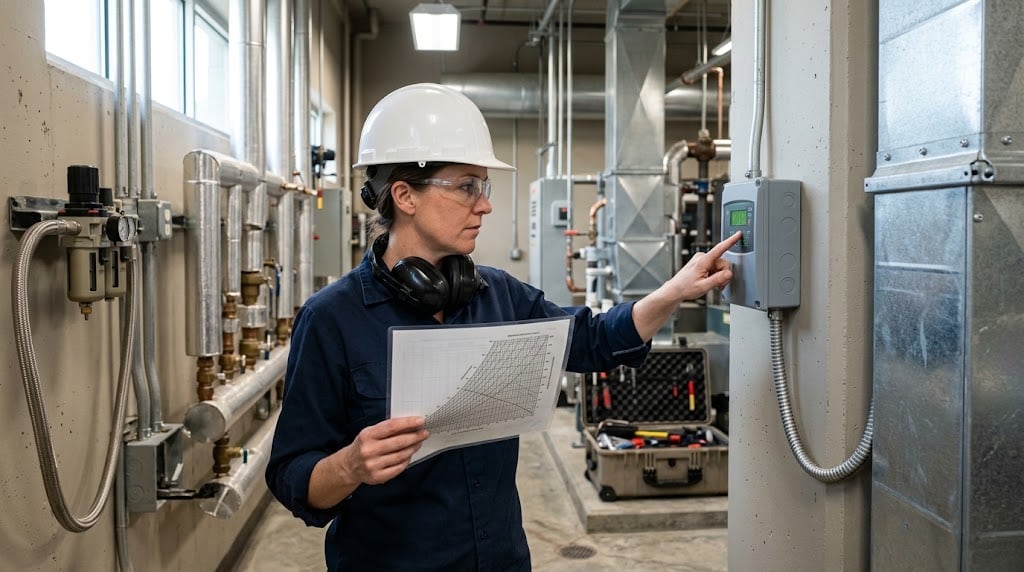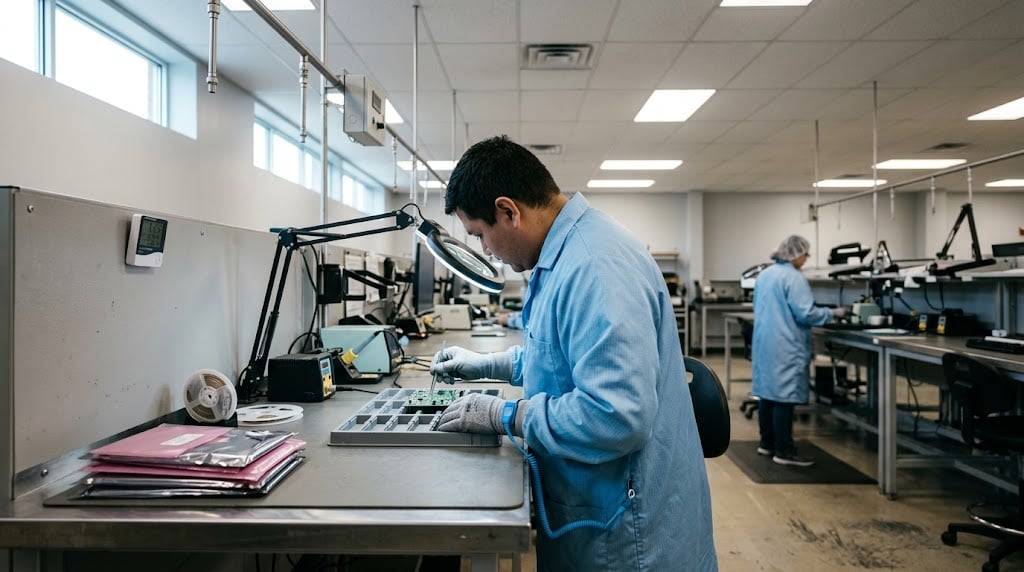


A hygrometer is an instrument that measures relative humidity, which is the amount of moisture in the air expressed as a percentage of what the air can hold at its current temperature. It is also called a humidity meter or humidity gauge, and a reading of 45% RH means the air contains 45% of the moisture it could hold at that temperature.
That reading helps people understand whether a room, facility, or growing space is too dry, too damp, or within the target range for comfort, materials, or process control. This guide explains what a hygrometer measures, how different types work, and how humidity readings are used in controlled environments.
Key Takeaways
- A hygrometer measures relative humidity as a percentage.
- Humidity meter and humidity gauge are common names for the same instrument.
- A 45% RH reading means the air holds 45% of the moisture it could hold at that temperature.
- Different hygrometers use different sensing methods, from basic digital sensors to laboratory instruments.
- In facilities and growing environments, hygrometer readings are used to guide humidity control.
What Is a Hygrometer?
A hygrometer is the instrument used to measure relative humidity in indoor air. It tells you how much moisture the air is holding compared with the maximum it could hold at the current temperature.
Hygrometer, Humidity Meter, and Humidity Gauge
These names usually refer to the same instrument. In residential, commercial, and growing environments, the label may change, but the function stays the same: the device measures relative humidity so the user can track whether conditions are too dry, too damp, or within the target range.
The terms are commonly used like this:
- Hygrometer: the standard technical name for the instrument.
- Humidity meter: a common practical term used in everyday and facility settings.
- Humidity gauge: often used for dial-style or display-based units.
What a Hygrometer Reading Tells You
A hygrometer reading shows relative humidity as a percentage. That percentage tells you how full the air is with moisture at the current temperature, which makes the reading useful for indoor comfort, material protection, storage conditions, and growing environments.
A reading of 45% RH means the air holds 45% of the moisture it could hold at that temperature. If the number rises too high, mold, condensation, and material damage become more likely. If it falls too low, static, dry air, and moisture loss from materials can become the bigger problem.
How Does a Hygrometer Measure Humidity?
A hygrometer works by detecting a physical or electrical change caused by moisture in the air. Different sensor designs use different methods, but the goal is always the same: convert moisture response into a relative humidity reading.
Capacitive Sensors
Capacitive sensors are the most common method in modern digital hygrometers. They use a sensing layer placed between electrodes, and that layer responds as it absorbs moisture from the air.
As moisture changes, the sensor’s electrical capacitance changes with it. The device converts that change into a humidity reading, which is why capacitive sensors are widely used in indoor monitors, commercial controls, and growing environments where fast, reliable RH tracking is needed.
Resistive Sensors
Resistive sensors measure humidity by tracking changes in electrical resistance. A moisture-sensitive material absorbs water vapor, and its resistance shifts as the surrounding air becomes drier or more humid.
This design is compact and cost-effective, which is why it appears in many practical monitoring devices. It is often used where continuous RH indication matters more than laboratory-grade precision.
Hair Tension Hygrometers
Hair tension hygrometers are a mechanical method that uses human or animal hair as the sensing element. Hair changes length as humidity changes, and that movement drives a needle or dial display.
This method is older, but it is still useful as a simple demonstration of how humidity affects physical materials. It appears less often in professional control systems, but it remains part of the basic explanation of how hygrometers developed.
Chilled Mirror and Dew Point Hygrometers: Laboratory Grade
A chilled mirror hygrometer cools a polished surface until condensation forms on it, then identifies the exact temperature where that happens. That temperature is the dew point, and from it the instrument can determine moisture conditions with very high accuracy.
This is considered a reference-grade method because it measures the condensation point directly rather than estimating humidity from a secondary sensor response. Laboratories, calibration environments, and some pharmaceutical facilities specify chilled mirror instruments when measurement traceability, verification, or very high accuracy is required.
The main difference between common sensor methods and laboratory-grade chilled mirror instruments is:
- Capacitive sensors: practical, fast, and widely used for general RH monitoring.
- Resistive sensors: compact and useful for routine monitoring applications.
- Hair tension hygrometers: mechanical and mainly educational or legacy.
- Chilled mirror hygrometers: reference-grade instruments used for calibration, laboratory work, and high-accuracy controlled environments.
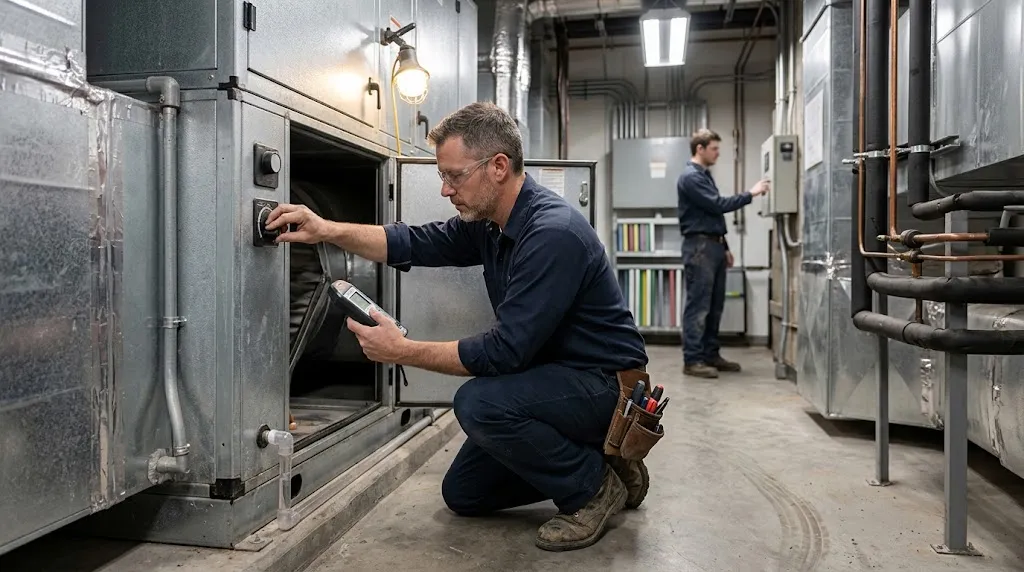
Types of Hygrometers by Form Factor
Hygrometers come in several form factors depending on how the reading will be viewed, stored, or used in the space. The main difference is not what they measure, but how the information is displayed, logged, and connected to a wider control setup.
Standalone Dial and Digital Hygrometers
Standalone units are the most basic format and are often used for quick room checks in homes, offices, storage areas, and grow rooms. A dial version gives a simple visual reading, while a digital version shows the relative humidity value more clearly and is easier to read at a glance.
These units work best when the goal is spot checking or simple day-to-day monitoring. They are practical in spaces where someone only needs to know whether the room is within an acceptable range and does not need continuous logging or remote alerts.
Thermo-Hygrometers
A thermo-hygrometer combines humidity and temperature in one device. That makes it more useful than a humidity-only display in spaces where RH must be interpreted alongside room temperature.
This format is common in indoor climate control because temperature affects how relative humidity behaves. In growing rooms, storage areas, and commercial spaces, seeing both readings together gives a more useful picture of current conditions than RH alone.
Data-Logging Hygrometers
Data-logging hygrometers store readings over time instead of showing only the current value. That makes them useful in facilities, storage rooms, and growing environments where patterns matter more than a single snapshot.
They are often used when teams need to review how RH changes across a shift, overnight, or during equipment cycles. For readers moving from definitions to selection, this is the point where choosing the right humidity meter for your facility becomes the next step.
Wireless and Connected Humidity Monitors
Wireless and connected units send RH readings to a phone, dashboard, or building system instead of relying only on a local display. This format is useful when humidity must be watched across multiple rooms or when staff cannot be physically present at every location.
In commercial and growing environments, connected monitoring becomes more valuable as the number of zones increases. It allows teams to see drift sooner, compare conditions across spaces, and respond before humidity moves too far outside the target range.
What Is a Normal Hygrometer Reading?
A normal hygrometer reading depends on the type of space and what the environment is trying to protect. A home, a cleanroom, a data center, and a grow room will not use the same RH target because the acceptable range changes with the application.
RH Ranges for Residential Environments
In most homes, a common target range is around 30% to 50% RH. That range is generally used to balance comfort with moisture control and to reduce the risk of mold, condensation, static, or material damage.
When RH stays well above that range, dampness, condensation, and mold become more likely. When it stays well below it, dry air, static, and moisture loss from wood and other materials become more common.
RH Ranges for Industrial and Commercial Facilities
Commercial and industrial RH targets are set by the needs of the process, the materials, and the equipment in the room. That is why facility targets are usually tighter and more application-specific than residential comfort ranges.
General commercial and office environments follow ASHRAE Standard 55, which recommends 30% to 60% RH for conditioned spaces occupied by people. Below 30%, dry air symptoms, static electricity, and material shrinkage become common. Above 60%, condensation and microbial growth risk increase.
Data centers are governed by ASHRAE TC9.9 guidelines, which recommend 40% to 60% RH as the operational target for most server environments, with an allowable range of 20% to 80% depending on equipment class. Below 40% RH, the risk of electrostatic discharge damaging hardware increases. In environments with elevated copper and silver corrosion risk, the upper limit is typically kept below 60%.
Cleanrooms generally operate between 30% and 60% RH, with the specific target determined by the process. ISO Class 1 to Class 5 environments, including semiconductor fabrication and high-grade pharmaceutical manufacturing, typically target 30% to 60% RH, as defined under ISO 14644-4. Electronics-focused cleanrooms often run drier, toward 30% to 40% RH, to reduce ESD risk, while pharmaceutical cleanrooms typically target 45% to 55% RH to limit microbial growth.
Pharmaceutical and GMP facilities operating under EU GMP Annex 1 or equivalent cGMP standards typically maintain RH between 30% and 65%, with the exact target validated against the specific product and process requirements. The target is not universal; it is set and documented as part of each facility’s validated operating range.
Growing environments use different targets at each stage of the crop cycle. Propagation and early vegetative growth typically require higher RH, often 70% to 80%, while late vegetative and flowering stages are kept lower, often 40% to 60%, to manage disease risk as canopy density increases.
The point is not that one RH number fits every facility. A hygrometer only becomes useful when the reading is tied to the correct validated target for that environment.
Hygrometer vs Humidity Monitor: What Is the Difference?
A hygrometer is the instrument that measures relative humidity at a given moment. A humidity monitor usually includes a hygrometer but adds functions such as continuous display, data logging, alerts, trend tracking, or connection to a wider control system.
The Practical Difference in Everyday Use
In simple use, a hygrometer gives you the reading, while a humidity monitor helps you follow that reading over time. That difference matters in facilities and growing environments because one number on its own may show current conditions, but it does not show whether the space is drifting, cycling, or staying stable.
A basic hygrometer is enough when the goal is a quick check in one room. A humidity monitor is more useful when staff need to review trends, compare zones, or respond to alarms before humidity moves outside the target range.
When the Difference Matters in Professional Environments
In professional settings, the distinction becomes operational rather than semantic. A facility may use a hygrometer as the sensing element, but the full monitoring setup may also include logging, alarms, dashboards, and control integration.
That is why a humidity monitor is usually treated as part of a wider environmental system rather than a standalone reading tool. For a facility manager or grower, the important question is not just what the instrument is called, but whether it can support the level of visibility and control the space requires.
How Hygrometers Are Used in Humidity Control Systems
In a controlled environment, a hygrometer is not only a display device. Its reading becomes an input that tells the control system whether humidity is below target, above target, or holding where it should.
From Measurement to Control: How a Hygrometer Feeds a Humidification System
In commercial and industrial spaces, the hygrometer sends the RH reading to a controller, and that controller adjusts the humidification system to hold the target range. Without that control loop, the reading is only information and does not actively protect the room, process, or materials.
This is the point where measurement becomes control. Smart Fog’s industrial humidification systems are built for 24/7 operation, with RH control up to 99% and typical fluctuations kept within ±1–2% when the system is properly applied.
Why the Feedback Loop Matters in Controlled Environments
The value of a hygrometer increases when the reading is used to trigger action instead of manual guesswork. In a facility, that feedback loop helps keep humidity closer to the specified range as heat load, airflow, occupancy, or process conditions change.
This matters in warehouses, labs, production rooms, and growing environments where humidity drift can affect materials, product quality, or room stability. A hygrometer alone tells you what is happening, but a hygrometer tied to control logic helps keep the environment where it needs to be.
Summary
A hygrometer measures relative humidity and shows how much moisture the air is holding at the current temperature. That reading helps people manage comfort in homes and also supports humidity targets in facilities, storage areas, and growing environments.
The instrument becomes more useful as the environment becomes more controlled. In professional settings, the reading is often tied to monitoring, logging, alarms, and system control so humidity can be maintained instead of simply observed.
That is where measurement becomes part of a wider control strategy. For industrial and commercial facilities that need precise humidity monitoring and control, explore Smart Fog’s humidification systems.
FAQ
What is a normal hygrometer reading?
For most indoor homes and general commercial spaces, a normal RH reading is about 40% to 60%. Below 30%, low humidity can cause static and dry air issues. Above 70%, condensation, mold, and corrosion risk increase.
What is the difference between a humidity monitor and a hygrometer?
The terms are often used interchangeably. A hygrometer measures relative humidity, while a humidity monitor usually means a hygrometer with added functions such as logging, alarms, or wireless tracking for ongoing monitoring instead of spot readings.
Where is the best place to put a hygrometer in your house?
Place it away from windows, doors, exterior walls, direct sun, and HVAC vents. A central spot at about chest height gives a more representative reading, and using it with a thermometer helps you interpret the room condition more accurately.
Does 80% humidity mean the air is 80% water?
No. It means the air holds 80% of the water vapour in the air that it could hold at that temperature. The actual moisture content still depends on temperature, because warmer air can hold much more moisture than cooler air.
Is one hygrometer enough for a large facility?
Usually not. Large spaces can have different conditions from one zone to another, so a single reading may miss a high humidity level near one process area and different conditions elsewhere. Facility monitoring often needs multiple sensor locations.
Do hygrometers measure temperature too?
Some do and some do not. A basic hygrometer measures RH, while a thermo-hygrometer combines humidity and temperature in one device, which is useful because RH changes as room temperature changes.