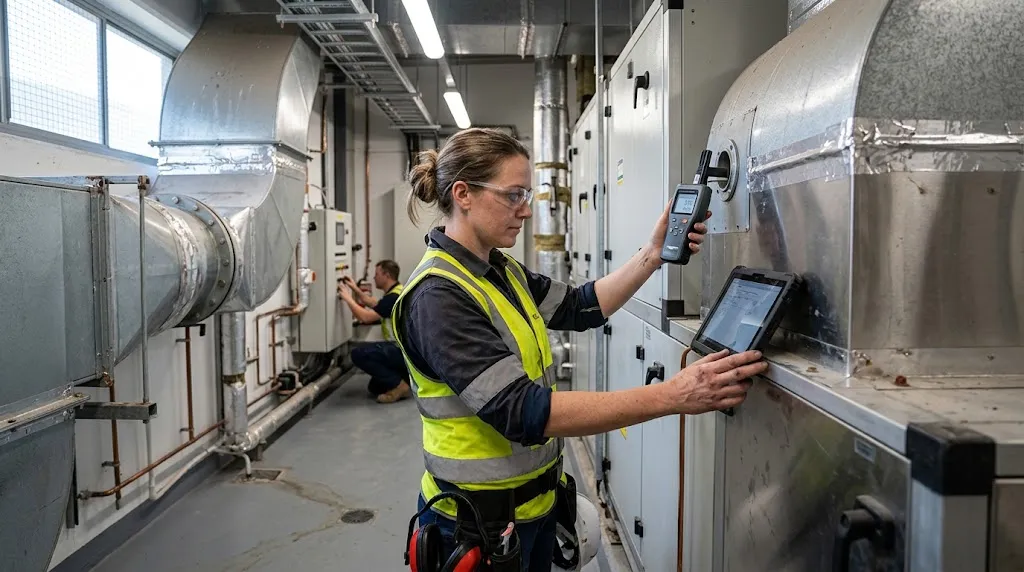


Facilities that rely on humidity for product quality, process integrity, or material preservation still need to stay below the point where mold becomes a risk. The goal is not to remove humidity completely, but to manage RH precisely enough to protect products and materials without creating damp surfaces.
This article explains the RH levels where mold risk increases, how temperature and surface conditions change that risk, and what precision humidity control looks like in commercial and food processing environments.
Key Takeaways
- Mold risk rises above 60% RH and accelerates significantly above 70% RH. This threshold is not a fixed cutoff; temperature, surface conditions, material type, and airflow all affect whether mold can establish at a given RH level.
- Ambient RH readings do not capture local surface risk. In cold storage and food processing environments, surfaces operating below ambient temperature can reach dew point and develop condensation even when room-level RH reads within range.
- The control challenge in food processing facilities is maintaining RH within a band; high enough to protect product quality and prevent static, low enough to stay below mold thresholds. Pushing humidity as low as possible is not the answer.
- Precision humidification systems that maintain plus or minus 1-2% RH stability prevent both undershoot, which damages product, and overshoot, which creates mold risk.
- A humidification system that wets surfaces creates localized mold risk regardless of ambient RH. Non-wetting delivery is a mold prevention requirement, not just a product quality one.
At What Humidity Does Mold Start to Grow?
Mold risk begins to rise when indoor relative humidity stays above 60%, which is why EPA guidance recommends keeping indoor RH below 60% and ideally between 30% and 50%. This threshold is not a fixed cutoff because mold growth also depends on temperature, surface moisture, material type, airflow, and how long damp conditions persist.
For controlled indoor environments, the practical safe zone is to stay below 60% RH and avoid surface condensation, with mold risk increasing more sharply once RH moves above 70%.
Why 60% RH Is the Widely Cited Threshold
The 60% RH level is widely cited because it is a practical upper limit for indoor moisture control. At this range, many common mold species can find enough available moisture to begin growth on porous building materials, packaging, wood, paper, insulation, or dust-covered surfaces.
This does not mean mold can never grow below 60% RH. Some species can colonize under lower room-level RH when surface conditions are favorable, especially where materials stay damp, airflow is poor, or cold surfaces create localized condensation.
Mold Growth Humidity Chart: RH Thresholds by Temperature
Mold risk changes with RH, temperature, surface conditions, and time. In food processing and cold storage spaces, surfaces such as walls, coils, packaging, and stored goods may be colder than the surrounding air, which can create localized risk even when ambient RH looks acceptable.
Use the below practical facility reference, not a species-specific mold model:
- When temperatures are below 50°F and RH remains below 60%, mold risk is low, and risk stays lower when surfaces remain dry and airflow prevents condensation.
- When temperatures are below 50°F and RH is between 60% and 70%, mold risk is elevated, as cold surfaces may reach dew point near doors, coils, drains, or packaging.
- When temperatures are between 50°F and 77°F and RH remains below 60%, mold risk is low, representing a practical safe zone for many controlled indoor environments.
- When temperatures are between 50°F and 77°F and RH is between 60% and 70%, mold risk is elevated, as risk rises when RH stays high or porous materials absorb moisture.
- At any temperature range, when RH exceeds 70% or condensation is present, mold risk is high, as surface moisture can support mold even when room-level RH appears acceptable.
Why Ambient RH Is Not the Whole Picture
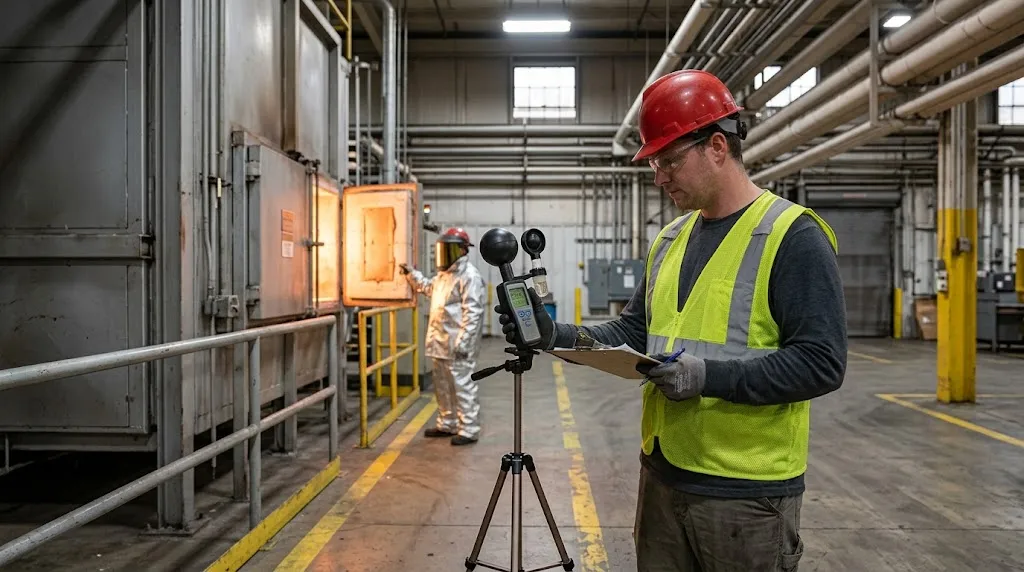
Ambient RH shows the room-level indoor humidity level, but mold grows on surfaces, not in the air. In food processing and cold storage environments, a cold surface can have a higher local RH than the ambient reading shows. It is because surface temperature affects how close nearby air gets to saturation, creating enough moisture for mold to grow even when the room appears controlled.
Cold Surfaces in Food Processing Environments
In refrigerated production areas, cold storage rooms, and food processing spaces, walls, coils, packaging, drains, and equipment surfaces often operate below ambient temperature. This temperature and humidity difference can create localized high-RH conditions at the surface.
Even at 55% ambient RH, a cold surface may reach dew point and develop condensation where the room-level reading suggests safety.
For facility teams, reducing the risk of mold growth requires cold storage humidity control that accounts for surface temperature, airflow, and localized moisture conditions, not just the room RH target.
The Safe RH Range: Staying Above the Floor and Below the Ceiling
In commercial and food processing environments, mold prevention is not about pushing humidity as low as possible. The control challenge is maintaining RH within a safe band, with 30% to 60% RH serving as a common occupied-space reference. But food processing facilities require tighter control around product quality, static risk, material integrity, and mold thresholds.
What Happens When RH Is Too Low in Food Processing Facilities
Low humidity levels can pull moisture from food products, leading to weight loss, surface drying, or cracking in bakery and confectionery items. They can also increase dust movement and particulate contamination where dry ingredients, powders, or packaging materials are handled.
Packaging lines can become more vulnerable to static buildup when humidity in the air drops too low. That is why food processing facilities cannot simply keep humidity low to avoid mold; they need optimal humidity control that protects product condition while reducing the risk of mold.
Holding RH Within a Safe Band Without Overshooting
Precision humidification systems engineered to maintain ±1 to 2% RH stability help prevent both undershoot and overshoot. Undershoot can damage products and materials, while overshoot can create excess moisture, surface condensation, and conditions for mold formation.
The control requirement is a stable RH setpoint without fluctuation spikes above the mold threshold. In food processing environments, consistent humidity, proper ventilation, and stable setpoint control help prevent mold problems without creating new product-quality risks.
Mold Prevention in Food Processing and Cold Storage Facilities
Mold prevention in food processing and cold storage facilities depends on controlling both the room environment and the surfaces where moisture collects. Facility teams need to track ambient RH, surface temperature, airflow, and condensation-prone areas because a safe room-level reading can still hide local surface risk.
The practical response is a combination of safe RH band control, ventilation, air circulation, and cleaning protocols for walls, coils, drains, packaging areas, and equipment surfaces that repeatedly collect condensation.
A humidification system also needs to distribute humidity evenly without creating wet spots or surface condensation. In this context, non-wetting humidification is important because surface wetting can create localized mold risk regardless of ambient RH.
Final Thoughts
Mold risk commonly rises above 60% RH, but that threshold is not a fixed line because surface temperature, airflow, material type, and exposure time all affect whether moisture can support mold growth.
In food processing and cold storage facilities, the goal is to maintain RH within a precise band, high enough to protect product quality and low enough to prevent excess moisture, surface condensation, and mold risk.
Non-wetting humidification matters because surface wetting can create localized mold risk even when room-level RH appears controlled. Smart Fog supports food processing humidification systems designed to maintain stable, controlled humidity without surface wetting.
FAQ
At what relative humidity level does mold start to grow?
Mold risk rises when humidity levels in your home stay above 60% for too long. Mold spores are common indoors, but they need enough moisture on surfaces for mold to grow and become a larger mold and humidity problem.
Why are basements or crawl spaces more prone to mold?
Basements and crawl spaces often have cooler surfaces, weak airflow, and more moisture exposure. When humid indoor air meets cold walls or floors, condensation can form and create ideal conditions for mold, making these areas a breeding ground for mold issues.
Can high humidity lead to black mold specifically?
High humidity can support many types of mold, including species often called black mold. Moisture alone does not identify the type, so visible growth, musty odors, or recurring mold issues should be inspected properly because some mold can become a health risk.
How do I measure humidity accurately?
Use a hygrometer to monitor indoor humidity in areas where moisture risk is likely. In controlled spaces, sensors should be calibrated regularly so readings stay reliable and help you keep indoor humidity within a safer range.
Why is mold prevention difficult in food processing or cold storage facilities?
Cold surfaces can create localized condensation even when ambient RH looks safe. Facility teams must monitor both room RH and surface conditions to protect indoor air quality, prevent excessive humidity from becoming a mold trigger, and reduce mold risk.
What are the best ways to control humidity and stop mold growth?
Keep RH below 60%, improve ventilation, increase air circulation, fix leaks, and clean damp surfaces. A dehumidifier can help in a bathroom, basement, or other moisture-prone space, while consistent humidity control helps protect your home, prevent structural damage, and avoid conditions that promote mold.