

- Static electricity becomes problematic in manufacturing when relative humidity drops below 45%, creating surface resistance conditions above 10^12 ohms that allow charge accumulation.
- Environmental factors including low humidity, synthetic materials, high-speed processes, and dust accumulation create the primary static generation mechanisms in manufacturing environments.
- Comprehensive static control programs require risk assessment across personnel safety, product damage, process disruption, and fire hazards in facilities handling flammable materials.
- Humidity control prevents static buildup by maintaining air conductivity above critical resistance thresholds, eliminating the need for multiple point-of-use elimination devices.
- Manufacturing facilities processing synthetic materials, operating at high speeds, or handling electronic components face the highest static-related risks and require systematic control programs.
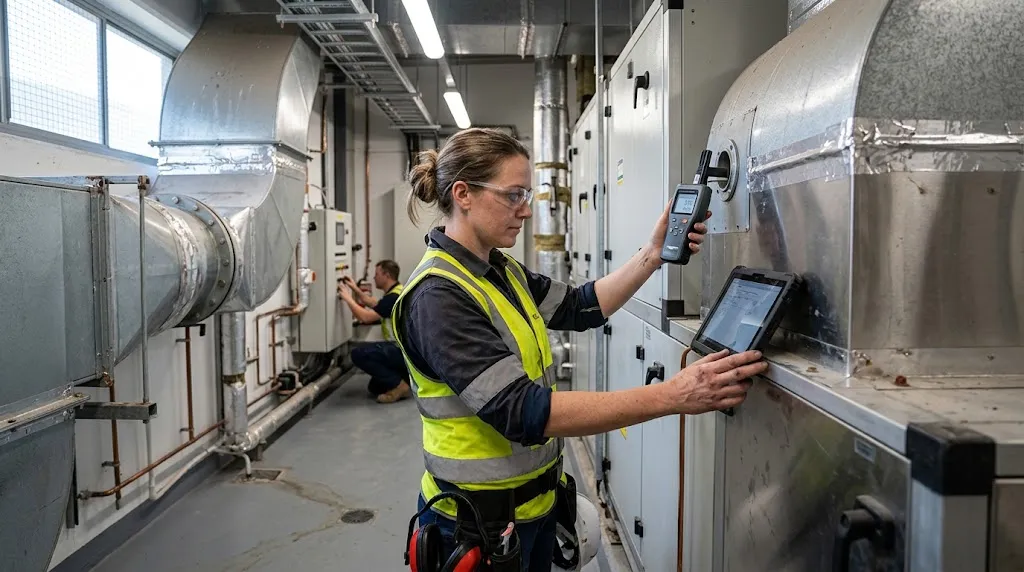
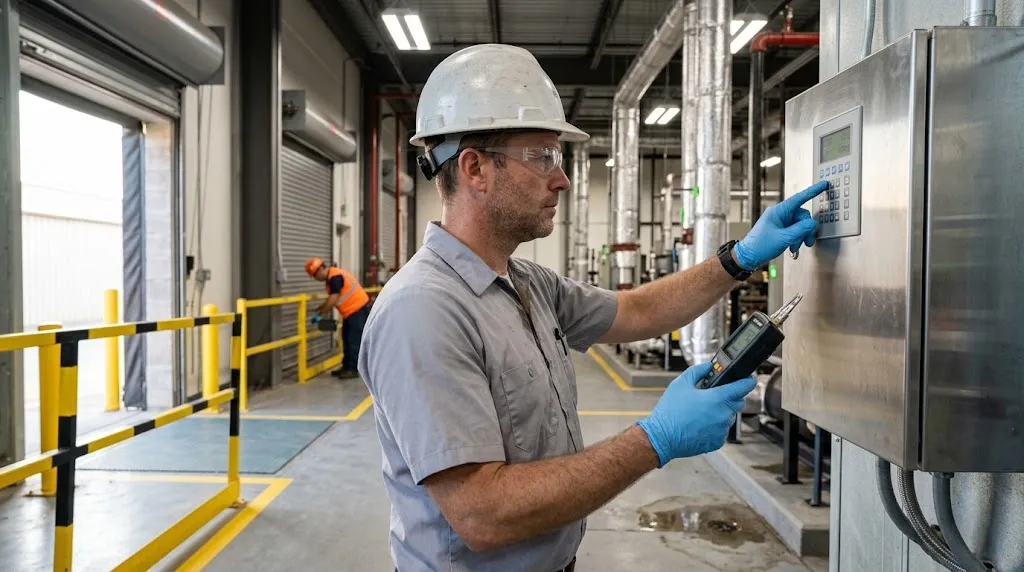
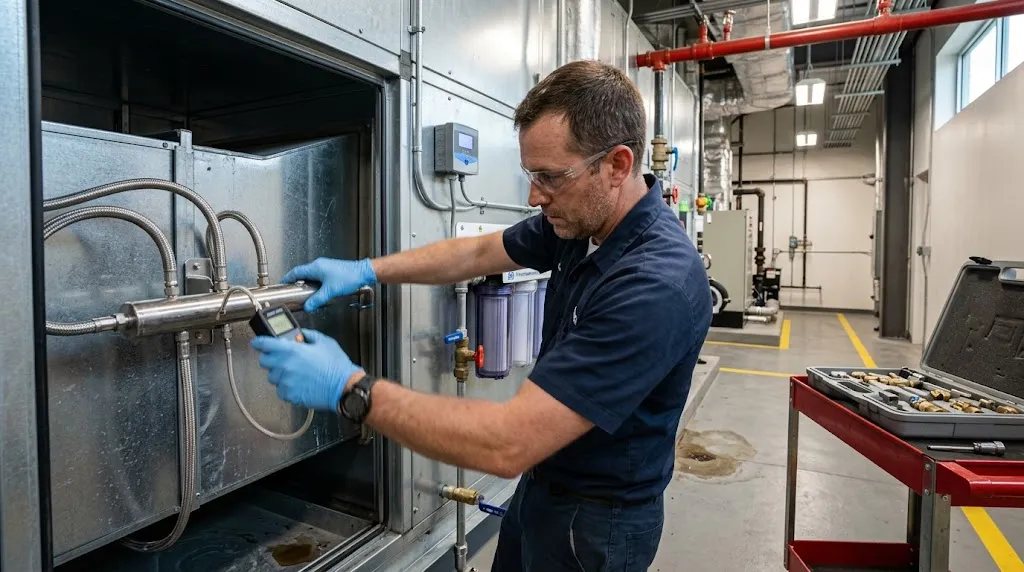
- Static control implementation requires baseline measurement, environmental assessment, technology selection, and ongoing monitoring with specialized equipment.
When Manufacturing Facilities Need Static Control Programs
Manufacturing facilities require static control programs when environmental and operational conditions create charge accumulation that threatens product quality, equipment functionality, or personnel safety. The decision to implement systematic static control depends on specific facility characteristics, materials handled, and process conditions that generate or accumulate electrostatic charges. Static control becomes mandatory rather than optional when facilities handle sensitive electronic components, process synthetic materials at high speeds, or operate in low-humidity environments where relative humidity consistently falls below 45%. These conditions create the perfect environment for static charge buildup and subsequent discharge events.High-Risk Manufacturing Environments
Electronics manufacturing facilities face the greatest static-related risks due to component sensitivity to electrostatic discharge (ESD) control systems. Semiconductor fabrication, printed circuit board assembly, and electronic device manufacturing require comprehensive static control because ESD events can damage components with voltages as low as 20 volts, well below human perception thresholds. Pharmaceutical and biotechnology facilities processing powdered materials experience significant static buildup during material transfer, mixing, and packaging operations. These facilities require static control not only for product quality but also to prevent fire hazards when handling flammable solvents and fine powders that can create explosive atmospheres. Plastics manufacturing and processing facilities generate substantial static charges through high-speed extrusion, molding, and material handling processes. The inherently insulative nature of most plastic materials prevents charge dissipation through traditional grounding methods, requiring environmental or active elimination approaches.Environmental Thresholds for Control Programs
Relative humidity below 45% creates air conditions that cannot adequately dissipate static charges, with surface resistance exceeding 10^12 ohms on most materials. Manufacturing facilities operating in these conditions require systematic humidity management or point-of-use elimination equipment to maintain acceptable static levels. Process speeds above 100 feet per minute in material handling, web processing, or conveyor systems generate static charges faster than natural dissipation can occur. High-speed operations combined with synthetic materials create the most challenging static control environments requiring multiple control technologies. Material resistivity above 10^12 ohm-cm indicates insulative materials that cannot dissipate static charges through grounding alone. Manufacturing processes involving these materials require either environmental control through humidity management or active charge neutralization through ionization equipment.How Static Electricity Develops in Manufacturing Environments
Static electricity in manufacturing develops through triboelectric charging when materials with different electrical properties contact and separate during processing operations. This charge generation mechanism becomes amplified in low-humidity environments where air cannot provide adequate conductivity for natural charge dissipation. The magnitude of static charge accumulation depends on material properties, contact pressure, separation speed, and environmental conditions. Manufacturing processes involving synthetic materials, high-speed operations, or repetitive contact-separation cycles create the most significant static buildup challenges.Triboelectric Charging in Manufacturing Processes
Material contact and separation during manufacturing operations transfers electrons between surfaces based on their relative positions in the triboelectric series. Synthetic materials like polyethylene, polypropylene, and PVC generate particularly strong charges when processed against metal machinery or other synthetic materials. High-speed manufacturing processes amplify triboelectric charging because faster separation speeds generate higher voltage potentials. Web processing, high-speed conveying, and rapid material handling operations create charge accumulation rates that exceed natural dissipation, resulting in voltage buildups that can reach thousands of volts on processed materials.Environmental Factors That Amplify Static Buildup
Low relative humidity reduces air conductivity and increases surface resistance on materials, preventing natural charge dissipation that would normally occur in more humid conditions. When humidity drops below 45%, surface resistance on most materials exceeds the threshold for effective charge dissipation through air conductivity. Dust accumulation on surfaces and in air creates additional insulative barriers that prevent charge dissipation while providing additional particles for triboelectric charging. Manufacturing environments with airborne particulates experience accelerated static buildup and require both static control and air filtration systems for effective management.Environmental Risk Assessment for Static Control
Systematic static risk assessment requires quantitative measurement of environmental conditions, identification of charge-generating processes, and evaluation of potential damage mechanisms specific to each manufacturing facility. This assessment provides the foundation for selecting appropriate control technologies and establishing monitoring protocols. Effective risk assessment follows a structured methodology that documents baseline conditions, identifies high-risk processes, and establishes quantitative criteria for static control program success. The assessment must address both immediate safety risks and long-term product quality impacts from static-related problems.Baseline Environmental Measurements
Relative humidity measurement throughout manufacturing areas establishes the foundation for static control program design, particularly given temperature and humidity requirements for pharmaceutical facilities. Humidity readings below 45% indicate environments where static control measures are required, while readings below 30% represent high-risk conditions requiring comprehensive environmental management. Static field strength measurements using calibrated field meters identify areas where static charges exceed safe thresholds for personnel or products. Field strengths above 1 kV indicate moderate static levels, while readings above 5 kV require immediate attention to prevent discharge events that can damage sensitive products or create safety hazards. Surface resistance measurement on critical materials and work surfaces determines the effectiveness of grounding systems and identifies insulative materials that require alternative control approaches. Resistance measurements above 10^12 ohms indicate surfaces that cannot adequately dissipate static charges through conventional grounding methods.Process and Material Risk Identification
High-speed material handling operations require evaluation of processing speeds, material types, and contact interfaces where triboelectric charging occurs. Operations involving synthetic materials at speeds above 100 feet per minute typically generate static levels requiring active control measures. Sensitive product identification focuses on electronic components, precision assemblies, and materials susceptible to static damage. Components with sensitivity thresholds below 100 volts require comprehensive static control programs, while products sensitive below 20 volts demand the most rigorous environmental management.Static Control Program Design and Implementation
Comprehensive static control programs integrate environmental management, targeted elimination equipment, and systematic monitoring protocols tailored to specific manufacturing facility requirements. Program design must address facility-wide environmental conditions while providing localized control for high-risk processes and sensitive materials. Implementation follows a phased approach beginning with baseline establishment, progressing through pilot testing, and culminating in facility-wide deployment with ongoing monitoring protocols. Success depends on selecting appropriate technologies for each application while maintaining cost-effective operation over long service intervals.Program Components and Technology Integration
Environmental control through humidity management provides facility-wide static prevention by maintaining air conductivity levels that prevent charge accumulation on surfaces and materials. Humidity control eliminates the root cause of static buildup rather than treating symptoms, reducing the need for multiple point-of-use devices throughout the facility. Point-of-use ionization equipment addresses localized static problems in areas where environmental control alone cannot provide adequate charge dissipation. Ionizers work by generating positive and negative ions that neutralize charges on nearby surfaces, requiring regular maintenance and calibration to maintain effectiveness. Personnel protection through anti-static flooring, grounding straps, and conductive work surfaces prevents static discharge during material handling and assembly operations. These passive control measures require ongoing monitoring to ensure electrical continuity and effective charge dissipation.Implementation Phases and Success Metrics
Pilot testing in high-risk areas establishes program effectiveness before facility-wide deployment, allowing optimization of control parameters and verification of monitoring protocols. Pilot areas should represent the most challenging static control conditions to validate program design under worst-case scenarios. Success metrics include reduction in static-related product defects, elimination of personnel discharge events, and maintenance of target humidity levels within specified tolerances. Quantitative measurement through regular monitoring provides objective evidence of program effectiveness and identifies areas requiring adjustment. Ongoing monitoring protocols using calibrated measurement equipment track environmental conditions, static field levels, and system performance to maintain program effectiveness over time. Monthly measurements in critical areas and quarterly facility-wide assessments ensure continued static control performance.Comparing Static Control Methods for Manufacturing
Manufacturing facilities can choose from several static control approaches, each with specific advantages for different applications, coverage areas, and operational requirements. The selection depends on facility size, process sensitivity, maintenance capabilities, and total cost of ownership considerations over the system's service life. Technology comparison must evaluate both initial implementation costs and ongoing operational requirements including maintenance, energy consumption, and effectiveness across different environmental conditions. The most appropriate approach often combines multiple technologies to address facility-wide and localized control requirements.Facility-Wide vs. Point-of-Use Approaches
- Environmental humidity control: Maintains air conductivity throughout the facility, preventing static charge accumulation at the source and eliminating the need for multiple localized devices across manufacturing areas.
- Ionization systems: Provide targeted charge neutralization in specific work areas or process zones, requiring installation and maintenance of multiple units to achieve comprehensive facility coverage.
- Passive grounding systems: Offer reliable charge dissipation for conductive materials and personnel protection, but cannot address static buildup on insulative materials that dominate modern manufacturing processes.
- Conductive flooring and surfaces: Create personnel safety zones and provide charge dissipation paths for grounded materials, requiring ongoing electrical continuity testing and surface treatment to maintain effectiveness.
Technology Selection Criteria
- Coverage requirements: Facility-wide environmental control provides comprehensive static prevention across all manufacturing areas, while point-of-use approaches require individual assessment and equipment selection for each critical process zone.
- Maintenance demands: Humidity control systems typically require less frequent maintenance than ionization equipment, which needs regular cleaning and calibration to maintain charge neutralization effectiveness.
- Installation complexity: Environmental humidity systems integrate with existing HVAC infrastructure, while ionization networks require electrical connections and mounting hardware throughout manufacturing areas.
- Operating costs: Humidity control operates using existing utilities without requiring specialized consumables, while ionization systems may require replacement emitters and regular calibration services to maintain performance specifications.
Smart Fog Humidity Control for Manufacturing Static Prevention
Precision humidity control that maintains optimal air conductivity prevents static charge accumulation across manufacturing environments without requiring multiple point-of-use elimination devices. Smart Fog's adiabatic humidification technology produces self-evaporating droplets that achieve precise humidity control up to 99% RH with plus or minus 1-2% accuracy, providing the environmental stability required for comprehensive static prevention. The equal-sized droplet grid evaporates completely before reaching surfaces, equipment, or products under proper system design, eliminating concerns about moisture damage to sensitive manufacturing processes while maintaining the air conductivity necessary for static dissipation.Environmental Static Prevention Through Humidity Control
Maintaining relative humidity above 45% creates air conductivity that allows static charges to dissipate naturally rather than accumulating on surfaces and materials. Smart Fog systems achieve this environmental control through compressed air and water mixed in proprietary nozzles that produce consistent droplet patterns for stable humidity throughout manufacturing areas. The precision humidity control addresses static prevention at the source by maintaining surface resistance below critical thresholds where charge accumulation becomes problematic. This environmental approach eliminates the need for ionizer networks, specialized flooring systems, or multiple grounding installations required by other static control methods.- Prevents charge accumulation by maintaining air conductivity above 10^11 ohms surface resistance
- Eliminates static-related product defects without point-of-use intervention devices
- Provides facility-wide coverage through existing HVAC integration
Facility-Wide Coverage and Industrial Reliability
Smart Fog systems integrate with existing facility infrastructure to provide comprehensive static control without requiring electrical connections throughout manufacturing areas or specialized maintenance protocols for multiple elimination devices. The non-wetting operation allows installation in sensitive manufacturing environments including electronics manufacturing humidification and precision assembly operations. Industrial design with no moving parts in the humidification process provides reliable operation in demanding manufacturing environments where system downtime can impact production schedules. Maintenance intervals extending up to every two years reduce operational disruption compared to ionization systems requiring regular cleaning and calibration.- No moving parts in the humidification process for reliable industrial operation
- Maintenance intervals up to every two years minimize operational disruption
- Non-wetting operation prevents moisture damage to sensitive products and equipment