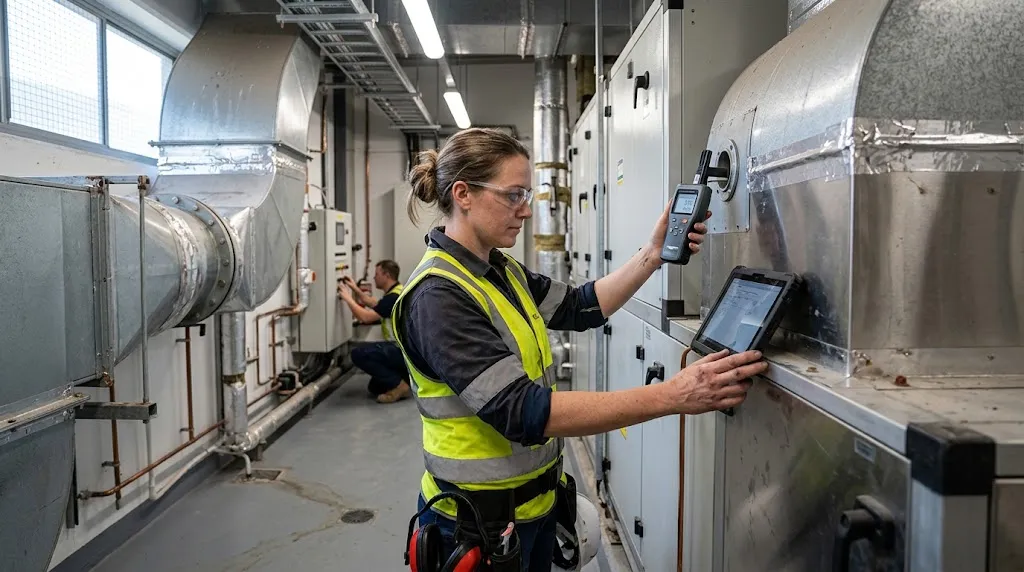
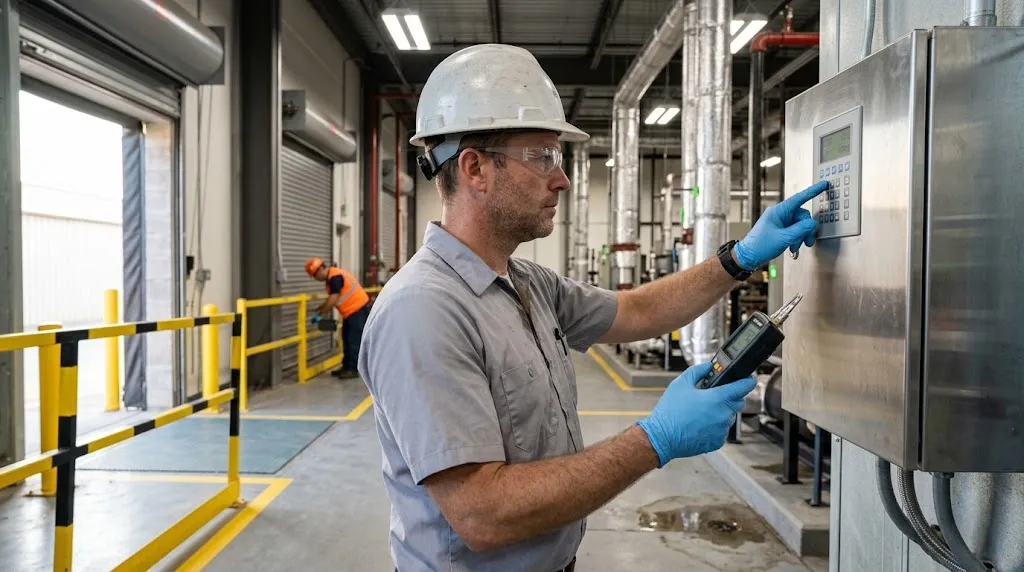
...

Static Control Components: The Building Blocks of an ESD Control System

Static control systems protect electronics manufacturing through multiple component types: ionizers, grounding equipment, conductive materials, and environmental controls that work together to prevent electrostatic discharge. Each component addresses different aspects of ESD risk, from neutralizing existing charges to preventing charge accumulation in the first place.

No single component provides complete protection. Effective static control requires a layered approach where ionizers neutralize charges, grounding systems provide safe discharge paths, specialized materials control surface conductivity, and environmental controls maintain atmospheric conditions that reduce charge generation. Understanding these components helps facility engineers design comprehensive ESD protection strategies.

Key Takeaways

  • Static control systems require multiple component types working together: ionizers for charge neutralization, grounding equipment for safe discharge paths, conductive materials for controlled environments, and environmental controls for atmospheric conditions.
  • Air ionizers neutralize static charge through positive and negative ion generation, with placement requiring 3-5 feet from protected equipment and regular emitter point maintenance.
  • Grounding components must create continuous conductive paths with resistance measurements below 10^9 ohms, including wrist straps, heel straps, conductive flooring, and equipment ground connections.
  • Conductive and static-dissipative materials control charge accumulation through surface resistivity ranges: conductive materials below 10^4 ohms/square, static-dissipative materials between 10^4 and 10^11 ohms/square.
  • Environmental humidity control maintains air conductivity above 40% RH, reducing static generation by enabling natural charge dissipation through moisture in the air.

Understanding Static Control System Architecture

Static control requires a layered approach with different component types addressing different aspects of electrostatic discharge. The three main categories are charge neutralization through ionizers, safe discharge through grounding systems, and controlled environments through materials and humidity. Each component type provides different coverage areas and maintenance requirements.

No single component provides complete protection because static electricity generates through multiple mechanisms. Friction between materials creates triboelectric charging, while dry air enables charge accumulation on surfaces. Effective ESD control systems combine active neutralization, passive discharge paths, and environmental conditioning.

Component selection depends on facility requirements and coverage needs. Ionizers provide localized protection around sensitive equipment, grounding systems ensure personnel safety and equipment protection, conductive materials control work surface environments, and humidity systems provide facility-wide prevention.

Charge Neutralization vs. Charge Prevention

Charge neutralization components like ionizers actively generate ions to neutralize existing static charges on surfaces and in the air. These systems work continuously to balance positive and negative charges in their coverage area, typically within a 3-5 foot radius of the ionizer placement.

Static prevention components stop buildup before it occurs. Humidity control maintains air conductivity above 40% relative humidity (RH), enabling natural charge dissipation. Conductive materials provide controlled paths for charges to flow safely to ground rather than accumulating on surfaces.

Localized vs. Facility-Wide Protection

Localized protection components address specific work areas or equipment. Ionizers protect individual workstations, conductive work surfaces control charge at assembly points, and personal grounding protects operators during sensitive tasks. These components require precise placement and regular maintenance.

Facility-wide protection provides background ESD control across entire manufacturing areas. Environmental humidity control affects static generation throughout the building, while conductive flooring systems create continuous ground planes. These systems require higher initial investment but lower maintenance per protected area.

Air Ionization Components for Charge Neutralization

Air ionizers generate positive and negative ions to neutralize static charges on surfaces and products within their coverage area. Corona discharge ionizers use high voltage to create ions at emitter points, while soft X-ray ionizers use radioactive materials to ionize air molecules without requiring high voltage maintenance.

Placement requirements determine ionizer effectiveness. Most ionizers provide coverage within 3-5 feet of the emitter points, requiring strategic positioning around sensitive equipment or work surfaces. Airflow patterns affect ion distribution, making HVAC integration important for consistent performance across work areas.

Maintenance intervals vary by ionizer type and environment. Corona discharge systems require emitter point cleaning every 3-6 months in typical manufacturing environments due to particle accumulation. Contaminated emitter points reduce ion output and create charge imbalance, leading to inadequate neutralization or surface attraction.

Corona Discharge vs. Soft X-Ray Ionizers

Corona discharge ionizers create ions through high voltage applied to sharp emitter points. These systems provide adjustable ion output and fast neutralization speeds but require regular emitter cleaning and high voltage safety considerations. They work well in controlled environments with moderate particulate levels.

Soft X-ray ionizers use radioactive sources to create ions without emitter points or high voltage. These systems require no regular maintenance and provide consistent ion output regardless of particulate contamination, but they need radiation safety licensing and cannot be adjusted for different applications.

Placement and Coverage Calculations

Ionizer coverage follows inverse square principles where ion density decreases with distance from the emitter. Most industrial ionizers provide effective neutralization within 3-5 feet, requiring multiple units for large work areas. Placement height typically ranges from 12-24 inches above work surfaces for optimal ion distribution.

Airflow affects ion transport and coverage patterns. High airflow can disperse ions beyond their intended coverage area while low airflow may create dead zones. Electronics manufacturing humidification systems must coordinate with ionizer placement to maintain consistent ion distribution across work areas.

Grounding and Bonding Infrastructure

Grounding components provide safe discharge paths for static charges through direct conductive connections to earth ground. Personal grounding includes wrist straps and heel straps that connect operators to ground potential, while equipment grounding uses conductive mats, work surfaces, and overhead grounding systems to protect sensitive components.

Resistance requirements ensure effective charge dissipation without creating electrical safety hazards. According to ANSI/ESD S20.20 standard, grounding connections must maintain resistance below 10^9 ohms for effective static control while staying above 10^4 ohms to prevent electrical shock hazards.

Testing protocols verify grounding system effectiveness through regular resistance measurements. Daily testing of wrist straps and heel straps ensures operator protection, while monthly testing of work surfaces and equipment grounding confirms continued effectiveness. Failed grounding components create gaps in ESD protection that may not be immediately visible.

Personal vs. Equipment Grounding Systems

Personal grounding protects operators from carrying static charges that could damage sensitive components. Wrist straps provide continuous grounding during handling tasks, while heel straps and ESD footwear maintain grounding during movement. These systems require daily testing and proper connection to verified ground points.

Equipment grounding protects sensitive components from static charges generated by the work environment. Conductive work surfaces, equipment mats, and grounding straps for tools create controlled charge dissipation paths. These systems focus on protecting products rather than personnel and typically require less frequent testing.

Resistance Testing and Compliance Verification

Work surface testing uses surface resistance meters to measure conductivity across work areas. Readings must fall within specified ranges for the material type, per ANSI/ESD S20.20 surface resistance specifications. Wrist strap testers measure resistance between the operator and ground, typically requiring readings between 750K ohms and 35 megohms for proper function according to industry standards.

Work surface testing uses surface resistance meters to measure conductivity across work areas. Readings must fall within specified ranges for the material type: conductive surfaces below 10^4 ohms/square, static-dissipative surfaces between 10^4 and 10^11 ohms/square. Regular testing identifies degraded surfaces before they compromise ESD protection.

Conductive and Static-Dissipative Materials

Material selection controls charge accumulation through surface resistivity properties that determine how quickly charges dissipate. Conductive materials with surface resistivity below 10^4 ohms/square provide rapid charge dissipation, while static-dissipative materials between 10^4 and 10^11 ohms/square offer controlled dissipation that prevents rapid discharge events.

Work surface materials directly affect component protection during assembly and testing operations. ESD mats typically use static-dissipative materials that prevent charge accumulation while avoiding rapid discharge that could damage sensitive components. These surfaces require proper grounding connections to maintain effectiveness.

Durability considerations affect long-term material performance and cost-effectiveness. Static-dissipative properties can degrade over time due to wear, cleaning chemicals, or contamination. Regular testing and planned replacement schedules ensure continued protection without unexpected failures that compromise production quality.

Surface Resistivity Classifications

Conductive materials below 10^4 ohms/square provide immediate charge dissipation but may create rapid discharge events that damage sensitive components. These materials work best for grounding connections and areas where rapid charge removal is more important than controlled dissipation.

Static-dissipative materials between 10^4 and 10^11 ohms/square offer controlled charge dissipation that prevents accumulation without creating damaging discharge events. This range provides the optimal balance for most electronics manufacturing applications where component protection is the primary concern.

Work Surface vs. Flooring Material Requirements

Work surfaces require static-dissipative materials in the 10^6 to 10^9 ohms/square range to protect components during direct handling. These surfaces need daily cleaning with ESD-safe cleaners that maintain resistivity properties. Proper grounding connections through snap fasteners or grounding cables complete the discharge path.

Flooring materials typically use slightly higher resistivity ranges between 10^6 and 10^11 ohms/square to provide personnel grounding while maintaining durability under foot traffic. ESD flooring must integrate with facility grounding systems and accommodate cleaning procedures that maintain both cleanliness and static control properties.

Environmental Controls: Humidity as a Static Control Component

Humidity control maintains air conductivity that enables natural charge dissipation before static buildup becomes problematic. Water molecules in the air create conductive paths that allow charges to dissipate gradually rather than accumulating on surfaces. This mechanism provides facility-wide static prevention that complements localized control measures.

Optimal humidity ranges for electronics manufacturing typically fall between 40–60% relative humidity, as specified in ANSI/ESD S20.20 environmental requirements and broader industry guidance from ASHRAE. Below 40% RH, air conductivity drops significantly and static generation increases. Above 60% RH, condensation risks and material degradation become concerns for sensitive electronic components.

Seasonal variation challenges require consistent humidity control strategies regardless of outdoor conditions. Winter heating systems can drop indoor humidity below 20% RH, creating severe static problems. Summer humidity may require dehumidification in some climates, but maintaining minimum levels for static control remains essential for electronics facilities.

The Physics of Humidity-Based Static Control

Water molecules in humid air provide charge carriers that enable natural dissipation of static electricity. As humidity increases, air conductivity increases exponentially, allowing charges to flow through the air rather than accumulating on surfaces. This mechanism works continuously without requiring active components or maintenance.

The relationship between humidity and static generation follows established physics principles where charge accumulation decreases as relative humidity rises above 40%. This threshold represents the point where air conductivity becomes sufficient for natural charge dissipation in most electronics manufacturing environments.

Humidity Requirements for Electronics Facilities

Electronics facilities typically require 45-55% RH for optimal static control in humidity-sensitive environments while avoiding condensation risks on sensitive components. This range provides sufficient air conductivity for charge dissipation while maintaining safe margins below dew point temperatures on cooled surfaces or equipment.

Control precision becomes critical in electronics manufacturing where humidity variations can affect both static generation and product quality. Million-dollar solution approaches maintain ±2% RH control accuracy to ensure consistent static control performance across production areas.

Smart Fog Humidification: Environmental Static Control for Electronics Facilities

Precise humidity control provides facility-wide static prevention through air conductivity management that enables natural charge dissipation. Smart Fog systems produce an equal-sized droplet grid through compressed air and water mixed in proprietary nozzles, creating self-evaporating droplets that maintain optimal humidity without surface wetting risks to sensitive electronics equipment.

The non-wetting characteristic eliminates concerns about moisture contamination on circuit boards, components, or production equipment while maintaining the 45-55% RH range required for effective static control. This precision enables electronics facilities to achieve comprehensive static prevention without the surface contamination risks associated with traditional humidification approaches.

Precision Humidity Without Surface Contamination

Smart Fog’s droplet technology produces uniform droplets that self-evaporate before reaching any surface under proper system design, enabling precise humidity control up to 99% RH with ±1-2% accuracy. This precision maintains optimal air conductivity for static control while eliminating moisture-related contamination risks on sensitive electronics components and assembly equipment.

The system operates with no moving parts in the humidification process, reducing maintenance requirements to intervals extending up to two years. This reliability ensures consistent humidity control for static prevention without frequent service interruptions that could compromise production schedules or ESD protection effectiveness.

Facility-Wide Static Prevention for Electronics Manufacturing

Maintaining 45-55% RH across electronics facilities provides continuous static prevention that reduces charge generation at the source rather than requiring neutralization after charges accumulate. This environmental approach complements localized static control components while providing background protection throughout manufacturing areas.

Smart Fog systems integrate with existing HVAC infrastructure and facility controls to maintain precise humidity levels regardless of seasonal outdoor conditions. The 100% water-efficient operation and non-wetting performance enable reliable static control in electronics facilities where surface contamination and precision environmental control are both critical requirements.

Final Thoughts on Static Control Components

Effective static control requires multiple component types working together rather than relying on any single solution. Ionizers provide active charge neutralization, grounding systems ensure safe discharge paths, specialized materials control surface conductivity, and environmental humidity control reduces charge generation facility-wide.

Component selection depends on specific facility requirements, contamination sensitivity, and coverage needs. Electronics manufacturing typically requires the full range of components due to sensitive product requirements, while other industries may emphasize certain component types based on their specific ESD risks and environmental conditions.

For facilities requiring comprehensive static control, speak with a Smart Fog engineer about environmental humidity control that provides facility-wide static prevention without surface contamination risks.

FAQ

What are the main components of a static control system for electronics manufacturing?

Static control systems for electronics manufacturing typically include four main component types: air ionizers for charge neutralization, grounding equipment for safe discharge paths, conductive and static-dissipative materials for work surfaces, and environmental humidity controls. Each component addresses different aspects of ESD protection and must work together for comprehensive coverage.

How do air ionizers work as static control components?

Air ionizers generate positive and negative ions through corona discharge or soft X-ray technology to neutralize static charges on surfaces and in the air. They provide coverage within 3-5 feet of the emitter points and require placement based on airflow patterns and equipment locations. Regular maintenance includes emitter point cleaning every 3-6 months for corona discharge systems.

What grounding components are required for ESD protection?

ESD grounding components include personal grounding like wrist straps and heel straps, work surface grounding through conductive mats and bench connections, and facility grounding systems. All connections must maintain resistance below 10^9 ohms for effective static control while staying above 10^4 ohms for electrical safety.

What is the difference between conductive and static-dissipative materials?

Conductive materials have surface resistivity below 10^4 ohms/square and provide rapid charge dissipation for grounding connections. Static-dissipative materials range between 10^4 and 10^11 ohms/square and offer controlled charge dissipation that prevents accumulation without creating damaging rapid discharge events, making them ideal for work surfaces.

How does humidity control function as a static control component?

Humidity control maintains air conductivity through water molecules that enable natural charge dissipation before static buildup occurs. Maintaining 40-60% relative humidity provides sufficient air conductivity for electronics facilities while avoiding condensation risks on sensitive components and equipment.

What resistance measurements are required for ESD grounding components?

ESD grounding components must maintain resistance below 10^9 ohms for effective charge dissipation according to ANSI/ESD S20.20 standards. Personal grounding like wrist straps typically requires 750K ohms to 35 megohms for proper function, while work surfaces need readings appropriate for their material classification.

Which static control components provide facility-wide vs. localized protection?

Localized protection includes ionizers covering 3-5 feet radius, conductive work surfaces for specific areas, and personal grounding for individual operators. Facility-wide protection includes environmental humidity control throughout the building and conductive flooring systems that create continuous ground planes across manufacturing areas.

How do you select the right combination of static control components for a facility?

Component selection depends on facility size, contamination sensitivity, product types, and environmental conditions. Electronics manufacturing typically requires all component types due to sensitive products, while other facilities may emphasize certain components based on their specific ESD risks, coverage needs, and maintenance capabilities.

You might also be interested in…

ESD Testing: Types, Standards, and How to Test for Electrostatic Compliance

ESD Testing: Types, Standards, and How to Test for Electrostatic Compliance

ESD testing verifies that electronic devices, components, and facility protection systems can withstand electrostatic discharge events without failure or performance degradation. This guide explains the most common ESD testing methods, key standards such as IEC 61000-4-2 and ANSI/ESD S20.20, testing equipment requirements, and the environmental conditions needed to maintain reliable compliance and long-term static control.

read more
How to Get Rid of Static Electricity: Causes, Fixes, and When You Need a System

How to Get Rid of Static Electricity: Causes, Fixes, and When You Need a System

Static electricity forms when dry conditions allow electrical charges to build up on surfaces through friction, creating shocks, equipment issues, and operational disruptions. This guide explains what causes static electricity, the most effective fixes for clothing, hair, homes, and workplaces, and when professional humidity control systems become necessary for long-term static elimination.

read more
ESD Protection: A Complete Guide to Protecting Electronics from Static Damage

ESD Protection: A Complete Guide to Protecting Electronics from Static Damage

ESD protection is essential for preventing static electricity from damaging sensitive electronic components during manufacturing, handling, and storage. This guide explains how grounding, ionization, humidity control, protective packaging, and facility design work together to reduce electrostatic discharge risks and create a comprehensive static control program.

read more

Chief Technology Officer at Smart Fog

Author

Ido Goldstein is a technology innovator with deep expertise in humidity engineering, climate control, and non-wetting fog systems. He has spent years advancing energy-efficient and water-smart solutions that help industries like cleanrooms, data centers, wineries, and greenhouses maintain precise environmental control.

Passionate about technology with real-world impact, Ido also supports sustainable agriculture initiatives and nonprofit innovation. Through this blog, he shares practical insights on HVAC advancements, indoor air quality, and the science behind high-performing environments.