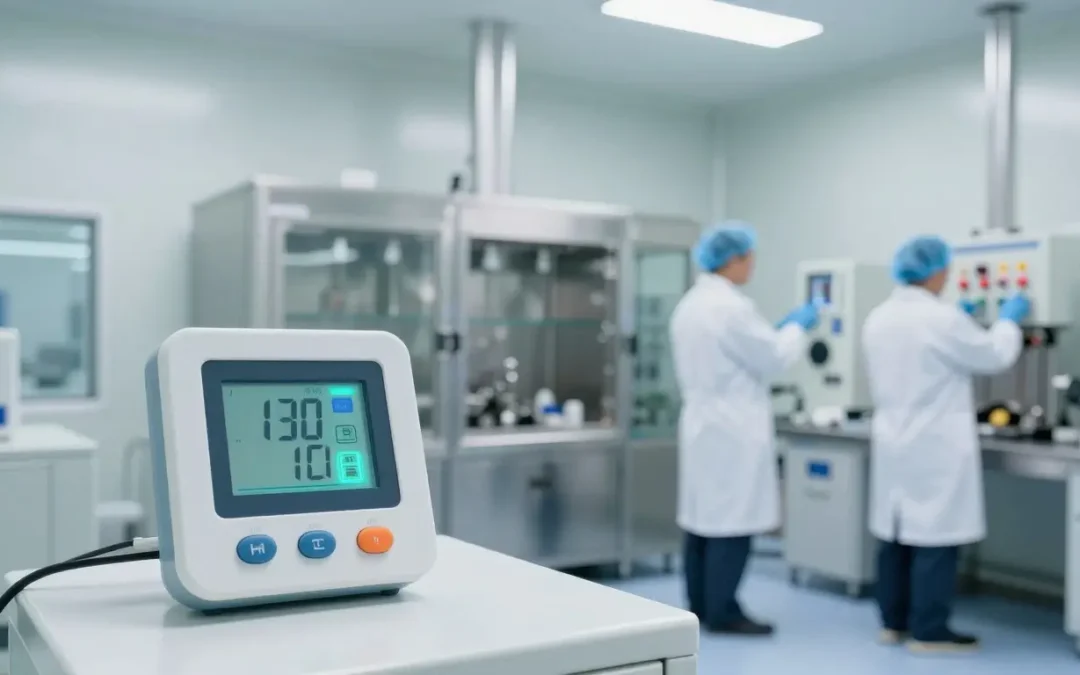
Healthcare facilities rely on stable indoor environmental conditions to support patient safety, infection prevention efforts, and consistent clinical performance. Humidity control helps maintain indoor balance, protects medical equipment, and supports healthcare environments that must operate within strict environmental standards.
Selecting the right hospital humidification system requires evaluating performance, hygiene standards, control precision, and long-term operational efficiency. The right solution helps hospitals maintain stable indoor moisture levels across patient rooms, treatment areas, laboratories, and other sensitive clinical environments.
Key Takeaways
- Proper humidity control helps reduce conditions that support airborne pathogen spread.
- Stable moisture levels can improve patient comfort in clinical environments.
- High-performance systems help support clean, controlled healthcare spaces.
- Automated controls and sensors improve consistency with less manual adjustment.
- Efficient system selection can reduce long-term operating and maintenance costs.
What Hospital Grade Humidifiers Are and Why Healthcare Facilities Require Them
Hospitals require controlled environmental conditions to support infection prevention programs and maintain reliable clinical operations. Humidification systems help maintain balanced indoor moisture levels that support stable healthcare environments.
Definition of Medical-Grade Humidification Systems
Medical humidification control systems are environmental control technologies designed to maintain stable humidity levels inside healthcare facilities. These systems are built using materials and components suited for environments where hygiene, reliability, and consistent performance are essential.
Healthcare facilities depend on humidification systems designed for durability and easy maintenance. These systems must operate continuously while supporting cleaning protocols required in clinical environments.
Medical-grade humidification systems commonly include the following characteristics:
- High-precision humidity control that maintains stable indoor moisture levels.
- Compatibility with hospital HVAC systems to support facility-wide environmental management.
- Materials resistant to microbial growth that support hygienic operation.
- Designs that allow routine cleaning and maintenance without disrupting system performance.
These features help hospitals maintain reliable environmental control across patient care and clinical support areas.
Why Precision Humidity Control Is Critical in Hospitals
Hospitals require precise environmental management because humidity levels influence patient comfort, equipment reliability, and indoor air behavior. Stable humidity conditions help maintain predictable environmental performance across sensitive healthcare areas.
Maintaining balanced indoor moisture levels supports consistent clinical operations and helps reduce environmental fluctuations that could affect patient care.
Humidity stability is particularly important across several hospital departments:
- Patient care areas, where environmental comfort supports recovery conditions.
- Operating rooms, where controlled environments support safe procedures.
- Laboratories and pharmacies, where humidity influences the stability of materials and samples.
When hospitals maintain stable humidity conditions, clinical spaces remain more predictable and supportive for both patient care and medical operations.
Types of Hospital Grade Humidifiers Used in Healthcare Facilities
Healthcare facilities use different humidification technologies depending on the size of the facility, environmental requirements, and HVAC infrastructure. Each system type provides different operational characteristics suited to specific hospital environments.
Steam, Ultrasonic, and Evaporative Humidification Technologies
Hospitals commonly rely on several humidification technologies to introduce controlled moisture into indoor air. Each technology uses a different method to increase humidity levels within healthcare environments.
The most widely used humidification approaches include the following technologies.
Steam Humidifiers
Steam humidifiers heat water to generate vapor that is distributed through ventilation systems. These systems are often used in environments where high humidity output and precise environmental control are required.
Steam humidification is commonly applied in:
- Operating rooms
- Intensive care units
- Clinical areas requiring strict environmental stability
Ultrasonic Humidifiers
Ultrasonic humidifiers use high-frequency vibration to create fine airborne moisture from water. Their quiet operation allows them to function in areas where noise reduction is important.
These systems are often used in:
- Patient rooms
- Isolation areas
- Laboratory environments
Evaporative Humidifiers
Evaporative humidifiers increase humidity by passing air through moisture-saturated media, allowing water to evaporate into the airflow. These systems often offer a simpler operational design compared to other technologies.
Evaporative systems are commonly used in:
- General hospital spaces
- Pharmacy storage areas
- Non-critical facility zones
Some hospital-grade systems use adiabatic humidification: a technology that introduces moisture through self-evaporating droplets rather than heat or vibration. Unlike steam systems, adiabatic humidification adds no heat load to the environment. Unlike ultrasonic systems, it introduces no particulates into the air.
Smart Fog’s adiabatic humidification system for hospitals is engineered to maintain precise, stable humidity without wetting surfaces, damaging sensitive equipment, or requiring frequent maintenance. This makes it an operationally practical option for facilities managing continuous environmental control requirements.
Central HVAC-Integrated vs Standalone Medical Humidifiers
Hospitals may install humidification systems either within the central HVAC infrastructure or as independent systems placed in specific areas. The choice depends on building design and environmental control requirements.
Both configurations support humidity control, but they operate differently within healthcare facilities.
Common system configurations include:
- Central HVAC-integrated humidifiers, which operate inside the hospital’s ventilation system and maintain consistent humidity across large areas of the facility.
- Standalone humidifiers, which function as independent units that can be placed in specific rooms or departments where localized humidity control is required.
Selecting the appropriate configuration helps hospitals maintain stable environmental conditions across different healthcare departments.
Infection Control and Hygiene Considerations in Hospital Humidification
Hospitals rely on strict environmental controls to support infection prevention and patient safety. Humidity management helps maintain stable indoor conditions that support hygienic clinical environments.
Balanced humidity levels help maintain predictable indoor air behavior across healthcare spaces. Proper humidification systems must operate in ways that avoid introducing contamination risks.
Preventing Microbial Growth and Contamination Risks
Hospital humidification systems must support hygienic operation and prevent conditions that allow microbial contamination. System design, maintenance procedures, and water quality management all influence how safely a humidification system performs in healthcare environments.
Healthcare facilities commonly implement several practices to reduce contamination and manage environmental risk within controlled clinical environments.
These practices may include the following measures:
- System designs that support routine cleaning, allowing maintenance teams to access components that require sanitation.
- Regular cleaning and disinfection schedules that prevent buildup of bacteria or mold inside system components.
- Use of treated or purified water sources that reduce the chance of introducing contaminants into the humidification process.
- Humidity systems designed to evaporate water efficiently, helping prevent standing water where microbes may grow.
When these practices are followed, hospitals can maintain humidity levels while supporting hygienic environmental control.
Compliance With Healthcare Safety and Sanitation Standards
Healthcare facilities must maintain environmental systems that align with strict safety and sanitation requirements. Humidification systems must operate within regulatory frameworks designed to protect patient safety.
Hospitals typically follow environmental control guidelines established by healthcare regulatory organizations.
Compliance practices often include the following actions:
- Following infection prevention guidelines issued by organizations such as the Centers for Disease Control and Prevention (CDC).
- Meeting environmental standards established for healthcare ventilation and climate control systems.
- Maintaining documented maintenance schedules for humidification equipment.
- Conducting routine inspections and performance verification to confirm proper system operation.
These procedures help ensure humidification systems support safe clinical environments while remaining compliant with healthcare regulations.
Department-Specific Humidifier Requirements in Hospitals
Different hospital departments operate under unique environmental requirements. Humidification systems must support the specific operational needs of each clinical area.
Hospitals often configure humidity control systems differently depending on the department and the sensitivity of the environment.
Operating Rooms, ICUs, Patient Rooms, and Isolation Areas
Critical care areas require tightly controlled environmental conditions to support infection prevention and patient safety. Humidity levels must remain stable to avoid environmental fluctuations that could affect sterile procedures or patient recovery environments.
Maintaining balanced humidity conditions helps reduce condensation risk and supports predictable indoor air behavior in these spaces.
Environmental control requirements in these areas often include the following considerations:
- Operating rooms, where precise humidity control supports sterile surgical conditions.
- Intensive care units (ICUs), where stable environmental conditions support critically ill patients.
- Patient rooms, where balanced humidity improves indoor comfort during recovery.
- Isolation areas, where controlled environments help reduce cross-contamination risks.
Humidity systems used in these departments must provide accurate and reliable environmental control.
Laboratories, Pharmacies, and Sterile Storage Areas
Laboratories and pharmaceutical areas require environmental stability to protect sensitive materials and equipment. Humidity fluctuations in these areas can influence product stability and laboratory processes.
Sterile storage areas also require controlled humidity conditions to protect medical supplies and maintain sterile environments.
Environmental requirements in these departments typically focus on the following needs:
- Laboratories, where humidity stability protects sensitive instruments and biological samples.
- Pharmacies, where controlled moisture levels help maintain medication stability.
- Sterile storage areas, where humidity control supports the preservation of medical supplies.
Reliable humidification systems help hospitals maintain stable environmental conditions across these specialized healthcare environments.
Key Buying Factors for Hospital Humidification Systems
Hospitals must evaluate humidification systems carefully because environmental control directly affects clinical safety and operational stability. The selected system must align with facility size, department requirements, and long-term operational performance.
Capacity, Coverage Area, and Humidity Output Requirements
Humidification capacity must match the physical size and air volume of the hospital space. Systems that are too small or oversized can create unstable humidity conditions.
Hospitals evaluate several environmental factors when determining system capacity. Proper planning helps ensure consistent humidity performance across patient care and clinical support areas.
Important capacity considerations include the following factors:
- Total square footage of the area, which determines the amount of air that must be humidified.
- Ceiling height and room volume, since larger air volumes require greater moisture output.
- Existing HVAC system capacity, which affects how the humidifier integrates with ventilation infrastructure.
- Target humidity levels, which vary depending on the department and clinical application.
Accuracy, Control Range, and System Responsiveness
Humidity control systems must maintain precise environmental conditions across sensitive healthcare areas. Accurate humidity management helps maintain stable indoor air conditions and supports reliable clinical environments.
Hospitals often require systems that respond quickly to environmental changes. Responsive systems help maintain ideal humidity levels even when occupancy or airflow conditions change.
Facilities typically evaluate the following system capabilities:
- Humidity control accuracy, which allows the system to maintain stable moisture levels.
- Control range flexibility, allowing the system to operate across different environmental requirements.
- Advanced sensors and automated controls, which adjust humidity levels in response to real-time changes.
- Integration with building management systems, enabling centralized monitoring and control.
Integration With Hospital HVAC and Environmental Control Systems
Hospital humidification systems must operate as part of the building’s overall environmental control infrastructure. Integration with HVAC systems helps maintain consistent indoor climate conditions across large healthcare facilities.
Compatibility With Building Management Systems
Hospitals rely on centralized monitoring platforms to manage environmental systems across large facilities. Humidification systems must integrate with these platforms to support efficient environmental management, as humidity control supports infection prevention and stable indoor environmental conditions.
Building management systems allow facility teams to monitor humidity conditions across multiple areas from a single interface. This centralized visibility helps hospitals respond quickly to environmental changes.
Integration with BMS supports several operational advantages:
- Centralized monitoring of humidity levels across hospital departments.
- Remote adjustment of environmental settings when humidity conditions change.
- Data tracking and environmental reporting that supports facility management decisions.
- Improved coordination between HVAC and humidification systems.
Sensors, Automation, and Real-Time Humidity Monitoring
Modern humidification systems rely on sensors and automated controls to maintain stable humidity levels. Continuous monitoring helps hospitals maintain precise environmental conditions across clinical areas.
Automated systems adjust humidity output based on real-time environmental readings. This capability helps maintain consistent indoor air conditions without constant manual adjustments.
Hospitals typically rely on the following monitoring capabilities:
- High-precision humidity sensors that detect small environmental changes.
- Automated humidity control systems that adjust output in response to sensor data.
- Real-time environmental monitoring that ensures humidity remains within required ranges.
- Integrated alerts and diagnostics that notify facility teams when conditions deviate from targets.
Energy Efficiency and Operational Costs of Hospital Humidifiers
Hospitals must consider both installation costs and long-term operating expenses when selecting humidification systems. Energy efficiency and maintenance requirements significantly influence the total cost of ownership.
Facilities often evaluate lifecycle costs rather than focusing only on the initial purchase price. Efficient systems can reduce operating costs while maintaining reliable humidity control as part of integrated environmental control strategies.
Long-Term Energy Consumption and Maintenance Costs
Humidification technologies differ in how much energy they consume during operation. Systems designed for efficiency can significantly reduce long-term operating expenses in large healthcare facilities.
Maintenance requirements also affect operational costs. Systems that are easier to service and clean can reduce downtime and maintenance labor.
Hospitals commonly evaluate the following cost factors:
- Energy consumption during continuous operation.
- Maintenance requirements for cleaning and servicing.
- Replacement schedules for system components.
- Design features that simplify routine maintenance.
Lifecycle Cost Compared With Initial Investment
Hospitals often compare the long-term lifecycle cost of humidification systems before making a purchase decision. Lifecycle cost includes installation, energy consumption, maintenance, and repair expenses.
Systems with higher upfront costs sometimes provide lower long-term operating expenses. Evaluating total lifecycle cost helps hospitals select systems that remain economical over many years of operation.
Lifecycle cost evaluations typically consider:
- Initial purchase and installation expenses
- Annual energy consumption costs
- Maintenance and servicing expenses
- Expected system lifespan and replacement cycles
Maintenance, Compliance, and Long-Term Reliability Considerations
Hospital humidification systems must operate reliably while meeting strict hygiene and safety requirements. Proper maintenance and regulatory compliance help ensure these systems maintain stable environmental conditions across healthcare facilities.
Cleaning Protocols, Servicing, and System Calibration
Routine maintenance keeps hospital humidification systems operating within safe environmental limits and reduces the chance of contamination inside system components. Cleaning schedules, servicing procedures, and calibration routines help maintain consistent humidity performance across clinical environments.
Hospitals typically establish structured maintenance programs that combine daily monitoring with scheduled servicing tasks. These programs help facility teams detect issues early and maintain reliable environmental control throughout the system’s lifespan.
Maintenance programs often include the following procedures:
- Daily visual inspections and basic cleaning to confirm system components remain free from visible buildup.
- Scheduled servicing by trained technicians who understand the design and operation of humidification equipment.
- Routine calibration of humidity sensors and control systems to maintain accurate environmental readings.
- Periodic deep cleaning of internal components to prevent microbial accumulation inside the system.
Regulatory Compliance and Healthcare Environmental Guidelines
Hospitals must operate environmental systems in accordance with healthcare safety standards and infection prevention frameworks. Choosing hospital grade humidifier systems is a critical part of this process, ensuring humidification solutions align with clinical safety requirements and support safe healthcare environments.
Compliance involves both system design and ongoing operational oversight across the facility. Hospitals must verify that humidification equipment continues meeting regulatory expectations throughout its operational life.
Healthcare facilities commonly maintain compliance through the following practices:
- Following infection prevention guidance issued by organizations such as the Centers for Disease Control and Prevention (CDC).
- Meeting environmental standards for healthcare ventilation and climate control systems established by professional engineering bodies.
- Conducting routine inspections and performance verification to confirm system integrity.
- Maintaining documented maintenance records that demonstrate continued regulatory compliance.
Final Thoughts on Choosing Hospital Grade Humidifiers
table humidity is a baseline operational requirement for hospitals, not an optional comfort feature. Patient care areas, laboratories, and clinical support environments all depend on consistent environmental conditions to function reliably.
When evaluating humidification systems, facilities should weigh capacity, control precision, HVAC compatibility, and maintenance demands. Smart Fog addresses each of these factors as a non-wetting precision humidification system, using self-evaporating droplets to maintain stable, uniform humidity without wetting surfaces or damaging sensitive medical equipment.
The right system protects both the environment and the equipment within it, reliably and long term.
FAQs
What humidity level should hospitals maintain?
Hospitals typically maintain 40–60% relative humidity to support stable indoor environmental conditions. Balanced humidity levels also help maintain patient comfort and protect sensitive medical equipment.
Why is humidity control important in hospitals?
Humidity control helps maintain stable indoor air conditions across clinical environments. Balanced humidity supports infection prevention practices and environmental stability in healthcare facilities.
What humidification systems are used in hospitals?
Hospitals may use steam, evaporative, ultrasonic, or adiabatic humidification systems depending on the facility design and environmental requirements. The system choice usually depends on the size of the facility and the level of humidity control required.
Can humidity affect medical equipment?
Yes, humidity levels can influence the performance and reliability of sensitive medical equipment. Extremely dry or humid conditions may affect environmental stability in laboratories, pharmacies, and clinical areas.
How does Smart Fog work in hospital humidification systems?
Smart Fog is a non-wetting precision humidification system that uses self-evaporating droplets to deliver stable, uniform humidity control. It supports facilities to maintain humidity levels without wetting surfaces or equipment.