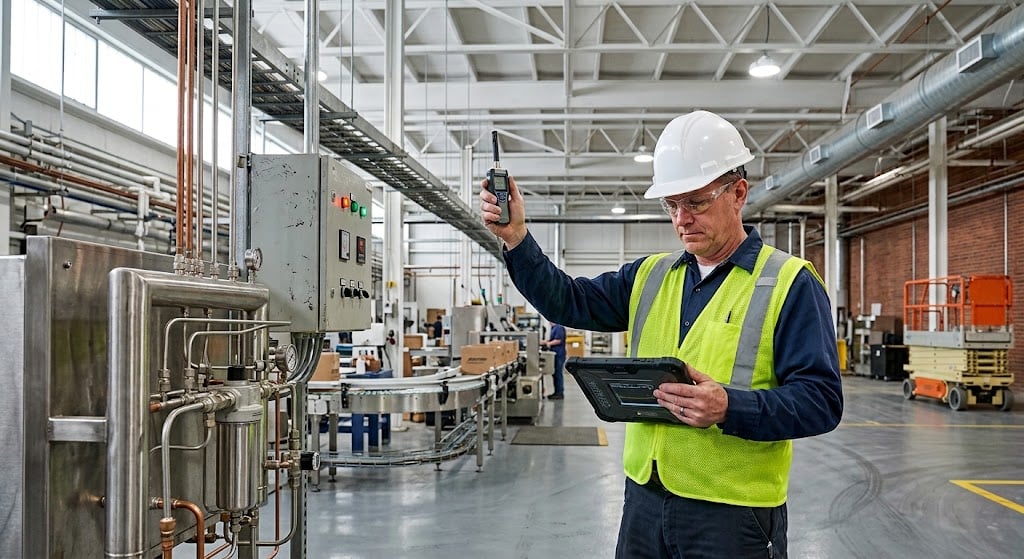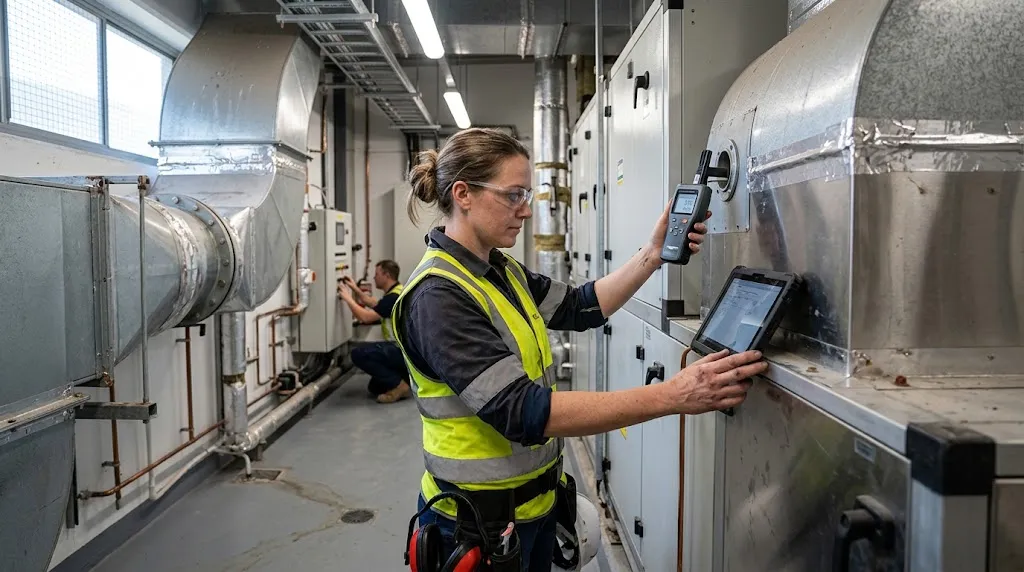


Automatic fogging systems use sensors, controllers, and automated valves to maintain precise humidity levels without manual intervention. These systems integrate humidity sensors with programmable controllers to continuously monitor ambient conditions and adjust fog output based on real-time environmental data. Unlike timer-based or manual systems, automated fogging provides closed-loop feedback control that can maintain humidity within plus or minus 1-2% precision.
Industrial facilities rely on automatic fogging systems for critical applications where humidity fluctuations can affect product quality, equipment performance, or regulatory compliance. Manufacturing plants, data centers, and pharmaceutical facilities use these systems to ensure continuous environmental control without requiring constant operator attention. The automation components work together to eliminate human error while providing 24/7 humidity management in demanding industrial environments.
Key Takeaways:
- Automatic fogging systems integrate humidity sensors, programmable controllers, and automated valves to maintain target relative humidity levels without manual operation.
- Industrial systems connect to building management systems and PLCs for facility-wide environmental control and data logging.
- Sensor-driven control loops can maintain humidity within plus or minus 1-2% precision by modulating fog output based on real-time conditions.
- Automated systems eliminate human error in humidity management and provide 24/7 continuous operation in critical environments.
- Advanced systems include remote monitoring capabilities, alarm notifications, and predictive maintenance alerts through connected sensors.
- Integration with existing HVAC controls allows coordinated temperature and humidity management across large facilities.
How Automatic Fogging Systems Work: Core Components and Control Logic
Automatic fogging systems operate through closed-loop feedback control that continuously compares actual humidity levels to predetermined setpoints. Humidity sensors measure ambient relative humidity and transmit readings to a central controller, which processes this data and determines the required fog output adjustment. When humidity drops below the setpoint, the controller activates automated valves or pumps to increase fog production until the target level is restored.
This control approach differs significantly from timer-based systems that operate on fixed schedules regardless of environmental conditions. True automation requires sensor feedback to respond to changing conditions in real time. The control loop includes response time considerations, where faster systems can react to humidity changes within seconds, while control lag refers to the delay between sensor detection and system response.
Sensor Input and Measurement
Humidity sensors provide the foundational data for automated control decisions. Industrial-grade sensors measure relative humidity with accuracy typically within plus or minus 2-3%, though precision applications may require sensors with plus or minus 1% accuracy or better. These sensors continuously transmit readings to the control system, enabling real-time adjustments based on actual conditions rather than assumptions.
Control Logic and Decision Making
Controllers process sensor data using programmed algorithms that determine when and how much fog output to provide. The control logic includes deadband settings to prevent excessive cycling, where the system only activates when humidity drops a specified amount below the setpoint. More sophisticated controllers use proportional control algorithms that gradually adjust fog output rather than simple on/off operation.
Types of Control Systems Used in Industrial Fogging Applications
Industrial automatic fogging systems use three primary control approaches, each offering different levels of sophistication and integration capability. The choice depends on facility size, precision requirements, and existing infrastructure. Each control type provides different trade-offs between installation complexity, operational precision, and total system cost.
Control precision varies significantly across system types:
- Standalone controllers: Maintain humidity within plus or minus 3-5% using basic proportional control
- PLC integration systems: Achieve plus or minus 1-2% precision through advanced control algorithms and faster response times
- Building management system integration: Enable coordinated environmental control with precision matching facility-wide HVAC systems
Installation complexity and infrastructure requirements:
- Standalone controllers: Require minimal wiring and can operate independently of existing building systems
- PLC integration systems: Need connection to existing industrial control networks and programming expertise
- Building management system integration: Require extensive system integration and coordination with facility engineering teams
Standalone Humidity Controllers
Dedicated humidity controllers operate independently to manage single-zone applications without requiring connection to larger building systems. These units include built-in sensors, control algorithms, and output relays that directly activate fog generation equipment. They work well for smaller facilities or isolated areas where centralized control is not necessary.
PLC Integration Systems
Programmable logic controllers enable automatic fogging systems to integrate with existing industrial control networks. PLCs provide more sophisticated control algorithms, data logging capabilities, and coordination with other facility systems. This approach suits manufacturing environments where humidity control must coordinate with production schedules and equipment operation.
Building Management System Integration
Facility-wide environmental control platforms allow automatic fogging systems to coordinate with HVAC, lighting, and security systems. This integration enables energy optimization strategies where humidity and temperature control work together to maintain optimal conditions while minimizing energy consumption. Large commercial and industrial facilities benefit from this comprehensive approach.
Sensor Integration and Environmental Monitoring in Automated Systems
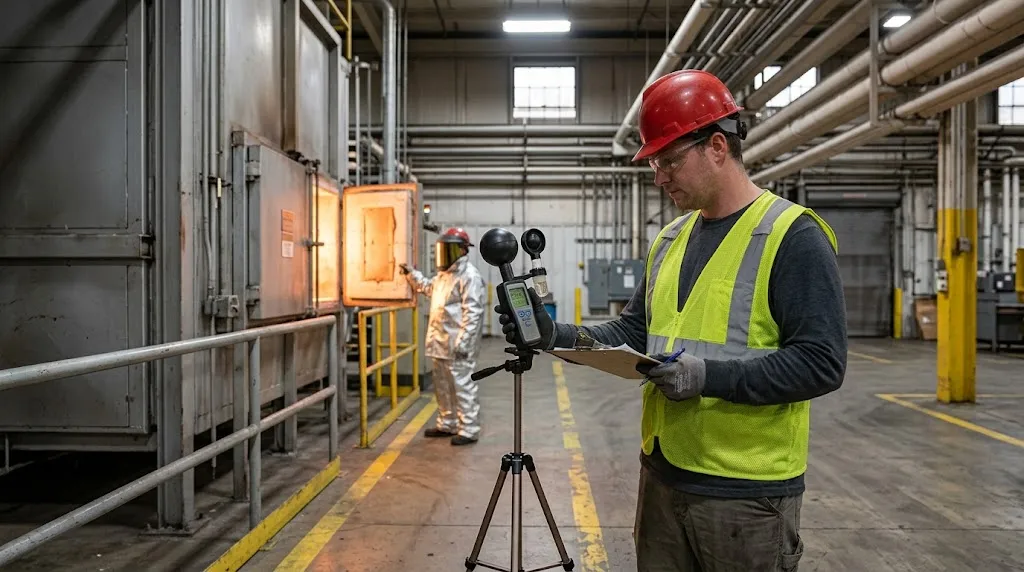
Sensor placement and accuracy determine how effectively an automatic fogging system can maintain target humidity levels. Industrial applications require sensors that withstand harsh environments while providing consistent readings across temperature ranges and contamination exposure. Multiple sensor configurations enable zone-based control where different areas maintain specific humidity requirements.
Sensor accuracy requirements vary by application, with general industrial use accepting plus or minus 3% accuracy while pharmaceutical and electronics manufacturing may require plus or minus 1% or better. Calibration schedules typically range from quarterly to annually depending on environmental conditions and accuracy requirements. Humidity control systems often incorporate redundant sensors to ensure continued operation if individual sensors fail.
Humidity Sensor Types and Accuracy Requirements
Capacitive humidity sensors dominate industrial applications due to their stability and resistance to condensation. These sensors measure changes in electrical capacitance caused by moisture absorption in a polymer film. Resistive sensors offer lower cost but may drift over time in harsh environments. Thermal conductivity sensors provide high accuracy in clean environments but require protection from dust and contamination.
Multi-Zone Monitoring and Control Strategies
Multiple sensors enable area-specific humidity management where different zones maintain distinct environmental conditions. Manufacturing facilities often require varying humidity levels for different production processes, with sensors in each zone providing independent control. This approach prevents over-humidification in areas where high humidity could cause problems while ensuring adequate moisture where needed.
Advanced Automation Features: Remote Monitoring and Predictive Maintenance
Modern automatic fogging systems include connectivity features that enable facility managers to monitor system performance from remote locations. These systems can send alerts when humidity levels exceed programmed ranges or when equipment requires maintenance. Data logging capabilities provide documentation for regulatory compliance and help identify trends that may indicate developing problems.
Predictive maintenance features analyze system performance data to identify components that may fail before actual breakdown occurs. This capability reduces unplanned downtime and helps facilities schedule maintenance during planned shutdowns rather than emergency repairs.
Remote Monitoring and Alert Systems
Connected automatic fogging systems provide real-time status information through web interfaces or mobile applications. Operators receive immediate notification when humidity levels exceed acceptable ranges or when equipment malfunctions occur. These alerts enable rapid response to prevent conditions that could affect product quality or regulatory compliance.
Data Logging and Compliance Documentation
Automated record-keeping eliminates manual data collection while providing the documentation required for industries like pharmaceuticals and food processing. Systems can log humidity levels, system runtime, and maintenance activities to demonstrate compliance with regulatory requirements. This data also supports facility optimization by identifying patterns in humidity demand and system performance.
Smart Fog Automated Industrial Humidification Systems
Compressed air and water combine through a proprietary nozzle to produce an equal-sized droplet grid that enables precise automated humidity control up to 99% RH with plus or minus 1-2% precision. This technology responds rapidly to sensor inputs without the thermal lag associated with steam systems or the surface wetting risks of traditional misting. The self-evaporating droplets eliminate condensation concerns that can interfere with sensitive automation equipment.
The system design includes no moving parts in the humidification process, reducing maintenance requirements while enabling 24/7 set-and-forget continuous operation. Industrial humidifier systems integrate with existing facility control systems through standard industrial protocols.
Precision Automated Control Technology
Smart Fog systems maintain stable humidity levels through rapid response to sensor inputs, with control precision that supports demanding applications in electronics manufacturing and pharmaceutical production. The equal-sized droplet grid ensures consistent performance across varying load conditions without the performance degradation common in systems with moving components.
Industrial Integration and Continuous Operation
Complete system design includes controllers, sensors, and distribution networks engineered for facility-wide automated environmental control. Data center humidification systems and commercial humidification systems demonstrate the technology’s capability in critical environments where automated precision is essential.
Final Thoughts
Automatic fogging systems provide the precision and reliability required for industrial humidity control without constant operator intervention. These systems combine sensors, controllers, and automated valves to maintain target humidity levels while eliminating the human error and inconsistency associated with manual systems. The choice between standalone controllers, PLC integration, and building management system connectivity depends on facility requirements and existing infrastructure.
For facilities evaluating automated humidity control solutions, system precision, integration capability, and maintenance demands represent the primary selection criteria. Get a specification review to determine the most appropriate automation approach for your industrial facility’s humidity control requirements.
Frequently Asked Questions
What are the main components of an automatic fogging system?
Automatic fogging systems include humidity sensors that measure ambient conditions, programmable controllers that process sensor data, and automated valves or pumps that adjust fog output. Additional components include power supplies, control panels, and communication interfaces for system monitoring and integration.
How do humidity sensors control fog output in industrial applications?
Humidity sensors continuously measure relative humidity and transmit readings to a controller that compares actual levels to programmed setpoints. When humidity drops below the target, the controller activates fog generation equipment until sensor readings indicate the setpoint has been reached, creating a closed-loop feedback control system.
What is the difference between timer-based and sensor-controlled fogging systems?
Timer-based systems operate on fixed schedules regardless of actual humidity conditions, while sensor-controlled systems respond to real-time environmental data. Sensor-controlled systems provide more precise humidity control and energy efficiency by only operating when humidity levels require adjustment.
Can automatic fogging systems integrate with existing building management systems?
Modern automatic fogging systems can integrate with building management systems through standard communication protocols like Modbus or BACnet. This integration enables coordinated control with HVAC systems and provides centralized monitoring of humidity levels across multiple zones or buildings.
How precise can automated humidity control be with fogging systems?
Advanced automatic fogging systems can maintain humidity within plus or minus 1-2% of setpoint under proper system design. Precision depends on sensor accuracy, controller sophistication, and system response time, with industrial systems typically achieving higher precision than residential or basic commercial units.
What maintenance do automatic fogging control systems require?
Control system maintenance typically includes annual sensor calibration, periodic cleaning of sensor housings, and software updates for controllers. The frequency depends on environmental conditions and accuracy requirements, with some industrial applications requiring quarterly calibration while others operate reliably with annual service.