

Indoor air conditions influence how particles, droplets, and microorganisms behave inside buildings. When humidity levels drop too low, respiratory droplets can evaporate quickly and form smaller aerosol particles that remain suspended in the air for longer periods.
These suspended particles may carry respiratory viruses such as influenza, allowing them to circulate more easily within indoor spaces. Maintaining balanced humidity levels with a properly controlled humidifier helps stabilize indoor air conditions and limit how long contaminants remain airborne.
Key Takeaways
- Low humidity allows microorganisms and particles to travel farther indoors.
- Balanced humidity supports the body’s natural respiratory defenses.
- Extremely dry air may contribute to seasonal respiratory illness transmission.
- Stable indoor moisture helps maintain healthier workplace environments.
- Monitoring humidity levels helps detect hidden environmental risks.
- Consistent environmental control helps reduce airborne contaminant circulation.
The Relationship Between Low Humidity and Contamination Risk in Controlled Environments
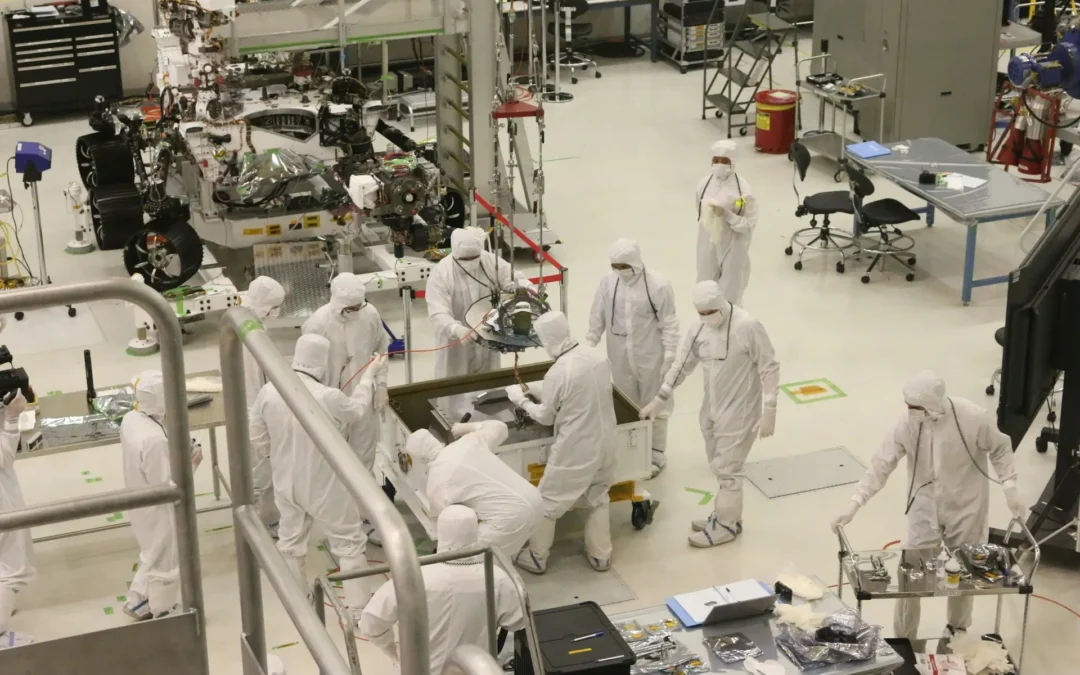
Low humidity can significantly influence contamination risk in controlled environments such as cleanrooms and laboratories. These facilities depend on stable environmental conditions to protect sensitive equipment, materials, and processes.
How Dry Air Alters Particle Behavior and Airborne Stability
Humidity plays a key role in how airborne particles behave inside controlled environments, which is why cleanroom humidity control is essential for maintaining stable environmental conditions. When humidity levels drop, particles are less likely to combine with moisture and settle out of the air.
Dry conditions allow particles to remain suspended for longer periods and circulate through indoor airflows. This prolonged suspension increases the likelihood that contaminants will reach sensitive equipment, surfaces, or production processes.
Several changes in particle behavior commonly occur when indoor air becomes too dry.
- Increased particle suspension: Dry air allows particles to stay airborne longer instead of settling quickly.
- Reduced particle aggregation: Without sufficient moisture, particles are less likely to cluster together and fall out of the air.
- Greater contaminant mobility: Airborne particles can travel farther through ventilation systems and indoor air currents.
Role of Relative Humidity in Contamination Control
Relative humidity plays an important role in maintaining stable environmental conditions in controlled environments. Maintaining balanced humidity levels helps regulate airborne particle behavior and reduces contamination risks.
Extremely dry air increases particle suspension and electrostatic charge buildup, while excessive humidity can create moisture-related problems. Maintaining humidity within recommended ranges helps support stable air conditions and contamination control.
Different humidity ranges can influence contamination risk in controlled environments.
- Low relative humidity (below 30%): Particle suspension increases and electrostatic charge buildup becomes more likely.
- Moderate relative humidity (40–60%): This range supports stable environmental conditions and helps reduce airborne particle circulation.
- High relative humidity (above 70%): Excess moisture can lead to condensation and microbial growth.
How Dry Air Increases Airborne Particle Suspension
Dry indoor air changes how airborne particles behave and move within indoor environments. When humidity levels fall, particles remain lighter and can stay suspended in the air for longer periods.
Reduced Moisture and Increased Particle Mobility in Indoor Air
Moisture in the air normally helps particles combine with water molecules and settle out of circulation. When humidity drops, this effect weakens and particles remain airborne for longer periods.
This increased mobility allows particles to travel farther through indoor airflows and ventilation systems. As a result, contaminants can circulate more easily within controlled environments and indoor spaces.
Impact on Dust, Micro-Particles, and Contaminant Circulation
Dry air also influences how dust and micro-particles move through indoor environments. Smaller particles remain suspended longer and are more easily carried through airflow patterns.
These particles can eventually settle on equipment, surfaces, or materials used in sensitive environments. Maintaining stable humidity levels helps reduce particle suspension and supports more consistent indoor air conditions.
Electrostatic Charge Buildup in Low Humidity Environments
Low humidity does more than influence particle movement; it also affects how electrical charges behave in indoor environments. Dry air contains less moisture to dissipate static electricity, allowing electrostatic charges to accumulate more easily.
Static Electricity and Electrostatic Discharge Risks
Static electricity forms when electrons transfer between surfaces that come into contact or move across one another. When humidity levels are low, the air acts as an insulator, allowing electrical charges to remain on surfaces instead of dissipating, which can lead to static electric problems in controlled environments.
In environments where sensitive electronic components are handled, electrostatic discharge can damage circuits or equipment. Even a small discharge event may affect product quality or cause equipment malfunction.
Different humidity ranges influence the likelihood of electrostatic discharge.
- Very dry environments (below 20% relative humidity): Static charge buildup occurs easily and electrostatic discharge risks are high.
- Dry environments (20–40% relative humidity): Static electricity may still accumulate and moderate discharge risks remain.
- Moderate humidity environments (40–60% relative humidity): Moisture in the air helps dissipate static charges and reduces electrostatic risks.
Attraction of Particles to Sensitive Surfaces and Equipment
Electrostatic charges can also influence how particles interact with surfaces inside controlled environments. Charged surfaces create small electric fields that attract dust and other airborne particles.
This attraction increases the likelihood that particles will settle on equipment, instruments, or materials. Maintaining balanced humidity levels helps reduce electrostatic charge buildup, demonstrating why humidity control is critical for supporting cleaner indoor environments.
Surface Contamination Risks in Dry Environments
Dry indoor conditions can increase the likelihood that airborne particles settle on surfaces and equipment. When humidity levels drop too low, particles remain suspended longer and eventually deposit onto materials, tools, or sensitive components.
Increased Deposition of Contaminants on Equipment and Materials
Dry air allows airborne particles to circulate longer through indoor environments before settling. As these particles move through airflow patterns and ventilation systems, the chances of them landing on equipment or materials increase.
This process becomes more noticeable in environments where fine particles, dust, or microbial contaminants are present. Without sufficient moisture in the air, particles do not combine with water molecules or settle quickly, allowing them to travel farther and deposit more easily on sensitive surfaces.
The level of surface contamination risk often varies depending on humidity conditions in the environment.
- Dry environments (below 30% relative humidity): Particle suspension remains high, increasing the likelihood of contaminants settling on equipment and surfaces.
- Moderate environments (30–60% relative humidity): Balanced humidity helps stabilize airborne particles and reduces excessive surface deposition.
- Humid environments (above 60% relative humidity): Particle suspension decreases, although excessive moisture may introduce other environmental concerns.
Cleaning Challenges and Re-Contamination in Low Humidity Conditions
Low humidity introduces several cleaning and contamination challenges that directly affect surface control and maintenance cycles. These issues often increase cleaning frequency while reducing effectiveness over time.
Here’s a clear breakdown of the key challenges:
- Dry air promotes electrostatic charge buildup on surfaces, attracting dust and fine particles.
- Charged surfaces become harder to keep clean even after routine cleaning procedures.
- Airborne particles resettle quickly in low humidity conditions, leading to rapid re-contamination.
- Repeated particle deposition increases contamination risk in controlled environments.
- Cleaning cycles need to be performed more frequently to maintain required cleanliness levels.
- Lack of humidity balance reduces cleaning efficiency and long-term surface stability.
Contamination Risks in Controlled Environments
Controlled environments depend on stable air conditions to maintain cleanliness and protect sensitive processes. Facilities such as hospitals, cleanrooms, and research laboratories rely on strict environmental control to limit contamination.
Cleanrooms, Hospitals, and Laboratory Facilities
Cleanrooms are specifically designed to minimize the introduction and circulation of airborne particles. Hospitals and laboratory facilities follow similar environmental controls to protect patient safety and ensure accurate scientific or medical results.
Maintaining cleanliness in these environments requires careful control of air filtration, surface sanitation, and personnel procedures. Each of these factors helps reduce the risk that contaminants enter or spread within controlled spaces.
Several operational practices help maintain contamination control in these facilities.
- Air filtration and circulation: High-efficiency filtration systems remove airborne particles and maintain consistent airflow patterns.
- Surface cleanliness protocols: Routine cleaning and disinfection prevent the accumulation of dust, microbes, and other contaminants.
- Personnel procedures and training: Proper gowning, handling practices, and operational protocols reduce the introduction of particles from human activity.
Environmental Stability Requirements in High-Sensitivity Operations
High-sensitivity operations require consistent environmental conditions to ensure reliable performance and product quality. Maintaining stable temperature, humidity, and air quality helps reduce environmental variability that could interfere with processes.
Environmental instability can affect both equipment performance and material behavior. Small changes in temperature or humidity may influence how components interact, how coatings cure, or how sensitive instruments operate.
Stable environmental conditions support several critical operational outcomes.
- Reliable equipment performance: Consistent environmental conditions help prevent malfunction or calibration drift in sensitive equipment.
- Reduced contamination risks: Stable humidity and air conditions help limit particle suspension and surface contamination.
- Process accuracy and repeatability: Maintaining controlled environments helps ensure consistent results in manufacturing, research, and medical operations.
Impact of Low Humidity on Filtration and Air Quality Systems
Humidity levels influence how effectively air filtration and ventilation systems remove airborne contaminants. When indoor air becomes too dry, particles remain suspended longer and may circulate more widely through airflow patterns.
Interaction Between Humidity, Airflow, and Ventilation Systems
Humidity affects how airborne particles move through ventilation systems and indoor air currents, which makes maintaining the correct humidity requirement important for effective contaminant control. When moisture levels are low, particles remain lighter and disperse more easily through airflow.
This increased mobility can influence how effectively ventilation systems capture and remove contaminants. Airflow patterns may carry particles farther through indoor environments, which can make filtration and contaminant control more difficult.
Several factors influence how humidity interacts with airflow and ventilation performance.
- Ventilation system design: System layout and airflow distribution influence how particles move and how effectively contaminants are removed.
- Filter type and particle capture capability: Different filtration technologies capture particles of varying sizes and concentrations.
- Air change rate within the space: The frequency at which indoor air is replaced affects how quickly airborne contaminants are removed.
Effects on Filtration Efficiency and Particle Control
Dry indoor air can influence how filtration systems interact with airborne particles. When humidity levels drop, particles remain smaller and more mobile, which may affect how efficiently they are captured.
This behavior can allow fine particles to travel farther before reaching filtration systems. As particle suspension increases, maintaining stable air quality becomes more dependent on effective ventilation and filtration design.
Low humidity may also influence filtration performance in several ways.
- Increased particle penetration through filters: Smaller suspended particles may pass through filtration systems more easily.
- Static charge buildup in dry air: Electrostatic effects may influence how particles interact with filters and surfaces.
- Reduced overall particle control: Extended particle suspension can affect indoor air quality stability.
Recommended Humidity Levels to Reduce Contamination Risk
Maintaining balanced humidity is important for managing airborne particles and reducing contamination risk in controlled environments. Stable humidity conditions support consistent air quality and help limit excessive particle suspension.
Relative Humidity Ranges for Controlled Environments
Different controlled environments require specific humidity ranges depending on their operational requirements. Facilities such as cleanrooms, laboratories, and hospitals maintain carefully controlled humidity to support safety, stability, and process reliability.
Recommended humidity levels often fall within a moderate range that helps balance particle control and moisture management. This range supports both contamination prevention and operational stability in controlled environments.
Typical humidity guidelines for controlled spaces include the following ranges.
- Cleanrooms (ISO Class environments): Relative humidity commonly maintained around 30–50% to support precision manufacturing and pharmaceutical production.
- Laboratory environments: Relative humidity often maintained around 40–60% to protect experiments, instruments, and stored samples.
- Hospital patient and treatment areas: Relative humidity typically maintained around 30–60% to support infection control and patient comfort.
Balancing Humidity for Cleanliness, Safety, and Compliance
Maintaining balanced humidity helps facilities protect equipment, materials, and occupants from environmental risks. Both excessively dry air and excessive moisture can create operational challenges in controlled environments.
Low humidity can increase particle suspension and electrostatic charge buildup, while high humidity may introduce condensation or microbial growth risks. Stable humidity control helps maintain consistent air conditions and supports regulatory compliance in sensitive facilities.
Facilities typically manage humidity through environmental monitoring, ventilation management, and controlled humidification systems. Continuous monitoring allows operators to maintain stable environmental conditions and respond quickly when humidity levels change.
Environmental Practices to Reduce Dry Air Contamination Risks
Reducing contamination risks in dry indoor environments requires stable environmental management and controlled humidity levels. When air becomes too dry, particles and biological aerosol droplets can remain suspended longer and circulate more widely through indoor airflow.
Stable Environmental Conditions in Controlled Spaces
Controlled environments such as cleanrooms, laboratories, and healthcare facilities rely on carefully regulated environmental conditions, often supported by a humidification system. Stable humidity and temperature help reduce airborne particle movement and maintain reliable operational conditions.
Environmental stability also supports human respiratory health. Extremely dry air may contribute to dehydration of the mucous membranes that protect the airway, which can increase susceptibility to respiratory infections such as influenza or coronavirus.
Several operational strategies help maintain stable environmental conditions.
- Precise temperature and humidity control: Maintaining balanced environmental conditions helps limit airborne particle suspension and contamination risks.
- Routine HVAC inspection and maintenance: Regular system maintenance ensures ventilation systems operate efficiently and maintain consistent airflow.
- Controlled humidification systems: Environmental humidification or a monitored humidifier helps maintain appropriate indoor moisture levels.
Continuous Monitoring and Preventive Management
Environmental monitoring plays a key role in maintaining contamination control in sensitive environments. Continuous measurement of humidity, temperature, and air quality allows facilities to identify changes before they affect operations.
Monitoring programs help ensure that environmental conditions remain within recommended ranges. Stable monitoring also supports regulatory compliance and long-term operational reliability.
Key environmental parameters commonly monitored include the following.
- Relative humidity: Maintaining levels around 40–60% helps stabilize airborne particle behavior and reduce contamination risk.
- Temperature stability: Controlled temperature ranges help maintain consistent environmental performance.
- Air quality and filtration performance: Regular verification of filtration systems helps ensure airborne contaminants are effectively removed.
Final Thoughts on Dry Air and Contamination Risk
Dry indoor air directly affects how airborne particles behave in controlled environments. When humidity drops too low, particles stay suspended longer and settle on equipment, materials, and sensitive surfaces, raising contamination risk in facilities that depend on stable environmental control.
Balanced humidity helps stabilize particle behavior and maintain consistent indoor conditions. For cleanrooms, where environmental precision matters, Smart Fog offers a non-wetting humidification system that uses self-evaporating droplets to deliver uniform humidity control without wetting surfaces or equipment.
FAQs
How do low humidity levels affect the stability of airborne viruses such as COVID-19?
Lower relative humidity can increase the environmental stability of certain viruses by allowing droplets to evaporate rapidly and concentrate viral particles. Research shows that maintaining indoor humidity between 40–60% RH can reduce virus viability and lower the potential risk of transmission.
What is the relationship between dry air and the suspension of dust and micro-particles?
Dry air reduces the moisture that normally helps bind airborne particles, allowing dust and contaminants to remain suspended for longer periods. As a result, indoor air may contain higher concentrations of micro-particles that circulate through ventilation systems and affect respiratory health.
Can low humidity lead to electrostatic discharge risks in controlled environments?
Yes, dry air increases the likelihood of electrostatic charge accumulation because the air becomes less conductive. This buildup can lead to electrostatic discharge (ESD), which may damage sensitive electronic equipment and attract airborne particles to surfaces.
Why is surface contamination harder to manage during dry winter months?
During winter, heated indoor air often contains very little moisture, creating extremely dry environmental conditions. These conditions allow particles and contaminants to settle more easily onto surfaces and may also reduce the effectiveness of routine cleaning processes.
How does moisture in the air influence filtration and airflow systems?
Air moisture levels influence the behavior and physical properties of airborne particles moving through ventilation systems. Maintaining balanced relative humidity helps filtration systems capture contaminants more effectively and improves overall indoor air quality management.