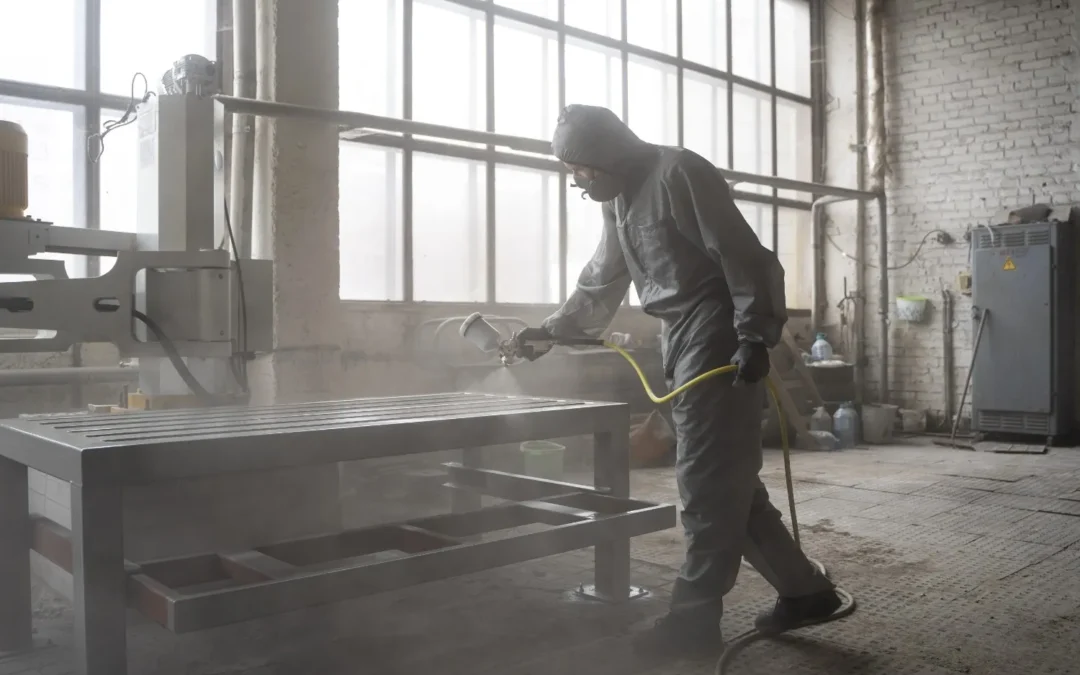


Industrial paint booths rely on controlled conditions to produce clean, even finishes. Static electricity interferes with this process by pulling paint particles off-course, which leads to overspray, uneven coverage, and surface defects.
Instead of settling smoothly, charged paint can cling unpredictably to surfaces. Controlling static electricity is essential for consistent results.
Proper grounding and humidity control help reduce static buildup inside paint booths, especially in dry conditions where static forms more easily. Managing these factors keeps paint transfer stable and improves finish quality.
Key Takeaways
- Static electricity causes overspray and uneven paint application.
- Dry air increases static buildup in paint booths.
- Grounding and humidity control reduce finish defects.
- Managing static improves consistency and surface quality.
What Static Electricity Means in Paint Booths
Static electricity plays a direct role in how paint behaves inside a booth. It occurs when electrical charges build up on surfaces, often during spray painting, as air, paint particles, and materials move rapidly through the space.
In paint booths, static is commonly created when surfaces come into contact and then separate, allowing electrons to transfer and form a charge. High spray velocity, airflow, and material movement can increase this buildup, making static a consistent factor that affects paint control and finish quality.
How Static Charge Builds Up During Spray Painting
Static charge builds up during spray painting as paint particles move through the air and make contact with equipment and the surface being coated. The friction created during spraying, along with the moment paint hits and spreads across a surface, allows electrical charges to form and collect.
Several factors affect how much static develops. Spray speed, paint formulation, and humidity levels inside the paint booth all play a role. Certain solvents or additives can make paint more prone to holding a charge, while dry air and high spray velocity increase the chance of static buildup.
Common Sources of Static in Industrial Paint Booths
Static electricity develops naturally during normal paint booth operations. Movement, friction, and dry conditions all contribute to charge buildup that affects spray control and finish quality.
The most common sources of static include:
- Spray guns and atomization High spray velocity creates friction between paint particles and air.
- Air movement and ventilation systems Fast-moving air through ducts, hoses, and filters generates static.
- Paint formulation Certain solvents and additives retain electrical charges more easily.
- Surface contact Paint particles transferring onto metal or composite surfaces create charge buildup.
- Dry booth conditions Low humidity increases static formation.
- Poor grounding Ungrounded equipment allows static charges to accumulate instead of dissipate.
How Static Electricity Creates Overspray
In paint booths, static electricity can lead to noticeable overspray and reduced painting efficiency. This happens when electrical charges interfere with how paint particles move and settle during spraying.
Electrostatic Repulsion and Paint Particle Deflection
When static electricity builds up, it can push paint particles away from the surface instead of letting them settle smoothly. As a result, much of the paint misses the intended area, creating overspray and uneven coverage.
This deflection does more than hurt finish quality. Paint that bounces off or drifts away wastes material, reduces transfer efficiency, and often forces operators to apply extra coats to achieve the desired result.
Loss of Transfer Efficiency and Increased Material Waste
Static electricity reduces transfer efficiency by pulling paint particles away from the target surface. This causes more overspray and increases the amount of paint required to achieve proper coverage.
Key impacts include:
- Lower transfer efficiency: More paint misses the intended surface
- Increased material waste: Overspray leads to higher paint consumption
- Higher operating costs: Additional paint, cleanup, and booth maintenance
- Increased rework: Uneven coverage often requires extra coats
Controlling static electricity helps limit overspray, reduce material waste, and improve overall paint booth efficiency.
Static-Driven Surface Finish Defects
Static-driven finish defects can seriously affect how painted surfaces look and perform. In industrial paint booths, static electricity disrupts paint flow and adhesion, leading to visible flaws that reduce both appearance and long-term durability.
Static affects the painting process in several ways, often showing up as surface defects that are difficult to correct later. These issues directly impact finish consistency and product quality.
Uneven Coating Thickness and Patchy Coverage
One of the most common problems caused by static electricity is uneven coating thickness. Static charges push paint particles off course, causing some areas to receive too much paint while others are left thin or exposed. This results in patchy coverage across the surface.
Beyond appearance, uneven coatings can weaken protection. In industries like automotive and aerospace, thin or inconsistent paint layers can leave metal exposed to moisture, chemicals, or corrosion, reducing the lifespan of the part.
Rough Texture, Contamination, and Visual Imperfections
Static electricity can also prevent paint from settling smoothly, creating a rough or grainy texture. Charged surfaces tend to attract dust and airborne particles, which become trapped in the wet paint and cause visible imperfections.
In applications where surface quality is critical, these defects often lead to rework or rejected parts. Rough finishes and contamination increase costs, slow production, and make it harder to maintain consistent quality across batches.
Why Low Humidity Amplifies Static Problems
Low humidity makes static electricity harder to control in paint booths. When the air is dry, electrical charges cannot dissipate easily, causing static to build up and persist. These conditions increase electrostatic instability and contribute to humidity related paint defects, as paint particles behave unpredictably during spraying.
Relationship Between Dry Air and Static Charge Accumulation
The effects of dry air on coatings are closely linked to low humidity levels inside paint booths. Dry air does not conduct electricity efficiently, which prevents static charges from dissipating. As static builds up during spraying, it interferes with how paint particles travel, settle, and bond to the surface, leading to reduced coating consistency and performance.
In dry conditions, static charge buildup can lead to:
- Paint particle deflection Charged particles are pushed away from the target surface, increasing overspray
- Static attraction Paint particles are pulled unevenly toward the surface, causing inconsistent coating thickness
- Uneven coverage Some areas receive too much paint while others remain undercoated
Maintaining proper humidity helps reduce static accumulation and improves spray control and finish consistency.
Seasonal and Facility Conditions That Worsen Static
Many environmental paint booth issues arise from seasonal and facility conditions that lower humidity, making static electricity harder to control. When air lacks moisture, static builds up on surfaces and equipment, reducing paint transfer efficiency, attracting dust, and affecting finish quality.
The following conditions commonly contribute to increased static buildup inside paint booth environments:
- During the winter season, cold weather lowers indoor humidity, allowing static charges to build up faster.
- Heating systems dry out the air inside facilities, reducing the moisture that normally helps dissipate static.
- In arid or dry regions, low ambient humidity makes static a constant issue throughout the year.
- Enclosed paint booths with limited airflow and moisture circulation can trap dry air and static charges.
Where Static-Related Defects Matter Most
Static electricity is a real challenge in manufacturing environments where paint quality and surface consistency are critical. When static interferes with the coating process, it leads to overspray, uneven coverage, and finish defects that are difficult and costly to fix.
Industries like automotive, aerospace, and heavy manufacturing are especially vulnerable. In these sectors, surface finish is not just about appearance. It affects performance, durability, and long-term reliability of the finished product.
Automotive, Aerospace, and Heavy Manufacturing
In the automotive industry, static-related issues often show up as uneven paint coverage, which leads to rework and slows down production. In aerospace manufacturing, where precision standards are much stricter, static electricity can create surface defects that affect component quality and reliability.
Heavy manufacturing faces similar challenges, especially when painting large machinery or oversized parts. These components tend to build up static more easily, making it harder to achieve consistent coating during spraying or finishing.
Metal, Plastic, and Composite Parts
The material being coated plays a big role in how static-related defects appear. Metal parts, common in automotive and aerospace manufacturing, need even coatings for protection and visual quality. Inconsistent coverage can reduce durability and expose surfaces to corrosion.
Plastic parts tend to hold static charge, causing paint to cling unevenly or build up in unwanted areas. Composite materials, used in high-performance applications, require precise control, as static interference can lead to surface flaws that affect both finish quality and performance.
How Static Electricity Raises Costs in Paint Booths
Static electricity often goes unnoticed, but it can quietly drive up costs in industrial paint booths. When static interferes with paint application, it affects efficiency, material use, and overall production flow.
Increased Rework, Reject Rates, and Downtime
Static-related defects such as uneven coatings, patchy coverage, and visible imperfections frequently lead to rework. Parts that fail quality checks may be rejected altogether, increasing scrap rates. In many cases, production must slow down or stop while issues are corrected, which reduces throughput and productivity.
Overspray caused by static also adds extra labor. Paint that misses the target surface needs to be cleaned up, and parts often require additional coats. This combination of cleanup, rework, and delays quickly increases labor costs and extends production timelines.
Higher Paint Consumption and Operating Expenses
When static pushes paint particles off course, more paint is needed to achieve proper coverage. This directly increases material costs and reduces transfer efficiency. Static issues also lead to more frequent booth cleaning, filter changes, and equipment maintenance, adding to operating expenses.
Over time, the added wear on spray equipment can result in more repairs or replacements. Energy use can also rise when facilities rely on static control systems to compensate for poor environmental conditions. Together, these factors make static electricity a costly problem if left unmanaged.
How to Control Static Electricity in Paint Booths
Controlling static electricity is key to keeping paint booths running smoothly. When static is left unmanaged, it leads to overspray, finish defects, and extra rework that quickly adds time and cost to the process.
One of the most effective ways to reduce static is by maintaining ideal humidity levels inside the booth. Modern precision humidity control systems help keep moisture in the air at the right level, allowing static charges to dissipate naturally and improving paint consistency and finish quality.
Role of Modern Precision Humidity Control
Modern precision humidity control systems play an important role in reducing static electricity inside paint booths. By maintaining stable relative humidity, these systems help limit static charge buildup that can interfere with paint application and finish quality.
The most common humidity control approach in industrial environments is adiabatic humidification, which:
- Introduces moisture through controlled evaporation
- Increases relative humidity using existing heat in the air
- Supports precise humidity control, helping reduce static buildup in paint booths
Advanced adiabatic systems generate ultra-fine, self-evaporating droplets that disperse into the air and raise humidity without surface wetting when properly engineered and applied. This approach supports coating environments where moisture control and finish consistency are critical.
Grounding, Ionization, and Booth Design Best Practices
Static control in paint booths relies on grounding, ionization, and smart booth design to safely manage charge buildup. When applied together, they reduce defects, overspray attraction, and finish inconsistencies.
Key best practices to follow:
- Properly ground all equipment, parts, and metal structures
- Use ionization in non-conductive or complex spray areas
- Maintain stable airflow to minimize friction and static generation
- Keep booth materials and surfaces clean and conductive
- Ensure consistent environmental stability during operations
Monitoring Static and Humidity Levels for Consistent Finish Quality
Maintaining consistent finish quality requires careful control of static electricity and humidity in paint booths. Even minor changes in Industrial paint booth humidity can affect paint atomization, transfer efficiency, and drying.
Excess humidity may cause overspray, uneven coverage, poor adhesion, or surface defects such as blushing and orange peel. Regular monitoring ensures stable conditions, smoother application, and more consistent results.
Using Sensors and Controls to Maintain Stable Conditions
Effective industrial coating humidity control relies on advanced sensors and automated control systems to maintain stable environmental conditions inside paint booths. These systems continuously monitor humidity levels and static activity, allowing real time adjustments that support consistent finish quality and coating performance.
Key components of effective monitoring systems include:
- Sensors capable of detecting even slight changes in static electricity and humidity.
- Control systems that can make precise adjustments to maintain optimal conditions.
- Real-time data monitoring to quickly identify and address any deviations.
Preventive Maintenance and Operational Best Practices
Regular preventive maintenance is essential for ensuring that monitoring and control systems operate effectively. This includes routine checks on sensors and control systems, as well as training personnel on best practices for maintaining optimal conditions.
Operational best practices include:
- Regular calibration of sensors to ensure accuracy.
- Prompt response to alerts and alarms from monitoring systems.
- Continuous training for personnel on the importance of maintaining optimal static and humidity levels.
From Static Risk to Stable Finishes: Why Control Matters
Controlling static electricity is essential for achieving consistent, high quality finishes in paint booths because static directly affects how paint particles move and adhere to a surface. When static levels rise, paint distribution becomes uneven, increasing the risk of patchy coverage, overspray, and surface defects.
Maintaining proper humidity, grounding equipment correctly, using ionization systems, and designing booths with static control in mind helps stabilize application conditions. The result is smoother film build, reduced material waste, fewer rework cycles, and more reliable painting performance.
Final Thoughts
Static inside a paint booth can disrupt coating quality, increase material use, and lead to unnecessary rework. When environmental conditions are not properly controlled, finish consistency declines and production efficiency can suffer.
Maintaining stable relative humidity is one of the most effective ways to reduce static buildup and support consistent coating performance. Engineered humidification systems, such as Smart Fog, use compressed air and water to generate self-evaporating droplets that integrate into the air before contacting surfaces under proper system design.
By stabilizing humidity levels without introducing surface moisture, facilities can create more predictable and reliable paint booth conditions.
FAQ
What is static electricity and how does it affect the painting process?
Static electricity is a static charge on a surface that causes paint mist and airborne particles to become airborne, leading to uneven paint application, wasted paint, and defects like orange peel and inconsistent film thickness.
How does humidity control help mitigate static electricity in paint booths?
Maintaining a relative humidity of 40–60% helps eliminate static by allowing moisture in the air to neutralize the charge, improving material transfer, product quality, and overall throughput, especially in dry climates.
What are some common sources of static electricity in industrial paint booths?
In large industrial paint booths, spray equipment, moving materials and equipment, and coatings such as powder coating or water-based paints tend to accumulate static, increasing surface contamination and overspray.
How can grounding and ionization help control static electricity?
Proper grounding and ionizers that release ionized air are used to remove a negative charge through corona discharge, which helps eliminate static buildup so guns work more efficiently across the part.
What are some best practices for designing a paint booth to minimize static electricity?
Use anti-static wipes, ensure consistent airflow, and design multi-stage filtration with intake filters and exhaust filters to control static pressure, reduce particulate, extend filter life, and replace filters as needed for less overspray.