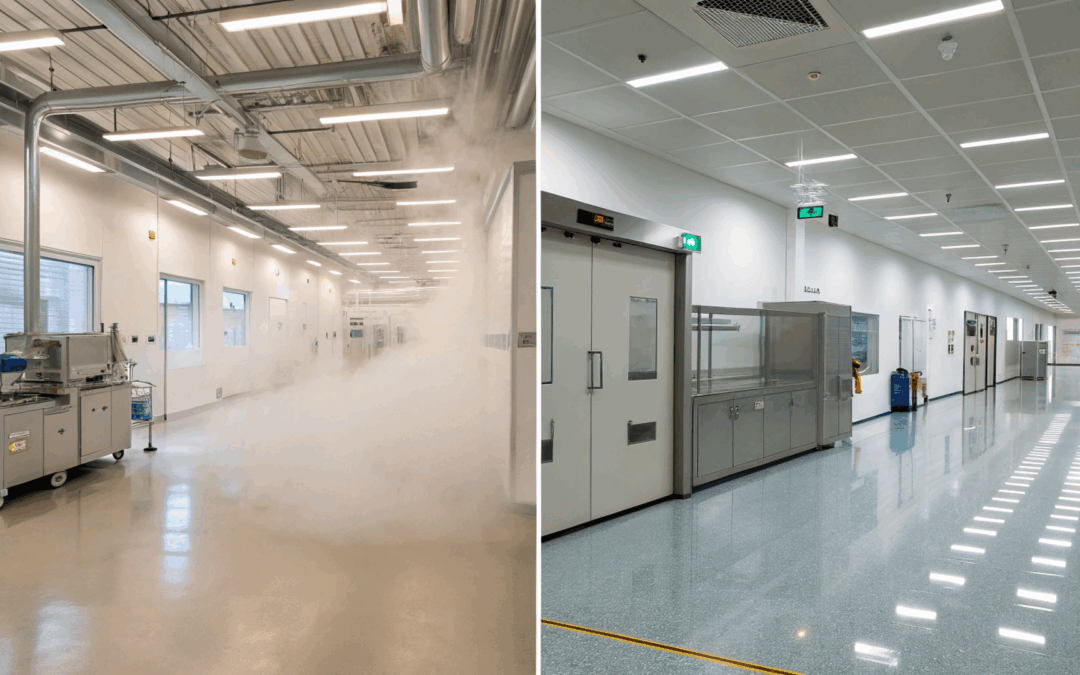


Operating room humidity compliance represents a critical intersection of patient safety, infection control, and regulatory adherence that healthcare facilities across the United States must navigate daily. This complex requirement involves maintaining relative humidity within specified ranges under multiple, sometimes conflicting standards while ensuring continuous monitoring and documentation to satisfy regulators and accreditors.
The stakes for non-compliance are significant. Facilities face potential operating room closures, regulatory citations, and compromised patient safety when humidity levels deviate from established standards. Understanding the intricate web of requirements from organizations like ASHRAE, CMS, and the Joint Commission is essential for healthcare engineering professionals, infection control specialists, and facility management teams.
This comprehensive guide examines current regulatory standards, practical monitoring requirements, common compliance challenges, and evidence-based risk management strategies that healthcare facilities need to maintain operating room humidity compliance while delivering safe, effective perioperative care.
Understanding Operating Room Humidity Compliance Requirements
Operating room humidity compliance refers to the mandatory adherence to ANSI/ASHRAE/ASHE Standard 170-2017, which requires healthcare facilities to maintain relative humidity between 20% and 60% in operating rooms and other anesthetizing locations. This standard serves as the foundation for regulatory enforcement by CMS and accreditation bodies like the Joint Commission.
The Joint Commission and CMS enforce continuous environmental monitoring requirements that mandate 24/7 surveillance of temperature and humidity conditions whenever operating rooms are in use for their intended purpose. These organizations typically tolerate temporary deviations that are corrected within 24 hours, provided facilities have documented response plans and risk mitigation strategies.

Non-compliance consequences extend far beyond regulatory citations. Facilities may face mandatory operating room closures during humidity excursions, forcing case cancellations and patient transfers. More critically, humidity levels outside established ranges can compromise patient safety through increased infection risks, equipment malfunctions, and sterile supply integrity concerns.
The patient safety rationale behind these humidity standards encompasses multiple factors. High humidity above 60% promotes microbial growth and compromises wrapped sterile instruments and supplies. Conversely, extremely low humidity below 20% increases electrostatic discharge risks that can malfunction medical devices and potentially affect infection control through impaired mucociliary clearance in patients’ respiratory systems.
Current Regulatory Standards and Guidelines
ANSI/ASHRAE/ASHE Standard 170-2017 serves as the primary design and operational standard for operating room humidity control, specifying minimum relative humidity of 20% and maximum of 60% for anesthetizing locations. This standard evolved from earlier requirements that mandated higher minimum humidity levels, with the 2008 addendum reducing the lower limit from 35% to 20% primarily for energy efficiency and technical feasibility reasons.
The Facility Guidelines Institute incorporates ASHRAE 170 requirements by reference in its Guidelines for Design and Construction of Hospitals and Outpatient Facilities. FGI guidance affects new construction projects and major renovations, ensuring HVAC systems are designed to maintain the 20-60% relative humidity range while meeting other environmental parameters like air changes per hour and pressure relationships.
CMS Conditions of Participation under 42 CFR 482.41(b) Physical Environment require Medicare-participating hospitals to maintain environmental controls that protect patient safety. Following the 2012 categorical waiver, CMS recognizes the 20-60% humidity range for anesthetizing locations, provided facilities comply with any more stringent state requirements and manufacturer’s instructions for medical devices and supplies.
The National Fire Protection Association standards, particularly NFPA 99 Healthcare Facilities Code and NFPA 101 Life Safety Code, work in conjunction with ASHRAE requirements. The 2012 edition of NFPA 101 effectively adopted ASHRAE 170 ventilation requirements, creating alignment between life safety and mechanical system standards for operating room environmental controls.
Professional organizations including the Association of periOperative Registered Nurses (AORN), American Society of Anesthesiologists (ASA), and Anesthesia Patient Safety Foundation (APSF) have issued joint statements acknowledging the 20-60% range while emphasizing the importance of manufacturer’s instructions compliance and risk assessment for humidity-sensitive medical devices and supplies.
Continuous Monitoring and Documentation Requirements
The Joint Commission mandates 24/7 environmental monitoring for operating rooms, requiring continuous surveillance of both temperature and humidity when rooms are in use for their intended purpose. This monitoring must include real-time data logging with alarm capabilities that alert staff when conditions approach or exceed established thresholds.
Acceptable temporary deviation periods typically extend up to 24 hours for minor excursions, provided facilities implement immediate notification protocols and risk assessment procedures. During these events, clinical engineering and infection control teams must evaluate patient safety implications and document mitigation strategies for any procedures performed during non-compliant conditions.

Data logging requirements mandate retention of environmental monitoring records for compliance audits, typically maintaining detailed logs for minimum periods specified by state regulations or accreditation standards. These records must demonstrate continuous compliance patterns, response times for excursion events, and corrective actions taken to restore acceptable conditions.
Alarm systems must provide multiple notification levels, including immediate alerts when humidity approaches action levels (often set 5-10% within regulatory limits) and critical alarms when conditions exceed the 20-60% range. Response protocols should specify notification hierarchies involving facilities management, clinical engineering, and perioperative services leadership with defined response timeframes.
Sample documentation templates should capture essential elements including timestamp data, humidity and temperature readings, affected operating room identification, root cause analysis, risk assessment outcomes, and verification of corrective actions. This documentation serves as evidence of compliance during regulatory surveys and accreditation reviews.
Common Compliance Challenges and Solutions
HVAC system failures represent the most frequent cause of operating room humidity compliance events, often resulting from equipment malfunctions, preventive maintenance issues, or inadequate system capacity during extreme weather conditions. Emergency response protocols must include backup systems, portable dehumidification or humidification equipment, and clear decision trees for case management during system outages.
Aging HVAC infrastructure presents ongoing challenges for many healthcare facilities, particularly those with systems installed before current humidity standards took effect. Upgrade considerations must balance capital investment costs against compliance risks, often requiring phased modernization approaches that prioritize critical operating room zones while maintaining operational continuity.
Staff training requirements for environmental monitoring responsibilities often receive insufficient attention, leading to delayed recognition of compliance issues or inappropriate responses during excursion events. Comprehensive training programs should cover monitoring system operation, alarm response procedures, and communication protocols with clear competency assessment criteria.
Cost-effective solutions for smaller facilities and ambulatory surgery centers may include shared monitoring systems, cloud-based data logging platforms, and simplified response protocols tailored to reduced complexity operations. These solutions must still meet regulatory requirements while acknowledging resource constraints in smaller healthcare organizations.
Geographic and Seasonal Considerations
Northern climates face significant humidity control challenges during winter months when outdoor air contains minimal moisture, requiring substantial humidification capacity to maintain minimum 20% relative humidity levels. Successful strategies include steam humidification systems with adequate capacity, proper control sequencing, and preventive maintenance schedules that address mineral buildup and system cycling issues.
Southern and coastal regions must address excess humidity removal requirements, particularly during summer months when outdoor conditions may exceed 80% relative humidity. Effective approaches include enhanced dehumidification capacity, proper cooling coil sizing, and reheat systems that allow independent temperature and humidity control without energy waste.
Seasonal maintenance schedules should align with predictable weather patterns, performing humidification system maintenance before winter heating seasons and dehumidification equipment servicing before summer cooling periods. These schedules should include filter changes, sensor calibration, and control system verification to prevent weather-related compliance events.
Regional examples of successful humidity management strategies demonstrate the importance of climate-specific design approaches. Northern facilities often employ multiple humidification stages with automatic changeover capabilities, while southern facilities may utilize desiccant wheel systems or enhanced mechanical dehumidification to manage excess moisture loads effectively.
Risk Assessment and Management for Non-Compliance Events
Mandatory risk assessment procedures activate immediately when operating room humidity exceeds the 20-60% range, requiring systematic evaluation of patient safety implications, equipment functionality, and sterile supply integrity. These assessments must consider the severity and duration of excursions, types of procedures affected, and vulnerability of patient populations.
Multidisciplinary team composition for humidity excursion response should include representatives from Infection Control, Clinical Engineering, OR leadership, Facilities Management, and Risk Management. This team structure ensures comprehensive evaluation of clinical, technical, and regulatory implications while maintaining clear decision-making authority for case management decisions.

Risk stratification criteria should establish clear thresholds for different response levels. Minor excursions (21-30% or 55-60%) may require enhanced monitoring and documentation, while moderate deviations (15-20% or 60-70%) typically necessitate case-by-case risk evaluation and possible procedure modifications. Severe excursions (below 15% or above 70%) generally mandate immediate case suspension pending environmental restoration.
Documentation requirements for risk assessments must capture detailed information including excursion timeline, affected procedures, patient risk factors, equipment IFU considerations, and mitigation strategies employed. This documentation serves multiple purposes including regulatory compliance, risk management, and quality improvement initiatives.
Decision-making protocols for continuing versus postponing surgical procedures should consider urgency of clinical need, availability of alternative operating rooms, duration of environmental restoration, and specific risks associated with humidity levels for planned procedures. Emergency cases may proceed with enhanced precautions, while elective procedures typically require environmental compliance restoration.
Impact on Medical Equipment and Supplies
Electrostatic discharge risks increase significantly when operating room humidity falls below 30%, creating potential for medical device malfunctions that could compromise patient safety. The FDA MAUDE database contains multiple reports of ESD-related incidents in low-humidity environments, highlighting the practical importance of maintaining adequate moisture levels for electronic equipment protection.
Manufacturer’s Instructions for Use (IFU) requirements for humidity-sensitive equipment often specify minimum 30% relative humidity for safe operation, creating potential conflicts with ASHRAE 170’s 20% minimum. CMS requires conformity with device IFUs, meaning facilities operating below 30% humidity may face compliance challenges even while meeting building code requirements.
Sterile supply storage considerations become critical during humidity excursions, as excessive moisture can compromise packaging integrity while very low humidity may affect adhesive properties and packaging materials. Storage areas typically require maximum 60% humidity with temperature control between 72-78°F to maintain sterile supply shelf life and integrity.
Medical device malfunction risks during humidity excursions extend beyond electrostatic discharge to include sensor accuracy issues, mechanical component problems, and electronic system instability. Critical devices like anesthesia machines, electrosurgical units, and patient monitoring systems may require operational verification following significant humidity events.
Equipment validation procedures following environmental deviations should include functional testing of sensitive devices, verification of sensor accuracy, and documentation of any performance impacts. These procedures help ensure patient safety while providing evidence of appropriate risk management for regulatory review.
Best Practices for Maintaining Compliance
Comprehensive environmental control policies and procedures form the foundation of effective operating room humidity compliance programs. These policies should address monitoring requirements, response protocols, staff responsibilities, and coordination between clinical and engineering teams with clear escalation pathways for different severity levels of environmental events.
Preventive maintenance schedules for HVAC systems and monitoring equipment require careful coordination to minimize service disruptions while ensuring reliable system performance. Regular calibration of humidity sensors, inspection of humidification and dehumidification equipment, and validation of control systems help prevent compliance failures and extend equipment life.
Clear communication protocols between facilities management and clinical staff ensure rapid response to environmental events while maintaining appropriate clinical decision-making authority. These protocols should specify notification methods, response timeframes, and information sharing requirements that support effective coordination during compliance events.

Contingency plans for emergency situations and system failures should include backup equipment inventory, alternative operating room assignments, and vendor contact information for emergency repairs. Regular testing of these contingency plans helps ensure effectiveness during actual events while identifying improvement opportunities.
Regular compliance audits and performance improvement initiatives provide systematic evaluation of humidity control effectiveness, identification of recurring issues, and development of corrective actions. These audits should review monitoring data trends, response time metrics, and staff compliance with established procedures.
Staff Training and Competency Requirements
Training requirements for environmental monitoring responsibilities must address both technical and clinical aspects of humidity control, ensuring staff understand regulatory requirements, monitoring system operation, and appropriate response procedures. Training should be role-specific, with different levels of detail for clinical staff, engineering personnel, and management.
Competency assessment procedures for OR staff should include practical demonstrations of monitoring system use, scenario-based response exercises, and written evaluation of regulatory knowledge. Annual competency validation helps ensure ongoing proficiency while identifying staff development needs.
Emergency response training for humidity excursion events should simulate realistic scenarios including system failures, severe weather impacts, and equipment malfunctions. These exercises help staff practice coordination procedures while identifying process improvement opportunities and communication gaps.
Continuing education requirements and documentation support ongoing staff development in environmental compliance topics, regulatory updates, and best practice evolution. Professional development opportunities through organizations like the American Society for Healthcare Engineering (ASHE) and Association for the Advancement of Medical Instrumentation (AAMI) help staff maintain current knowledge in this rapidly evolving field.
Conclusion
Operating room humidity compliance requires sophisticated understanding of overlapping regulatory requirements, continuous monitoring capabilities, and comprehensive risk management strategies that protect patient safety while maintaining operational efficiency. Healthcare facilities must navigate complex interactions between ASHRAE standards, CMS requirements, Joint Commission expectations, and manufacturer’s instructions while addressing practical challenges posed by HVAC systems, geographic factors, and resource constraints.
Success in maintaining humidity compliance depends on proactive approaches that integrate engineering excellence, clinical awareness, and administrative support through well-designed policies, trained personnel, and reliable systems. The investment in comprehensive humidity control programs pays dividends through reduced compliance risks, improved patient safety outcomes, and enhanced operational reliability that supports the primary mission of delivering exceptional perioperative care.
Healthcare facilities should conduct thorough assessments of their current humidity control capabilities, update policies and procedures to reflect current standards, and implement staff training programs that ensure competent response to environmental challenges. By taking these steps, facilities can maintain operating room humidity compliance while supporting the broader goals of patient safety, infection control, and regulatory adherence that define excellence in modern healthcare delivery.