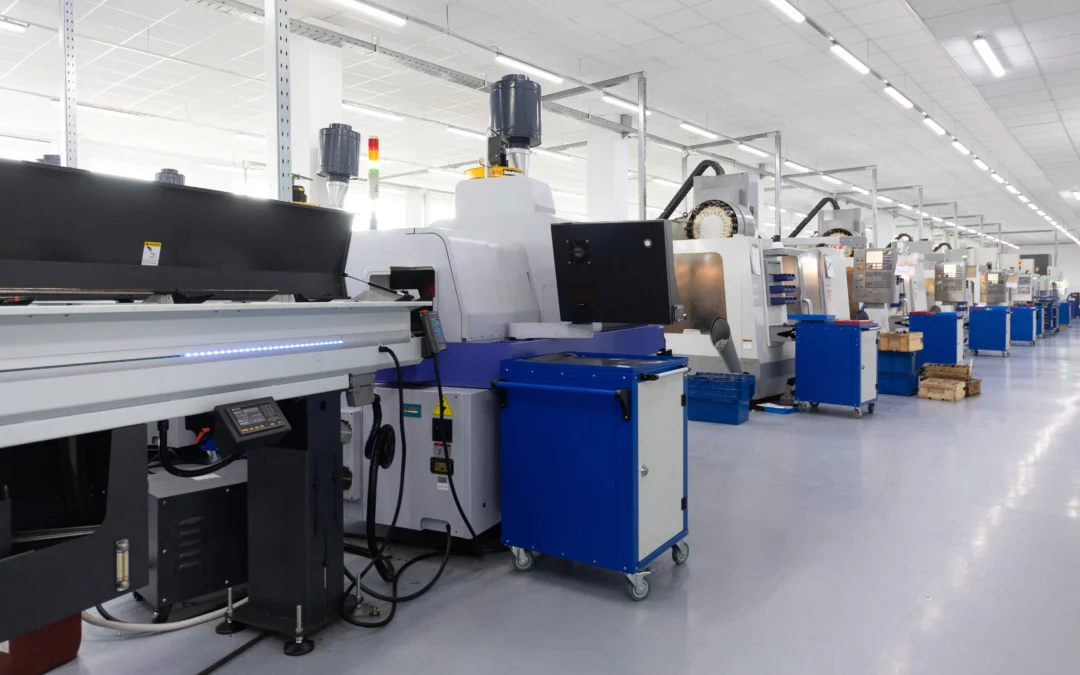


Proper humidity control is essential for consistent print quality, as it keeps paper stable, supports accurate registration, and improves ink adhesion during production runs. Fluctuating air conditions can cause warping, stretching, and feed issues that directly impact output precision.
Stable relative moisture also reduces static buildup, prevents sheets from sticking, and minimizes waste caused by mechanical disruptions. A balanced climate protects paper stocks, maintains color consistency, and helps printing equipment perform reliably throughout the day.
Key Takeaways
- Maintain stable moisture to prevent paper curling and warping.
- Stop static buildup to ensure smooth sheet feeding.
- Ensure predictable ink adhesion and drying times.
- Enhance registration accuracy for sharp, professional images.
- Reduce material waste and mechanical downtime.
- Extend the life of sensitive high-end equipment.
Print Quality as a Function of Environmental Stability
The stability of the environment in which printing occurs plays a crucial role in determining the final print quality. Environmental factors, particularly humidity, have a significant impact on the printing process, influencing aspects such as ink transfer, registration, and coverage.
Variability in Ink Transfer, Registration, and Coverage
Humidity fluctuations can disrupt print stability by altering ink flow and transfer behavior. Ink transfer in dry environments is particularly sensitive, as low moisture levels increase viscosity and reduce transfer efficiency, often leading to uneven deposition and surface defects. In contrast, high humidity can cause excessive ink spread, resulting in inconsistent coverage and registration challenges.
Humidity also affects substrate stability. Materials like paper expand or contract as moisture levels change, increasing the risk of misalignment and registration errors that compromise overall print quality.
Relationship Between Environmental Drift and Print Defects
Drifts in environmental conditions, especially humidity, can directly contribute to an increase in print defects. As humidity levels deviate from the optimal range, the likelihood of defects such as misregistration, ink smudging, and uneven coverage increases. This not only affects the aesthetic quality of the print but can also lead to functional issues, depending on the application of the printed material.
Furthermore, environmental instability can lead to issues with static electricity, which can cause paper sheets to stick together or attract dust, further complicating the printing process and potentially leading to additional defects.
How Controlled Humidity Supports Consistent Ink Transfer
The role of controlled humidity in ensuring stable substrate moisture content is pivotal for high-quality printing results. Maintaining the right level of humidity is crucial because it directly affects how ink interacts with the substrate during the printing process.
Stable Substrate Moisture Content During Printing
Substrate moisture content is a critical factor in printing. When the substrate’s moisture level is stable, it ensures that the ink adheres uniformly and dries consistently. Fluctuations in humidity can cause the substrate to absorb or release moisture, leading to variations in its physical properties, such as size and texture.
Some key benefits of stable substrate moisture content include:
- Consistent ink absorption rates.
- Reduced risk of paper curl or cockle.
- Improved dimensional stability of the substrate.
Uniform Ink Adhesion and Coverage Across Runs
Uniform ink adhesion is essential for achieving consistent print quality across different runs. Controlled humidity helps maintain the substrate’s moisture content within an optimal range, ensuring that the ink adheres evenly. This results in:
- Consistent color density and vibrancy.
- Reduced risk of ink smudging or setoff.
- Improved overall print quality and reduced waste.
By maintaining a controlled humidity environment, printers can significantly enhance the consistency of their printing results. This not only improves the quality of the final product but also reduces the need for reprints and minimizes production downtime.
Maintaining Registration and Dimensional Accuracy
Maintaining precise registration and dimensional accuracy in printing requires stable environmental control, as humidity fluctuations directly influence the dimensional stability of paper.
Since paper is hygroscopic, it absorbs and releases moisture based on surrounding conditions, causing expansion or shrinkage that can lead to misregistration and printing defects if humidity is not properly controlled.
Minimizing Paper Expansion and Shrinkage
Paper expansion and shrinkage are directly influenced by moisture levels in the printing environment. Even small humidity fluctuations can change paper dimensions, leading to registration errors and inconsistent print alignment. Maintaining stable humidity helps preserve dimensional stability throughout the production process.
Key impacts of humidity on paper behavior include:
- Paper expands under high humidity, causing registration issues and potential ink bleeding.
- Paper shrinks in low humidity, increasing brittleness and misalignment risks.
- Fluctuating moisture levels lead to unstable sheet behavior during printing runs.
- Controlled humidity keeps paper dimensionally stable and easier to handle.
- Stable paper condition supports accurate registration and consistent print quality.
Preventing Sheet Handling and Feeding Issues
Humidity also affects the handling and feeding of paper sheets. When paper is too dry, it can become brittle and prone to cracking, while high humidity can cause sheets to stick together. By maintaining a stable humidity level, printers can prevent sheet handling and feeding issues, ensuring smooth production runs.
Humidity control solutions can help prevent these issues by maintaining a consistent environment. This not only improves print quality but also reduces waste and increases overall efficiency.
Supporting Uniform Drying and Curing Performance
Maintaining optimal temperature and humidity is essential for uniform ink drying and curing, as environmental conditions directly influence evaporation rates and ink setting behavior.
Uncontrolled humidity can cause uneven drying, leading to smudging, setoff, and curing inconsistencies, whereas stable humidity supports predictable drying rates and consistent print quality.
Consistent Ink Set and Drying Behavior
Ink set and drying behavior are strongly influenced by environmental humidity and substrate moisture levels. Stable humidity ensures proper ink adhesion, controlled absorption, and predictable drying performance across different print jobs.
Here are some key points related to ink set and drying behavior:
- Humidity control maintains optimal substrate moisture for consistent ink adhesion.
- UV ink typically dries faster, around 5 seconds at 40% RH and about 7 seconds at 60% RH.
- Solvent ink drying time increases from roughly 10 seconds at 40% RH to 15 seconds at 60% RH.
- Water-based ink may dry in about 8 seconds at 40% RH and around 12 seconds at 60% RH.
- Higher humidity can slow drying but improve ink stability and surface interaction.
- Consistent environmental conditions support uniform drying and better print quality.
Reducing Smudging and Setoff Variability
Smudging and setoff variability are common issues that arise when ink drying is not uniform. Smudging occurs when wet ink is smeared or spread unintentionally, while setoff refers to the unwanted transfer of ink from one sheet to another. Both issues can be significantly reduced by maintaining a controlled humidity environment.
By ensuring that the ink dries consistently, printers can minimize the risk of these defects and achieve higher quality prints. This not only improves customer satisfaction but also reduces waste and the need for reprints.
Process-Level Benefits of Proper Humidity Control
Proper humidity control has a significant impact on the overall printing process, enhancing both quality and productivity. By maintaining optimal humidity levels, printers can experience significant improvements at the process level, leading to more efficient and consistent operations.
Improved Transfer Efficiency and Reduced Material Waste
One of the key benefits of controlled humidity is the improvement in transfer efficiency. When humidity is maintained within an optimal range, the transfer of ink or other materials onto the substrate becomes more consistent and reliable. This consistency reduces the likelihood of defects and minimizes material waste, leading to cost savings and improved productivity.
Key advantages of improved transfer efficiency include:
- Reduced rework due to fewer print defects
- Lower material costs from minimized waste
- Enhanced overall equipment effectiveness (OEE)
Repeatable Results Across Shifts and Production Batches
Repeatability is the foundation of professional print operations. Output must remain stable not only within a single run, but across shifts, operators, and production batches.
Humidity plays a direct role in that stability. When environmental conditions fluctuate, material dimensions shift, ink behaviour changes, and process settings require adjustment. Over time, these small variations accumulate and show up as inconsistencies in finished output.
Maintaining controlled relative humidity helps create a stable production environment that carries over from one shift to the next. Operators inherit predictable conditions. New batches begin under the same environmental baseline. Quality control becomes less reactive and more standardized.
Benefits of environmental stability include:
- More consistent output aligned with customer specifications
- Reduced production variability and fewer corrective adjustments
- Lower material waste and improved process efficiency
- Greater confidence in repeatable performance across runs
By focusing on proper humidity control as part of overall process management, printing facilities can strengthen operational reliability and support consistent, high-quality results across every production cycle.
Smart Fog’s non-wetting humidification technology helps maintain stable, evenly distributed relative humidity across printing environments. By supporting consistent environmental conditions shift after shift, Smart Fog systems contribute to predictable material behaviour and reliable print performance without introducing surface moisture.
Aligning Humidity With Printing Process Requirements
Aligning humidity levels with specific printing process needs is essential for achieving high-quality prints. Different printing technologies and applications have unique environmental requirements, and understanding these needs is crucial for optimizing print quality and reducing production issues.
Offset, Digital, Flexographic, and Packaging Applications
Different printing processes have unique environmental sensitivities, making tailored humidity control essential for stable performance and consistent output quality. Maintaining process-specific humidity ranges helps prevent substrate distortion, ink issues, and mechanical inconsistencies across applications.
Key humidity considerations across printing applications include:
- Offset printing requires stable humidity around 40–60% RH to prevent ink emulsification, paper curl, and registration issues.
- Digital printing benefits from controlled humidity in the 40–60% RH range to ensure consistent inkjet performance and reduce substrate-related defects.
- Flexographic printing needs more precise humidity control, typically 30–50% RH, to maintain plate integrity and support uniform ink transfer on flexible materials.
- Packaging applications demand adaptable humidity control based on substrate type and printing method.
- Consistent humidity across processes improves ink transfer, material stability, and overall print quality.
Substrate-Specific Environmental Sensitivities
Substrates used in printing respond differently to environmental conditions, making humidity control a substrate-specific requirement. Recognizing these sensitivities helps prevent material distortion, print defects, and production inconsistencies.
Key substrate-specific environmental sensitivities include:
- Paper substrates are highly sensitive to moisture, leading to dimensional changes, curl, and registration issues.
- Film and foil substrates are more moisture-resistant but can be sensitive to temperature fluctuations.
- Flexible materials may react differently to humidity during high-speed printing processes.
- Inconsistent humidity can cause substrate instability and handling difficulties.
- Monitoring and adjusting humidity based on substrate type helps minimize production issues.
- Proper environmental control ensures stable materials and consistently high-quality prints.
Integrating Humidity Control Into Print Room Operations
Integrating humidity control into print room operations means maintaining a stable, process-focused environment rather than relying on basic humidifiers alone. Evaluating the printing process, substrates, and room conditions helps create consistent print quality, lower waste, and smoother production.
Environmental Monitoring and Sensor Integration
Effective humidity control begins with accurate environmental monitoring. This involves using sensors to track the current humidity levels in the print room and adjusting the humidity control systems accordingly. Sensor integration is crucial for real-time monitoring and for making adjustments to maintain optimal conditions.
By integrating sensors that can detect even slight changes in humidity, printers can ensure that their environment remains stable, even when external conditions fluctuate. This stability is key to maintaining consistent print quality.
Automation for Stable Environmental Conditions
Automation ensures humidity stays within the required range without constant manual monitoring. This helps maintain print consistency, material stability, and overall production reliability.
The core roles of automation in stable environmental control include:
- Continuously monitoring humidity through real-time sensors
- Automatically adjusting levels based on environmental changes
- Maintaining optimal conditions for print quality and ink transfer
- Reducing manual intervention during production
- Responding quickly to fluctuations that may cause defects
- Supporting consistent output, lower waste, and higher efficiency
Measuring Print Quality Improvements From Environmental Control
Measuring print quality improvements from environmental control involves assessing how stable humidity and climate conditions enhance ink transfer, registration accuracy, and drying consistency during production.
A controlled environment reduces rework, minimizes interruptions, and supports more efficient, high-quality printing with predictable performance across runs.
Reduced Rework and Production Interruptions
When the printing environment is not controlled, factors such as humidity can cause significant issues. For instance, high or low humidity can affect the moisture content of the paper, leading to expansion, shrinkage, or misregistration.
By maintaining a stable humidity level, printers can minimize these issues, thereby reducing the need for rework and minimizing production interruptions.
- Reduced paper jams and misfeeds due to stable paper moisture content.
- Less rework due to improved registration and ink adhesion.
- Fewer production interruptions resulting from environmental-related defects.
Improved Throughput and Output Consistency
Environmental control also contributes to improved throughput and output consistency. By ensuring that the printing environment remains stable, printers can achieve consistent results across production runs. This consistency is crucial for maintaining high-quality output and meeting customer expectations.
Some key benefits include:
- Consistent ink drying and curing times.
- Uniform substrate handling and feeding.
- Enhanced overall production efficiency.
By ensuring that the printing environment remains stable, printers can achieve consistent results across production runs. For high-speed presses, humidification for digital printing helps maintain uniform ink drying, reliable substrate handling, and repeatable output quality.
Supporting Long-Term Print Quality Through Environmental Management
Effective environmental management is crucial for maintaining long-term print quality. By controlling the print environment, printers can ensure that their output remains consistent over time.
Stability in Dynamic Production Environments
Maintaining environmental stability in dynamic production settings is critical for consistent print performance. Fluctuating workloads and changing operating conditions can quickly impact humidity levels and overall process reliability if not properly managed. Stable environmental control helps printers maintain uniform quality even during high-demand cycles.
Here are the factors supporting stability in dynamic production environments:
- Variable production loads can cause environmental shifts that affect print consistency.
- Proper humidity control stabilizes conditions during workload fluctuations.
- Stable environments reduce print variability across different production runs.
- Consistent climate management supports reliable high-speed operations.
Consistency Across Multiple Shifts
Consistency across multiple shifts is equally important for sustaining print quality in continuous operations. Without controlled environmental management, output can vary between shifts due to operational and atmospheric differences.
Key considerations for consistency across multiple shifts include:
- Uniform environmental conditions help maintain consistent print quality across shifts.
- Robust environmental management systems reduce process variability and human error.
- Controlled humidity ensures stable output regardless of operator or shift changes.
- Long-term environmental stability improves efficiency and overall production reliability.
Final Thoughts on Improving Print Quality Through Humidity Control
In print rooms, humidity is a controllable variable that directly influences static buildup, substrate stability, ink transfer, and overall print consistency. Maintaining stable relative humidity helps limit environmental drift and supports more predictable production performance in high-airflow facilities.
Smart Fog’s non-wetting humidification technology is engineered for continuous industrial operation, delivering uniform humidity distribution without surface moisture. By stabilizing environmental conditions throughout the space, Smart Fog systems help reduce variability in paper behaviour, support consistent drying conditions, and contribute to reliable, high-quality output across every print run.
FAQ
What is the ideal humidity range for maintaining print quality?
Most printing facilities maintain 40% to 60% RH, using a hygrometer to monitor levels and keep the environment properly humid for stable print performance.
How does humidity control improve registration accuracy?
Controlled humidity prevents paper expansion and shrinkage, protecting machinery precision and ensuring consistent registration during production runs.
Why does low humidity cause print defects and static issues?
Low humidity in printing facilities creates dry, non-humid air that increases static buildup, sheet sticking, and feeding disruptions.
Can humidity control reduce waste and rework in printing operations?
Yes, maintaining a balanced environment with humidification or a dehumidifier reduces defects, material waste, and unplanned production interruptions.
How does environmental stability affect multi-shift print consistency?
Stable humidity monitoring with a hygrometer and well-regulated humid conditions helps printing facilities maintain consistent output across shifts while protecting machinery reliability.