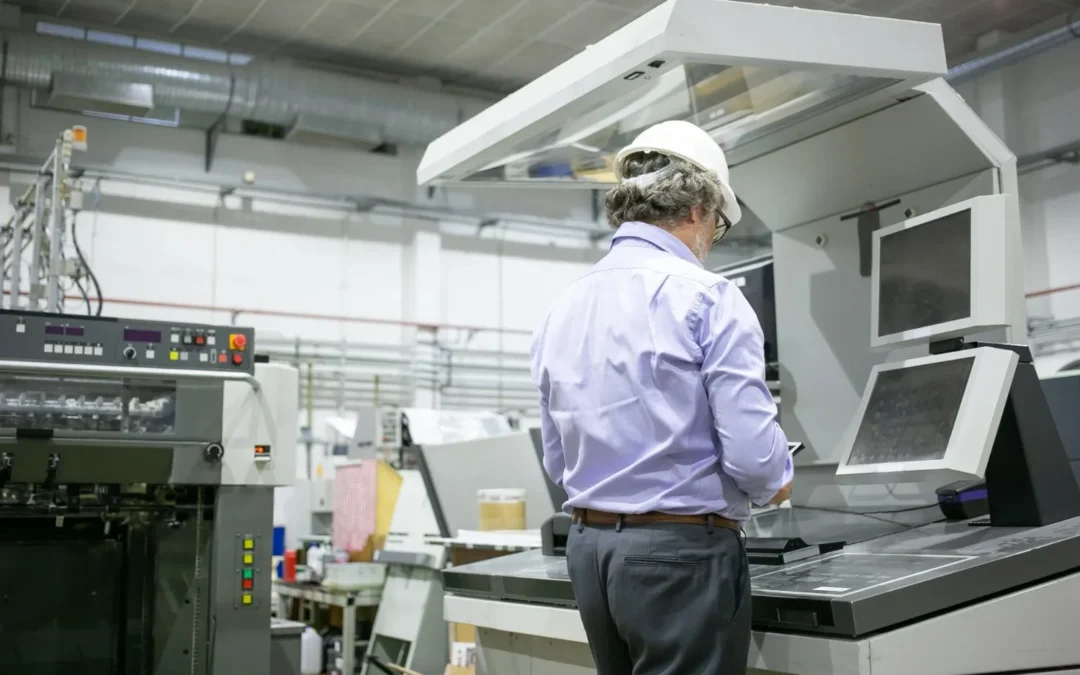


Running a successful printing facility requires controlling the environment, not just equipment and workflow. Balanced humidity helps sheets move smoothly through the press and prevents sticking or handling issues.
When humidity drops, static electricity increases, leading to paper jams, misfeeds, and uneven ink behavior. Maintaining proper moisture levels stabilizes paper, supports consistent color accuracy, and protects press components from unnecessary wear.
Key Takeaways
- Consistent air moisture prevents paper curling and costly press jams.
- Proper settings eliminate static electricity that disrupts sheet feeding.
- Stable conditions help maintain ink viscosity to improve color quality.
- Controlled environments extend the life of sensitive machine parts.
- Reliable humidification reduces production downtime and material waste.
- Accurate monitoring ensures high-quality results across every shift.
Why Humidity Precision Matters in Printing Facilities
Precise humidity control is essential in printing facilities because even minor fluctuations can affect ink behaviour, substrate interaction, and overall print consistency. A stable humidity environment supports predictable ink transfer, uniform drying, and reliable print quality across different production runs.
Humidity Stability as a Process Control Variable
Humidity stability is a critical process control variable in printing facilities. It directly influences the physical properties of the materials used in printing, such as paper and ink. For instance, paper absorbs or releases moisture based on the surrounding humidity, affecting its dimensional stability and, consequently, the print quality.
By maintaining stable humidity levels, printing facilities can ensure that their processes remain within specified tolerances. This control is vital for achieving consistent results, particularly in high-precision printing operations where even minor deviations can lead to significant issues.
Impact of Environmental Drift on Print Consistency
Environmental drift, especially fluctuations in humidity, directly affects material behavior and print stability during production. Even minor environmental changes can alter ink transfer, registration accuracy, and the dimensional stability of printing substrates.
The key impacts of environmental drift on print consistency include:
- Inconsistent ink transfer due to moisture variation in substrates
- Registration issues from expansion or shrinkage of paper
- Increased static buildup in low humidity environments
- Feeding problems such as sheet sticking and misfeeds
- Variations in color accuracy and print sharpness
Environmental drift can lead to material waste, rework, and production delays. Over time, unstable conditions also reduce efficiency and increase overall waste, making humidity stability essential for consistent print quality.
Recommended Humidity Ranges for Printing Environments
Maintaining recommended humidity ranges in printing environments is critical for preserving print quality, equipment performance, and process stability. Operating within optimal relative humidity levels helps reduce defects, minimize waste, and ensure consistent ink transfer and drying throughout production.
Industry-Recognized Relative Humidity Guidelines
Maintaining proper relative humidity is essential in printing environments where material behavior, ink performance, and equipment reliability are closely affected by moisture levels.
Stable RH helps reduce static, prevent paper distortion, and support consistent print output across different printing technologies. Industry standards commonly recommend a controlled humidity range to ensure operational stability and print accuracy.
The recommended relative humidity guidelines by printing process are outlined below:
- Offset Printing: 40–60% RH (optimal level around 50%).
- Flexographic Printing: 40–60% RH (optimal level around 50%).
- Digital Printing: 40–60% RH (optimal level around 50%).
Operating Within Optimal vs Acceptable Ranges
While the recommended RH range is between 40% and 60%, there is a distinction between optimal and acceptable ranges. Operating within the optimal range (45-55% RH) ensures the best possible print quality and equipment performance.
Key benefits of operating within the optimal RH range include:
- Improved print quality
- Reduced equipment downtime
- Minimized waste and rework
However, operating within the acceptable range (40-60% RH) may be sufficient for some printing facilities, depending on their specific processes and equipment.
Process Sensitivity to Humidity Variations
Different printing processes react differently to humidity variations, and even small fluctuations can affect ink transfer, drying behavior, and overall print consistency. High process sensitivity to humidity changes can lead to defects, variability in output, and reduced reliability in production quality.
Offset, Flexographic, Gravure, and Digital Printing
Different printing technologies have unique characteristics that influence their sensitivity to humidity. For instance, offset printing is highly sensitive to humidity due to the water-based dampening system used in the process. Maintaining optimal humidity levels is crucial to prevent issues such as ink emulsification and paper distortion.
- Flexographic printing, widely used for packaging, requires careful humidity control due to its use of flexible plates and varied substrates like paper, film, and foil. Humidity fluctuations can affect substrate stability and flexibility, increasing the risk of registration issues.
- Gravure printing, known for high-quality image reproduction, is less sensitive to humidity than offset and flexographic processes. However, stable environmental conditions still support consistent ink transfer and smooth substrate handling.
- Digital printing technologies, including inkjet and electrophotography, respond differently to humidity levels. Inkjet printing may experience bleeding or cockling on substrates, while electrophotographic printing is less sensitive but still influenced by extreme conditions, highlighting the need for consistent climate control for print facilities operating across multiple print processes.
Paper, Film, and Specialty Substrate Considerations
The type of substrate used in printing significantly influences the ideal humidity levels. Paper substrates are highly susceptible to humidity changes, which can cause dimensional changes, affect ink absorption, and lead to issues like curl or cockling.
- Film substrates, on the other hand, are generally less affected by humidity in terms of dimensional stability but can still be impacted by extreme conditions. The surface properties of films can change with humidity, affecting ink adhesion and drying.
- Specialty substrates, including textiles, labels, and synthetic materials, have unique responses to humidity.
Operational Impact of Humidity Deviations
The operational impact of humidity deviations is a critical concern in printing operations. Deviations in humidity levels can significantly affect the quality and consistency of printed materials.
Variability in Ink Transfer and Registration
Humidity deviations can cause variability in ink transfer and registration, leading to inconsistent print quality. Ink transfer is affected as changes in humidity alter the viscosity and flow characteristics of inks.
This variability can result in misregistration, where the different colors or elements of the print are not accurately aligned.
- Ink viscosity changes due to humidity fluctuations.
- Misregistration caused by dimensional changes in substrates.
- Impact on print quality due to inconsistent ink transfer.
Print Run Inconsistency Across Shifts
Furthermore, humidity deviations can lead to print run inconsistency across different shifts. As environmental conditions change throughout the day or between shifts, the printing process may require adjustments to maintain consistency.
Operators may need to adjust press settings, ink formulations, or drying conditions to compensate for the changes caused by humidity deviations.
To mitigate these issues, maintaining a stable humidity environment is crucial. This can be achieved through the use of advanced climate control systems and continuous monitoring of environmental conditions.
Coordinating Humidity With Temperature and Airflow
The interplay between humidity, temperature, and airflow is critical in printing facilities to ensure consistent print quality. Achieving a harmonious balance among these factors is essential for maintaining a stable environment that supports high-quality printing operations.
Temperature directly influences relative humidity (RH), which plays a critical role in printing environments. As temperature rises, air can hold more moisture, causing RH to drop if moisture levels remain unchanged, while lower temperatures increase RH.
This inverse relationship means temperature fluctuations can significantly alter RH even when absolute moisture stays constant. Since printing processes depend heavily on RH for paper handling, ink behavior, and substrate interaction, temperature control becomes an essential part of effective humidity management.
Environmental Balance Across Production Zones
Printing facilities often have different production zones, each with its unique environmental requirements. For example, areas dedicated to paper storage, printing, and finishing may have different optimal humidity and temperature conditions. Achieving environmental balance across these zones is essential to prevent issues such as paper curl, ink bleeding, or equipment malfunction.
- Maintaining a consistent temperature helps stabilize RH levels across different production zones.
- Airflow management is critical to prevent the migration of moisture and heat between zones.
- Using zoned HVAC systems can help in maintaining the desired environmental conditions in each production area.
By coordinating humidity with temperature and airflow, printing facilities can create a more stable and controlled environment. This not only enhances print quality but also improves operational efficiency and reduces the risk of production disruptions.
Maintaining Stable Humidity Under Changing Production Loads
The key to consistent printing quality lies in maintaining stable humidity, even as production loads change. Printing facilities must balance the need for stable environmental conditions with the variability introduced by different production demands.
Equipment Speed, Throughput, and Environmental Demand
When production equipment operates at higher speeds or with increased throughput, it can generate more heat and potentially alter the moisture balance within the facility. This change can impact the humidity levels, necessitating adjustments to maintain stability.
Higher equipment speed and throughput can lead to increased environmental demand. This demand can manifest as a need for more precise temperature and humidity control. Facilities must be equipped to handle these changes to prevent deviations in print quality.
For instance, a study on the effects of equipment speed on environmental conditions found that for every 10% increase in speed, there’s a corresponding need for a 5% adjustment in humidity control measures to maintain stability.
Seasonal and Facility-Based Variability
Seasonal changes and facility-specific conditions can cause significant fluctuations in humidity, temperature, and airflow within printing environments. These variations directly impact ink behaviour, substrate stability, and overall print consistency across production cycles.
Common sources of seasonal and facility-based variability include:
- Winter conditions leading to dry air and increased static buildup.
- Summer humidity affecting ink drying and viscosity.
- Differences in HVAC systems and climate control efficiency.
- Ventilation patterns influencing airflow and moisture distribution.
- Facility location (coastal vs inland) affecting ambient humidity levels.
- External weather conditions impacting internal environmental stability.
Environmental Control Approaches Used in Printing Facilities
Environmental control approaches are essential in printing facilities to maintain stable humidity, temperature, and airflow for consistent print quality. Facilities use integrated climate control systems to regulate environmental conditions and ensure reliable production performance and output consistency.
Humidification and Dehumidification Systems
Humidification and dehumidification systems play a crucial role in maintaining ideal humidity levels in printing facilities. Maintaining a stable relative humidity range is essential for print quality, material stability, and process consistency across production runs.
- Humidification systems add moisture to the air when the environment becomes too dry, helping prevent issues such as paper brittleness, static buildup, and inconsistent ink transfer. In industrial printing environments, the method of humidification and the uniformity of distribution can significantly influence how effectively the target humidity level is maintained without creating localized moisture.
- Dehumidification systems remove excess moisture when humidity rises beyond acceptable levels, mitigating problems such as paper warping, drying delays, and ink smudging.
The selection of a humidification or dehumidification system depends on factors including facility location, seasonal variation, printing process type, airflow patterns, and the performance requirements of the materials being printed.
Role of Sensors and Automated Monitoring
The effectiveness of environmental control in printing facilities heavily relies on the role of sensors and automated monitoring systems. These technologies enable real-time tracking of humidity levels, temperature, and other environmental parameters.
- Sensors detect even slight deviations from the set parameters, triggering corrective actions to maintain optimal conditions.
- Automated monitoring systems provide continuous oversight, ensuring that environmental controls are functioning correctly and making adjustments as needed.
By leveraging these advanced technologies, printing facilities can achieve a high level of precision in their environmental control, directly contributing to improved print quality and reduced waste.
Monitoring Strategies for Long-Term Humidity Stability
To achieve optimal print quality, printing facilities must implement robust monitoring strategies for humidity stability. This involves a combination of real-time tracking and process adjustments to prevent environmental drift over time.
Real-Time Tracking and Process Adjustments
Real-time tracking is essential for monitoring humidity levels in printing facilities. By using advanced sensors and monitoring systems, facilities can track humidity levels in real-time and make adjustments as needed.
This enables them to respond quickly to changes in humidity, preventing deviations that could impact print quality.
Key benefits of real-time tracking include:
- Immediate detection of humidity deviations.
- Prompt adjustments to maintain optimal humidity levels.
- Reduced risk of environmental drift.
Preventing Environmental Drift Over Time
Environmental conditions in printing facilities can gradually shift over time due to operational heat, seasonal changes, and continuous equipment use. Without active monitoring, this drift can lead to inconsistent humidity levels, temperature fluctuations, and reduced print stability.
Key measures for preventing environmental drift over time include:
- Continuous monitoring of humidity and temperature levels.
- Regular calibration of climate control systems.
- Consistent HVAC maintenance and performance checks.
- Automated environmental control for stable conditions.
- Periodic audits of airflow and moisture distribution.
- Adjustments based on seasonal and operational changes.
Aligning Humidity Control With Print Quality and Throughput Goals
Maintaining optimal humidity levels is crucial for printing facilities to achieve consistent print quality and maximize productivity. Effective humidity control ensures that the printing environment remains stable, reducing the likelihood of print defects and downtime.
By operating within the recommended humidity ranges, printing facilities can improve their throughput goals. Optimal humidity levels facilitate smoother production processes, minimizing the risk of equipment malfunctions and material damage.
Humidity control plays a vital role in achieving print quality and throughput objectives. Printing facilities that prioritize environmental stability are better positioned to meet customer demands and stay competitive in the market.
Implementing robust humidity control measures enables printing facilities to optimize their operations, ensuring that print quality and throughput goals are consistently met.
Final Thoughts on Ideal Humidity Levels for Printing Facilities
In modern printing facilities, humidity is not simply a comfort setting. It is a process control variable. It influences ink transfer, substrate stability, registration accuracy, and overall print consistency from the first sheet to the last.
When relative humidity drifts outside its target range, the effects show up quickly. Static buildup increases. Materials expand or contract. Ink behaviour shifts. What follows is familiar to many operations managers: higher waste, more rework, and creeping inefficiencies that compound across production cycles.
Maintaining stable humidity requires more than adding moisture to the air. It requires controlled distribution across the entire production space. Precision humidification systems are designed to hold relative humidity steady under changing environmental and operational loads, supporting consistent ink viscosity, smooth sheet handling, and reliable print performance.
Smart Fog’s non-wetting humidification technology distributes humidity evenly throughout industrial environments, helping stabilize production conditions without introducing surface moisture. When evaluating humidity control strategies, factors such as facility layout, airflow dynamics, seasonal shifts, and process sensitivity all influence system performance and long-term stability.
FAQ
What is the ideal humidity range for printing facilities?
Most printing facilities operate best between 40% and 60% relative humidity, as this range supports stable ink transfer, proper substrate behaviour, and consistent print quality.
Why does low humidity cause static issues in printing shops?
Low humidity reduces moisture in the air, allowing static charges to accumulate on paper, films, and equipment, which disrupts sheet feeding and ink placement.
How do humidity fluctuations affect print consistency?
Humidity variations can change ink viscosity, substrate dimensions, and drying behaviour, leading to misregistration, uneven coverage, and colour inconsistencies.
Do different printing processes require different humidity control levels?
Yes, processes like offset and flexographic printing are more humidity-sensitive, while gravure and electrophotographic printing are less sensitive but still benefit from stable conditions.
How does proper humidity control improve operational efficiency?
Maintaining stable humidity reduces waste, prevents paper jams, minimizes rework, and ensures smoother production with consistent output across shifts.