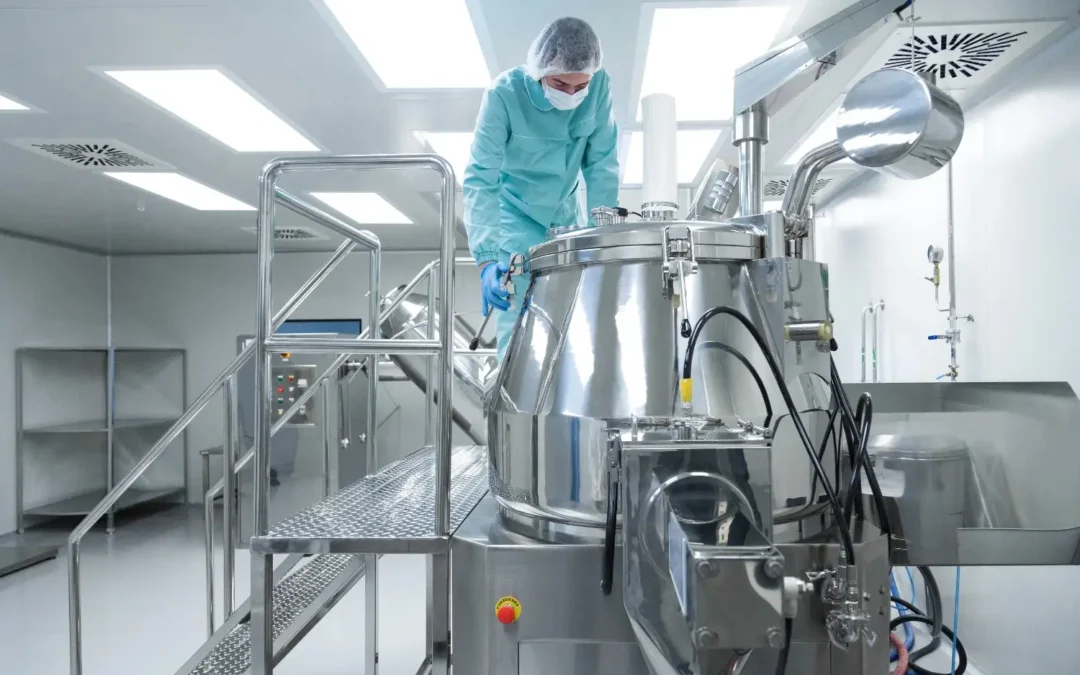


Pharmaceutical manufacturing requires strict environmental control to maintain product stability and safety. Fluctuations in humidity can damage sensitive materials, disrupt chemical processes, and increase the risk of contamination. Maintaining the correct relative humidity helps prevent degradation, supports compliance, and protects equipment.
Consistent humidity control is essential for reliable production outcomes. Advanced monitoring systems allow real-time tracking, helping facilities maintain stable conditions and protect product quality throughout the manufacturing process.
Key Takeaways
- Product integrity depends on stable moisture conditions throughout the production cycle.
- Strict regulatory standards are required to ensure legal compliance and patient safety.
- Proper moisture management prevents the degradation of sensitive chemical powders.
- Consistent air quality reduces the risk of mold and bacterial growth in labs.
- Advanced monitoring systems help maintain safety and prevent costly batch loss.
Why Ideal Humidity Levels Vary Across Pharmaceutical Manufacturing Environments
The ideal humidity levels in pharmaceutical manufacturing are not one-size-fits-all, as they vary based on the type of product being manufactured and the specific processes involved. Different manufacturing environments have distinct requirements to ensure product quality, compliance with regulatory standards, and optimal production conditions.
How Product Sensitivity, Process Type, and Regulatory Classification Drive RH Targets
Product sensitivity is a key factor in determining the ideal humidity level. In pharmaceutical environments, even small variations can impact material behavior, which is why humidity is treated as a critical control parameter. For instance, certain active pharmaceutical ingredients (APIs) are highly hygroscopic, meaning they absorb moisture from the air, affecting their stability and efficacy.
The type of pharmaceutical process being carried out influences the relative humidity (RH) targets. For example:
- Lyophilization: Requires very low humidity to prevent the reabsorption of moisture by the product.
- Granulation and Coating: Need controlled humidity to manage the product’s moisture content effectively.
- Sterile Manufacturing: Demands strict humidity control to maintain the integrity of the sterile environment.
Regulatory classification also plays a significant role. Areas classified under GMP (Good Manufacturing Practice) guidelines must adhere to strict environmental controls, including humidity, to ensure compliance.
The Difference Between GMP Thresholds and Operationally Ideal Humidity Ranges
GMP guidelines provide the minimum requirements for environmental conditions, including humidity, to ensure product safety and quality. However, operationally ideal humidity ranges are often more stringent than the GMP thresholds, as they are optimized for the specific manufacturing processes and product characteristics.
For example, while GMP might specify a maximum allowable RH for a certain area, the operationally ideal range might be narrower to ensure optimal production conditions. Understanding and maintaining these ideal ranges is crucial for:
- Ensuring product quality and stability.
- Optimizing production processes.
- Complying with regulatory requirements.
By understanding the factors that drive RH targets and the distinction between GMP thresholds and operationally ideal humidity ranges, pharmaceutical manufacturers can better control their environments to meet both regulatory requirements and production needs.
Recommended Humidity Levels by Pharmaceutical Manufacturing Area
Different areas within pharmaceutical manufacturing facilities have distinct humidity requirements, crucial for preventing contamination, ensuring product stability, and meeting regulatory demands. These levels are typically aligned with GMP expectations for humidity control, based on the type of products being manufactured, the processes involved, and the regulatory requirements applicable to each area.
Sterile Manufacturing and Aseptic Fill/Finish Environments
These environments demand strict humidity control to maintain sterility and prevent microbial growth. Even small fluctuations can compromise product safety and cleanroom compliance.
Key humidity considerations include:
- Relative humidity (RH) is typically maintained between 30% to 60%
- Precise control is required to prevent condensation formation
- Stable humidity supports cleanroom classification standards
- RH setpoints vary based on process sensitivity and regulatory requirements
- Controlled conditions help minimize microbial contamination risks
Solid Dose Production: Granulation, Compression, and Coating
Solid dose manufacturing processes are highly sensitive to moisture, which can directly affect product quality and production efficiency.
The following humidity factors are important in these areas:
- RH levels are generally maintained between 40% to 60%
- Proper control prevents moisture-induced product degradation
- Supports consistent granulation and compression performance
- Helps maintain chemical and physical stability of formulations
- RH range may vary depending on formulation-specific moisture sensitivity
API Synthesis and Active Ingredient Handling Areas
Active pharmaceutical ingredients require controlled environments to preserve their potency and prevent unwanted chemical reactions.
Key humidity control practices include:
- Recommended RH levels typically range from 20% to 60%
- Lower RH is often required for hygroscopic or moisture-sensitive APIs
- Prevents degradation and loss of active ingredient stability
- Supports safe handling and controlled storage conditions
- RH levels are adjusted based on API characteristics and process needs
Packaging Lines and Secondary Manufacturing Zones
Humidity control in packaging areas ensures product stability and protects packaging materials from environmental damage.
The following factors guide humidity management:
- RH levels are typically maintained between 30% to 50%
- Helps preserve integrity of packaging materials
- Prevents moisture-related damage during packaging processes
- Supports product stability during final handling stages
- Reduces risk of environmental exposure affecting finished goods
Recommended Humidity Levels by Pharmaceutical Process Type
The ideal humidity level in pharmaceutical manufacturing is not a one-size-fits-all solution; it varies significantly depending on the process type. Different processes have unique requirements to ensure product stability, quality, and manufacturing efficiency.
Lyophilization and Freeze-Drying Process RH Requirements
Lyophilization, or freeze-drying, is a process used to preserve pharmaceutical products by removing water content under controlled conditions. This process requires careful humidity control to prevent moisture exposure from affecting the product’s stability and reconstitution properties.
While the freeze-drying process itself operates under vacuum conditions, maintaining a low-humidity environment during handling and transfer helps protect moisture-sensitive products and supports overall product quality and shelf life.
Moreover, the equipment used for lyophilization should be designed to minimize the risk of moisture ingress. This includes using materials and system designs that limit water vapor entry and maintain controlled conditions throughout the process.
Powder Handling, Blending, and Granulation Humidity Targets
Powder handling, blending, and granulation are critical steps in the production of solid dosage forms. These processes require controlled humidity environments to prevent issues such as powder agglomeration and equipment malfunction. The ideal RH range for these processes typically falls between 30% to 60%. This range helps in maintaining the flow properties of powders and preventing the buildup of static electricity.
For instance, in granulation processes, maintaining the right humidity level is essential to achieve the desired granule properties. Too high humidity can lead to over-granulation, while too low humidity can result in under-granulation.
Film Coating, Tablet Compression, and Moisture-Sensitive Formulations
Film coating and tablet compression are processes that require precise control over humidity to ensure the quality of the final product. For film coating, the RH should typically be maintained between 30% to 60% to prevent the coating solution from becoming too viscous or too dry. For tablet compression, controlling humidity is crucial to prevent issues such as sticking and picking.
Moisture-sensitive formulations require even stricter humidity control to prevent degradation. The specific humidity targets for these processes can vary depending on the formulation and the equipment used. For example, some moisture-sensitive formulations may require RH levels as low as 10% to prevent hydrolysis or other degradation reactions.
Factors That Determine the Ideal Humidity Range for a Pharmaceutical Environment
Several factors influence the ideal humidity range in pharmaceutical manufacturing, and each must be carefully evaluated to maintain product quality and process stability.
Active Ingredient Hygroscopicity and Formulation Sensitivity
The hygroscopic nature of active pharmaceutical ingredients (APIs) and overall formulation sensitivity play a key role in defining humidity requirements. Highly hygroscopic APIs may require tighter control to prevent moisture uptake that can impact stability and efficacy.
Key considerations include:
- The chemical structure of the API and its tendency to absorb moisture
- The formulation type, such as solid dose, liquid, or semi-solid
- The presence of excipients that may also be hygroscopic
ISO Cleanroom Classification and Environmental Zoning
Cleanroom classification and environmental zoning influence how tightly humidity must be controlled across different areas. While ISO standards define particulate limits, humidity ranges are typically set based on process sensitivity and contamination control requirements.
The following outlines typical humidity ranges by ISO cleanroom classification:
- ISO 5 cleanrooms typically maintain a humidity range of 30–60%.
- ISO 7 cleanrooms typically maintain a humidity range of 30–65%.
- ISO 8 cleanrooms typically maintain a humidity range of 30–70%.
Seasonal Variability, HVAC Capacity, and Facility Design Constraints
External conditions and facility infrastructure also play a significant role. Seasonal shifts can affect internal humidity levels, especially if HVAC systems are not designed to compensate for these changes.
Key strategies include:
- Using HVAC systems capable of maintaining stable conditions despite external variability
- Designing facilities with materials and layouts that support humidity control
- Performing regular maintenance and validation to ensure consistent performance
Defining a target humidity range is only the first step. In practice, pharmaceutical environments must continuously adapt to changing materials, processes, and external conditions. This makes consistent humidity control more complex than simply maintaining a setpoint.
Humidification systems designed for stable output and uniform distribution, such as Smart Fog, help facilities manage this variability by supporting consistent humidity levels across different operating conditions when properly implemented.
Temperature and Humidity Interaction in Pharmaceutical Manufacturing
The interplay between temperature and humidity is a critical consideration in pharmaceutical manufacturing environments. Both factors are interrelated and can significantly impact the quality and stability of pharmaceutical products.
How Temperature Fluctuations Affect Relative Humidity Readings and Control
Temperature directly influences relative humidity (RH) in pharmaceutical environments. As temperature rises, air can hold more moisture, causing RH to drop if moisture levels remain unchanged. When temperature decreases, RH increases, which can disrupt controlled conditions.
Fluctuations in temperature can lead to inaccurate RH readings and unstable environments. This is especially critical when handling hygroscopic materials, where higher RH can cause clumping or product degradation.
Maintaining stable temperature is essential for consistent humidity control. This is typically achieved through precise HVAC systems, regular sensor calibration, and proper placement of temperature and RH sensors to ensure accurate monitoring.
Managing Temperature-Humidity Balance Across Production Areas
Achieving a balance between temperature and humidity across different production areas is vital for maintaining product quality and preventing environmental-related issues. This involves not only controlling temperature and RH levels but also ensuring that these parameters are monitored continuously and adjusted as necessary.
Different production areas may have unique temperature and humidity requirements. For instance, areas involved in the handling of moisture-sensitive products may require lower RH levels, while areas with hygroscopic materials might need controlled RH to prevent clumping. Implementing a zoned environmental control strategy can help in managing these diverse requirements effectively.
Regular validation and verification of the environmental control systems are also crucial. This includes periodic calibration of sensors, maintenance of HVAC systems, and review of environmental monitoring data to ensure that the temperature and humidity levels remain within the specified ranges.
Maintaining Ideal Humidity Levels: Monitoring and Validation Approach
Maintaining ideal humidity levels requires the correct humidification system, accurate RH setpoints, and consistent validation across all production stages. A reliable monitoring system continuously tracks temperature and humidity to ensure stable conditions. This helps maintain compliance, prevent deviations, and protect product quality.
Environmental Monitoring Practices That Confirm Ideal Levels Are Being Met
Effective environmental monitoring practices are crucial for ensuring that the humidity levels remain within the specified ranges. This includes:
- Installing sensors in strategic locations to monitor temperature and humidity.
- Calibrating these sensors regularly to ensure accuracy.
- Implementing a data logging system to track environmental conditions over time.
- Conducting regular audits to verify that the monitoring system is functioning correctly.
By implementing these practices, manufacturers can ensure that their products are produced in an environment that meets the required standards for quality and safety.
Requalification Triggers and When to Reassess RH Setpoints
There are several scenarios that may trigger the need to requalify or reassess the RH setpoints in a pharmaceutical manufacturing environment. These include:
- Changes in the formulation or manufacturing process of a product.
- Modifications to the facility or equipment used in production.
- Observations of humidity-related issues during production, such as product degradation or equipment malfunction.
- Regulatory requirements or updates to industry standards.
When any of these triggers occur, it is essential to reassess the RH setpoints and adjust the environmental monitoring and control strategies as necessary to maintain compliance and ensure product quality.
Final Thoughts on Ideal Humidity Levels for Pharmaceutical Manufacturing
Maintaining ideal humidity levels is essential for product stability, process consistency, and regulatory compliance in pharmaceutical manufacturing. Each area and process requires precise RH control based on material sensitivity and operational needs, as even small fluctuations can impact quality.
Consistent monitoring, validated systems, and adaptive control strategies are key to maintaining stable conditions and minimizing deviations.
Humidification approaches that prioritize uniform distribution and controlled output, such as Smart Fog systems, are designed to support these requirements by introducing fine droplets that evaporate into the air when properly implemented. This helps maintain consistent environmental conditions across production spaces while aligning with GMP expectations for control and stability.
FAQ
What is the typical ideal relative humidity range for pharmaceutical manufacturing?
Most facilities maintain 40%–60% RH, though moisture-sensitive products may require significantly lower levels.
Why is humidity control essential for preventing microbial growth?
High humidity promotes bacteria and fungi growth, while controlled low humidity helps maintain sterile and compliant environments.
How do temperature fluctuations affect humidity in pharmaceutical storage areas?
Temperature changes alter air moisture capacity, causing RH shifts that can lead to condensation, corrosion, or product degradation.
What equipment is used to manage humidity levels in pharmaceutical facilities?
Facilities use HVAC systems with humidifiers or dehumidifiers, supported by automated environmental control systems.
Why is temperature and humidity monitoring vital for regulatory compliance?
Continuous monitoring provides documented proof that storage conditions meet regulatory standards and protect product quality.