

- Dry air increases the likelihood of static buildup and discharge.
- Stable humidity helps reduce ESD risk across the production environment.
- Controlled conditions support sensitive components during assembly.
- Better environmental stability can improve manufacturing consistency.
- Ongoing monitoring helps maintain reliable humidity performance.
The Science of How Humidity Prevents Electrostatic Discharge
Humidity plays a direct role in how static charge behaves in electronics manufacturing environments. As moisture levels rise, surfaces become better able to dissipate charge, which helps reduce the likelihood of sudden electrostatic discharge events that can damage PCB assemblies and sensitive components.How Moisture Enables Surface Conductivity and Charge Dissipation
Moisture in the air helps create a thin conductive layer on many surfaces. This makes it easier for static charge to dissipate instead of remaining trapped and building to damaging levels. As relative humidity increases, surface conductivity generally improves, which reduces the chance of charge accumulation on materials used throughout PCB production. In practical terms, that means controlled humidity helps lower the risk of ESD by making it easier for static to decay before it reaches sensitive electronics.Ion Formation in Humid Air and Its Role in Neutralising Static Charge
Humidity also supports the presence of ions in the air, which can help neutralize static charge. When charged surfaces or materials are present, ions of the opposite polarity are drawn toward that charge and help reduce the imbalance. This natural process supports a lower static environment across the facility. While humidity alone is not the only line of defense, it plays an important role in reducing the conditions that allow high static voltages to build in the first place.Surface Resistivity Changes Across Relative Humidity Levels
Surface resistivity changes as humidity changes. In drier conditions, many surfaces become more resistive, which makes it easier for static charge to remain on the material and build over time. As humidity rises, those same surfaces often become less resistive and better able to release static charge. This is one reason controlled relative humidity control is so important for ESD management in PCB manufacturing, where material handling and component sensitivity make static control a daily requirement.RH Thresholds Where ESD Risk Changes Significantly
Electrostatic Discharge is a major concern in the production of Printed Circuit Boards (PCBs) and other electronic components. The likelihood and severity of ESD events are influenced by various factors, including the ambient RH. At low RH levels, the air is drier, and static electricity builds up more easily on surfaces, increasing the risk of ESD.The Charge Decay Rate vs RH Curve in Electronics Manufacturing Environments
Charge decay rate measures how quickly static charge dissipates from a surface or object. In PCB manufacturing, this matters because faster charge decay means there is less time for damaging static to remain on materials and discharge into sensitive components. As relative humidity increases, charge usually dissipates more quickly because surface conductivity improves. This allows static charge to release more easily instead of remaining trapped on packaging, tools, work surfaces, or electronic parts moving through production. That relationship is why humidity plays such an important role in ESD control. A more stable humidity level supports faster charge decay, lowers the likelihood of static accumulation, and helps create a safer handling environment across PCB facilities. In contrast, low humidity increases PCB defects by allowing static charge to persist longer and interfere with sensitive assembly processes.Why the 40–60% RH Range Is the Documented ESD Control Threshold for PCB Facilities
The 40 to 60% RH range is widely used in PCB facilities because it helps reduce static risk without introducing excess moisture into the environment. It offers a practical balance between ESD control and day-to-day manufacturing stability. Within this range, charge decay is generally more effective, which lowers the risk of electrostatic discharge reaching sensitive electronic components. At the same time, this range is often manageable across production environments where facilities need dependable humidity control without creating operational complications. Here is why this range is commonly used in PCB manufacturing:- It helps reduce the likelihood of ESD events.
- It improves charge decay and supports better static dissipation.
- It provides a practical balance between static control and stable manufacturing conditions.
Humidity Control as the Environmental Foundation of an ESD Prevention Programme
Humidity control is a core part of effective ESD prevention in PCB facilities. When humidity remains within a stable range, facilities are better able to reduce static buildup and protect sensitive electronic components throughout production.Why Surface-Level Controls Alone Cannot Address Environmental Charge Generation
Surface-level controls such as grounding and ionization remain important, but they do not solve every source of static risk. These measures mainly help manage charge after it has formed rather than stopping the environmental causes in ESD that allow static to build in the first place. That is why humidity matters so much in PCB manufacturing. When the air is too dry, charge accumulates more easily on materials, equipment, packaging, and work surfaces, increasing the likelihood of electrostatic discharge across the production environment.The Layered Defence Model: Humidity as Prevention, Traditional Measures as Residual Risk Management
A stronger ESD prevention programme uses a layered approach rather than relying on one control method alone. In that model, humidity control works as a preventive layer because it helps reduce static generation across the wider environment before discharge becomes a problem. Traditional ESD controls still play an essential role, but they work best as supporting measures that manage remaining risk. Grounding, ionization, and ESD-safe materials help control charge that still appears during production, while stable humidity helps reduce how often that charge forms in the first place. When these measures are used together, PCB facilities are better positioned to create a more reliable and complete ESD control strategy.How Controlled Humidity Reduces ESD Events Across PCB Production Processes
Controlled humidity helps reduce static-related risk across multiple stages of PCB production. It supports a more stable environment for component handling, assembly, and material movement, which helps lower the chance of damaging ESD events.Static Generation Reduction During Component Handling and SMT Assembly
Static electricity can build quickly during component handling and SMT assembly because of friction between materials, tools, packaging, and moving equipment. Controlled humidity helps reduce that buildup by making it easier for surfaces to dissipate charge before it reaches damaging levels. Here is how controlled humidity supports these production areas:- Reduces triboelectric charging between components and handling equipment.
- Minimizes static buildup on PCB components and assembly machinery.
- Strengthens overall ESD control in sensitive production areas.
Material Stabilisation and Reduced Electrostatic Attraction in Production Environments
Controlled humidity also supports material stability by reducing electrostatic attraction between surfaces and airborne particles. This helps lower the risk of dust, debris, or contaminants clinging to components and production materials during manufacturing. That added stability is important in environments where clean handling and process consistency directly affect product quality. With controlled humidity, manufacturers can achieve:- Improved handling characteristics of components and materials.
- Reduced risk of contamination due to electrostatic attraction.
- Better overall consistency across the production process.
How Humidity Control Reduces Latent Damage Risk in High-Density PCB Assembly
Latent damage is one of the most serious ESD risks in high-density PCB assembly because the component may not fail right away. Instead, the electrostatic event weakens internal structures, reduces long-term reliability, and creates failures that may only appear later in the field. Humidity control helps reduce that risk by limiting the dry conditions that allow static charge to build across the production environment. When humidity remains stable, the likelihood of ESD during handling, placement, and assembly is lower, which helps protect sensitive components from hidden damage. Controlled humidity helps by:- Maintaining conditions that reduce excessive static buildup.
- Lowering the risk of ESD during handling and assembly.
- Helping protect components from latent reliability damage.
Integrating Humidity Control With Grounding, Ionization, and ESD Programme Measures
Humidity control works best when it is part of a broader ESD prevention strategy rather than a standalone fix. In PCB manufacturing, it supports grounding, ionization, and handling controls by reducing static generation across the environment before discharge becomes a larger risk.How Humidity and Ionization Work Together to Address Different Charge Sources
Humidity and ionization support ESD control in different but complementary ways. Humidity helps reduce static buildup by improving surface charge dissipation, while ionization helps neutralize charge on insulators and isolated conductive objects that cannot be controlled through grounding alone. Using both measures together creates broader protection across the production environment. Humidity helps reduce how often static forms, and ionization helps manage charge that still appears on materials, packaging, and nearby surfaces during handling and assembly. Key benefits of combining humidity control and ionization include:- Improved charge neutralization across different materials.
- Reduced static generation in dry production environments.
- Stronger overall ESD protection across sensitive PCB areas.
- Humidity control: helps reduce static generation and supports faster charge decay by maintaining stable environmental conditions.
- Ionization: helps neutralize charge on non-conductive materials and isolated surfaces where grounding is ineffective.
- Grounding: provides a controlled path for charge dissipation from personnel, tools, and workstations.
Coordinating Humidity Targets With ESD Flooring, Workstation, and Handling Standards
Humidity targets should be coordinated with other ESD control measures so the full programme works as one system. Flooring, workstation design, grounding methods, and handling practices all perform better when the surrounding environment does not continuously recreate static risk. This coordinated approach helps facilities build more reliable protection across the production floor. Instead of treating each control as separate, PCB manufacturers can align humidity strategy with other ESD standards to improve consistency and reduce gaps in protection. Best practices for coordination include:- Maintaining a stable humidity range across the facility based on process needs.
- Selecting ESD flooring materials that perform reliably within the chosen environment.
- Designing workstations with grounding and ionization measures where needed.
- Applying handling standards that reduce unnecessary static generation during production.
Supporting ESD Control Across PCB Production Environments
In PCB manufacturing, static risk is constantly influenced by moving materials, automated assembly lines, and frequent handling of sensitive components. Variations in humidity can lead to inconsistent charge behavior across SMT lines, inspection stations, and packaging areas, reducing the effectiveness of grounding and ionization systems.
Humidification solutions such as Smart Fog are designed to support stable humidity conditions across these environments by introducing fine droplets that evaporate into the air when properly implemented. This helps maintain consistent charge dissipation conditions throughout the production floor, supporting more reliable performance of ESD control measures across PCB manufacturing processes.
Facility-Level Implementation: HVAC Integration and Environmental Monitoring
Facility-level humidity control depends on more than setting a target number. PCB manufacturers need HVAC performance and environmental monitoring to work together so humidity remains stable across different zones and changing production conditions.HVAC Configuration Effects on Humidity Stability
HVAC design has a direct impact on how well a facility can maintain humidity stability. If airflow, system sizing, or distribution is uneven, some zones may become drier or more variable than others, which makes ESD control harder to maintain. A well-planned HVAC setup with the right humidifier support helps keep humidity more consistent across PCB production spaces. This is especially important in facilities with multiple zones, heat-generating equipment, and different process requirements that can affect local environmental conditions. Key considerations for HVAC configuration include:- Proper system sizing based on the facility's humidity control needs.
- Air handler and diffuser placement that supports even air distribution.
- Integrated humidity control that helps maintain stable RH across production areas.
Monitoring Requirements for ESD-Level Humidity Maintenance
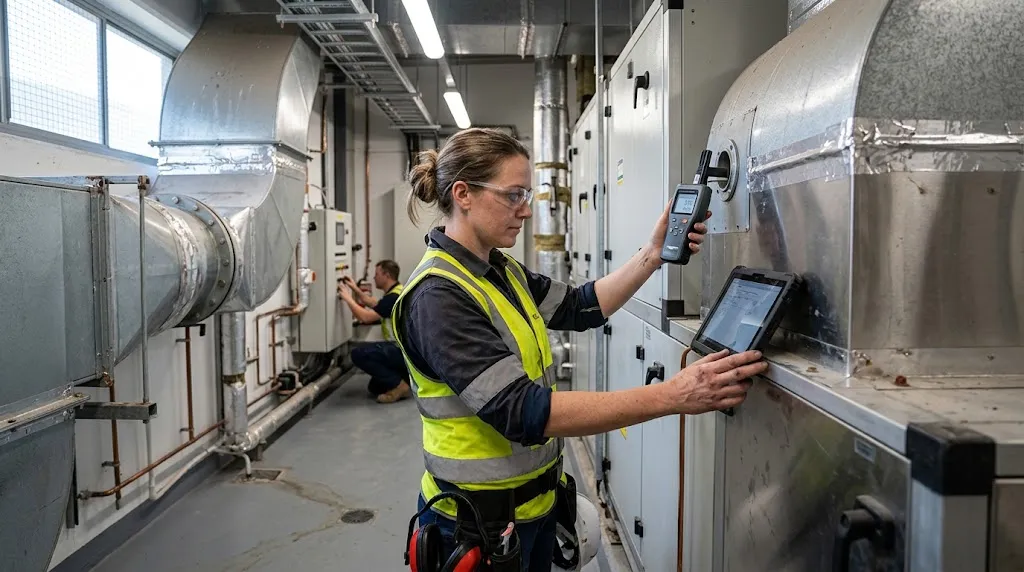
Monitoring is essential for confirming that humidity targets are being maintained over time. Without reliable measurement, facilities may not notice environmental drift until static-related issues begin affecting product quality or process stability. A strong monitoring programme helps teams identify changes early and respond before those conditions create a larger ESD risk. It also supports better validation of humidity performance across critical production zones and helps facilities maintain the right humidity requirements in PCB manufacturing areas. Effective monitoring requires:- Sensor placement in production areas where humidity control is most critical.
- Regular calibration and maintenance of monitoring equipment.
- Continuous data logging to track conditions and identify deviations over time.
Operational Challenges in Maintaining Humidity for ESD Prevention
Maintaining stable humidity in PCB facilities is critical for reducing ESD risk, but it is not always easy in active production environments. Air movement, process heat, seasonal conditions, and system limitations can all make humidity control harder to maintain from one zone to another.High Airflow Rates, Equipment Heat Loads, and Moisture Loss in Production Lines
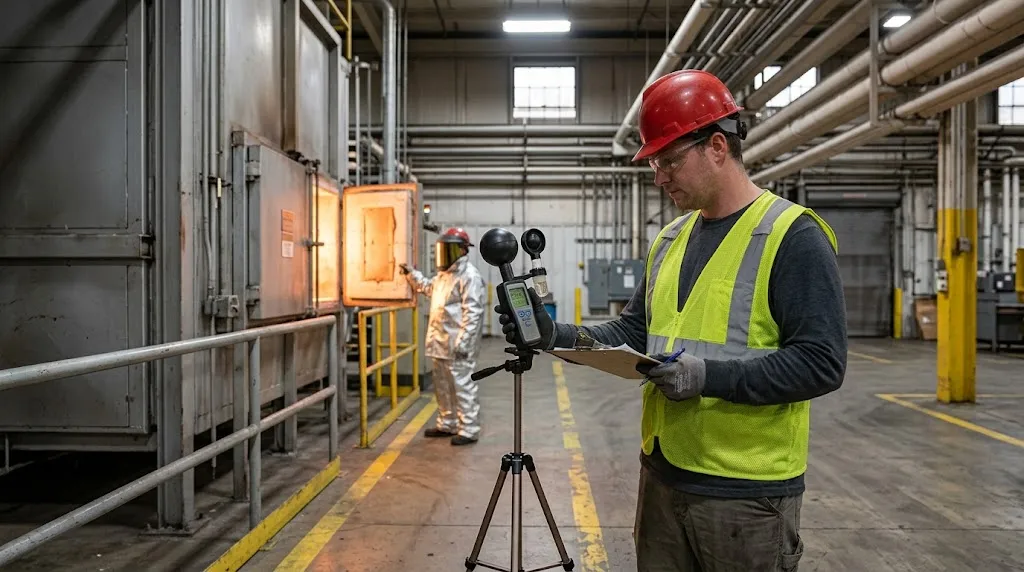
PCB production lines often include strong airflow and heat-generating equipment that can dry out the surrounding environment. As air moves quickly through the space and equipment raises local temperatures, relative humidity can drop even when the overall facility setpoint appears acceptable. This creates a challenge because some production zones may become much drier than others during normal operation. Reflow ovens, wave soldering systems, and other heat-intensive processes can lower local humidity enough to increase static risk around sensitive components and assemblies. To manage this, facilities need to pay close attention to how airflow and heat affect different parts of the line. Effective control usually depends on a combination of:- Humidity management matched to actual production conditions.
- Airflow planning that avoids unnecessary moisture loss.
- Monitoring in areas most affected by equipment heat and air movement.
Seasonal Dryness, Climate Variability, and HVAC System Limitations
Outdoor climate conditions also affect how easily a facility can maintain the right humidity level indoors. During dry seasons or in arid climates, incoming air often carries very little moisture. That makes stable indoor humidity harder to maintain and increases the need for a properly selected PCB humidifier. HVAC limitations can make this even more difficult. Some systems respond too slowly, some are not sized for the real humidity load, and others cannot maintain consistent conditions across mixed-use PCB facilities with different environmental needs. In practice, facilities often see major differences in performance depending on system capability:- Basic HVAC: limited humidity control, slower response, lower cost.
- HVAC with humidification module: moderate control, moderate response, mid-range cost.
- Advanced HVAC with integrated humidification and dehumidification: stronger control, faster response, higher cost.