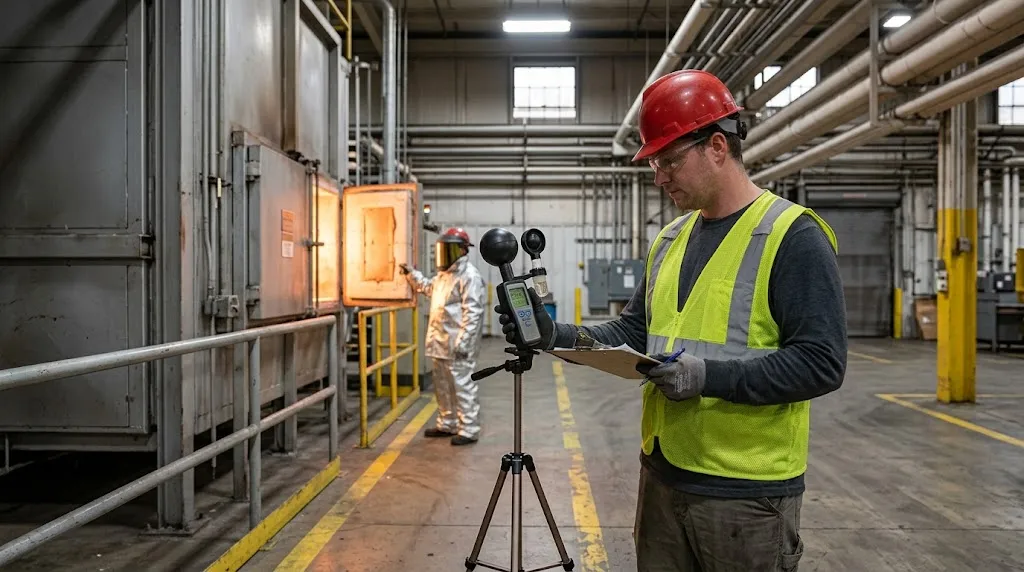
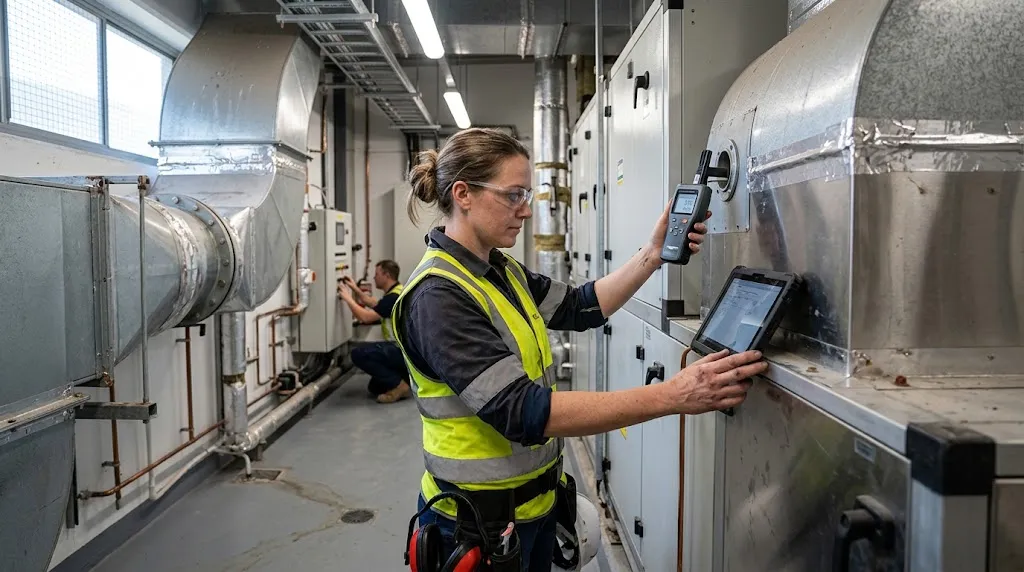
ESD flooring testing measures electrical resistance according to ANSI/ESD S7.1 standards to verify that flooring systems provide adequate static control in electronics manufacturing and other sensitive environments. The testing involves specific resistance measurements between floor points and from floor to ground using calibrated equipment under controlled environmental conditions. Valid test results require precise procedures, proper equipment calibration, and humidity control within narrow ranges specified by the standard.
Facilities that handle sensitive electronics, semiconductors, or other static-sensitive components depend on these measurements to validate their static control programs and maintain compliance with industry requirements.
Key Takeaways
- ANSI/ESD S7.1 defines the standard test method for measuring resistance between two points on ESD flooring systems using specific electrode configurations and measurement procedures.
- ESD flooring systems must demonstrate resistance values between 1.0 x 10^6 and 1.0 x 10^9 ohms when measured point-to-point, and less than 3.5 x 10^10 ohms when measured point-to-ground.
- Test measurements require a 500-volt DC source applied for 15 seconds, with readings taken at the end of the electrification period using calibrated resistance measuring equipment.
- Environmental conditions during testing must maintain relative humidity between 12% and 22% for consistent and repeatable resistance measurements.
- Testing must be performed on clean, dry flooring surfaces using standardized 2.5-pound cylindrical electrodes spaced according to ANSI/ESD S7.1 specifications.
- Humidity levels above 40% can reduce surface resistance by orders of magnitude, as detailed in moisture effect studies, potentially masking flooring defects and invalidating test results.
ANSI/ESD S7.1 Standard Requirements
The ANSI/ESD S7.1 standard establishes the official test method for measuring electrical resistance of ESD flooring systems in commercial and industrial facilities. This standard works in conjunction with ANSI/ESD S20.20, which defines the overall requirements for electrostatic discharge control programs in electronics manufacturing and other static-sensitive environments.
ANSI/ESD S7.1 specifically addresses the measurement procedures needed to verify that installed flooring systems maintain their static control properties over time. The standard applies to all types of ESD control flooring, including conductive vinyl, static dissipative epoxy, and other engineered floor materials designed for static electricity management.
Standard Scope and Application
The standard covers resistance testing requirements for facilities that must demonstrate compliance with electrostatic discharge control programs. Testing is required during initial floor installation acceptance, after any floor maintenance or refinishing work, and as part of ongoing compliance verification programs.
The scope includes both new installations and existing floors that require periodic verification. Facilities typically conduct initial acceptance testing within 30 days of installation and follow-up testing at intervals determined by their ESD control program requirements.
Resistance Specifications
ANSI/ESD S7.1 establishes specific resistance ranges that define acceptable ESD flooring performance. Point-to-point measurements between any two locations on the floor surface must fall between 1.0 x 10^6 and 1.0 x 10^9 ohms. Point-to-ground measurements from any floor location to the facility’s electrical ground system must not exceed 3.5 x 10^10 ohms.
These specifications ensure that the floor provides controlled static dissipation without creating safety hazards from excessive conductivity. Values below the minimum range may present electrical shock risks, while values above the maximum range indicate insufficient static control capability.
ESD Flooring Resistance Measurement Methods
Resistance measurement procedures under ANSI/ESD S7.1 require systematic testing approaches that ensure accurate and repeatable results across different floor areas and environmental conditions. The standard specifies exact procedures for electrode placement, voltage application timing, and data collection that must be followed for valid measurements.
Proper surface preparation is essential before conducting any resistance measurements. Floor surfaces must be clean and completely dry, with no cleaning residues, wax, or other surface contaminants that could affect electrical conductivity. Test locations should be representative of the floor area and include areas of normal foot traffic as well as locations near static-sensitive equipment.
Point-to-Point Testing Procedure
Point-to-point testing measures resistance between two locations on the floor surface using standardized cylindrical electrodes. The electrodes are placed exactly three feet apart and weighted to ensure consistent contact pressure of 2.5 pounds per electrode.
A 500-volt DC source is applied between the electrodes for exactly 15 seconds, allowing sufficient time for the electrical field to stabilize through the floor material. The resistance reading is taken at the end of this electrification period when the measurement has reached equilibrium. Each test location requires a minimum of three measurements, with the electrode positions rotated to verify consistency across different orientations.
Point-to-Ground Testing Procedure
Point-to-ground testing verifies the electrical path from the floor surface to the facility’s grounding system. One electrode is placed on the floor surface while the second connection is made to a verified electrical ground point, typically through the facility’s grounding bus or a dedicated ground rod.
The same 500-volt, 15-second measurement protocol applies to ground testing. This test verifies that the floor’s conductive elements properly connect to the building’s electrical ground system and that the resistance through this path remains within specification. Ground path integrity is critical for effective static charge dissipation during normal facility operations.
Test Equipment and Calibration Requirements
Valid ESD floor testing requires calibrated resistance measuring instruments designed specifically for high-voltage, high-resistance measurements. Standard digital multimeters lack the voltage capability and measurement range needed for accurate ESD flooring evaluation.
Professional ESD test equipment must provide the 500-volt test voltage specified in ANSI/ESD S7.1 and measure resistance values accurately across the range from 10^4 to 10^12 ohms. The instrument’s internal resistance and test current characteristics must not interfere with the measurement, particularly at the high resistance values common in static dissipative flooring materials.
Resistance Measuring Instruments
ESD flooring test equipment must maintain measurement accuracy within ±10% across the full resistance range specified in ESD standards. The test voltage must remain stable at 500 volts ±50 volts throughout the 15-second measurement period, regardless of the floor resistance being measured.
Calibration verification is required at least annually using traceable resistance standards that cover the measurement range. Daily function checks using known resistance values help ensure measurement reliability between formal calibration cycles. The test instrument’s battery condition and internal calibration circuits should be verified before each testing session.
Electrode and Test Probe Requirements
Test electrodes must meet exact physical specifications to ensure consistent contact with floor surfaces. The standard requires cylindrical electrodes with a 2.5-inch diameter contact surface, constructed from conductive rubber or similar material that provides uniform electrical contact without damaging floor surfaces.
Each electrode must weigh exactly 2.5 pounds to provide consistent contact pressure across different floor materials and surface textures. The electrode design must prevent air gaps or uneven contact that could affect resistance measurements. Connecting cables must use shielded construction to prevent electrical interference during high-voltage testing.
Pass/Fail Criteria and Result Interpretation
ESD flooring test results must be evaluated against the specific resistance ranges established in ANSI/ESD S7.1 to determine compliance status. Results outside the specified ranges indicate either insufficient static control capability or potential safety concerns from excessive conductivity.
Test documentation must record the exact resistance values measured, environmental conditions during testing, equipment calibration status, and the specific test locations on the floor plan. This documentation provides the evidence needed for ESD control program compliance and helps identify trends that may indicate floor degradation over time.
Acceptable Resistance Ranges
Point-to-point resistance measurements must fall between 1.0 x 10^6 ohms and 1.0 x 10^9 ohms to meet ANSI/ESD S7.1 requirements. Values below 1.0 x 10^6 ohms indicate excessive conductivity that may present electrical safety risks. Values above 1.0 x 10^9 ohms suggest insufficient static control capability.
Point-to-ground resistance measurements must not exceed 3.5 x 10^10 ohms from any floor location to the electrical ground system. Higher values indicate problems with the ground connection or excessive resistance in the floor’s conductive path. These measurements verify that static charges can dissipate safely to ground during normal operations.
Documentation and Retesting Requirements
Failed test results require investigation to determine whether the problem stems from floor degradation, installation defects, or environmental factors affecting the measurement. Areas that fail initial testing must be retested after corrective action to verify that resistance values return to acceptable ranges.
Testing frequency depends on the facility’s ESD control program requirements and the specific applications involved. High-reliability electronics manufacturing may require monthly verification testing, while less critical applications may need only annual testing. Any maintenance activities that could affect floor conductivity, such as refinishing or cleaning with new products, typically trigger additional verification testing.
Environmental Factors Affecting Test Results
Environmental conditions during ESD flooring testing significantly impact measurement accuracy and repeatability. Humidity, temperature, and surface contamination can alter floor resistance by several orders of magnitude, potentially invalidating test results if not properly controlled.
ANSI/ESD S7.1 specifies environmental limits that must be maintained during testing to ensure valid measurements. Testing conducted outside these limits may produce results that do not accurately reflect the floor’s performance under normal operating conditions.
Humidity Effects on Surface Resistance
Relative humidity has the most significant impact on ESD flooring resistance measurements. As humidity increases above 40%, moisture begins to form conductive films on floor surfaces, dramatically reducing measured resistance values. This effect can make defective flooring appear to meet specifications when humidity is elevated.
The standard requires testing at relative humidity between 12% and 22% to minimize moisture-related conductivity effects in ESD control programs. This controlled environment ensures that resistance measurements reflect the floor material’s inherent properties rather than surface moisture conditions. Testing at higher humidity levels may mask floor degradation or installation defects that would be apparent under proper test conditions.
Controlled Environment Requirements
Temperature during testing should remain stable between 70°F and 75°F to prevent thermal effects on floor material conductivity. Rapid temperature changes can affect both the floor resistance and the test equipment calibration, leading to inconsistent results.
Surface cleanliness requirements extend beyond visible contamination to include residues from cleaning products, floor waxes, or other treatments that may affect electrical properties. The floor must be completely dry before testing, with sufficient time allowed for any cleaning solvents to evaporate fully. Even trace amounts of conductive cleaning residues can significantly alter resistance measurements.
Maintaining Test Environment Humidity with Smart Fog Systems
While Smart Fog systems are most commonly deployed in electronics manufacturing to maintain the 40–60% RH range that prevents static charge accumulation during production, the same precision control capability applies where tight humidity stability within any target range is required. This includes the 12–22% testing environment specified by ANSI/ESD S7.1.
Precise control of humidity requirements for ESD programs within the 12-22% range specified by ANSI/ESD S7.1 requires humidification systems that can maintain narrow tolerance bands without affecting floor surface properties. Traditional humidification methods often introduce moisture variations or surface wetting that can compromise test validity and floor condition.
Smart Fog precision humidification systems address these challenges through compressed air and water mixing that produces an equal-sized droplet grid designed to self-evaporate before reaching floor surfaces. This approach enables facilities to maintain the stable humidity conditions required for valid ESD flooring testing while preserving floor integrity and measurement accuracy.
Precision Humidity Control for Testing Protocols
Smart Fog systems maintain relative humidity within ±1-2% of setpoint, providing the consistency needed for repeatable ESD flooring measurements across multiple test sessions. The system’s response time allows environmental conditions to be established and stabilized before testing begins, eliminating humidity fluctuations that could affect resistance measurements during the testing process.
The non-wetting operation ensures that humidity control does not introduce surface moisture that could interfere with electrical measurements. Floor surfaces remain dry throughout the environmental conditioning period, maintaining the surface conditions required for valid resistance testing under ANSI/ESD S7.1 protocols.
Non-Wetting Environmental Conditioning
ESD flooring materials require surface conditions that remain unaffected by the humidification process during test environment preparation. Smart Fog’s self-evaporating droplets maintain target humidity levels without depositing moisture on floor surfaces, equipment, or test instruments that could alter electrical properties or measurement accuracy.
The system operates continuously during extended testing sessions without creating condensation or surface moisture that could invalidate test results. This capability is particularly valuable in facilities with large floor areas requiring comprehensive testing over multiple days, where maintaining consistent environmental conditions throughout the testing period is essential for reliable compliance verification.
Final Thoughts
ESD flooring testing under ANSI/ESD S7.1 requires systematic attention to measurement procedures, equipment calibration, and environmental control to produce valid compliance verification. The standard’s specific resistance ranges and testing protocols ensure that flooring systems provide reliable static control while maintaining electrical safety in sensitive manufacturing environments.
Environmental conditions during testing significantly impact measurement accuracy, with humidity control being particularly critical for obtaining repeatable results. Facilities that need reliable ESD flooring validation can benefit from comprehensive ESD control systems designed to maintain the precise environmental conditions required for accurate testing.
For facilities requiring ongoing ESD compliance verification, contact Smart Fog engineers to discuss environmental control requirements for reliable ESD flooring testing programs.
FAQ
How do you test an ESD floor according to ANSI/ESD S7.1 standards?
ESD floor testing involves measuring electrical resistance using calibrated instruments with 500-volt capability and standardised floor compliance parameters per ANSI/ESD S20.20, using 2.5-pound cylindrical electrodes placed 3 feet apart. Measurements require 15-second voltage application periods under controlled humidity conditions between 12% and 22% relative humidity.
What resistance values must ESD flooring systems meet to pass testing?
ESD flooring systems must demonstrate point-to-point resistance between 1.0 x 10^6 and 1.0 x 10^9 ohms for acceptable static control without safety concerns. Point-to-ground resistance must not exceed 3.5 x 10^10 ohms to ensure adequate static charge dissipation paths. Values outside these ranges indicate either insufficient static control or potential electrical safety risks.
What equipment is required for proper ESD flooring resistance measurements?
Proper ESD testing requires calibrated resistance measuring instruments capable of 500-volt test voltage and accurate measurements across 10^4 to 10^12 ohm ranges. Test electrodes must be cylindrical with 2.5-inch diameter contact surfaces and weigh exactly 2.5 pounds each. Standard multimeters lack the voltage capability and measurement range needed for valid ESD flooring evaluation.
Why is humidity control critical during ESD flooring testing?
Humidity affects floor surface conductivity significantly, with moisture above 40% relative humidity creating conductive films that can reduce measured resistance by orders of magnitude. ANSI/ESD S7.1 requires testing between 12% and 22% humidity to minimize moisture effects and ensure measurements reflect the floor material’s actual electrical properties rather than surface moisture conditions.
How often should ESD flooring systems be tested for compliance?
Testing frequency depends on facility ESD control program requirements and application sensitivity levels. Initial acceptance testing occurs within 30 days of installation, with periodic verification testing typically conducted annually for general applications or monthly for high-reliability electronics manufacturing. Additional testing is required after any floor maintenance, refinishing, or cleaning procedure changes.
What environmental conditions are required for valid ESD flooring test results?
Valid testing requires relative humidity between 12% and 22%, stable temperature between 70°F and 75°F, and completely clean, dry floor surfaces. Environmental conditions must remain stable throughout the testing period to ensure measurement repeatability. Testing outside these parameters may produce results that do not accurately reflect floor performance under normal operating conditions.
What is the difference between point-to-point and point-to-ground ESD testing?
Point-to-point testing measures resistance between two locations on the floor surface to verify static control properties across the floor area. Point-to-ground testing measures resistance from floor locations to the facility’s electrical ground system to verify proper static dissipation paths. Both measurements are required for complete ESD flooring validation under ANSI/ESD S7.1.
How do you interpret ESD flooring test results and determine pass/fail status?
Test results are compared against ANSI/ESD S7.1 resistance specifications, with point-to-point values between 1.0 x 10^6 and 1.0 x 10^9 ohms indicating acceptable performance. Point-to-ground values must not exceed 3.5 x 10^10 ohms for passing results. Values outside these ranges require investigation and corrective action before the flooring system can be considered compliant for ESD control applications.