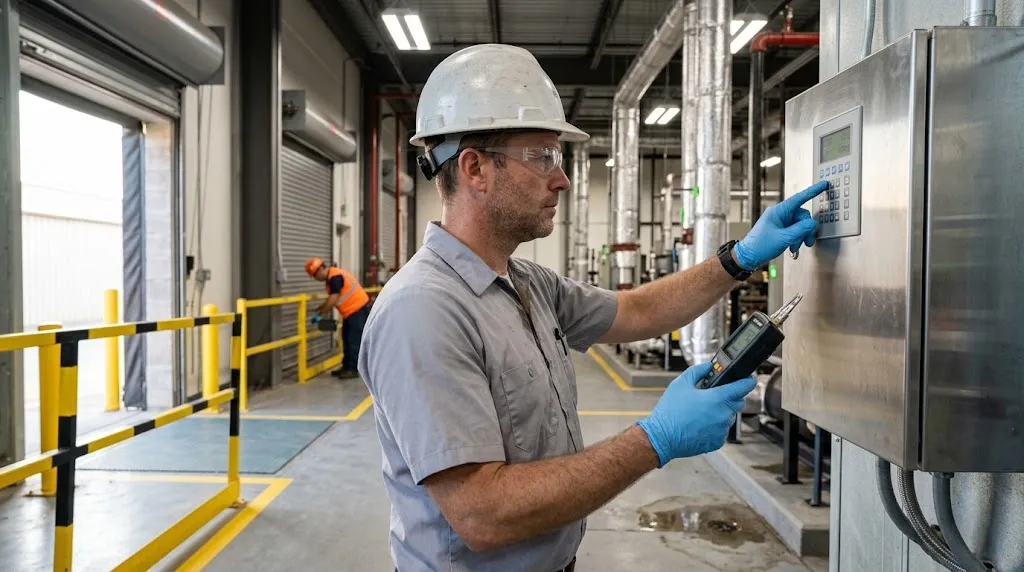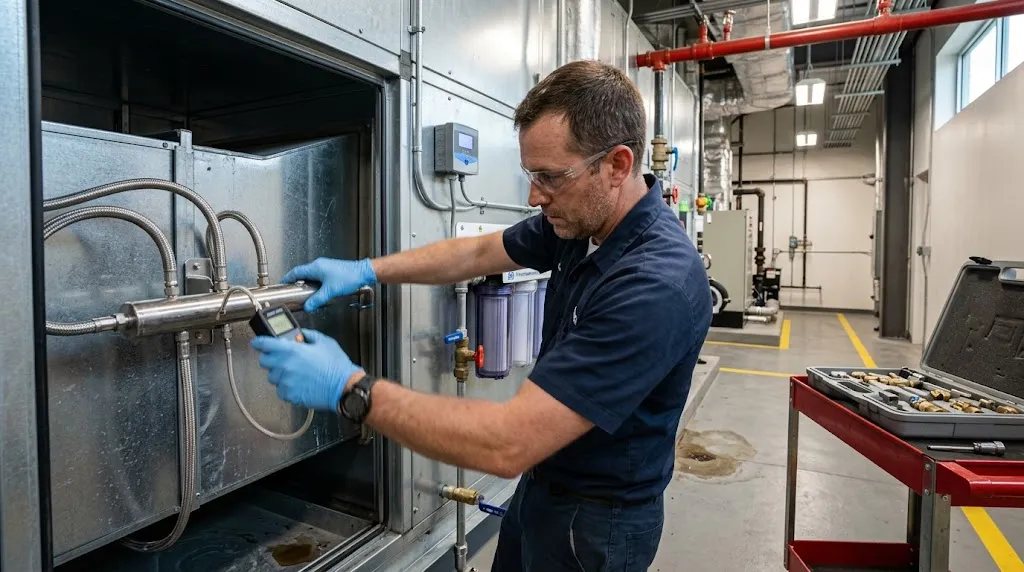


Electrostatic discharge prevention requires a combination of environmental controls, grounding systems, and protective materials to eliminate static buildup before it can damage equipment or create safety hazards. Environmental humidity control prevents charge accumulation facility-wide, while contact methods like wrist straps and grounding systems provide point-of-use protection at individual workstations.
Facility managers face increasing pressure to implement comprehensive ESD control as electronic components become more sensitive and production environments handle higher-value equipment. Traditional contact-based methods address immediate protection needs but cannot prevent charge generation throughout an entire facility. Environmental approaches like humidity control and ionization target the root causes of static buildup across larger spaces.
Effective ESD prevention programs integrate multiple protection methods rather than relying on any single approach. Understanding how environmental factors interact with contact-based protection enables facility managers to design systems that maintain reliable static control while meeting operational and compliance requirements.
Key Takeaways
- Environmental humidity control prevents static charge accumulation across entire facilities, while contact methods like wrist straps only protect at individual workstations.
- Relative humidity below 40% dramatically increases static charge buildup, making environmental control essential in dry climates or heated facilities.
- Grounding systems require continuous skin contact to be effective, creating compliance challenges in facilities with multiple operators and shifting workflows.
- Ionizers neutralize existing charges but require frequent maintenance and lose effectiveness with air movement, limiting their reliability in active production environments.
- Comprehensive ESD prevention combines environmental controls with protective materials and grounding, rather than relying on any single method.
- Anti-static materials and ESD-safe packaging provide protection during transport and storage but cannot address facility-wide charge generation.
Understanding Electrostatic Discharge in Facility Environments
Electrostatic discharge occurs when accumulated static charge transfers rapidly between objects at different electrical potentials, creating voltage spikes that can damage sensitive electronic components or ignite flammable materials. In industrial environments, charge buildup results from friction between materials, personnel movement across synthetic surfaces, and low humidity conditions that reduce air conductivity.
Static charge generation increases significantly in facilities where synthetic materials contact each other frequently during material handling, packaging, or production processes. Personnel walking across carpeted or vinyl flooring can accumulate thousands of volts, particularly in environments where relative humidity drops below 40%. Equipment operation, conveyor systems, and air movement through ducts also contribute to facility-wide charge accumulation.
Voltage thresholds for equipment damage vary by component type and sensitivity level. Integrated circuits can fail at discharge levels as low as 10 volts, while many electronic assemblies experience degradation or failure at 100-1000 volt discharge events. These voltage levels are far below human perception thresholds, making undetected ESD damage a persistent risk in facilities handling sensitive electronic components.
Common Sources of Static Charge Buildup
Static charge accumulation in facility environments results from predictable friction and separation processes that facility managers can identify and control:
- Material handling operations where synthetic packaging contacts metal surfaces or conveyor belts
- Personnel movement across synthetic flooring, particularly carpets and vinyl surfaces during dry conditions
- Air movement through HVAC systems that lack proper grounding and humidity control
- Separation of plastic films, labels, or protective coverings during packaging and assembly processes
Voltage Thresholds and Damage Mechanisms
ESD damage mechanisms vary by equipment type and sensitivity classification, requiring different protection strategies based on the electronic components present in each facility:
- Microprocessors and memory devices: susceptible to damage at 10-100 volt discharge levels
- Discrete semiconductors and circuit boards: typically damaged by discharge events exceeding 200-1000 volts
- Assembled electronic equipment: generally more robust but can experience performance degradation at 2000+ volt discharge levels
- Non-electronic equipment: may require protection only in environments where ESD poses ignition risks for flammable materials
Environmental vs Contact-Based ESD Prevention Methods
Environmental ESD control and contact-based protection represent fundamentally different approaches to static prevention, each addressing distinct aspects of charge management in facility environments. Environmental methods target the conditions that enable charge accumulation, while contact-based systems provide immediate discharge paths for charges that have already formed.
ESD control systems encompass both approaches but differ significantly in protection scope, maintenance requirements, and operator compliance demands. Environmental controls like humidity management and ionization systems provide facility-wide protection without requiring individual operator actions, while contact methods depend on consistent human compliance and proper equipment maintenance.
Facility-wide protection scope represents the primary differentiator between these approaches. Environmental controls address static charge prevention across entire production areas, storage zones, and personnel pathways simultaneously. Contact methods protect only at specific workstations or during individual handling operations, creating potential gaps in coverage where personnel move between protected areas.
Environmental Control Methods
Environmental ESD control addresses the atmospheric and facility conditions that enable static charge accumulation, providing protection that extends across entire production areas without requiring operator intervention.
Humidity control maintains relative humidity levels between 45-55% to increase air conductivity and prevent charge buildup on surfaces and materials, as outlined in EPA moisture control guidelines. Proper humidity levels enable static charges to dissipate naturally through the air rather than accumulating to dangerous levels on equipment or personnel. This method provides continuous protection regardless of personnel movement or material handling activities.
Ionization systems generate positive and negative ions to neutralize static charges on surfaces and materials within their coverage area. These systems require regular maintenance to ensure proper ion balance and lose effectiveness in environments with high air movement or contamination. Ionization provides active charge neutralization but cannot prevent new charge generation from ongoing facility operations.
Contact-Based Protection Systems
Contact-based ESD protection creates controlled discharge paths for static charges through direct physical contact between charged objects and grounding systems. These methods require consistent operator compliance and proper equipment maintenance to maintain effectiveness.
Grounding systems use wrist straps, heel straps, or conductive flooring to provide continuous electrical contact between personnel and ground potential. ESD control methods compared shows that grounding effectiveness depends on maintaining proper skin contact, which can be compromised by clothing, gloves, or inconsistent strap positioning.
Anti-static materials and ESD-safe workstations use conductive or dissipative surfaces to prevent charge accumulation on work surfaces, packaging materials, and storage containers. These materials provide protection for items in direct contact but cannot address charge generation from personnel movement or air handling systems elsewhere in the facility.
Implementing Facility-Wide ESD Prevention Programs
Comprehensive ESD prevention programs require systematic assessment, method selection, and ongoing monitoring to maintain effective static control across diverse facility environments. Program effectiveness depends on matching protection methods to specific facility conditions, equipment sensitivity levels, and operational workflows rather than implementing generic solutions.
Facility assessment begins with identifying charge generation sources, measuring existing static levels, and determining equipment sensitivity requirements throughout the facility. Environmental monitoring reveals humidity levels, air movement patterns, and seasonal variations that affect charge accumulation. Equipment inventories identify components requiring specific protection levels and help establish critical protection zones where ESD damage would have the greatest operational impact.
System selection balances protection effectiveness with operational requirements, maintenance demands, and compliance monitoring capabilities. Facilities handling highly sensitive electronic components typically require both environmental controls and contact-based protection to ensure comprehensive coverage. Less sensitive operations may achieve adequate protection through environmental controls alone, reducing operator compliance requirements and maintenance complexity.
- Conduct baseline static measurements and identify primary charge generation sources
- Establish equipment sensitivity classifications and protection requirements for each facility zone
- Select protection methods based on charge sources, sensitivity requirements, and operational constraints
- Install environmental controls first, followed by contact-based protection at critical workstations
- Train personnel on proper use of contact-based protection equipment and compliance monitoring procedures
- Implement regular monitoring protocols to verify system effectiveness and identify maintenance needs
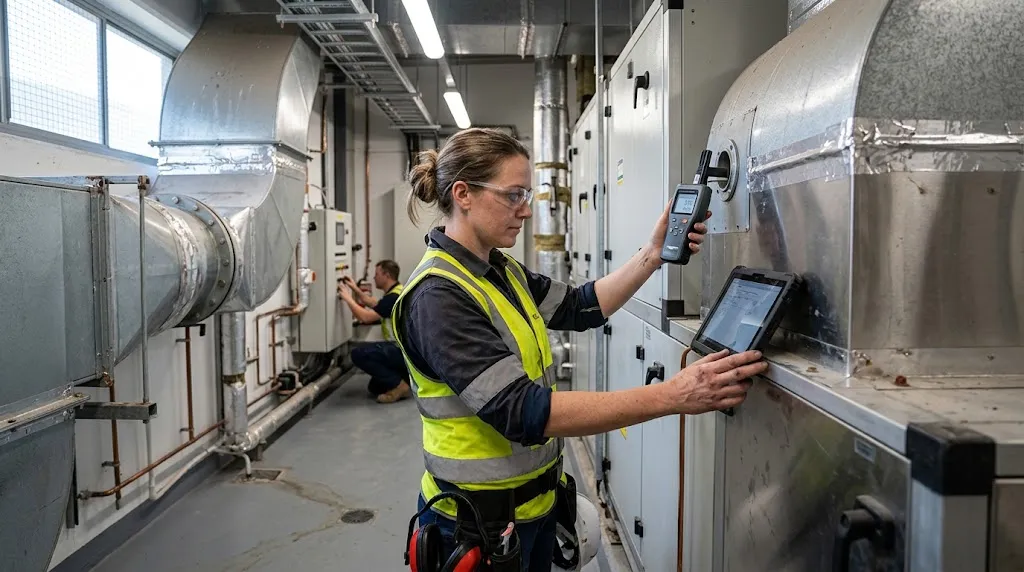
Facility Assessment and System Selection
Effective ESD prevention program design requires comprehensive assessment of facility-specific charge generation sources, equipment sensitivity levels, and operational requirements that influence protection method selection.
Static measurement surveys identify areas where charge accumulation exceeds equipment damage thresholds, typically focusing on personnel pathways, material handling areas, and workstations where ESD control procedures and materials are implemented for sensitive component handling. Seasonal humidity monitoring reveals environmental conditions that increase ESD risks, particularly during heating seasons or in arid climates where relative humidity drops below 40%.
Equipment sensitivity classification determines protection requirements for different facility zones based on the most sensitive components handled in each area. This assessment enables targeted protection strategies that provide appropriate coverage without over-engineering protection for areas handling less sensitive equipment.
Training and Compliance Monitoring
Personnel training and ongoing compliance monitoring ensure that contact-based protection systems maintain effectiveness throughout daily operations, particularly in facilities where protection depends on proper use of grounding equipment.
Training programs must address proper wrist strap positioning, heel strap maintenance, and recognition of equipment malfunctions that compromise grounding effectiveness. Regular compliance audits verify that personnel follow established procedures and identify operational changes that may require protection method adjustments.
Monitoring protocols typically include daily grounding system continuity checks, periodic static level measurements, and documentation of any ESD events or equipment failures that may indicate protection system inadequacies.
Humidity Control for Comprehensive Static Prevention
Humidity control prevents static charge accumulation by increasing air conductivity, enabling charges to dissipate naturally before reaching levels that damage sensitive electronic components or create safety hazards. Maintaining relative humidity between 45-55% provides optimal conditions for static prevention while avoiding moisture-related problems in most industrial environments.
Air conductivity increases significantly as relative humidity rises above 40%, allowing static charges to leak away from surfaces and personnel through the surrounding air rather than accumulating to dangerous levels as outlined in EPA’s moisture control guidelines. This natural dissipation process provides continuous facility-wide protection without requiring operator intervention or contact-based equipment that depends on human compliance.
Electronics manufacturing humidification demonstrates how proper humidity levels enable comprehensive ESD control across entire production facilities, protecting both personnel and equipment throughout material handling, assembly, and testing operations. Environmental humidity control eliminates the coverage gaps inherent in contact-based protection methods that only protect at specific workstations or during individual handling events.
How Humidity Prevents Static Charge Accumulation
Relative humidity above 45% increases the concentration of water molecules in the air, creating a more conductive environment that enables static charges to dissipate gradually rather than accumulating on surfaces. ASHRAE humidity standards for electronic environments establish 45-55% RH as the optimal range for electronic manufacturing environments where ESD control is critical.
Water molecules in humid air form a thin conductive layer on surfaces that provides a discharge path for static charges, preventing the buildup that leads to damaging discharge events. This natural dissipation process operates continuously across entire facilities, unlike contact-based methods that provide protection only at specific locations or during particular activities.
Facilities maintaining proper humidity levels typically experience static voltage levels below equipment damage thresholds even during high-friction activities like material handling or personnel movement across synthetic surfaces.
Advantages Over Traditional Contact Methods
Environmental humidity control provides facility-wide static prevention that operates independently of operator compliance, equipment maintenance schedules, and workstation configurations that limit the effectiveness of contact-based protection systems.
Contact methods require continuous skin contact with grounding equipment to maintain protection, creating compliance challenges in facilities with multiple operators, shift changes, or tasks requiring frequent equipment removal. Humidity control provides consistent protection regardless of personnel movement patterns or equipment usage variations.
Maintenance requirements for humidity control systems are typically less frequent and more predictable than contact-based equipment that requires daily continuity testing, regular cleaning, and replacement of worn components like wrist straps or conductive flooring surfaces.
Smart Fog Environmental ESD Control Systems
Precision humidification systems that maintain optimal humidity levels for ESD prevention without surface wetting provide the most reliable environmental approach to facility-wide static control. Smart Fog systems use compressed air and water through a proprietary nozzle to produce an equal-sized droplet grid that self-evaporates before reaching surfaces, equipment, or materials under proper system design.
This non-wetting mechanism enables facilities to maintain the 45-55% relative humidity levels required for effective ESD prevention without risking moisture damage to sensitive electronic components, packaging materials, or production equipment. Traditional humidification methods that produce larger droplets or steam can create surface moisture that damages electronics or creates contamination risks in manufacturing environments.
Smart Fog systems maintain humidity levels with plus or minus 1-2% precision and minimal fluctuation, ensuring consistent static prevention performance even during seasonal weather changes or facility operations that affect moisture requirements. The precision control eliminates the humidity swings that can create alternating periods of inadequate ESD protection and excess moisture exposure.
Precision Humidity Control Without Surface Wetting
Smart Fog’s equal-sized droplet grid evaporates completely into the air before contacting surfaces, enabling facilities to maintain optimal ESD prevention humidity levels without creating the surface moisture problems associated with conventional humidification systems.
The self-evaporating droplet mechanism allows precise control up to 99% relative humidity if required, though ESD prevention typically requires only 45-55% RH for effective static charge dissipation. This precision prevents both the low humidity conditions that enable dangerous static buildup and the excess moisture that can damage electronic components or packaging materials.
Non-wetting operation under proper system design eliminates concerns about moisture exposure to sensitive equipment, clean room environments, or materials that require dry storage conditions while maintaining the environmental humidity levels essential for comprehensive ESD control.
Facility-Wide Static Prevention Performance
Smart Fog environmental ESD control provides consistent static prevention across entire production facilities, personnel pathways, and storage areas without the coverage gaps inherent in workstation-based protection methods.
Facilities using Smart Fog systems for ESD prevention report stable humidity levels that maintain static voltage below equipment damage thresholds even during high-activity periods involving material handling, personnel movement, and equipment operation. The systems operate continuously with minimal maintenance requirements, typically extending service intervals to every two years.
The 100% water efficiency and no moving parts design enables reliable long-term operation that supports consistent ESD prevention performance without the frequent maintenance or compliance monitoring required by contact-based protection systems.
Final Thoughts
Effective electrostatic discharge prevention requires understanding both environmental and contact-based protection methods to implement comprehensive static control that addresses facility-specific risks and operational requirements. Environmental humidity control provides the foundation for facility-wide ESD prevention, while contact-based methods supplement protection at critical workstations where the most sensitive components are handled.
Facilities achieving reliable long-term ESD control typically integrate multiple protection approaches rather than depending on any single method. Humidity control eliminates the atmospheric conditions that enable dangerous static buildup, while grounding systems and anti-static materials provide additional protection during specific handling operations. This layered approach ensures comprehensive coverage that maintains effectiveness even if individual protection elements require maintenance or experience temporary failures.
Smart Fog precision humidification systems provide the environmental foundation for comprehensive ESD prevention through non-wetting humidity control that maintains optimal static dissipation conditions without risking moisture damage to sensitive equipment or materials.
Speak with a Smart Fog engineer about implementing environmental ESD control systems that provide reliable facility-wide static prevention for your specific manufacturing or assembly environment.
FAQ
What is the most effective method for preventing electrostatic discharge in facilities?
The most effective ESD prevention combines environmental humidity control with contact-based protection at critical workstations. Maintaining 45-55% relative humidity prevents charge accumulation facility-wide, while grounding systems and anti-static materials provide additional protection during sensitive component handling. This integrated approach addresses both charge generation and discharge risks.
How does humidity control prevent static electricity buildup?
Humidity control prevents static buildup by increasing air conductivity through water molecules that enable charges to dissipate naturally before accumulating to dangerous levels. Relative humidity above 45% creates a conductive environment where static charges leak away from surfaces and personnel through the surrounding air rather than building up to damaging voltage levels.
What humidity level prevents electrostatic discharge?
Relative humidity between 45-55% provides optimal conditions for ESD prevention in most industrial environments. Below 40% humidity, air conductivity drops significantly and static charges accumulate rapidly on surfaces and personnel. Above 55% humidity may create moisture-related problems with some electronic components while providing minimal additional ESD protection benefits.
Do anti-static wrist straps work for facility-wide ESD prevention?
Anti-static wrist straps provide effective protection only at individual workstations where they are worn and properly grounded. They cannot prevent static charge generation throughout facility areas where personnel move between workstations, handle materials, or operate equipment. Facility-wide ESD prevention requires environmental controls like humidity management that address charge accumulation across entire production areas.
What causes electrostatic discharge in industrial environments?
ESD in industrial environments results from friction between materials during handling operations, personnel movement across synthetic flooring, and low humidity conditions that prevent natural charge dissipation. Material separation, conveyor operations, and air movement through HVAC systems also generate static charges that can accumulate to damaging levels without proper environmental controls.
How do you implement an ESD prevention program?
ESD prevention programs begin with facility assessment to identify charge sources and equipment sensitivity requirements, followed by system selection that matches protection methods to operational needs. Implementation typically starts with environmental controls like humidity management, then adds contact-based protection at critical workstations. Ongoing training and compliance monitoring ensure continued effectiveness.
What materials help prevent static electricity buildup?
Anti-static and conductive materials help prevent static buildup by providing controlled discharge paths for accumulated charges. ESD-safe work surfaces, conductive flooring, anti-static packaging, and dissipative materials reduce charge generation and enable controlled dissipation. However, these materials provide protection only for items in direct contact and cannot address facility-wide charge generation from personnel movement or equipment operation.
Can ionizers alone prevent electrostatic discharge problems?
Ionizers neutralize existing static charges but cannot prevent new charge generation from ongoing facility operations. They require frequent maintenance to maintain proper ion balance and lose effectiveness in environments with high air movement or contamination. Ionizers work best as part of comprehensive ESD control programs that include environmental humidity control and contact-based protection methods.