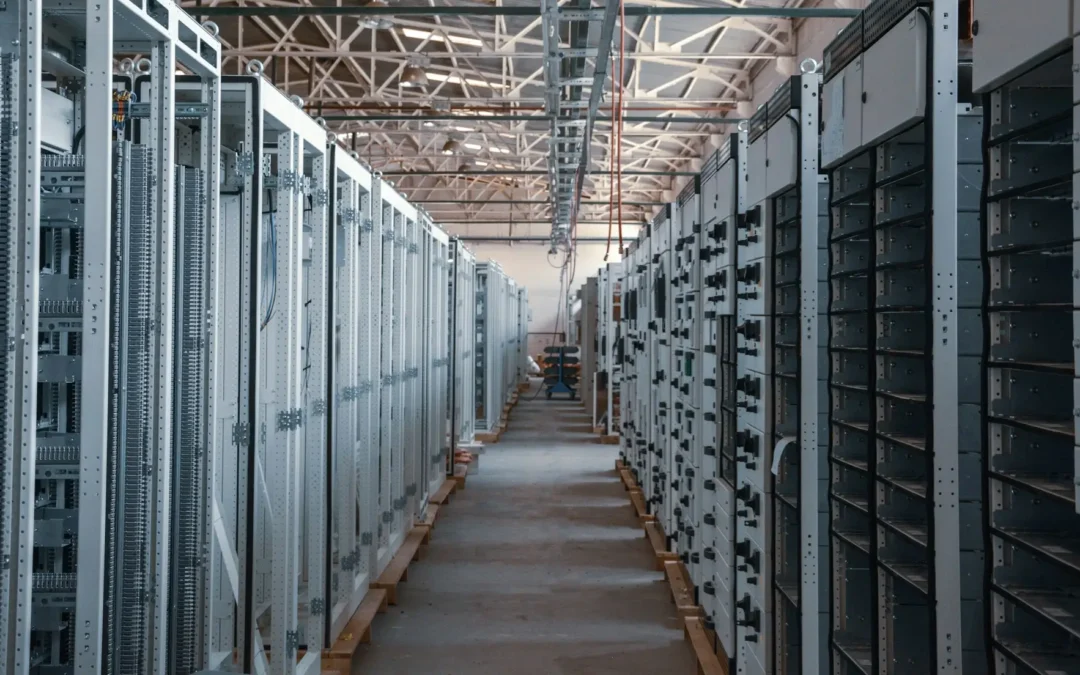


Maintaining optimal humidity levels is essential in defense and military facilities to protect mission-critical systems and preserve operational readiness. Sensitive electronics, control systems, storage environments, and mechanical equipment all rely on stable environmental conditions to function reliably.
Precision humidity control reduces the risk of corrosion, electrostatic discharge, and material degradation. A properly engineered humidification system maintains consistent, uniform conditions without surface condensation, helping ensure uninterrupted performance in demanding military environments.
Key Takeaways
- Stable relative humidity supports operational readiness in defense facilities.
- Precision humidity control protects sensitive electronics and equipment.
- Uniform, non-wetting humidification reduces corrosion and ESD risk.
- Environmental stability strengthens equipment longevity.
- Engineered humidification systems minimize operational disruption.
Why Defense Facilities Require Precision Humidity Control
Sensitive infrastructure within military facilities responds to humidity fluctuations. When humidity is unstable, the risk of corrosion, electrostatic discharge, and mechanical malfunction increases, directly impacting operational reliability.
Impact of Environmental Instability on Mission-Critical Systems
Environmental instability can disrupt both electronic and mechanical systems. Low humidity increases the risk of electrostatic discharge, which can damage sensitive circuitry. Excess humidity may contribute to corrosion or condensation-related failures.
To mitigate these risks, defense facilities typically maintain relative humidity within a controlled range suited for electronics, storage, and operational zones. Stability within that range is more important than the exact value.
Precision, non-wetting humidification systems help maintain uniform humidity without creating localized moisture accumulation, supporting safe and reliable equipment operation.
Humidity Risks in Electronics, Storage, and Operational Zones
Different areas within defense facilities face distinct humidity risks. Electronics areas are vulnerable to electrostatic discharge in dry conditions and condensation-related failures when humidity is excessive.
Storage areas can experience corrosion and material degradation if moisture levels are not properly controlled. Operational zones require balanced humidity to maintain equipment performance and support personnel function.
These risks underscore the need for engineered humidity control solutions in defense facilities, where environmental stability directly impacts equipment reliability, operational continuity, and long-term system protection.
Smart Fog is engineered for facilities that require stable, non-wetting humidity control across diverse operational zones. By using compressed air and water through precision nozzles, the system generates a controlled grid of self-evaporating droplets that disperse evenly and integrate into the air before contacting surfaces when properly applied.
The result is uniform humidity control designed to reduce static buildup, limit corrosion risk, and support reliable equipment performance in sensitive defense environments.
Evaluating Humidification Systems for Military Environments
Selecting a humidification system for military use requires evaluating performance, reliability, and adaptability. Defense environments demand systems that maintain stable humidity across zoned and secure facilities while responding effectively to operational variability.
Maintaining Stable Humidity in Zoned and Secure Facilities
Military facilities often contain multiple zones with different security levels and environmental requirements. A humidification system must maintain consistent humidity across these areas while integrating with secure infrastructure.
Careful system design ensures compatibility with existing air handling systems and supports centralized monitoring without compromising security protocols.
Uniform humidity distribution across zones helps prevent localized dry or moist pockets that could affect sensitive equipment.
Response to Operational Load and Environmental Variability
Military operations can create rapid shifts in environmental conditions. Effective humidification systems must respond quickly to temperature changes, occupancy shifts, and airflow variability while maintaining stability.
Adiabatic precision humidification systems are well suited for dynamic defense environments because they regulate humidity efficiently and evenly without generating surface condensation.
By adapting to operational load while maintaining consistent relative humidity, properly engineered systems help ensure equipment reliability and sustained operational readiness.
Comparing Humidification Technologies for Defense Applications
Defense facilities require precise, stable humidity control to protect sensitive systems and maintain operational readiness. While multiple humidification technologies exist, not all are equally suited for mission-critical military environments where reliability, uniform distribution, and condensation prevention are essential.
Steam-Based Humidification Systems
Steam-based humidification systems, including resistive and electrode steam units, generate humidity by introducing steam into the air. These systems are used in various large facilities, including some defense environments.
- They can be used with a boiler to generate steam for distribution.
- Steam-based systems can distribute humidity across ducted infrastructure.
However, they typically involve higher energy consumption, ongoing maintenance, and potential condensation risk if distribution is not carefully controlled.
Ultrasonic Humidification Systems
Ultrasonic humidifiers use high-frequency vibration to disperse water into the air as fine droplets. This approach differs from thermal or evaporative methods.
- They are compact and operate quietly in smaller spaces.
- They may be used in localized applications where limited-area humidification is required.
However, uniform humidity distribution across large defense facilities can be challenging, and strict water quality management is necessary to avoid unintended particulate introduction.
Adiabatic Humidification Approaches
Adiabatic humidification increases relative humidity through controlled evaporation, offering energy-efficient performance in large-volume defense environments when properly engineered.
Well-designed adiabatic systems for military facilities should provide:
- Capacity to handle high air volumes in expansive operational spaces.
- Stable humidity control across multiple zoned environments.
- Non-wetting precision delivery using self-evaporating droplets.
- Even dispersion that integrates into the air before contacting surfaces when properly applied.
- Reduced condensation risk in electronics areas, control rooms, and storage zones.
Smart Fog delivers the energy-efficient performance and large-volume coverage expected from advanced adiabatic systems while maintaining precise, non-wetting humidity control in secure environments. Designed for continuous industrial operation, it supports stable conditions across zoned defense facilities where condensation risk, static buildup, and corrosion must be tightly managed.
Performance Considerations for Sensitive Defense Equipment
Defense facilities housing sensitive equipment must prioritize humidity stability to ensure optimal performance, as dry air impacts sensitive defense systems and components.
Electronics, communication systems, and control infrastructure are highly susceptible to environmental variability.
Preventing Electrostatic Discharge in Electronics and Control Rooms
Electrostatic discharge (ESD) is a significant risk in low-humidity environments. Maintaining relative humidity within a controlled range, typically between 40–60%, helps reduce static buildup and lowers the risk of equipment damage.
Control rooms and electronics areas require precise humidity control to prevent static discharge. This is achieved through humidification systems designed to maintain stable humidity levels even when environmental conditions fluctuate.
Maintaining Conditions Without Surface Wetting
Humidification systems used in defense facilities must maintain required humidity levels without causing surface wetting. This is critical to ensure electronics, avionics, and mechanical systems remain dry and fully functional.
Advanced adiabatic humidification technologies are designed to introduce moisture that fully evaporates into the air before reaching equipment or structural surfaces. This approach maintains stable humidity while minimizing condensation risk.
By maintaining uniform, non-wetting humidity control, defense facilities protect sensitive systems and preserve operational readiness under demanding environmental conditions.
Humidification Requirements for Storage and Hangar Environments
The integrity of military equipment stored in hangars and long-term storage facilities depends on stable humidity control. These environments present unique challenges because large volumes of air must remain consistent to prevent corrosion and material degradation.
Preventing Corrosion in Long-Term Equipment Storage
Corrosion remains one of the primary risks in military storage environments. Maintaining a controlled humidity range aligned with ideal humidity levels for defense facilities helps reduce oxidation and surface degradation on metal components.
Key considerations include:
- Maintaining relative humidity within a controlled range appropriate for equipment storage.
- Integrating humidification systems with existing air distribution infrastructure.
- Ensuring the system responds quickly to changes in indoor environmental conditions.
Precision, non-wetting humidification systems help maintain stable humidity without introducing surface condensation on stored equipment.
Maintaining Stability Across Large Volume Facilities
Large storage and hangar facilities require humidity systems capable of delivering uniform conditions across expansive spaces. Inconsistent distribution can create localized dry or moist zones that increase corrosion or degradation risk.
Effective humidification in these environments involves:
- Even distribution of humidity throughout the facility.
- Continuous monitoring and real-time adjustment of environmental conditions.
- Scalable system design suited to the facility’s size and layout.
Uniform, self-evaporating humidification supports stable conditions across large volumes without wetting surfaces or structural elements.
Integration With Environmental Monitoring Systems
Humidification systems must integrate seamlessly with environmental monitoring infrastructure as part of a structured environmental control strategy to maintain stable conditions across mission-critical facilities. Continuous visibility into humidity levels allows facilities to respond quickly to environmental shifts.
Compatibility With Secure HVAC Infrastructure
For effective operation, humidification systems must align with secure HVAC infrastructure while maintaining strict operational protocols.
- Secure integration ensures compatibility without compromising facility security.
- Real-time monitoring enables immediate response to environmental changes.
Integrated control supports consistent humidity management across defense facilities.
Environmental Monitoring Across Zoned Areas
Defense facilities often operate with multiple zones, each requiring specific environmental conditions. Monitoring across these areas is essential to maintain equipment protection and operational reliability.
- Identify humidity requirements for each operational zone.
- Implement monitoring systems capable of tracking conditions across zones.
- Adjust humidification performance as needed to maintain stable conditions.
By integrating humidification with advanced monitoring systems, defense facilities maintain consistent environmental control, protect mission-critical equipment, and enhance overall operational readiness.
Compliance and Reliability Considerations
Humidification systems in defense facilities must meet strict compliance and reliability requirements to protect mission-critical operations. Meeting documented humidity control requirements for defense compliance ensures environmental stability aligns with operational and regulatory expectations.
Environmental Stability for Operational Readiness
Environmental stability directly supports operational readiness in defense facilities. Humidity control systems must maintain consistent levels even as temperature, occupancy, or external conditions fluctuate.
Operational readiness depends on preventing humidity-related equipment malfunction, including corrosion, static discharge, and material degradation.
- Prevention of corrosion and moisture-related equipment damage.
- Maintenance of stable humidity levels in electronics and control rooms.
- Protection of stored equipment and critical supplies.
Uniform, non-wetting humidity control strengthens reliability across both active and storage environments.
System Redundancy in Mission-Critical Facilities
In mission-critical defense facilities, system redundancy is not optional. Humidification systems should be designed with backup components and fail-safe controls to eliminate single-point vulnerabilities.
Redundant humidifiers, independent control loops, and integrated monitoring systems allow facilities to maintain stable humidity even during maintenance or unexpected disruptions.
Redundancy also enables service and upgrades without interrupting operations. This ensures continuous environmental control and minimizes the risk of mission disruption caused by system failure.
How Smart Fog Supports Humidity Stability in Defense Facilities
Humidity stability in defense facilities requires more than basic moisture control. It demands engineered precision, uniform distribution, and reliable non-wetting performance.
Smart Fog is a non-wetting precision humidification system designed to maintain stable, uniform humidity across sensitive defense environments. By producing a controlled grid of self-evaporating droplets that integrate into the air before contacting surfaces when properly applied, Smart Fog supports environmental consistency while minimizing condensation risk.
Non-Wetting Humidification for Electronics and Avionics Areas
Electronics and avionics areas require humidity control that maintains stability without introducing surface moisture. In these environments, low humidity increases electrostatic discharge risk, while excessive humidity can contribute to corrosion or electrical failure.
Smart Fog delivers evenly distributed humidity designed to stabilize conditions without wetting sensitive equipment when properly engineered.
- Helps reduce electrostatic discharge risk through stable humidity control.
- Reduces condensation risk on sensitive electronics and avionics.
- Promotes uniform humidity distribution across critical zones.
- Designed for continuous operation in mission-critical environments.
Supporting Stable Conditions in Storage and Hangar Environments
Large storage and hangar environments require systems capable of maintaining consistent humidity across expansive areas without localized wetting.
Smart Fog supports these environments by:
- Helping reduce corrosion risk through controlled humidity management
- Supporting equipment readiness during long-term storage
Engineered for large-volume distribution without wetting floors, walls, or equipment when properly applied, Smart Fog provides scalable humidity stability across mission-critical defense facilities.
By combining precision control, non-wetting performance, and industrial-scale system design, Smart Fog supports operational readiness and long-term equipment integrity in demanding military environments.
Final Thoughts
In defense and military facilities, humidity control is mission-critical. Properly engineered systems humidify secure spaces to help reduce electrostatic discharge risk in sensitive electronics, limit corrosion potential in storage and hangars, and protect high-value equipment and spare components. Environmental instability directly impacts operational readiness and long-term reliability.
Smart Fog provides non-wetting precision humidification designed for large, secure environments. By producing a controlled grid of self-evaporating droplets that integrate into the air before contacting surfaces when properly applied, Smart Fog delivers stable, uniform humidity without increasing condensation risk. The result is improved equipment protection, reduced static-related failures, and greater environmental stability across mission-critical zones.
To evaluate the right approach for your facility, explore our engineered defense humidification systems or speak with our team about designing a humidity control strategy tailored to your operational requirements.
FAQ
What is the ideal relative humidity level for defense facilities?
The ideal relative humidity level for defense facilities is between 40-60%. This range helps prevent equipment failure, corrosion, and compromised operational readiness. humidify spare
What type of humidification system is best suited for large volume storage and hangar environments?
For large volume storage and hangar environments, adiabatic or steam-based humidification systems are often used, as they can maintain stability across the entire area and prevent corrosion.
Can humidification systems be integrated with existing HVAC infrastructure?
Yes, humidification systems can be integrated with existing HVAC infrastructure, enabling real-time monitoring and control of humidity levels across zoned areas.
How do electrode boiler humidifiers work?
Electrode boiler humidifiers work by using an electric current to heat water, producing steam that is then distributed into the air, providing a reliable and efficient means of humidification.
What is the importance of maintaining proper humidity levels in military storage facilities?
Maintaining proper humidity levels in military storage facilities is crucial to prevent corrosion and ensure the integrity of equipment during long-term storage.
Can humidifiers be used in conjunction with dehumidifiers?
Yes, humidifiers can be used in conjunction with dehumidifiers to maintain a stable humidity level, particularly in environments where humidity levels fluctuate significantly.